Holy Cross: A Late Gothic Pilgrimage Church in Munich
Site at a Glance
- Rating
- 4.6
- Popularity
- Very Low
- Country
- Germany
- Primary era
- Medieval
- External website
- Open
- Eras represented
- Medieval, Early Modern
- Civilizations
- Duchy of Bavaria, Electorate of Bavaria, Holy Roman Empire
- Site type
- Religious
- Remains
- Church
On this page13 sections
History
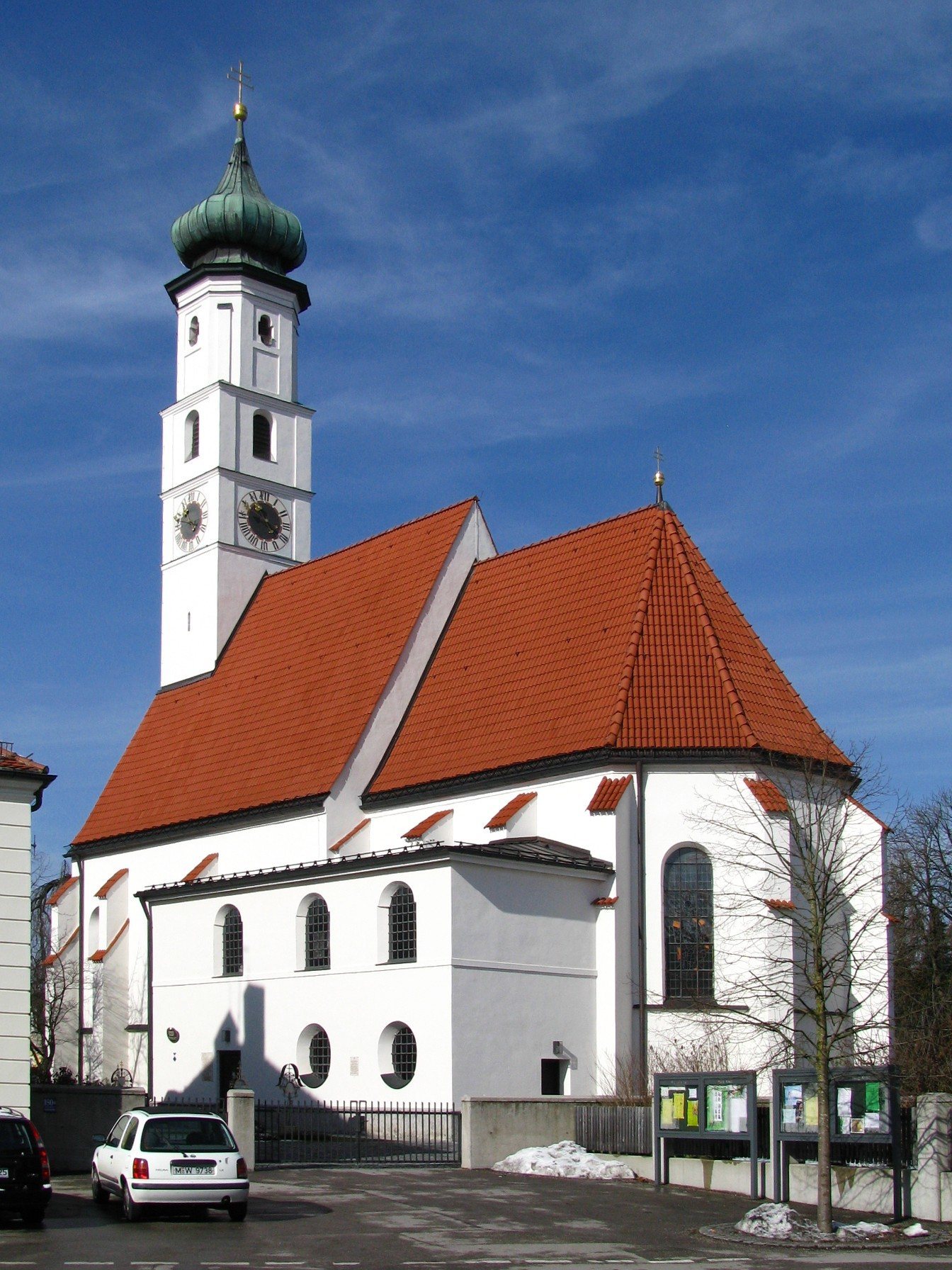
Holy Cross is a Roman Catholic parish church in Forstenried, a district of Munich, Germany. Built in the fifteenth century in the Late Gothic style, it became a pilgrimage church dedicated to the Holy Cross and remains the parish church of the Holy Cross parish within the Forstenried parish association.
Medieval Origins
A chapel dedicated to the Apostle Bartholomew stood at Forstenried by the twelfth century. Its patronage points to an origin around the year 1000, when Forstenried belonged to Polling Abbey, a religious foundation of Augustinian canons, or priests who followed the rule of Saint Augustine. In 1194, Forstenried was assigned to the Neuried and Gräfelfing parish but received its own baptismal and burial rights. It did not yet have its own parish priest. By 1433, it was a parish incorporated into Polling Abbey, with a beneficed priest serving as parish vicar.
A later tradition holds that a Romanesque crucifix was brought from Andechs Castle to Forstenried in 1229. The tradition relies on later entries in the Andechs Missal that are now regarded as late-fourteenth-century forgeries. The crucifix is therefore generally considered to have been in Forstenried at least since the end of the fourteenth century.
Creation of the Pilgrimage Church
Miraculous powers were attributed to the crucifix, and Forstenried became a regular pilgrimage destination. The Bartholomew chapel soon proved too small, leading to the construction of the present larger church in the fifteenth century. The church bore the title Holy Cross by 1524.
Pilgrimages increased substantially after the Thirty Years’ War, the seventeenth-century conflict that devastated large parts of central Europe. The church’s miracle book recorded numerous healings in detail. In response to the renewed flow of pilgrims, Kaspar Zuccalli remodeled the church in the Baroque style in 1672. The tower was heightened in 1626 and received an onion dome, helping make the church visible to pilgrims approaching Forstenried. Rococo furnishings, representing the lighter and more ornate development of the Baroque style, were added in 1749.
Changes since 1803
Forstenried’s institutional connection with the Augustinian canons of Polling ended during the secularization of 1803, when religious foundations in Bavaria were dissolved and their property transferred to secular authorities. Clergy who served in Forstenried at different times included Augustin Fastl, Franz Töpsl, and Sebastian Seemiller.
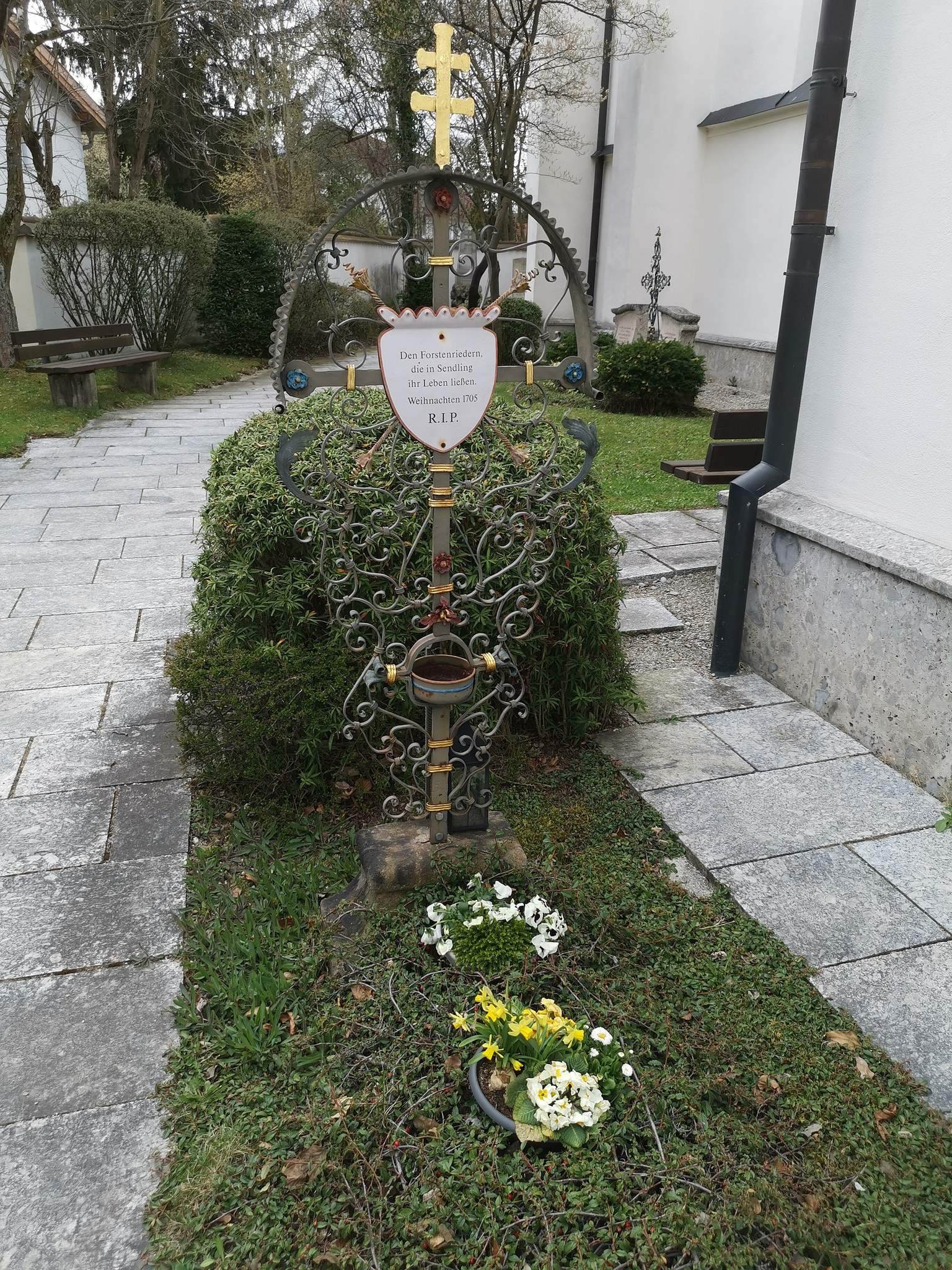
The church’s north entrance, characteristic of pilgrimage churches, was later replaced by an entrance on the south side. Wayside crosses at the edge of Forstenried still mark the old pilgrimage route and recall the church’s religious importance beyond its walls.
In 1949, the crucifix, which had been temporarily altered, was restored to its original Romanesque form. The altar was simplified, and its two flanking figures were placed beside the cross. Repairs to the interior in 1985 and 1986 reversed alterations to the Rococo furnishings. The church and its surrounding cemetery are listed together as protected monuments in Bavaria.
Remains
Setting and Exterior
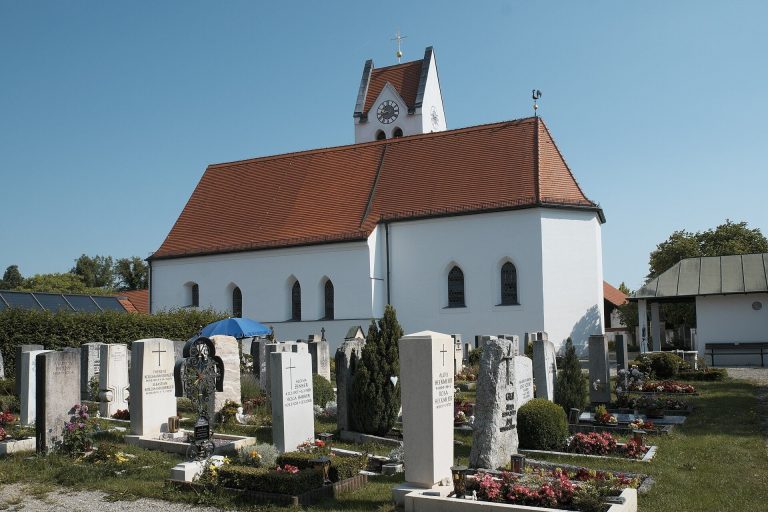
Holy Cross stands in the historic village center of Forstenried along Forstenrieder Allee, set slightly back from the road on slightly higher ground opposite it. A church cemetery encloses the building, which is oriented approximately 15 degrees north of an ideal eastward alignment. The parish house lies to the north, the Forstenried forester’s house to the south, and the Alter Wirt inn diagonally opposite across the road.
The western nave has a gabled roof, while the recessed choir carries a hipped roof. Buttresses support the exterior walls. The tower is integrated into the nave, with a square lower section and an octagonal upper section that supports the onion dome.
Interior and Principal Furnishings
Vault and High Altar
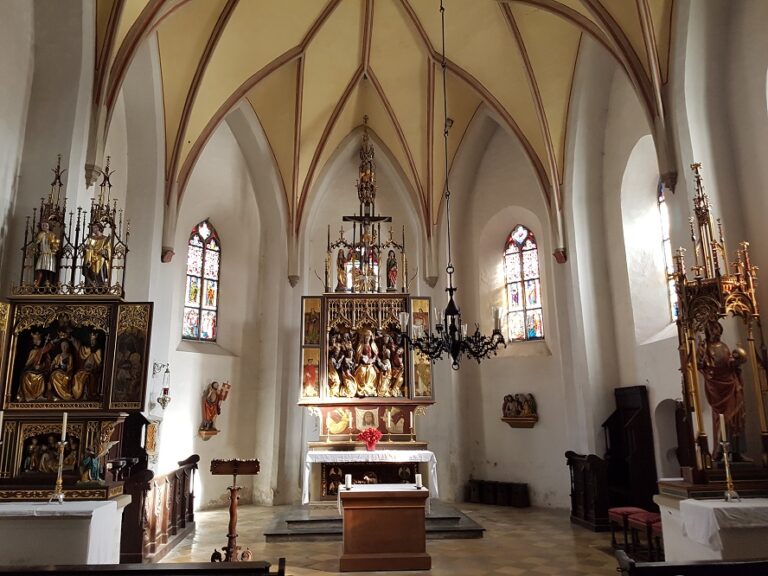
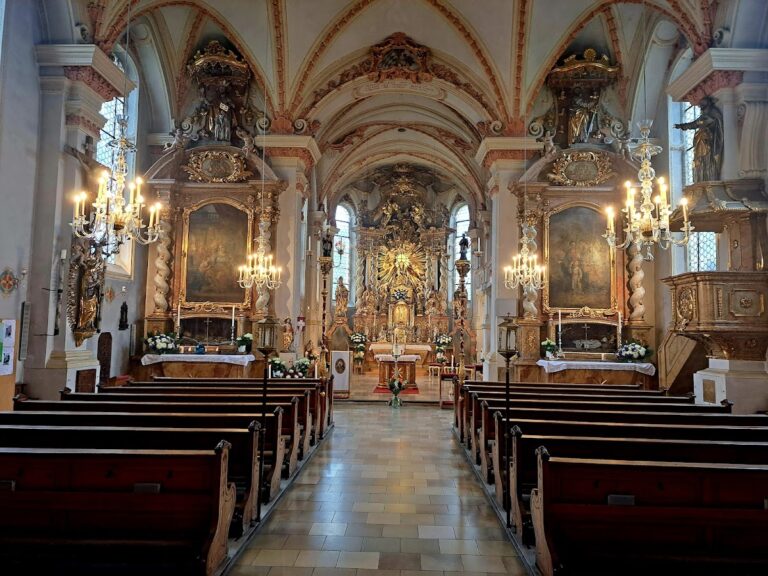
The interior is richly decorated with stucco and has a barrel vault, a continuous curved ceiling resembling half a cylinder, with pointed ends. This Baroque vault replaced the church’s original ribbed vault, which was supported by intersecting structural ribs.
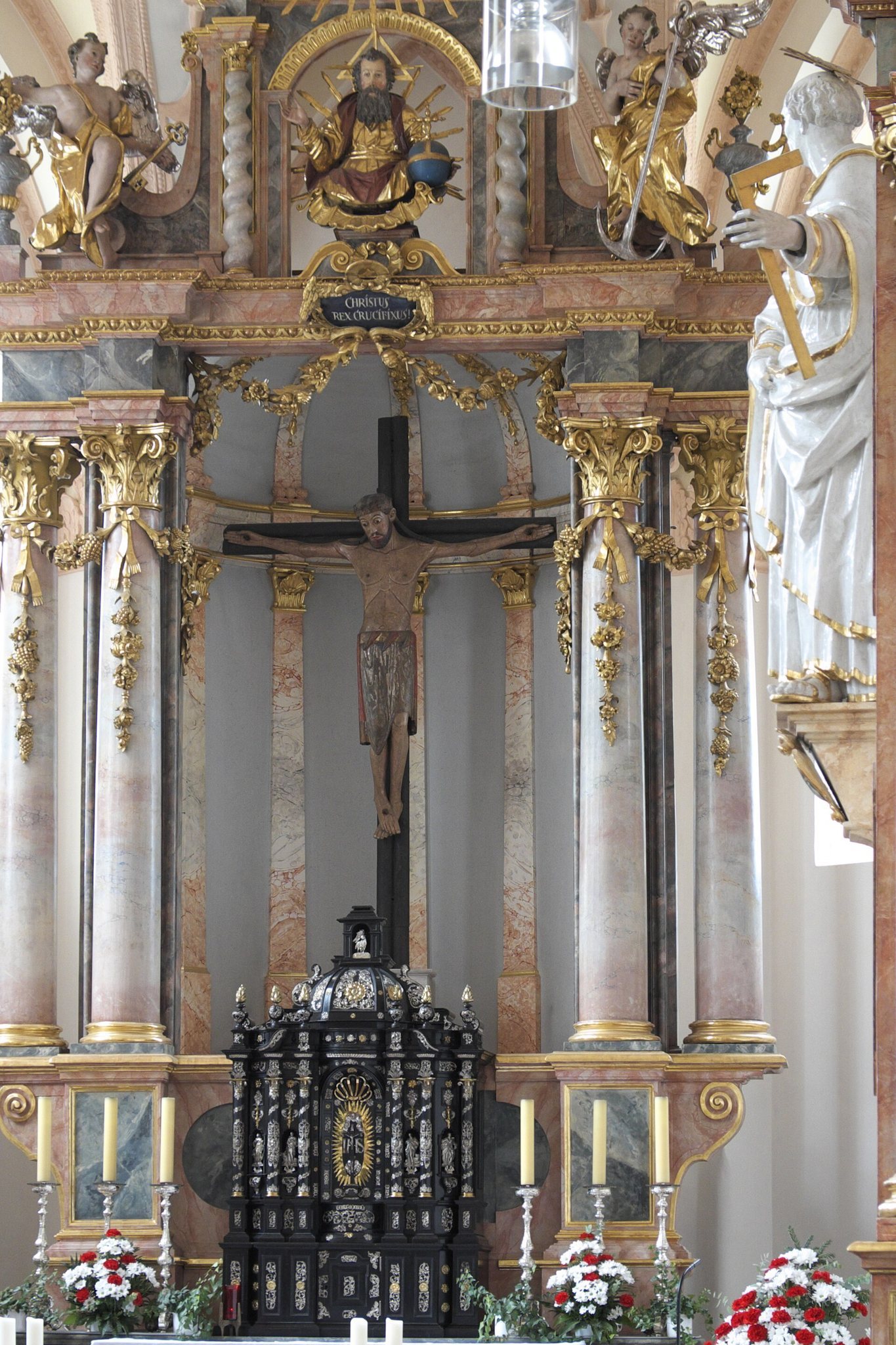
The Romanesque Forstenried Crucifix is integrated into the high altar of 1611. The twelfth-century work is painted in a Byzantine manner. Christ’s two feet are attached with a single nail, an early form of this representation in the German-speaking lands. The altar is flanked by figures of Saint Helena of Constantinople and the Apostle Bartholomew. Helena, the mother of the emperor Constantine, is traditionally associated with the discovery of the True Cross, while Bartholomew was one of the Twelve Apostles of Jesus.
Side Altars and Devotional Works
The wooden tabernacle dates from 1700 and is richly decorated with silver. The right side altar, dating from 1620, bears Johann Matthias Kager’s painting of the Assumption of Mary. The left side altar depicts the Lamentation of Christ. Wall figures of Christ, Mary, and the Apostles date either from 1620 or from 1672.
Pulpit and Stations of the Cross
The pulpit dates from 1746. Wenzeslaus Albert created the Stations of the Cross in 1769, a series of devotional images representing episodes of Christ’s Passion.
Organ and Bells
Organ
Anton Bayr originally built an organ with nine stops, one manual, and a pedal. It used a slider chest and mechanical action for both playing and registration. The surviving early-Classical facade, dated 1790, has five sections, a raised central tower, and harp-shaped side fields. A two-part Rückpositiv, a small secondary organ section, is attached to the gallery railing. The present organ was built by Georg Jann in 1978 and has two manuals and seventeen stops.
Bells
Johann Christoph Thaller cast a bell in Munich in 1702. After the Second World War, this surviving historic bell was joined in 1953 by three bronze bells made by the Rudolf Perner bell foundry in Passau. Their disposition follows a Paternoster motif with two major seconds.