Asdal Church: A 15th-Century Chapel for Asdal Manor
Site at a Glance
- Popularity
- Very Low
- Country
- Denmark
- Primary era
- Medieval
- Eras represented
- Medieval, Early Modern, Modern
- Civilizations
- Danish
- Site type
- Religious
- Remains
- Church
On this page12 sections
History
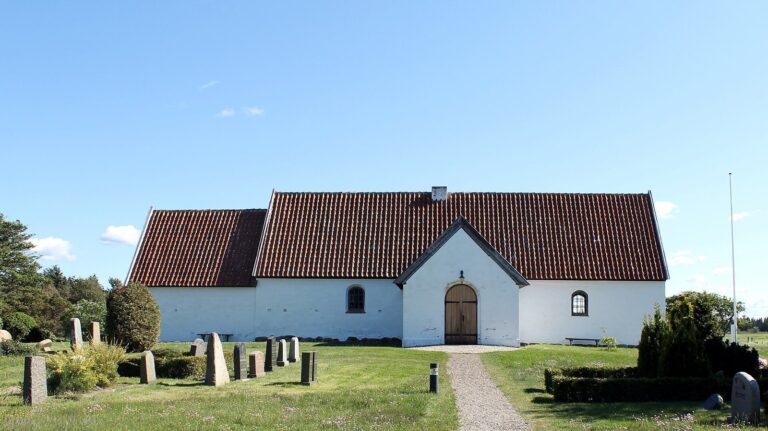
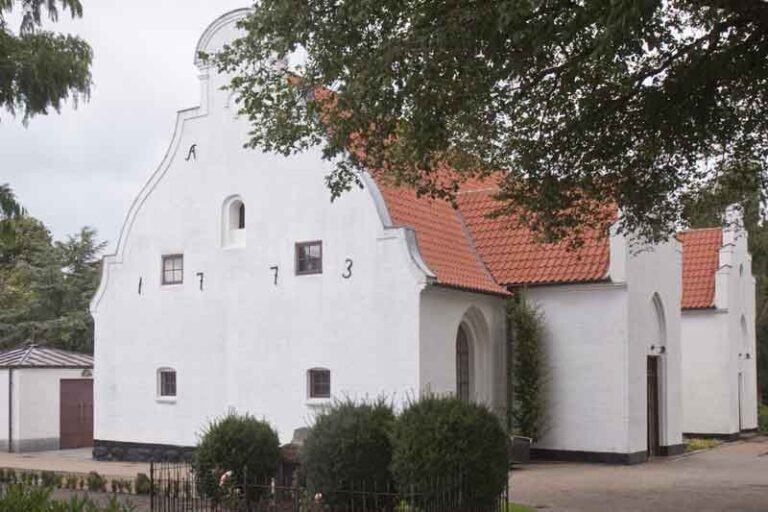
Asdal Church is a village church in Allingdam, Denmark, believed to have been built around the middle of the 15th century. Its construction is attributed to Johanne Andersdatter Panter, a Danish noblewoman, as a chapel for Asdal Manor. The church serves Asdal Parish in the Diocese of Aalborg.
Foundation as a manor chapel
The church is first mentioned in writing in 1472. A local legend instead credits Karl Pølse with building it as penance for killing a monk, but the church’s construction is attributed to Johanne Andersdatter Panter.
Sixteenth-century renovation
Ingeborg Skeel, a Danish noblewoman who owned Asdal Manor, undertook extensive renovations between 1575 and 1578. The work included a timber-framed porch. In 1578, Skeel and Otto Banner of Asdal arranged for the pulpit to be installed.
The seventeenth-century bell
In 1627, Friderich Rhanzo donated a bell. Rhanzo owned Asdal from 1622 to 1645 and served as a general in the army of Christian IV, king of Denmark and Norway from 1588 to 1648. Captured in a major battle in 1626, Rhanzo bought his freedom. The bell may have been given in gratitude for his release. An earlier bell probably existed, but may have been seized and melted down to make cannons.
Remains
Church plan and exterior fittings
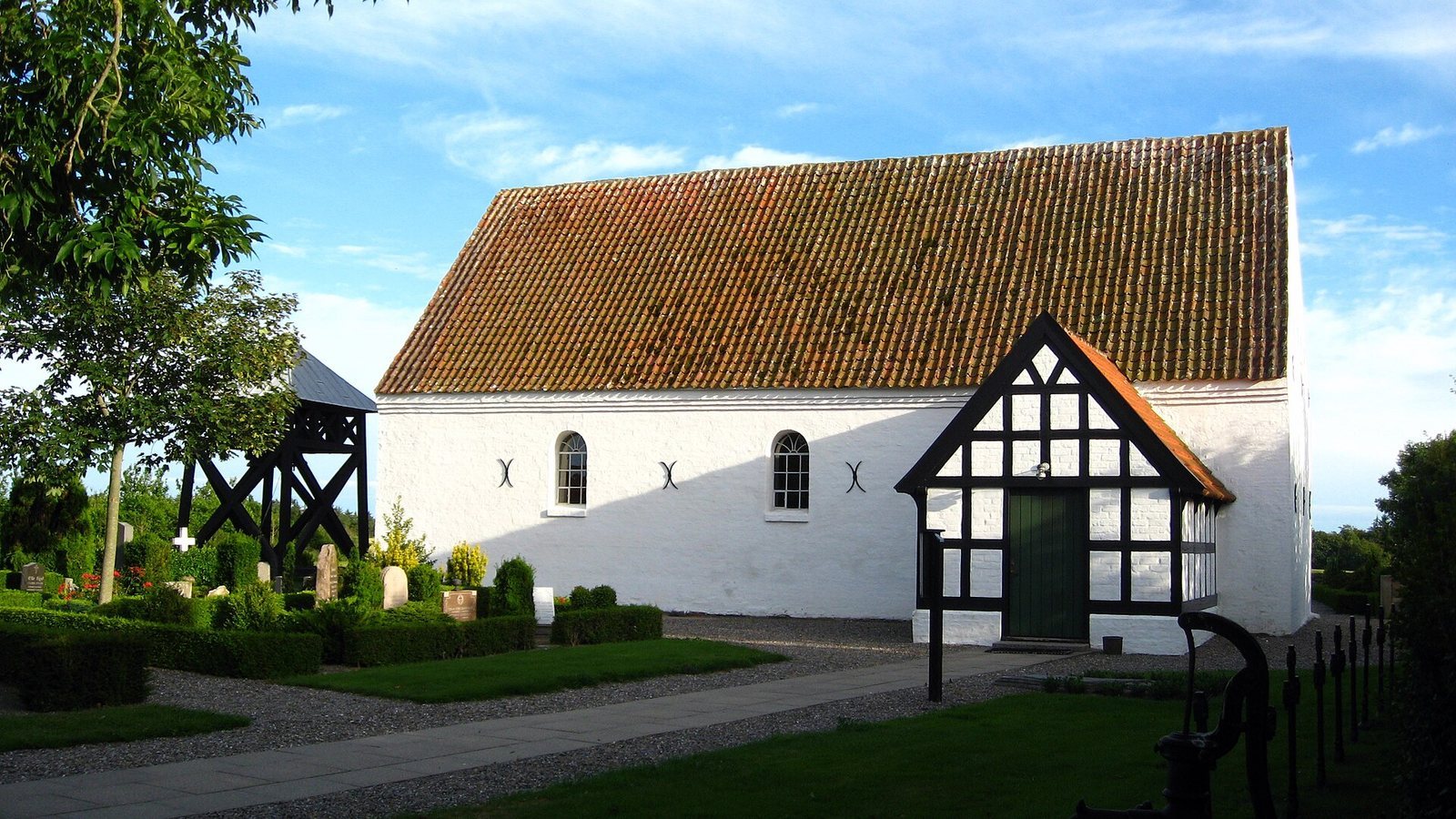
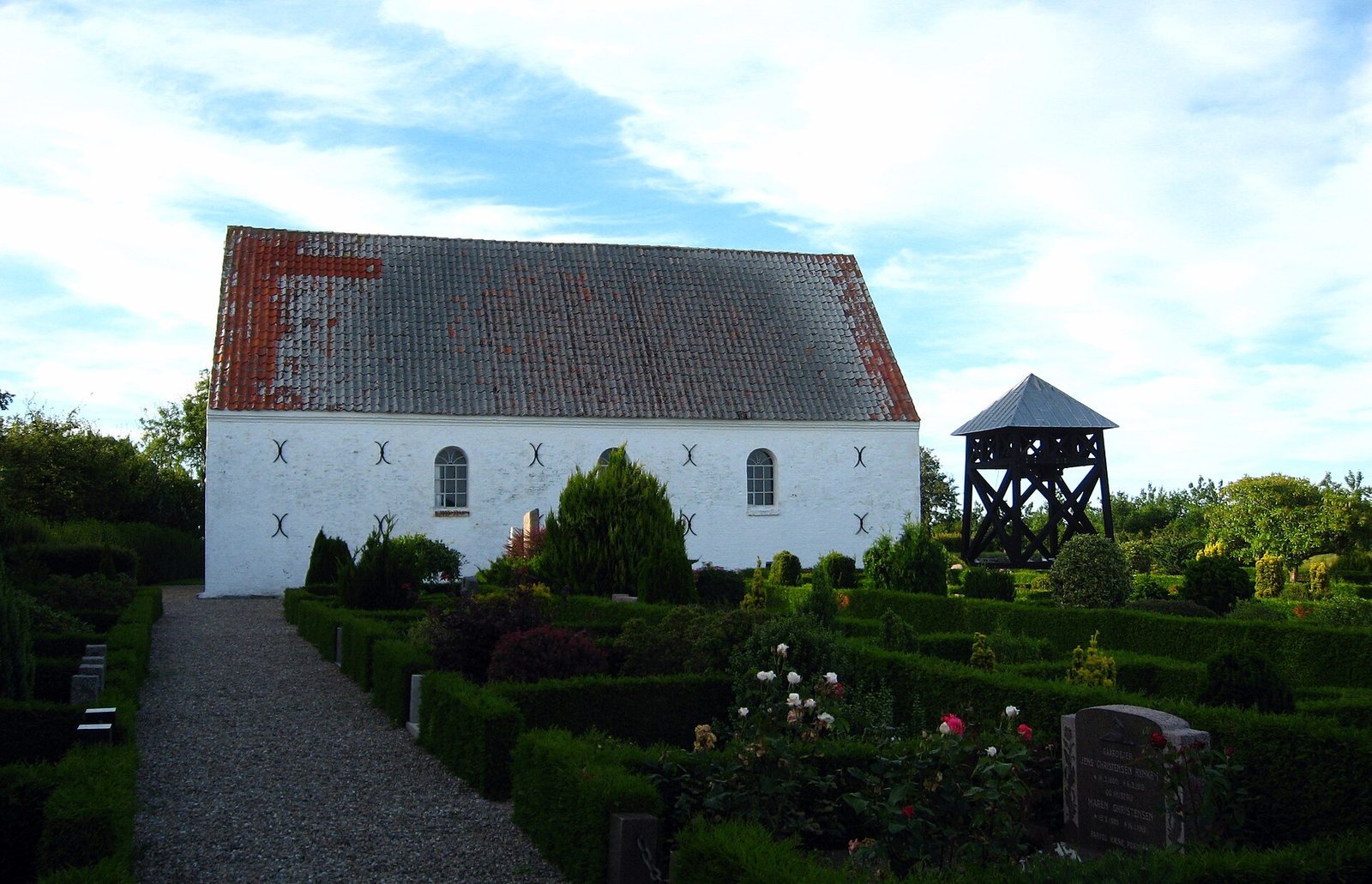
The church has a rectangular plan, with its nave, the main area for the congregation, and chancel, the area around the altar, forming one continuous interior. This open arrangement makes the relationship between priest and congregation more direct. A pointed-arch blind recess, a shallow niche closed at the back, is set into the inside of the north wall. It may have opened onto a clergy preparation room or a chapel later removed, although a side altar is considered the likelier explanation. The timber-framed porch is a rare surviving example of its kind; Hirsholmene Church has the only other surviving porch of this type. The present bell frame dates to 2003 and holds two bells. The older bell bears Rhanzo’s name and is cracked and no longer used; a newer bell has taken over its function.
Interior furnishings
Altarpiece and carved figures
The present altarpiece is a Lutheran panel design with hinged wings, dating to around 1575. It carries an image of the crucified Jesus painted around 1700. Its text includes the Lord’s Prayer and the words associated with the Christian Eucharist. A wooden Crucifixion group and a figure of Mary with the child, found in the church attic in 1921, are thought to have belonged to the original late-Gothic altarpiece. Late Gothic refers to a later medieval artistic style. The figures are now held by the National Museum of Denmark.
Altar vessels and candlesticks
The altar holds two brass candlesticks, a seven-branched brass candlestick, a chalice for Communion wine and a paten, the plate for Communion bread. The pair of brass candlesticks dates to around 1550 and bears an engraved Banner coat of arms, also found on candlesticks at Horne Church. The Banner family held Asdal Manor for several generations. The 18th-century chalice has six knobs bearing the letters “H I A S S E,” which appear upside down when it stands on its base. The silver paten is engraved with a cross inside an oval frame.
Pulpit
The pulpit bears the Skeel family’s coats of arms. Its inscription names Otto Banner of Asdal and Ingeborg Skeel and states that they had it erected in honor of God’s word. It also invokes forgiveness through the grace of God the Father, followed by peace and consolation.
Baptismal font
The church’s oldest furnishing is a granite baptismal font in the Romanesque style, an earlier medieval style. It rests on a base shaped like a truncated pyramid.
Manorial pews
Two manorial pews, dating to around 1550, now stand at the rear of the church, each at the end of a row of benches. They were moved there from the front to improve the view toward the altar. Their panels are carved in shallow relief, with stylized acanthus leaves, a leafy ornamental motif, rising from vases and interrupted by fantastical heads. Angel heads and various birds top the panels. The pews display Banner and Skeel coats of arms, and each door depicts the Crucifixion.