Råbjerg Church: A Medieval Lutheran Church in Denmark
Site at a Glance
- Popularity
- Low
- Country
- Denmark
- Primary era
- Medieval
- Eras represented
- Medieval, Early Modern, Modern
- Civilizations
- Danish
- Site type
- Religious
- Remains
- Church
On this page11 sections
History
Medieval origins
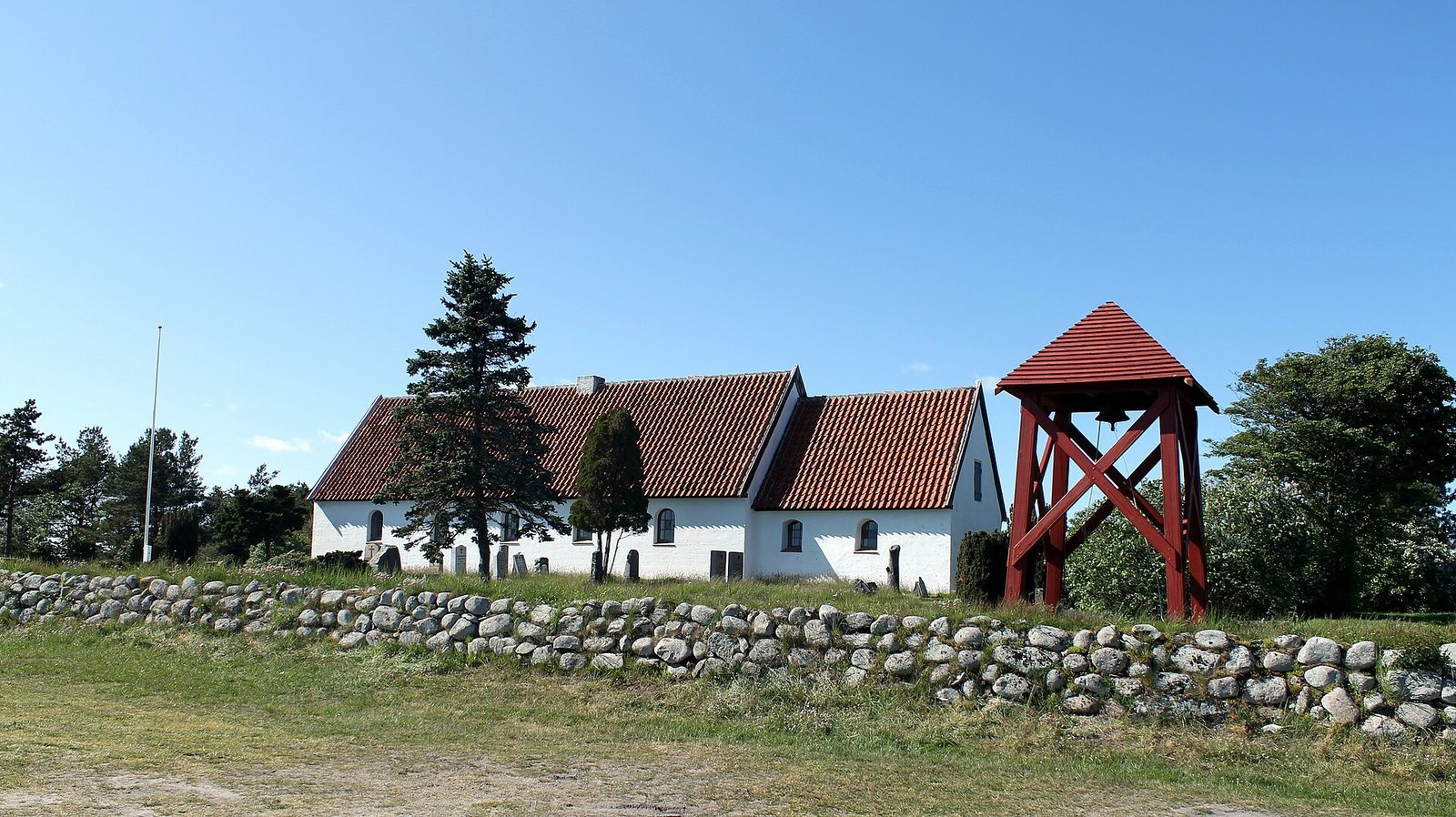
Råbjerg Church is a Danish Evangelical Lutheran church near Ålbæk, Denmark. Its oldest sections probably date from 1220 to 1300, when Romanesque and Gothic, two successive medieval European architectural styles, were giving the building elements associated with both. Lutheranism is a Protestant tradition that emerged during the Reformation. The church serves Råbjerg Parish within Aalbæk Pastorate and Frederikshavn Deanery in Aalborg Diocese.
Extensions and changing ownership
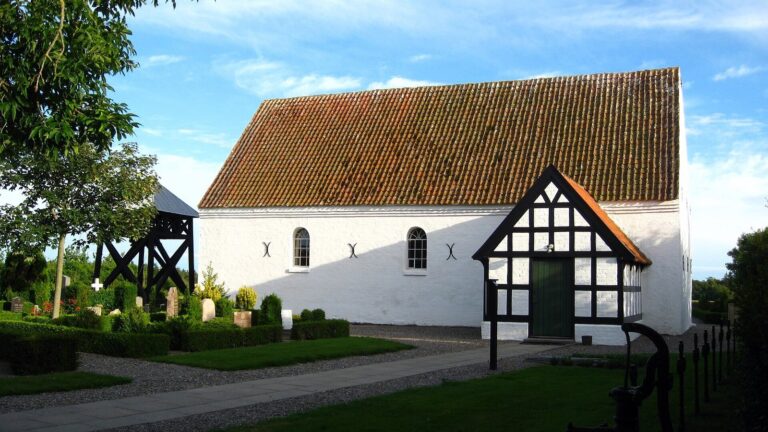
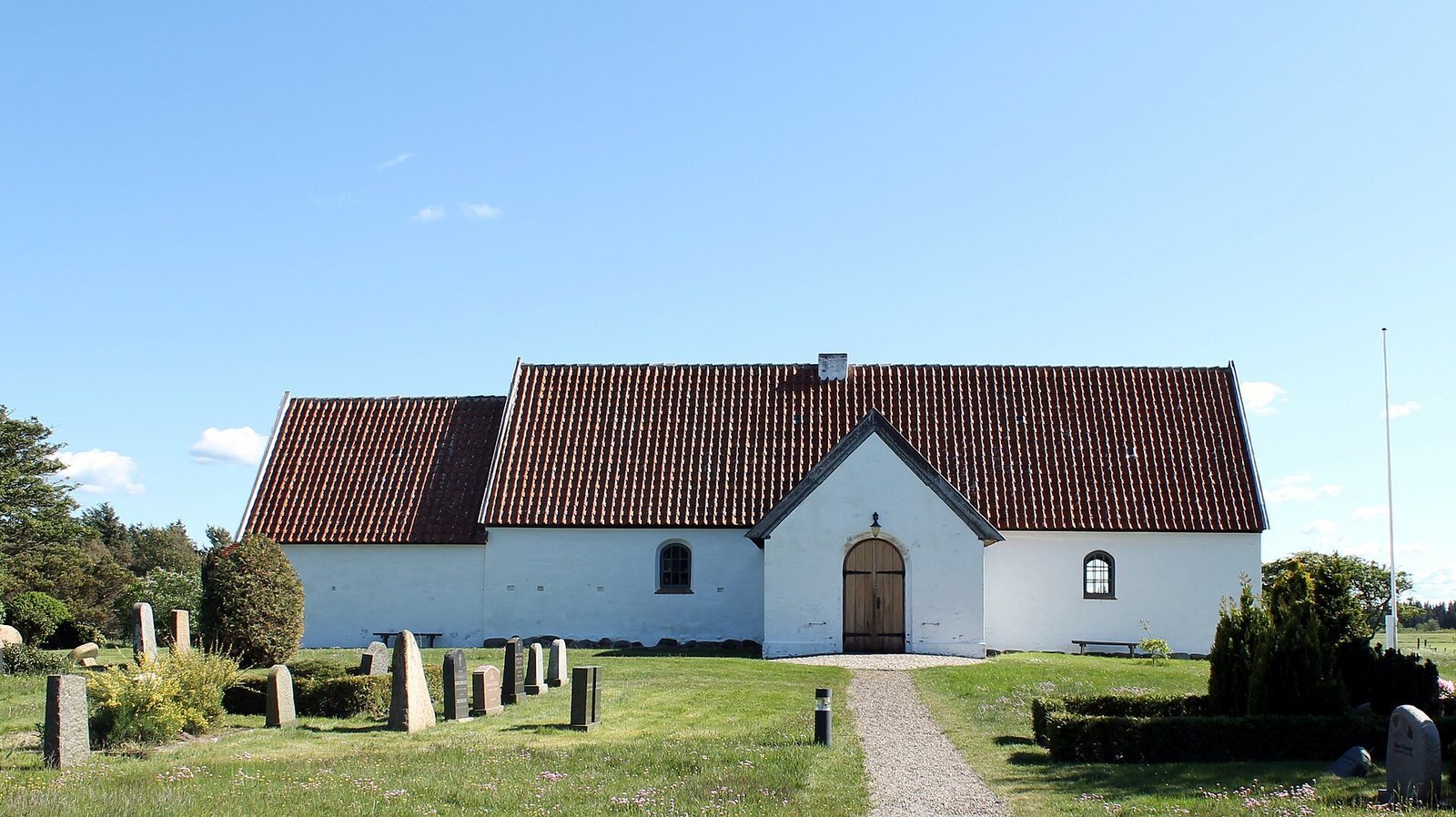
In 1620, the church was extended westward by four timber-framed sections, later rebuilt in masonry. A porch added on the south side in 1652 was moved to the west gable in 1699 as drifting sand affected the site. In 1758, it was relocated to the north side, and in 1886 a masonry building replaced it.
That same year, King Frederick V sold the church, along with the right to appoint its parish priest, to Hans Bugge of Bøgsted for 681 rigsdaler, a Danish currency of the period. In 1811, it was sold to Christen Jacobsen of Slynge in Tversted Parish, formerly an estate manager at Bøgsted. Peter and Mads Jensen Gaardboe inherited the church in 1835. It later belonged to Mads’s son, the author Andreas Gaardboe, and became separately owned in 1910. A major renovation followed in 1931.
Remains
The church stands in a sparsely settled part of Vendsyssel, near Råbjerg Mile, a large dune in northern Jutland. Its plan comprises a choir and nave, and its brick construction combines Romanesque and Gothic features.
Building and furnishings
Church fabric
The brick walls rest on a foundation of rough boulders laid without mortar. The choir and the eastern part of the nave contain the oldest sections of the building.
Bell frame
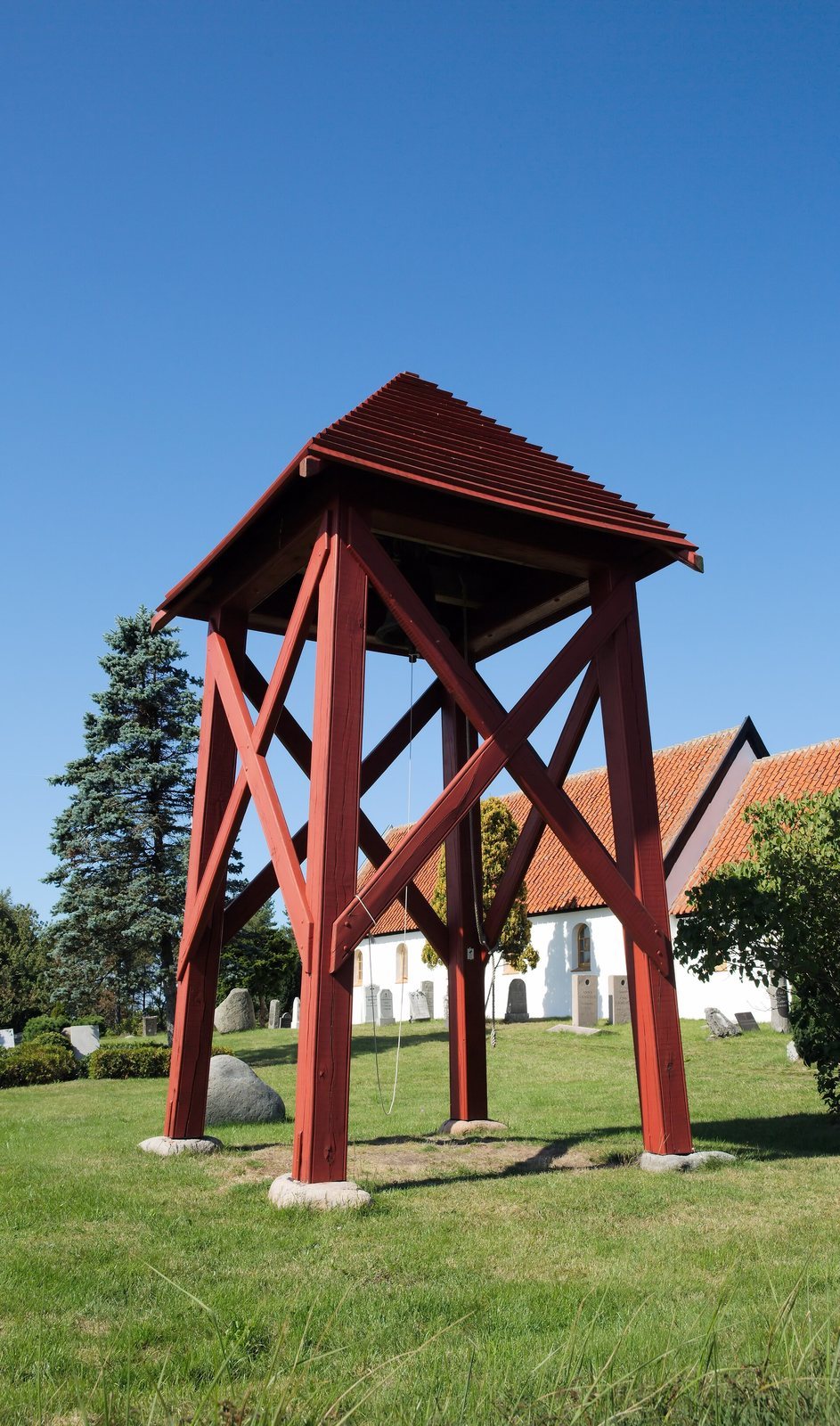
A bell frame erected in 1988 is an exact replica of one built from driftwood in 1681.
Altarpieces
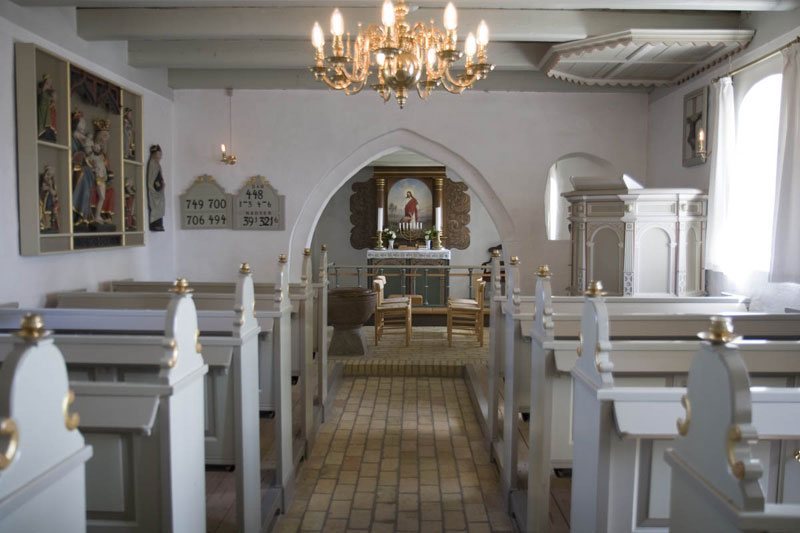
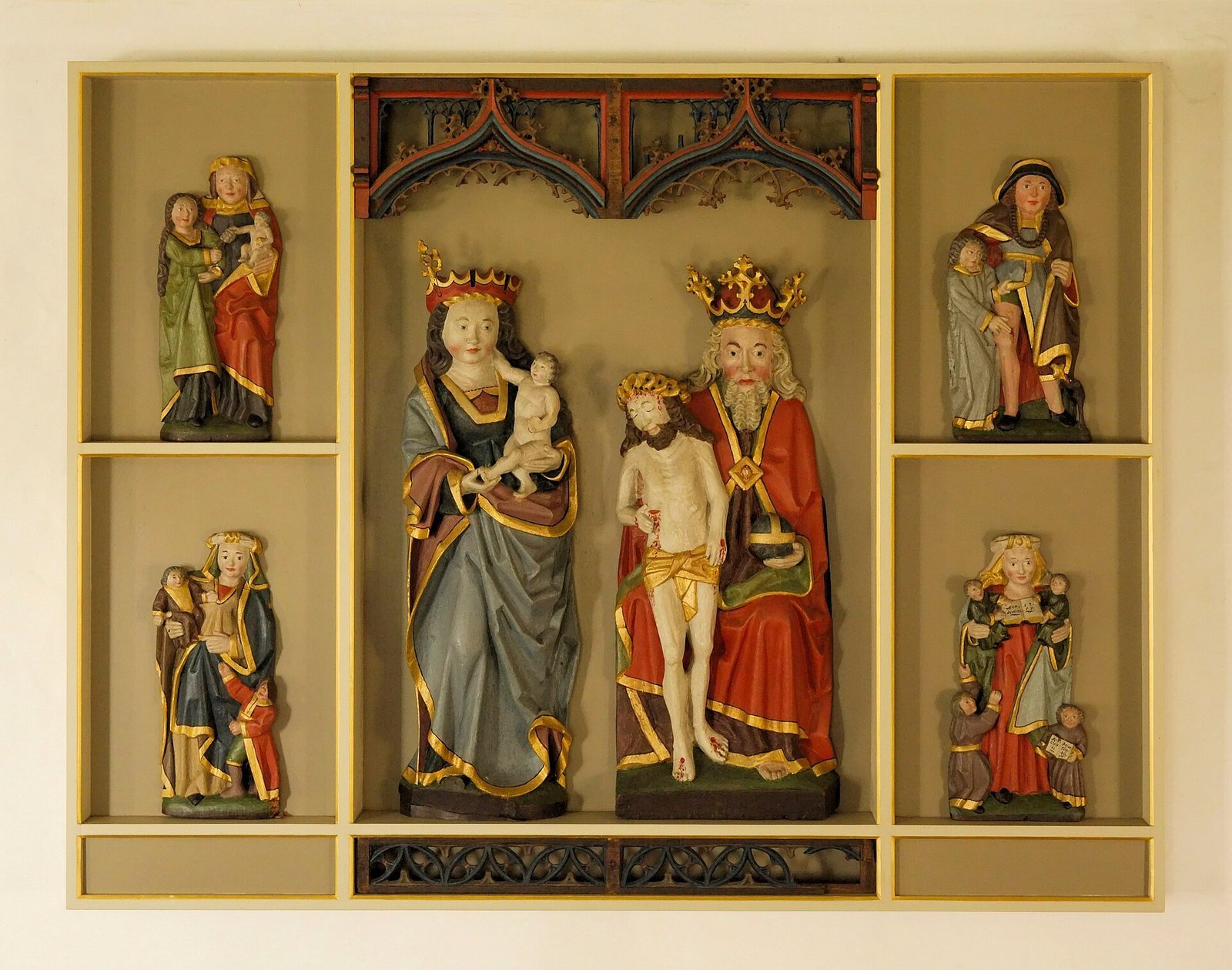
An earlier altarpiece was moved to the attic in 1865. A figural panel now seen in the church is believed to be a remnant of it. A painting of the Crucifixion took its place, then in 1897 was replaced by an altarpiece painted by Niels Anker Lund, showing Jesus receiving sinners.
Medieval figures
Church furnishings include Saint Anne, traditionally regarded as Mary’s mother, with Mary and the infant Jesus, as well as figures identified as Mary Cleophas and Mary Salome. Medieval interpretation grouped these figures with Jesus’ close family, and they may once have formed a single altarpiece.
Saint Servatius sculpture
A 60-centimetre sculpture from the church depicts a mother holding a child who wears a bishop’s mitre, a ceremonial headdress. The figures are identified as Saint Servatius and his mother, Memelia. Servatius was a fourth-century bishop of Maastricht. Medieval legends described him as the grandson of Esmeria or Emerentia, a sister of Saint Anne. Vendsyssel Historical Museum acquired the sculpture.
Cemetery
Singer Aksel Schiøtz is buried in the northwestern corner of the cemetery. Ole Lippmann, a businessman and resistance figure, is also buried there.