Fladstrand Church: A Parish Church in Frederikshavn, Denmark
Site at a Glance
- Popularity
- Low
- Country
- Denmark
- Primary era
- Early Modern
- Eras represented
- Early Modern, Modern
- Civilizations
- Danish, Denmark–Norway
- Site type
- Religious
- Remains
- Church
On this page13 sections
History
Fladstrand Church in Frederikshavn, Denmark, was built between 1688 and 1690, when Fladstrand was a small fishing settlement. Consecrated by Bishop Henrik Bornemann in 1690, it was the settlement’s only church and later served the growing town.
From parish church to burial chapel
After the larger Frederikshavn Church was consecrated in 1892, Fladstrand Church and its cemetery became a burial chapel. Bangsbostrand Church was built in the early twentieth century to ease pressure on Frederikshavn Church. Fladstrand Church returned to worship when it was reconsecrated in 1945.
Parish changes and continuing use
In 1964, Frederikshavn parish was divided into Abildgård, Bangsbostrand and Frederikshavn parishes. Abildgård received Fladstrand as a temporary parish church, but the building proved too small. A major renovation and rebuilding took place in 1967, and on August 7, 1969, Bishop Erik Jensen of Aalborg laid the foundation stone for a new Abildgård Church.
Today, Fladstrand Church and Abildgård Church serve Abildgård parish, a local congregation and administrative unit within Denmark’s established Evangelical Lutheran Church. The parish belongs to Frederikshavn deanery and Aalborg diocese. The three Frederikshavn congregations also hold services at Fladstrand Church in rotation.
Second World War burials
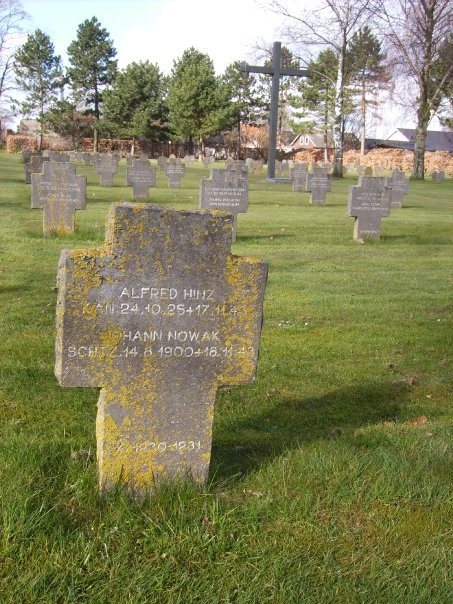
The cemetery became the burial place of British, German and Soviet military personnel and civilians who died during the Second World War. Around 1,500 names appear on memorial stones in the German graves area. Those commemorated include soldiers and refugees who died in local camps late in the war and just afterwards. Many were German soldiers drowned when troop transports travelling from Frederikshavn to Norway were mined or torpedoed.
The first large burials took place in autumn 1940, after the troopship Pioner struck a mine and about two hundred victims washed ashore on the east coast of Vendsyssel. Germany’s war-graves organization, Volksbund Deutsche Kriegsgräberfürsorge, maintains the graves.
Remains
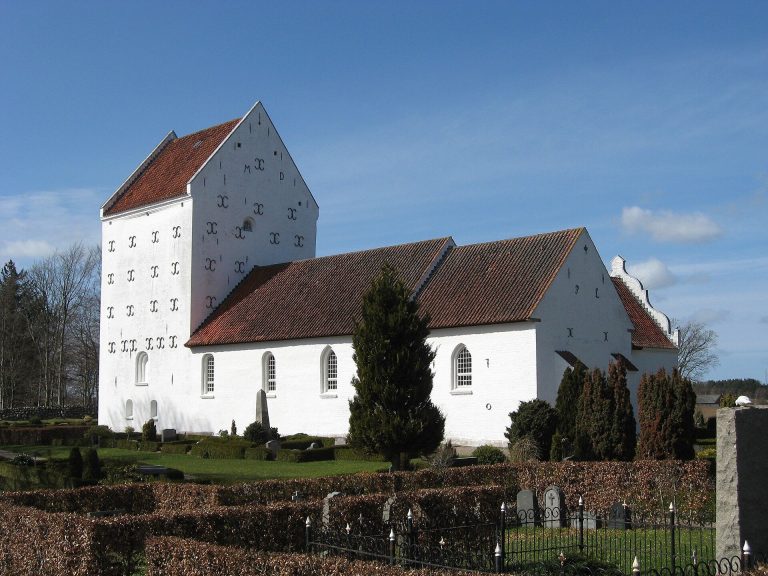
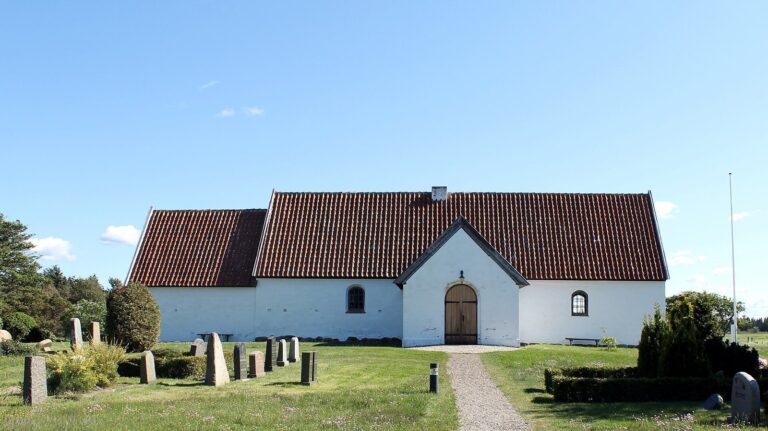
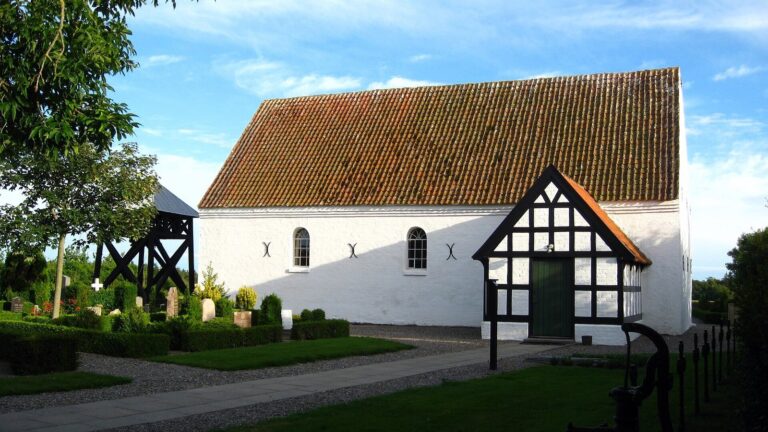
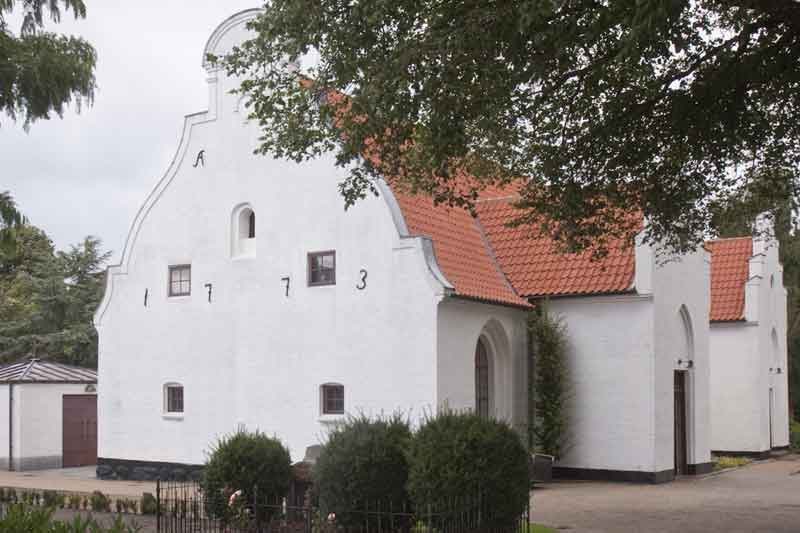
The church’s exterior retains much of its historic form, with masonry walls, a distinctive west gable and two extensions on the south side. The cemetery surrounds the church and spreads across adjoining sections to its north, southeast and east.
Church fabric and exterior
The east gable was rebuilt in masonry in 1749, and part of a side wall was reconstructed in 1767. In 1773, the west gable was rebuilt with the shaped profile it still has. The building reached its present size and form in 1866, when all its walls were made of masonry and two south-side extensions were added. These extensions now serve as a porch and a priest’s room. A bell frame erected in the twentieth century holds a bronze bell cast in 1687.
Interior
Organ and interior alterations
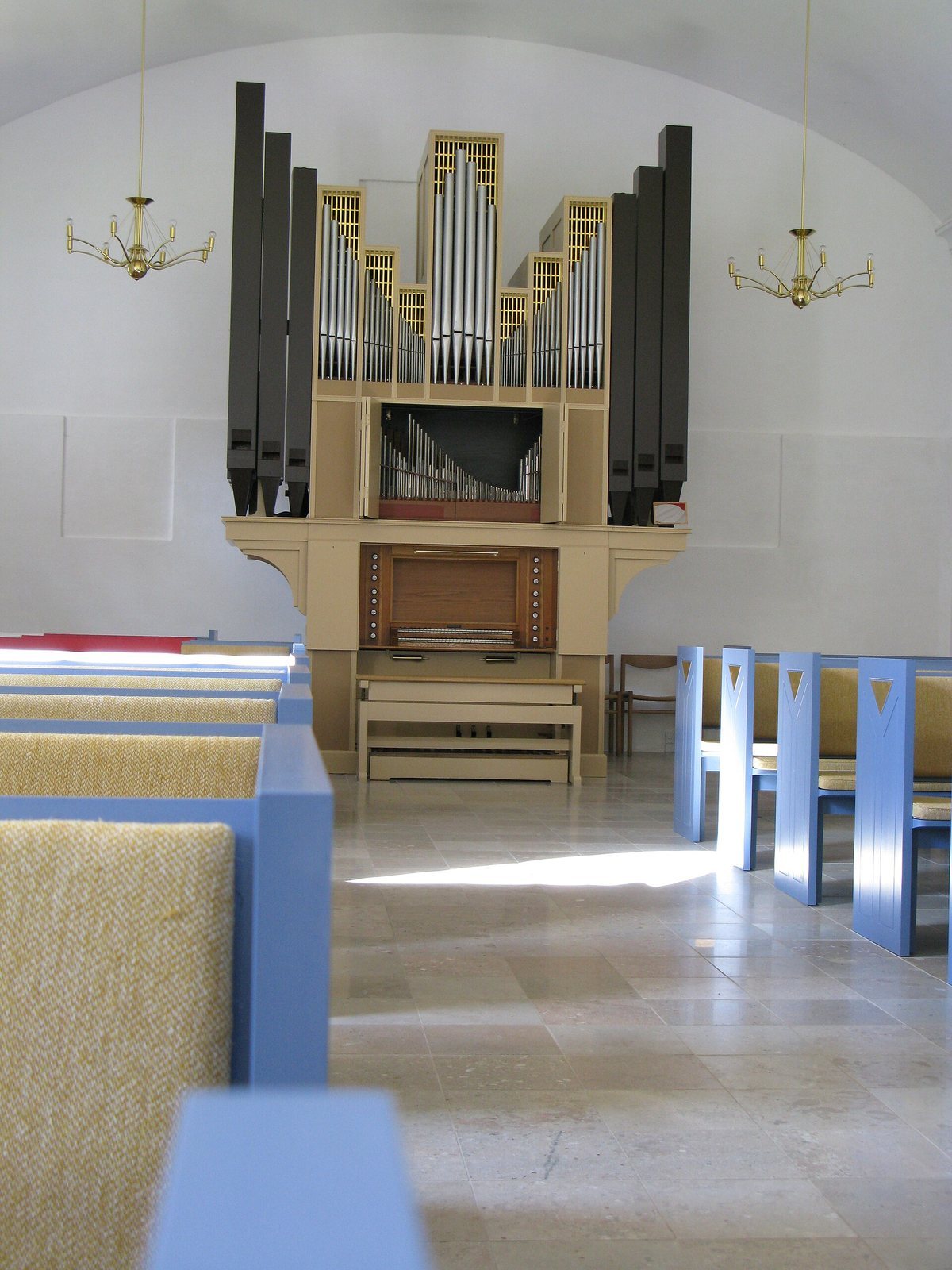
Extensive renovation in 2008 included a rebuilt church hall, a new roof structure and an ancillary building on the north side. The organ gallery and plank walls were removed. An elevated floor made from bricks set on edge was installed for a mechanical slider-chest organ, in which movable sliders direct air to selected groups of pipes. Built by Danish firm Marcussen & Søn, the organ has two keyboards and a pedalboard, and it was renovated during the work.
Altar and furnishings
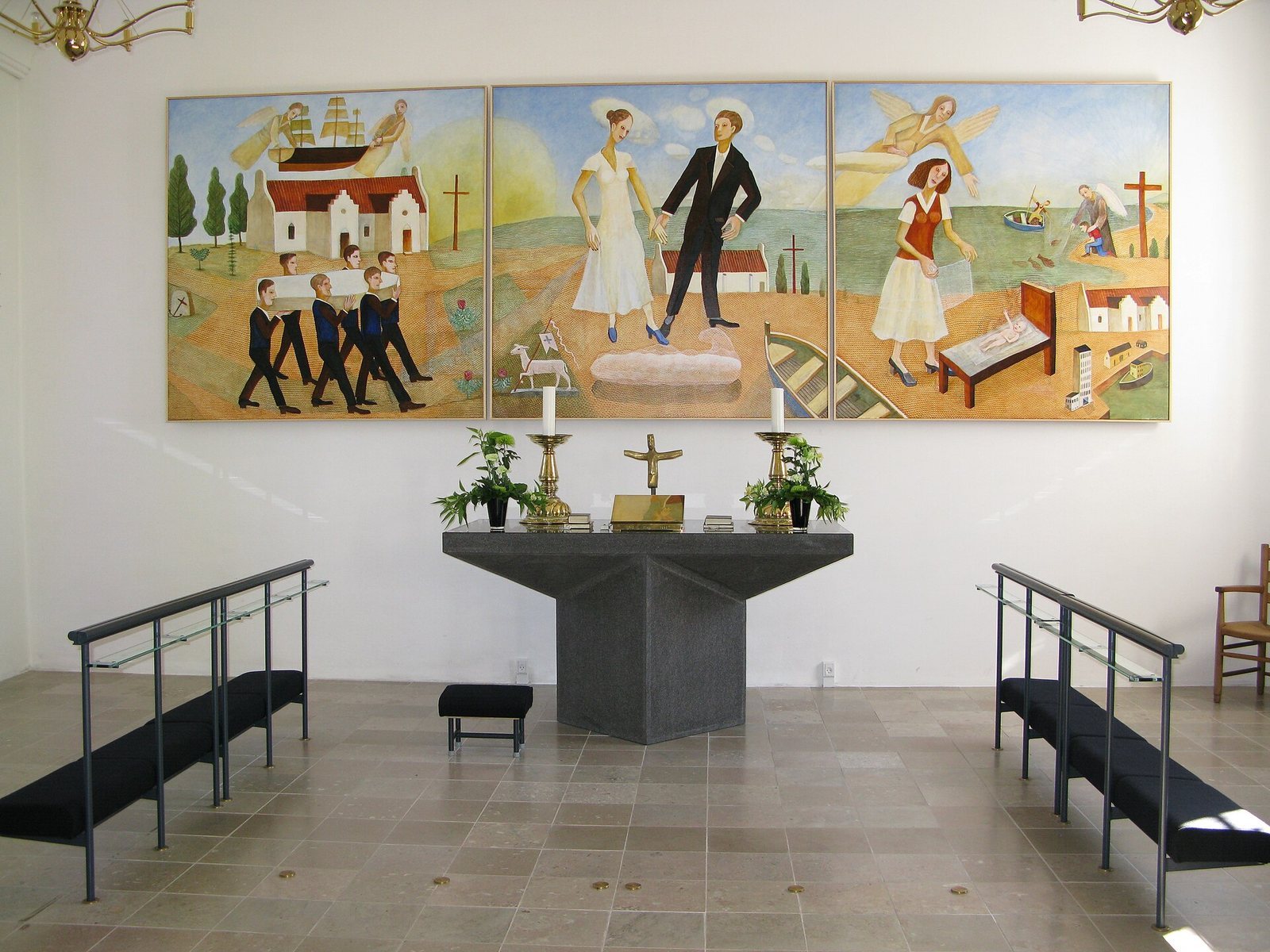
The church received a new altar table, communion rail, pulpit, benches and altarpiece during the 2008 refurnishing, which followed a woodworm infestation. The altar is a block of polished black granite. Finnish-born artist Seppo Mattinen made the altarpiece’s three paintings, which show events associated with the church and include it in the background; he also decorated the pulpit. The previous altar, dated 1868 and depicting Jesus at the Sea of Galilee, was not retained. Pews and a pulpit had been installed in 1943, along with two large wrought-iron candelabra decorated with leaf patterns.
Baptismal font and memorials
A wooden baptismal font, probably dating from the church’s construction, is turned, shaped like a chalice and painted to resemble marble. Two older epitaphs, or memorial tablets, were retained during the refurnishing. Epitaphs in the church date from about 1650 and 1704; one carries a memorial inscription for a married couple who died in 1789 and 1797. Several old gravestones are set into the church walls. During the 2008 work, some stones in the west extension were moved to make space for a toilet, a cleaning room and a cabinet for lighting equipment.
Cemetery
Cemetery sections
The cemetery’s oldest section lies around the church. Later sections extend immediately north of it and farther to the southeast, east and north, forming a larger burial ground around the historic core.
War cemetery
At the cemetery’s northern end, the war cemetery includes a small group of graves and a memorial stone for British airmen killed in the war. A large lawn forms part of the area associated with the German graves.