Messukylä Old Church: A Medieval Church in Tampere, Finland
Site at a Glance
- Popularity
- Medium
- Country
- Finland
- Primary era
- Early Modern
- Eras represented
- Medieval, Early Modern
- Civilizations
- Swedish
- Site type
- Religious
- Remains
- Church
On this page12 sections
History
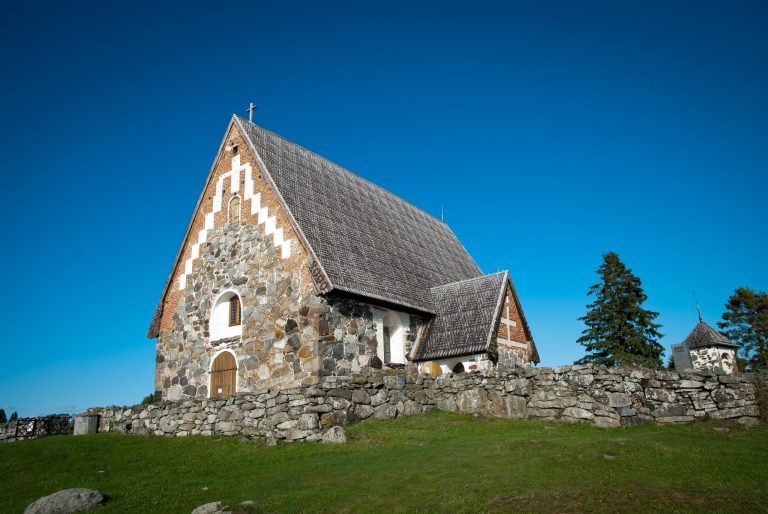
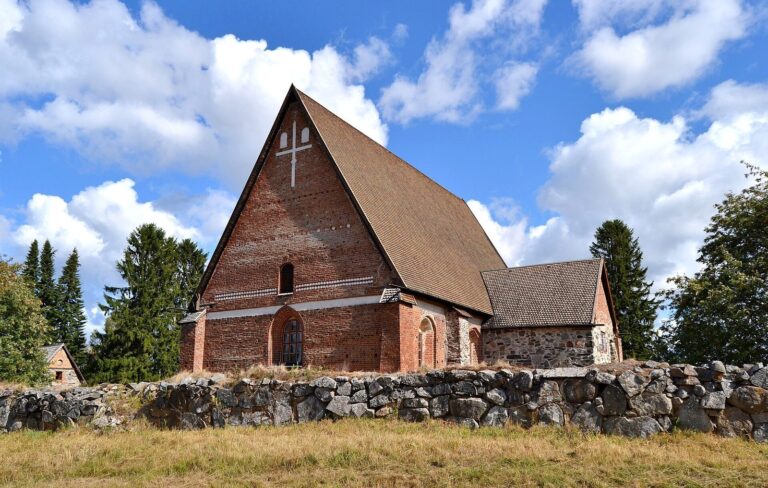
Messukylä Old Church is a medieval church in Tampere, Finland, dedicated to Michael, an archangel in Christian tradition. It is regarded as Tampere’s oldest building. The present stone church was built around 1510–1530, a date indicated by its masonry and windows, and replaced an earlier wooden church.
The medieval church and parish
A wooden church probably stood on the site before the stone building. A surviving choir-screen plank, from a partition marking off the choir, bears the date 1434, which is considered a likely construction date for the wooden church. Records identify Messukylä as a locality in 1439, an administrative parish in 1466, and a chapel parish in 1540. It was part of Pirkkala parish before becoming independent in 1636.
Early modern use and alteration
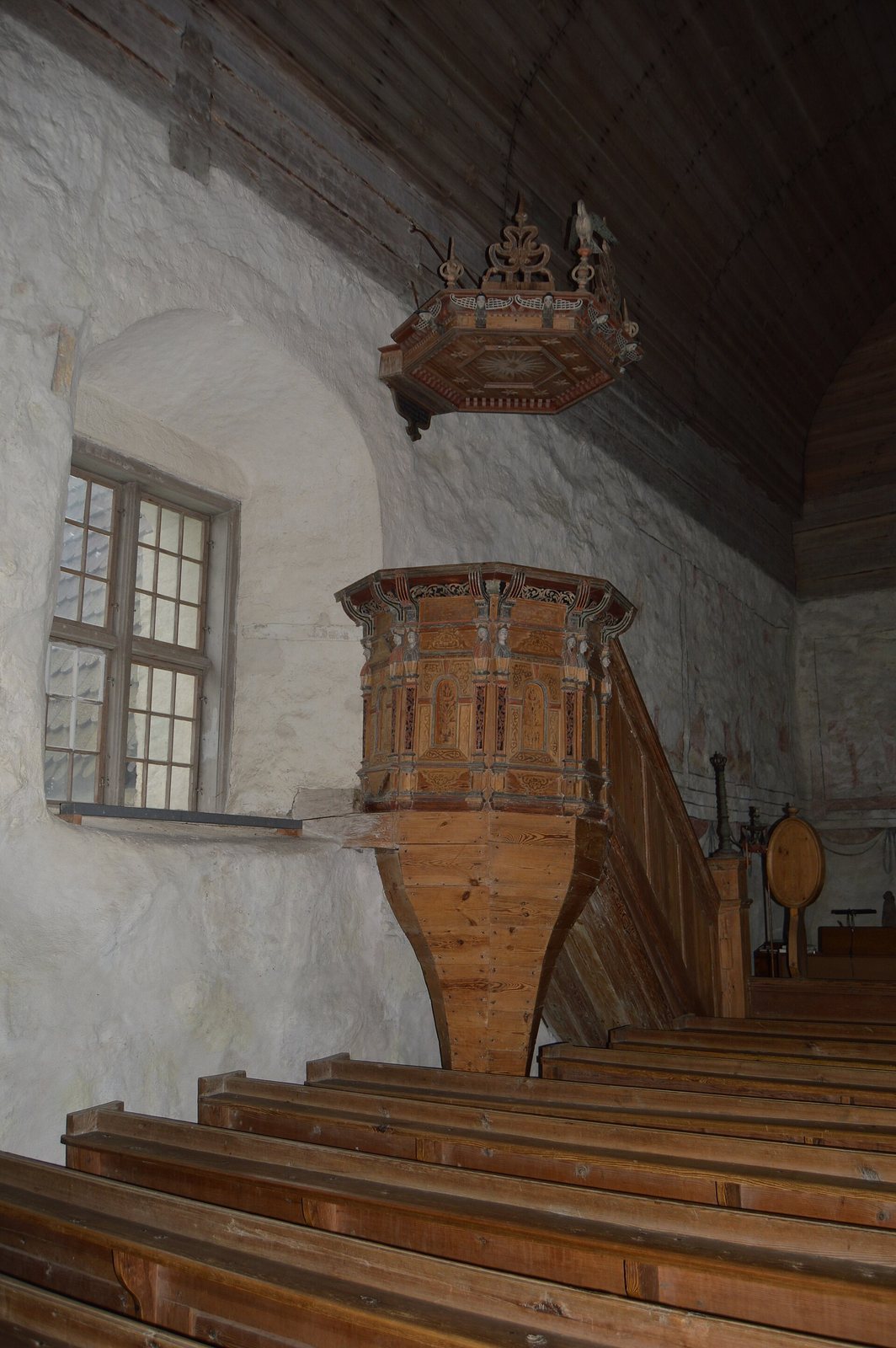
The church was renovated in the mid-seventeenth century, when its walls were painted. Lime later covered the paintings. Governor E. J. Creutz, a regional official acting on behalf of the Crown, donated the pulpit during the seventeenth century.
From the late seventeenth century into the early nineteenth, the church grounds served as an army drill ground. Gustav III, King of Sweden from 1771 to 1792, inspected troops there in 1775. The church underwent major repairs in 1796–1797 under master builder Matti Åkerblom. A bell tower was built beside it during this phase. The last burial beneath the church took place in 1793, while burials in the churchyard continued until 1860.
Changed use and restoration
A new brick church was built nearby in 1879. After a final service on Judgment Sunday, the old church ceased to be used for worship. Its bell tower was dismantled for material for the new building, and the church itself was used as a hay barn, stable, and storehouse for grain intended for the poor. Repeated requests for repairs by parish vicar K. Olander were followed by work on the church in 1907.
In 1956, Tampere’s church council chose to restore the building using plans by architect Paavo Riihimäki, prepared with the Finnish Antiquities Commission. The restoration took place in 1958–1959. The Tampere Parish Union has owned the church since 1948. It now serves as a church of the Messukylä parish within the Tampere Parish Union and the Evangelical Lutheran Church of Finland.
Remains
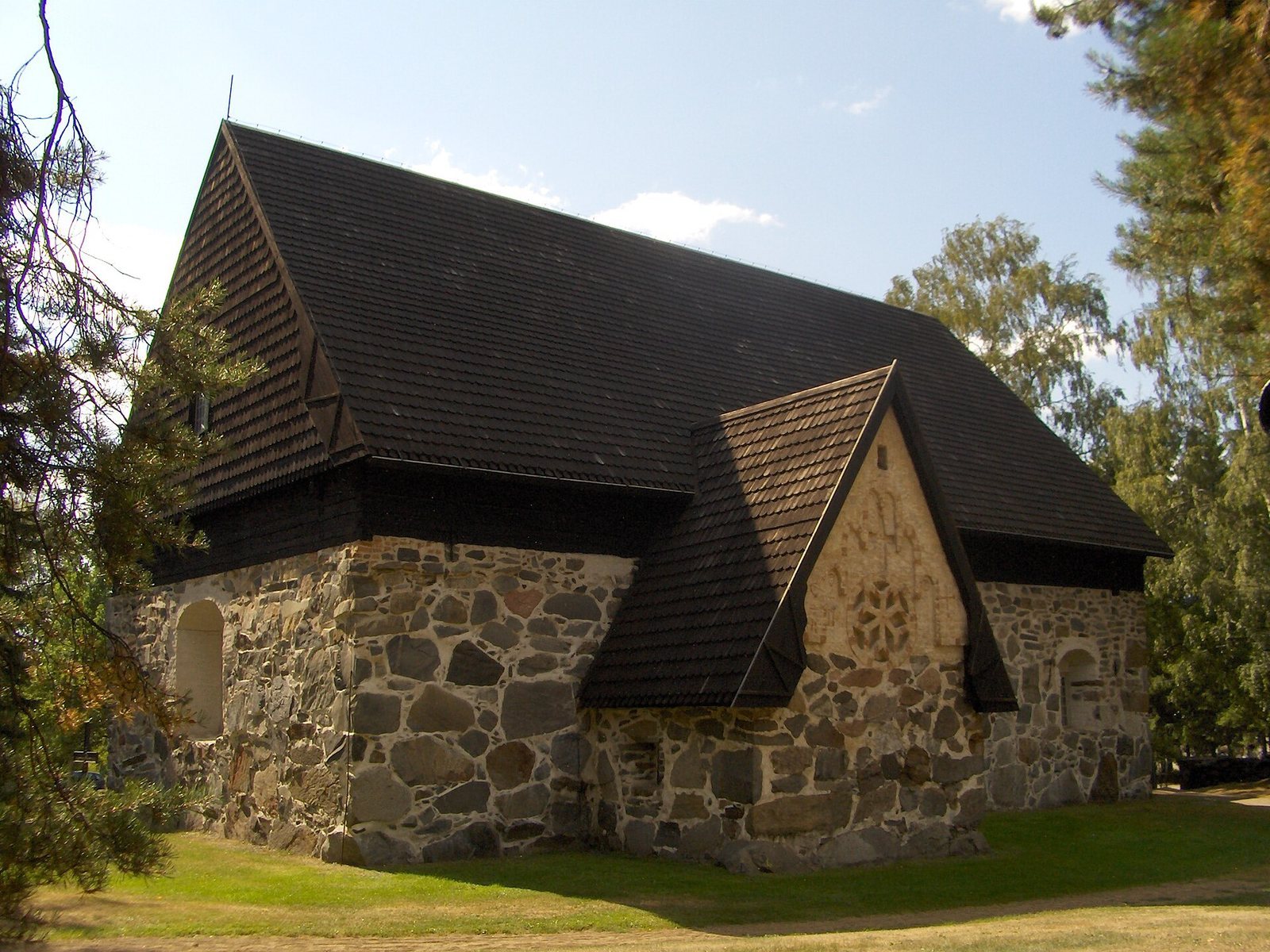
The church is built of gray fieldstone, in a form characteristic of medieval churches in Satakunta and Finland. Its prayer space is oriented east to west, and the entrance is at the western end. The surviving building brings together medieval fabric and later alterations.
Building fabric and layout
The church and sacristy
The sacristy on the north side is the oldest standing part of the church and dates to the late fifteenth century. It appears not to have been added to the earlier wooden church. A cross and a rosette decorate its gable.
Later alterations
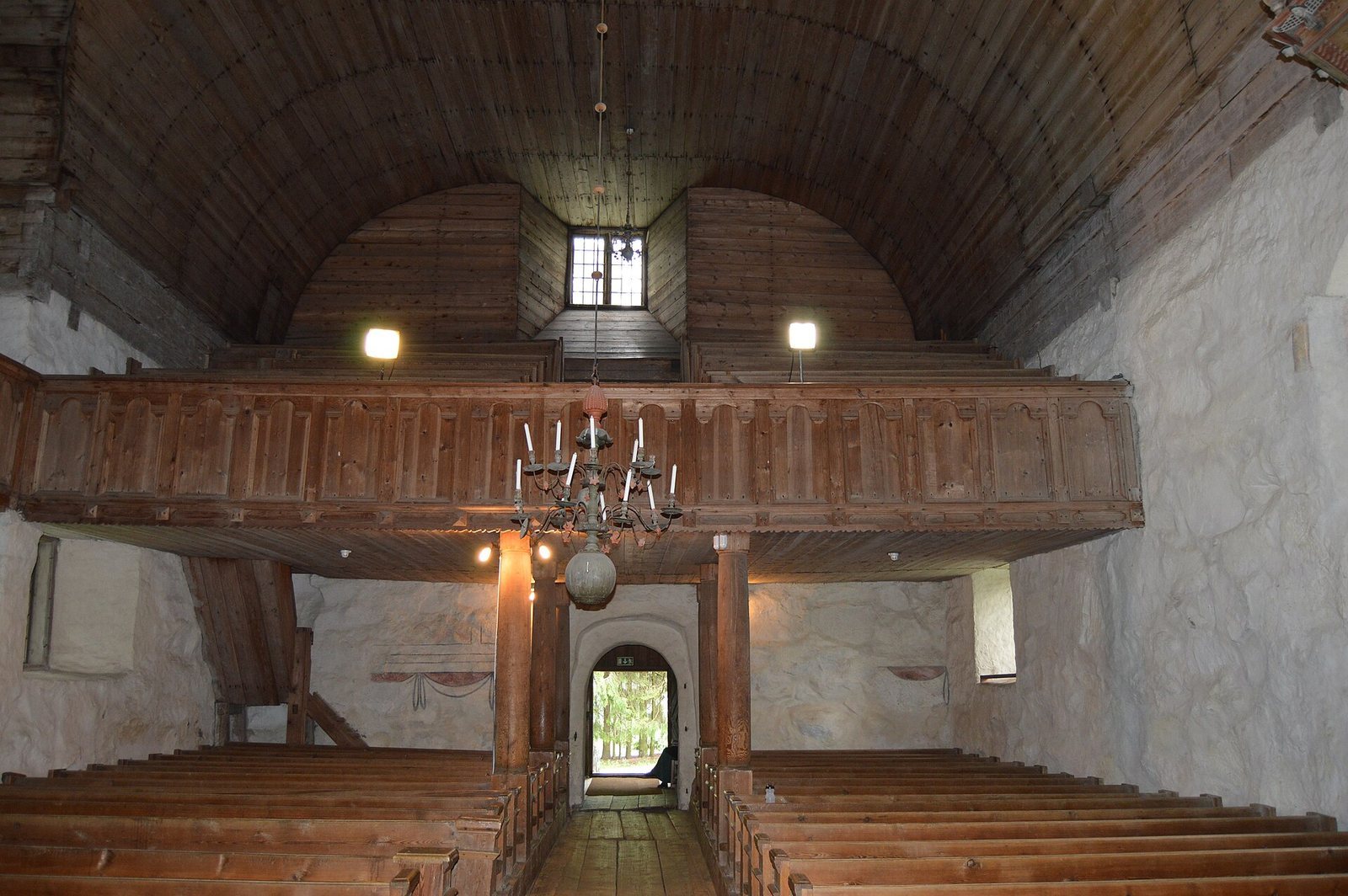
During the repairs of 1796–1797, the walls were raised by two courses of logs, and the formerly flat ceiling was replaced with a barrel vault, a continuous curved ceiling shaped like half a cylinder. The former porch was incorporated into the church as a side sacristy, and a new vestibule was added. The church bells are now kept in the vestibule. Stonework on the façade was restored in 2020.
Interior furnishings and paintings
Carvings and crucifix
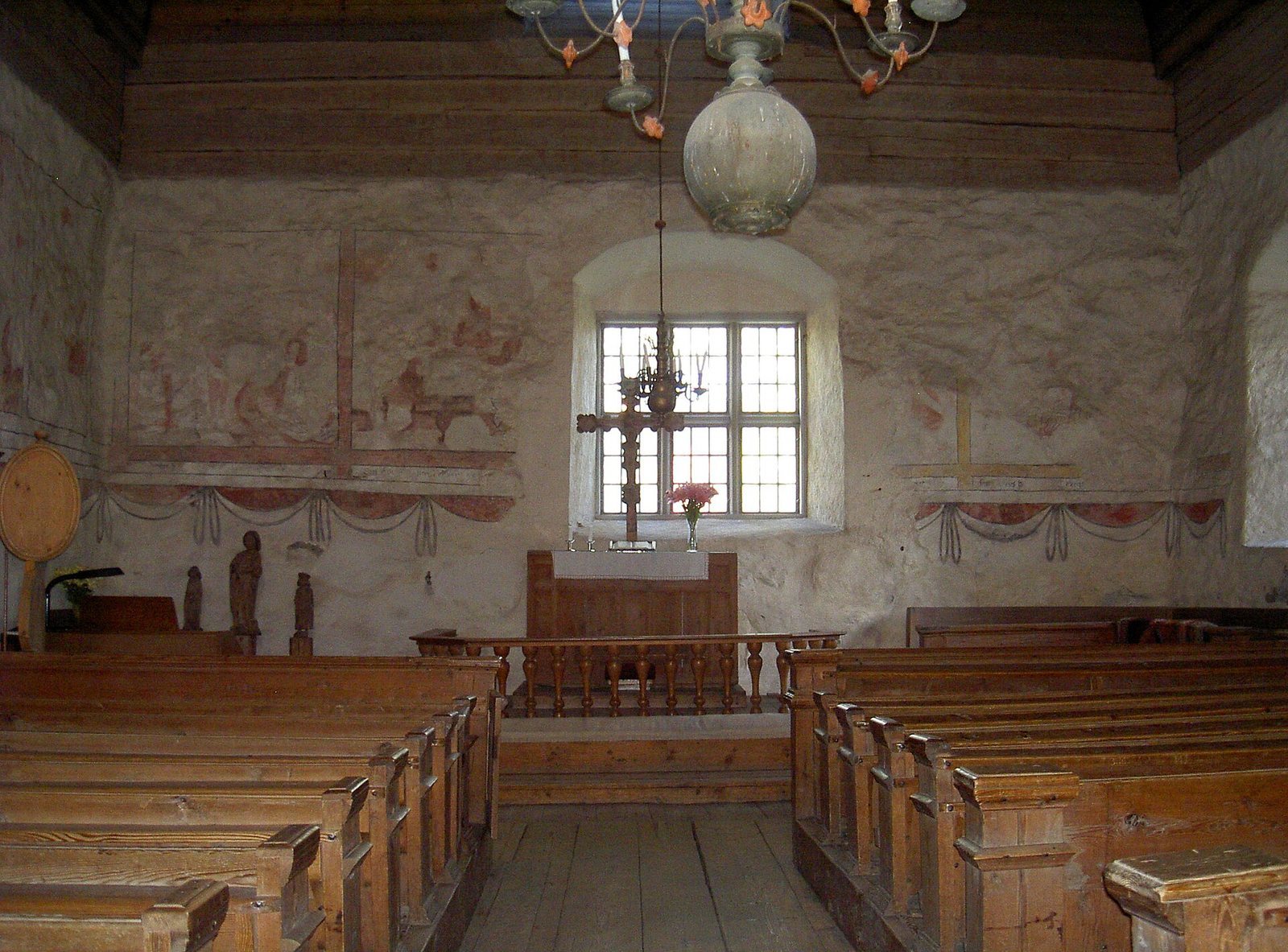
Five wooden carvings from the 1430s or 1440s are associated with the church. One depicts the Virgin Mary and is now in the National Museum of Finland in Helsinki; the other four remain in the church. Among them is a carving of Michael, while two are thought to represent Saint Olaf and the apostle Saint James. A triumphal crucifix, a large crucifix associated with the choir, was moved from above the choir screen to the altar table.
Pulpit
The seventeenth-century pulpit donated by E. J. Creutz has wooden inlay decoration and is described as unique in Finland.
Wall paintings
Fragments of the wall paintings survive beneath the lime coating that once covered them. Removing the coating during restoration exposed the painted sections again, and the cracked rear wall was bricked up.