Klein-Bijgaarden Castle: A Former Priory and Family Estate in Belgium
Site at a Glance
- Popularity
- Low
- Country
- Belgium
- Primary era
- Modern
- Eras represented
- Modern
- Civilizations
- Belgian
- Site type
- Domestic
- Remains
- Castle
On this page7 sections
History
Klein-Bijgaarden Castle, also known as Kasteel Wittouck, is a former priory estate and family castle in Belgium. Its history began with a Benedictine community and continued through its conversion into a private estate and later religious use.
The priory and its rebuilding
A Benedictine priory, a monastic house led by a prioress, was established here in 1251 as a continuation of a Bernardine monastery founded at Pepingen in 1235. Bernardines were Cistercians, a monastic order within the Benedictine tradition. The nuns drained marshland to make it suitable for cultivation.
Religious conflicts in the second half of the sixteenth century destroyed the priory. It was rebuilt in the early seventeenth century, then suffered damage in a fire in 1745.
Suppression and the Wittouck estate
French authorities suppressed the priory in 1796. The 1797 Treaty of Campo Formio ended the War of the First Coalition between France and Austria and confirmed French gains in the Austrian Netherlands. The estate was nationalized and offered for public sale in 1800. On 18 May that year, senior magistrate Guillaume Wittouck bought its 100 hectares for 45,000 francs and turned the former priory into a family castle. Many buildings were demolished, while service buildings and the watermill were adapted for industrial use.
Guillaume’s son François, mayor of Leeuw-Saint-Pierre, was at the castle when Russian occupation troops arrived in 1814. The force included Cossacks, members of military communities that served the Russian Empire. After occupying the estate, the troops beat François to death with a knout, a whip used in Russia for corporal punishment. His son Félix-Guillaume later rebuilt the castle and enlarged it.
Later uses
In 1932, much of the estate was sold to a property developer and divided into smaller parcels. Jacques Wittouck sold the castle to the Scheut Fathers on 14 November 1941. The congregation, a Catholic missionary order, used it for missionary work, including as a novitiate, a house for religious formation. By 1971 it served as a retirement home for elderly missionaries. The castle received protected status in 2021.
Remains
The former priory and the later castle form the main architectural groups of the estate. The grounds lie in a park crossed by the Zuun, a tributary of the Senne.
The castle
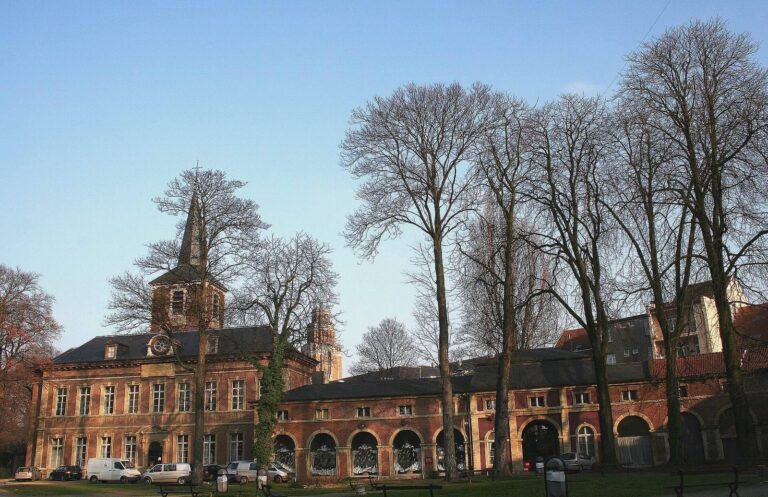
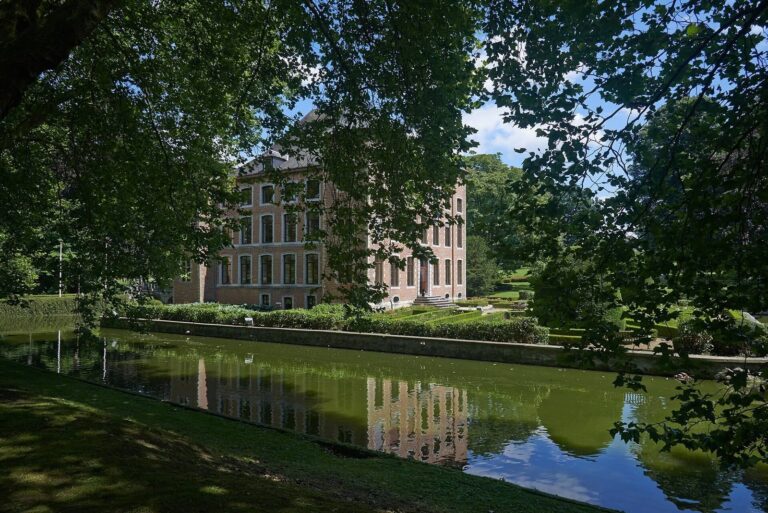
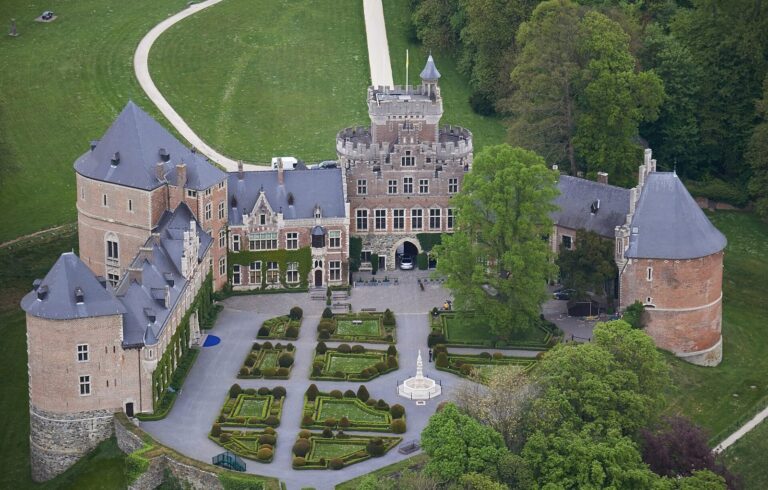
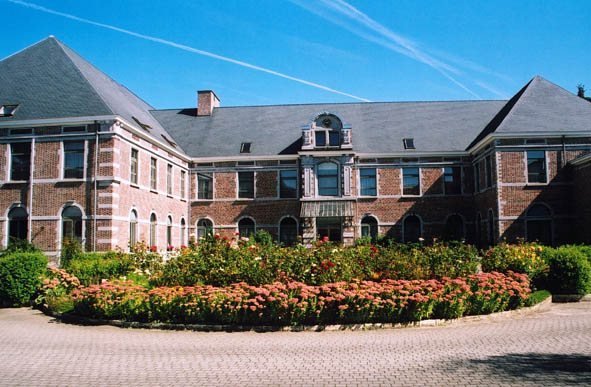
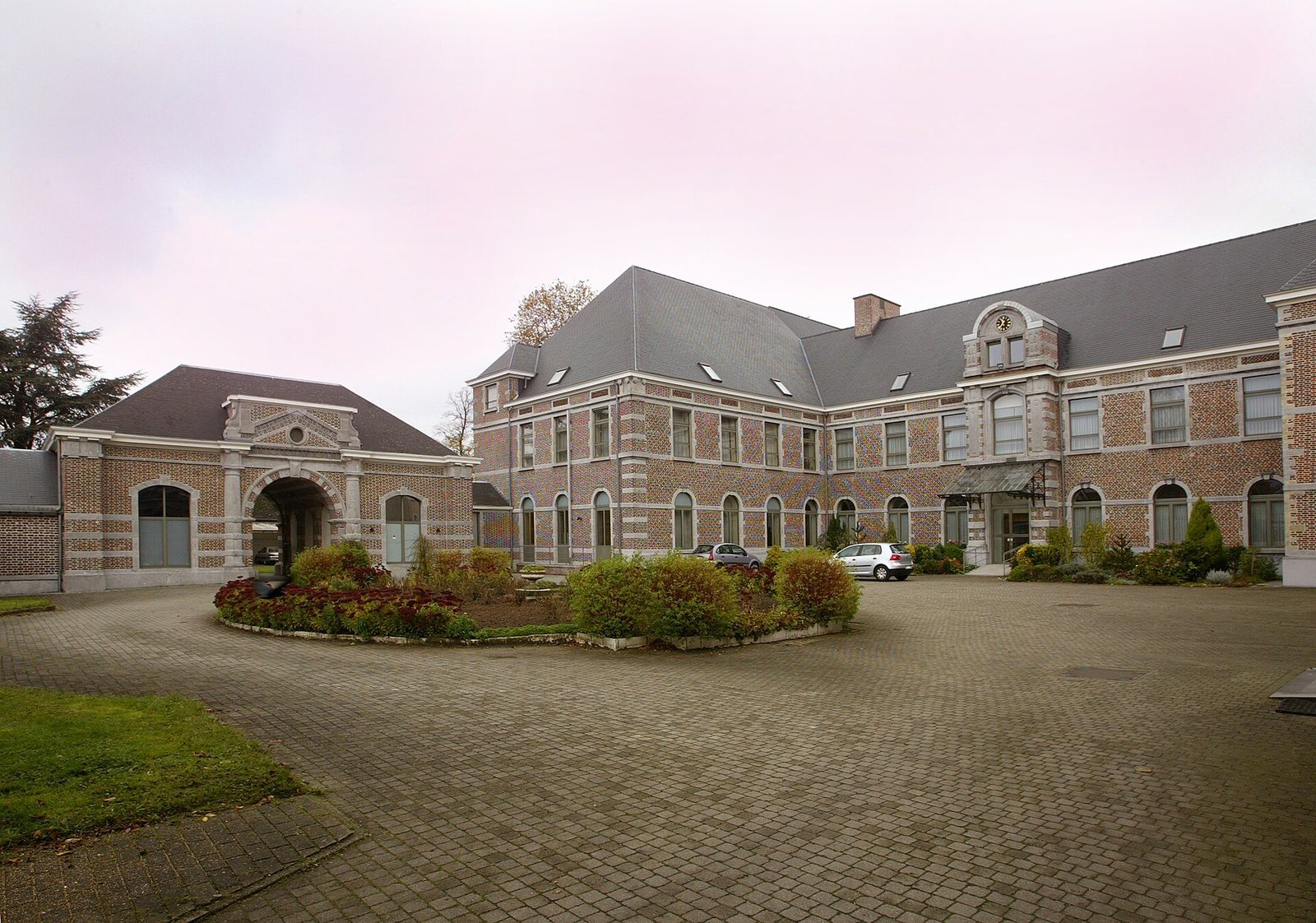
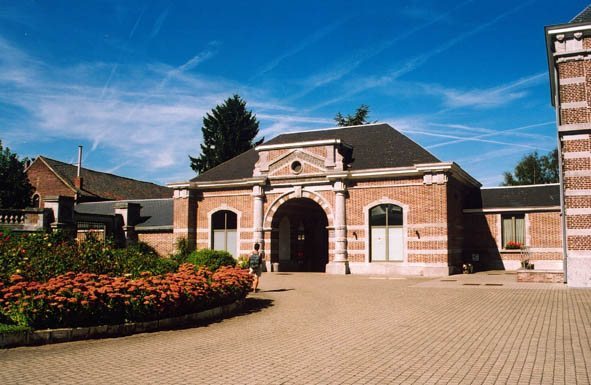
Built over the priory’s foundations in 1865–66, the castle is a U-shaped brick structure with an eclectic design and a predominantly neoclassical character. Its wings were designed by the nineteenth-century Belgian architect Henri Beyaert. The estate’s outbuildings were converted into pavilions.
The priory and service buildings
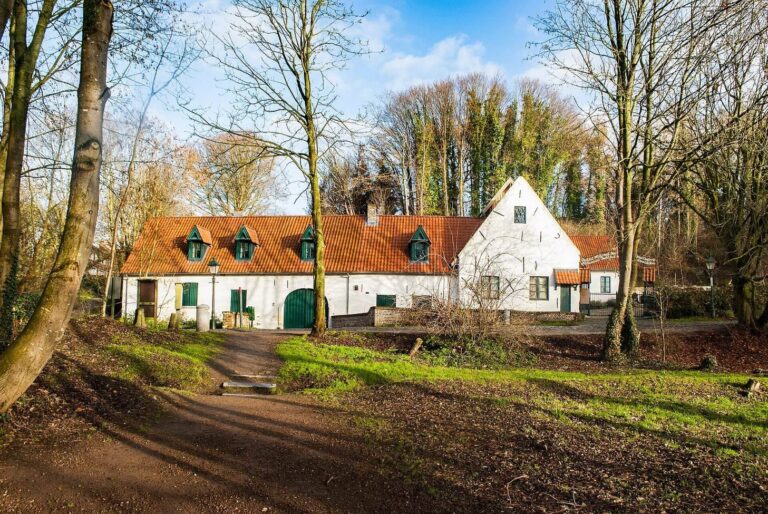
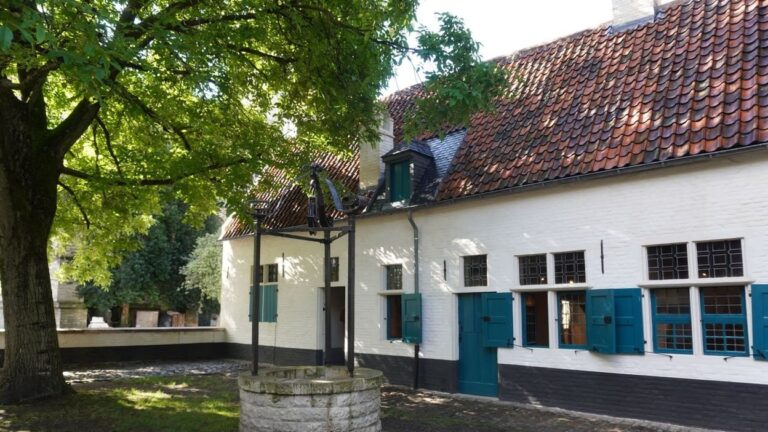
The former priory complex included a farm and a watermill on the Zuun. Its chapel and chapter house were rebuilt after the 1745 fire; the chapter house was where the monastic community met for readings and administrative business. Former service buildings were adapted for oil pressing and genever distilling. Genever is a juniper-flavoured spirit associated with the Low Countries.