Paimio Church: A Seventeenth-Century Parish Church in Finland
Site at a Glance
- Popularity
- Medium
- Country
- Finland
- Primary era
- Early Modern
- Eras represented
- Early Modern, Modern
- Civilizations
- Grand Duchy of Finland, Russian, Swedish
- Site type
- Religious
- Remains
- Church
On this page11 sections
History
Foundation and parish
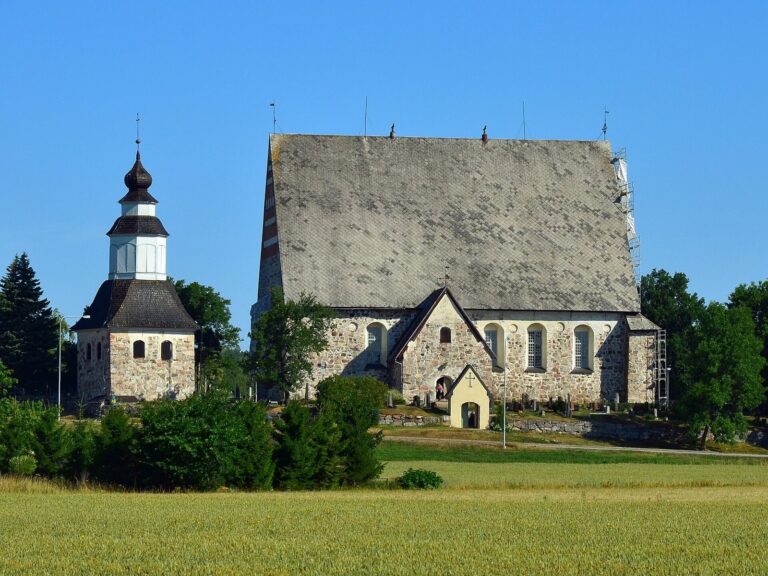
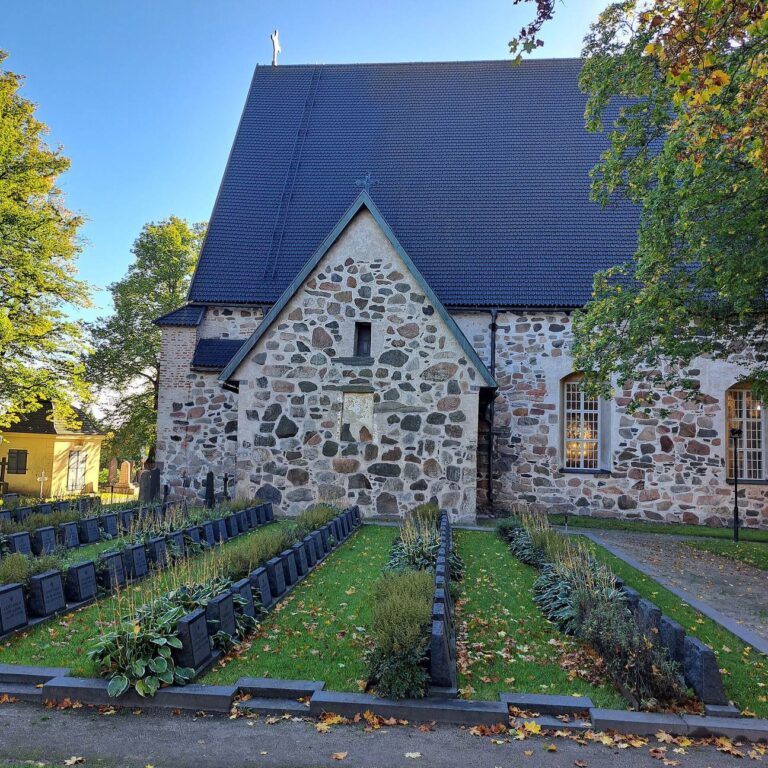
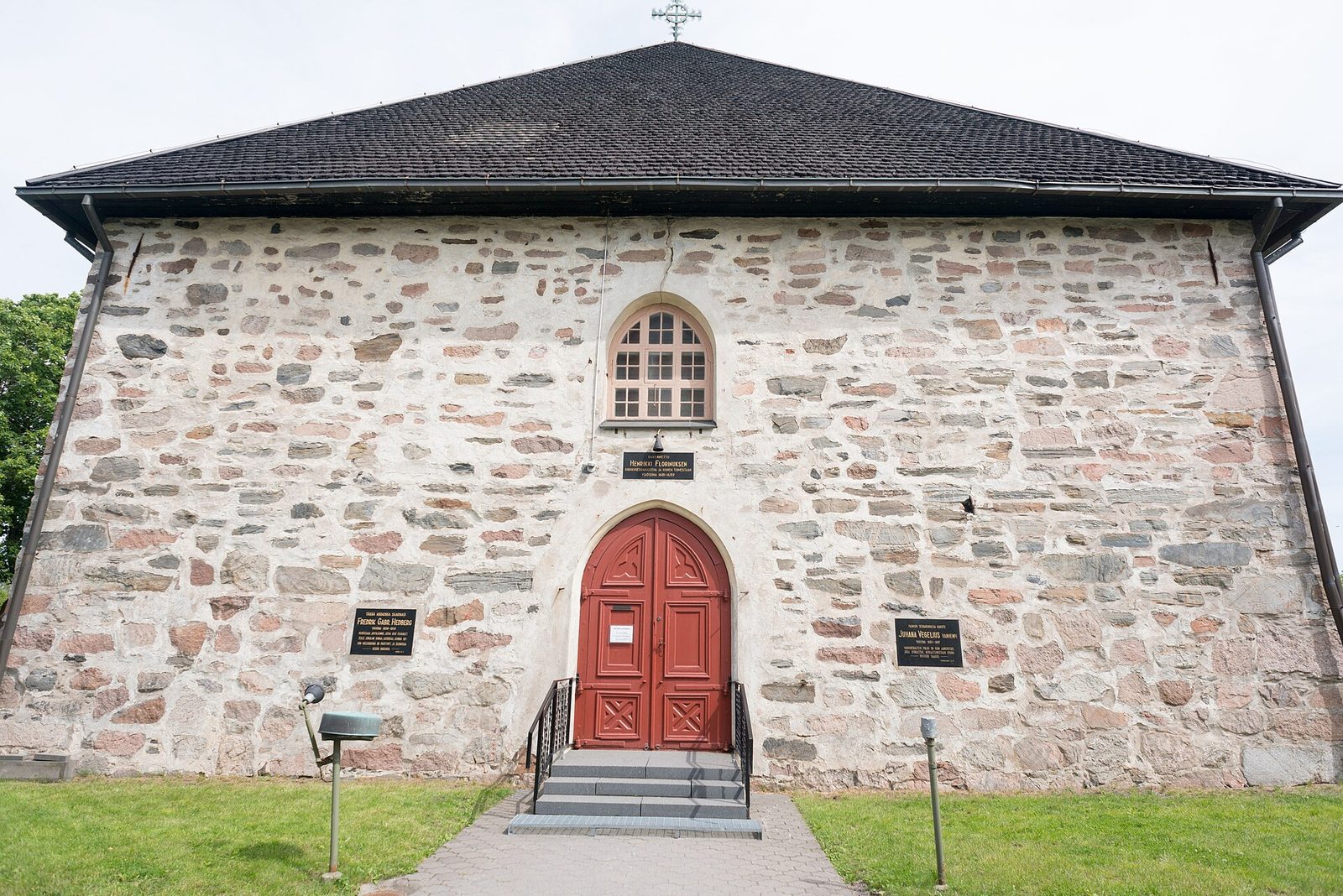
Paimio Church, also known as St Michael’s Church, is a grey-stone parish church in Paimio, Finland. Built in Vistan village between 1681 and 1689, it was consecrated on Christmas Eve 1689 by Bishop Johannes Gezelius the Younger, a Finnish Lutheran bishop. The church belongs to the Evangelical Lutheran Church of Finland, the country’s national Lutheran church, and the Turku Archdiocese, a regional church district. It is one of two churches in the Paimio area; St James’s Church in Hevonpää was consecrated in 1928.
Repairs and later changes
The church underwent repairs in 1750, 1863, 1904, and 1974, as well as a restoration in 1952. During the 1863 work, a wooden barrel-shaped ceiling was replaced by a neo-Gothic ceiling with sloping planes, following plans by provincial architect Pehr Johan Gylich. Electricity was installed in the mid-1920s, and central heating replaced stove heating in 1960.
A major renovation included repainting the interior in colours based on eighteenth-century tones. Archbishop Martti Simojoki, the senior bishop of the archdiocese, reconsecrated the church on Epiphany in 1975, when the parish marked its 650th anniversary. The Finnish Heritage Agency includes Paimio Church among Finland’s nationally significant built cultural environments.
Remains
Main church building
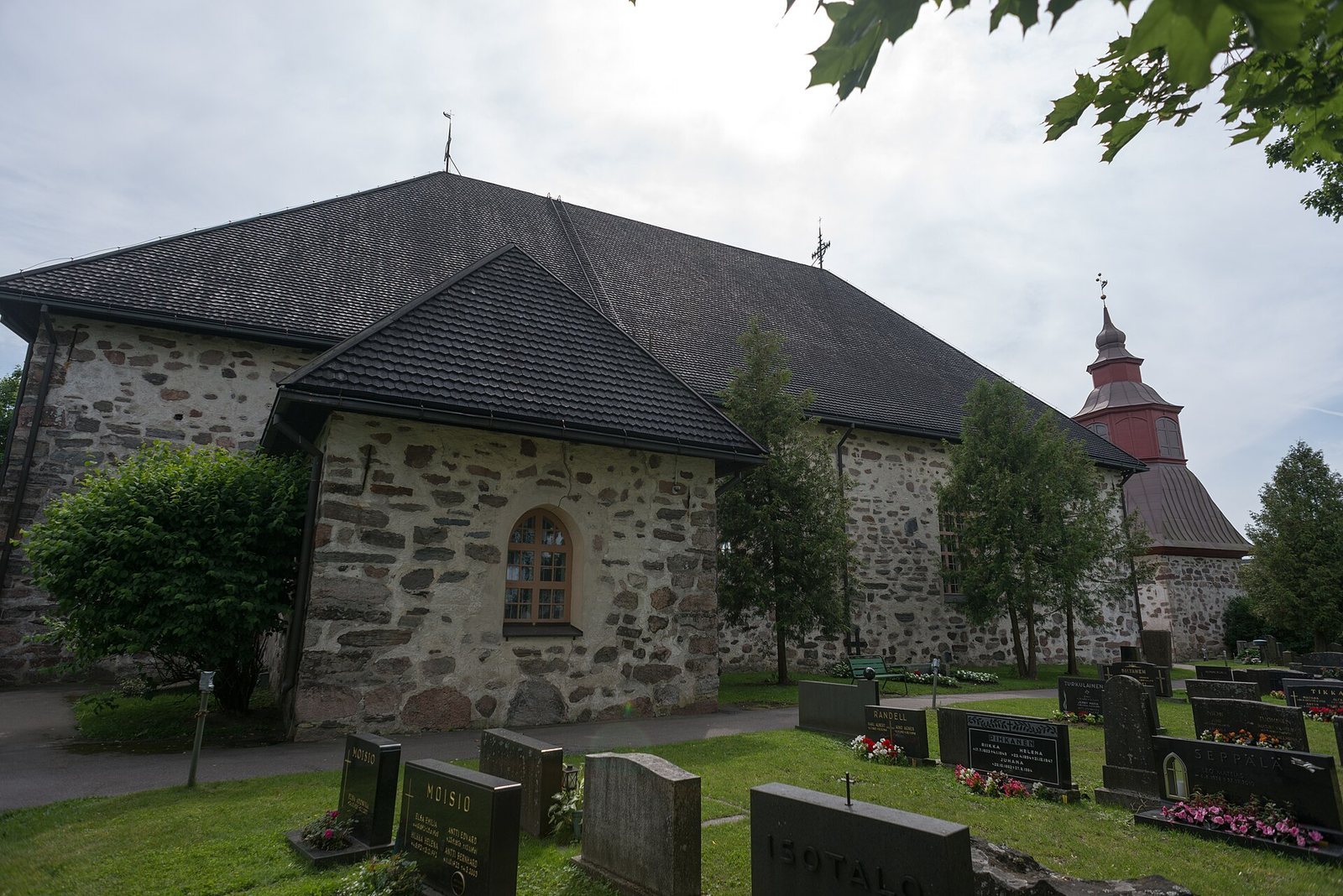
The church is a towerless, single-nave long church, arranged along its main lengthwise axis. Its broad hall was probably intended to have three aisles. Built of grey stone, the building covers 886 square metres and has seating for about 600. A sacristy, used for clergy and worship preparations, projects from the north side, while a porch on the south side historically served for storing weapons. The exterior has high hipped roofs, and the interior ceilings have sloping planes. The windows and some door openings have pointed arches.
Bell tower
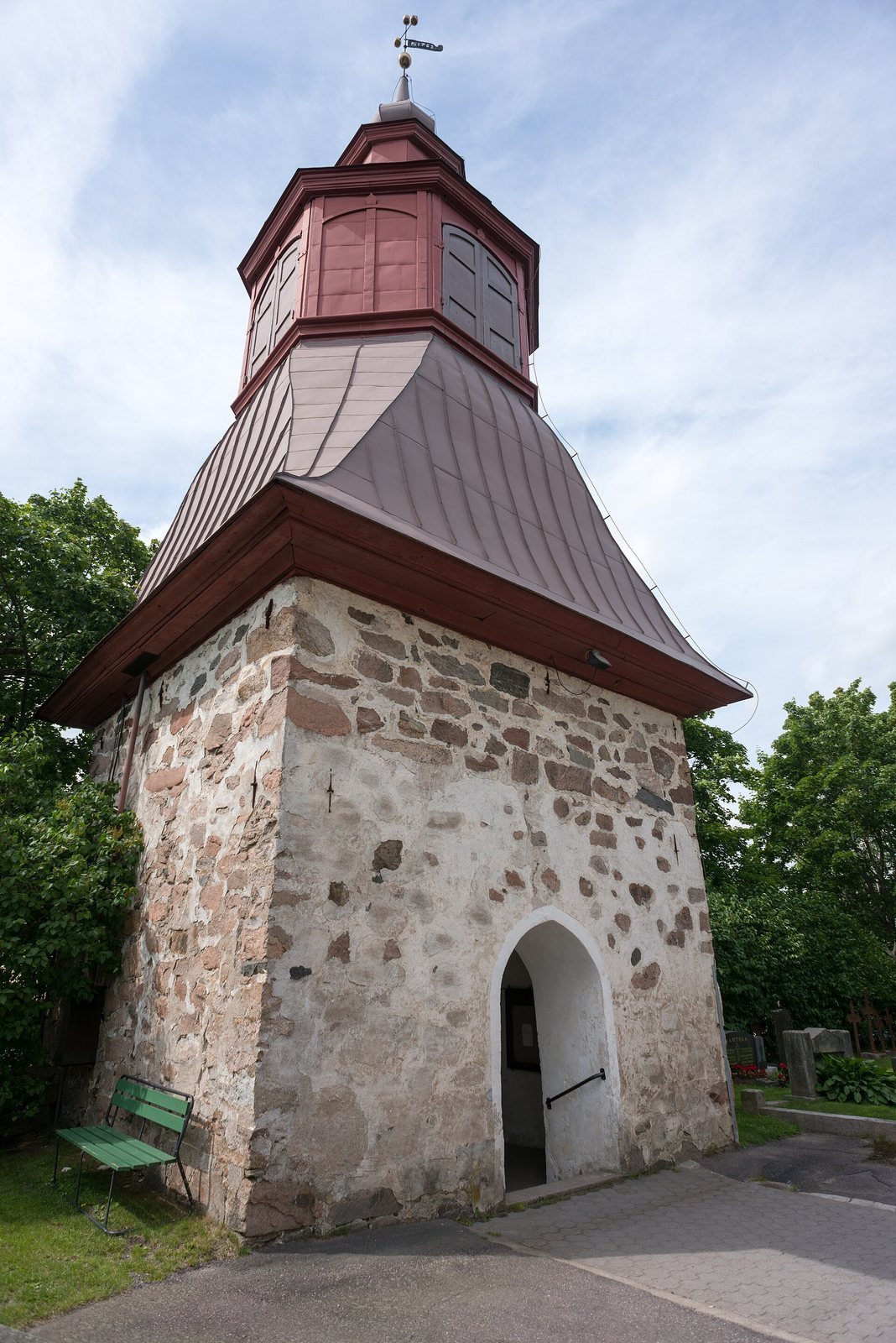
The separate bell tower was built at approximately the same time as the church. Its stone lower section was repaired in 1730. In 1768, the tower was renewed and its stone base raised under Antti Åkerblom’s direction; Mikael Blomgren supervised construction of the present wooden upper section. The roof and exterior paintwork were renewed later. Three bells hang in the tower: the oldest and heaviest was cast in Sweden in 1792 and weighs 700 kilograms; an Austrian bell from 1968 weighs 400 kilograms; and a Dutch bell from 1987 weighs 285 kilograms.
Interior furnishings and artworks
Altarpiece and paintings
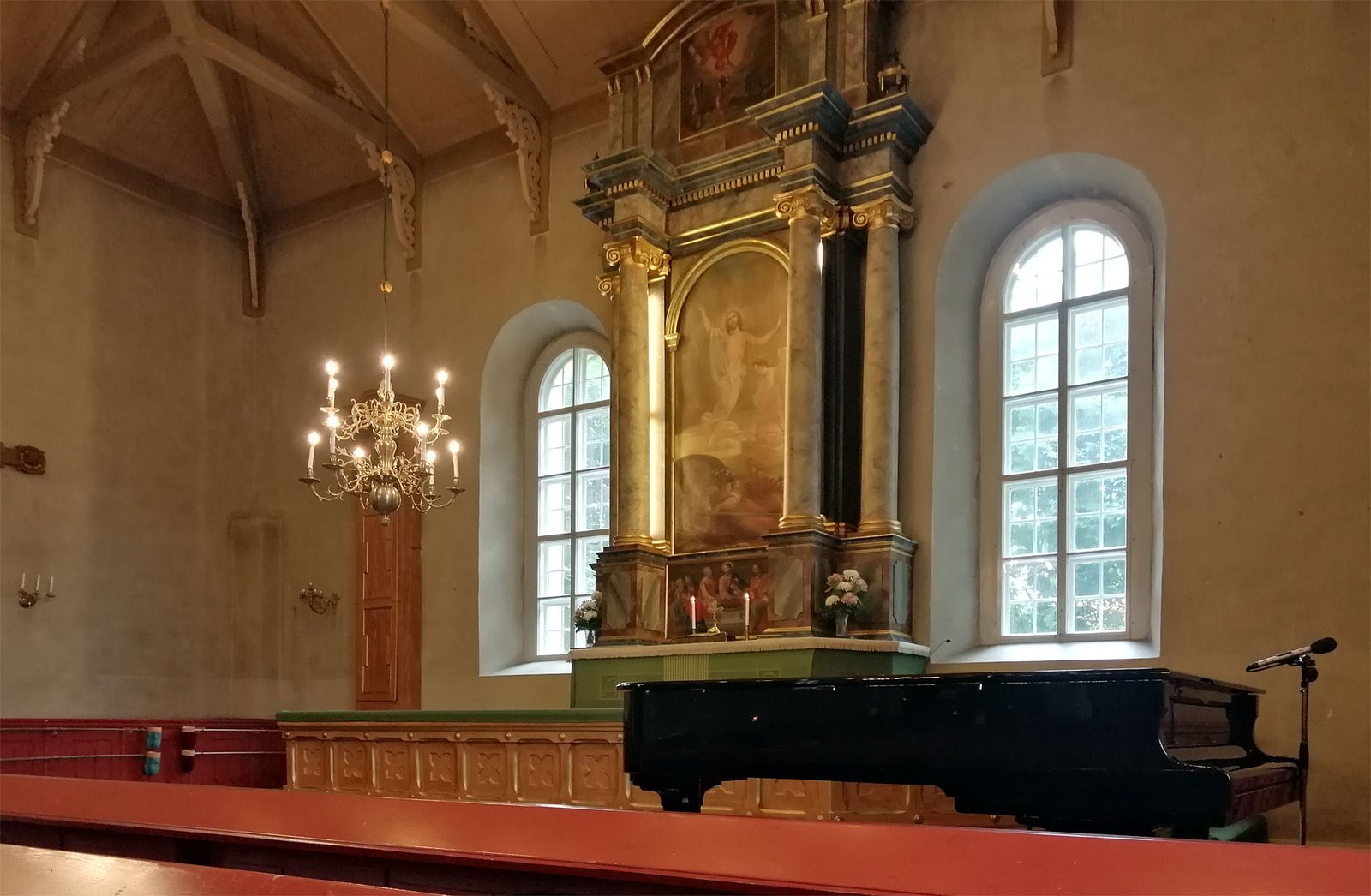
Most of the church’s paintings date from the 1750s and are by Jonas Bergman. Twenty images decorate the organ-gallery railing, while the pulpit’s side panels show Jesus, Peter, James, and Paul. The altarpiece doors depict James and Paul. Samuel Berner designed an altarpiece frame in 1755. Its lower panel, showing Holy Communion, was painted by Bergman in 1865. A 1755 painting of Christ on the Cross by Johan Georg Geitel was moved to the choir and replaced with Robert Wilhelm Ekman’s Resurrection, painted in 1865. The upper section also shows the Resurrection and is thought to be Bergman’s work. The church’s paintings and sculptures were restored in 1952–1953.
Other furnishings
A limestone baptismal font and an altarpiece were brought from the abandoned Räpälä Church when Paimio Church was completed. The wooden triumphal crucifix, traditionally displayed at the opening to the sanctuary, was probably acquired in the mid-eighteenth century. A five-metre-longcase clock dates from the 1750s. Some bronze chandeliers and wall sconces are also eighteenth-century pieces; three chandeliers purchased from Turku Cathedral in 1863 cost 94 rubles in total. One hymn-number board, attached to the cantor’s chair, was made by Aarre Aaltonen in 1944. Another, beside the pulpit, was made by glassmaker F. I. Foeder in 1802. Heraldic panels for the Armfelt and Gisselgors families, drawn by Reijo Helläkoski, date from 1995; a panel for the von Cräutlein family followed in 1999. An earlier Jägerhorn af Spurila family panel commemorates people buried at the church.
Organ
The first organ, built by Jens Zachariassen in 1878, had 13 stops, controls for groups of pipes producing particular tones. It was transferred to Tuupovaara Church in 1952. A replacement with 32 stops was built in 1951 by the Kangasala Organ Factory. Its façade is formed by pipes arranged decoratively.
Textiles
The Martha Organization, a Finnish association focused on household education, gave the church a wedding rya, a pile-textured woven textile, in 1960. Irmeli Grönlund designed it, and Lempi Kivinen wove it. From 1974 to 1978, Elli Korppi-Tommola restored liturgical garments and made new altar textiles and chasubles, sleeveless outer garments worn by priests during the Eucharist. Chasubles dating from 1840, 1862, and 1940 were repaired for continued use. A green altar cloth designed by Hannele Uotila and woven by Tuija Muntola was added in 1999. A restored chalice cloth from 1815, a textile used with a communion cup, is held in the museum associated with Turku Cathedral.