Turó de ses Abelles: A Talayotic Trading and Production Settlement in Mallorca
Site at a Glance
- Popularity
- Very Low
- Country
- Spain
- Primary era
- Classical
- Eras represented
- Classical
- Civilizations
- Unclassified
- Site type
- Economic
- Remains
- Production Complex
On this page12 sections
History
Turó de ses Abelles is a Talayotic archaeological settlement in the Puig de sa Morisca Archaeological Park at Santa Ponça, Mallorca, Spain. The Talayotic period was a prehistoric culture of the Balearic Islands, known especially for megalithic architecture. The settlement belongs to its late phase, around 200–123 BC, within the second Talayotic period, which extended from the eighth century BC to Rome’s conquest of Mallorca in 123 BC. Its coastal position supported an unusual commercial role, connecting imported goods with communities elsewhere on the island.
Trade and local economy
The bay offered a landing place, while a nearby lagoon provided fishing and hunting resources and shelter for boats. The settlement became a center for storing, exchanging, and distributing goods from the Punic world, associated with Carthage and the western Phoenicians. Wine arrived in amphorae, large containers used to transport goods, and other goods were exported. The quantity of imported wares appears to have exceeded what the local population needed, pointing to a role in supplying other Mallorcan communities. Indigenous inhabitants and foreign traders may have lived together there.
People at the settlement cultivated nearby land and fished in the lagoon, alongside craft and processing work. Their activities included milling grain, weaving, and metalworking; washing and dyeing wool may also have taken place. Iron-ore nodules found naturally in nearby ground may have been exchanged with Punic merchants.
Excavation and later landscape
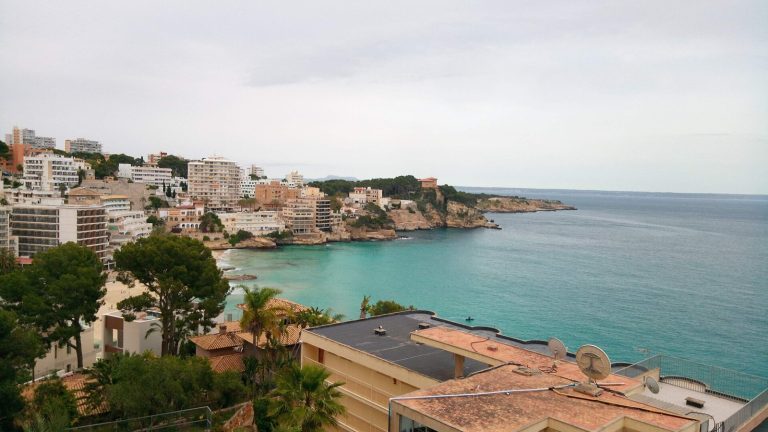
Excavations began in 1968 under archaeologists Joan Coll Camps and Antoni Vallespir Bonet and continued during several summers. An earlier interpretation of the site as a funerary place was later rejected. From the 1960s, the surrounding coastal estate was developed for housing and beach tourism, and the remains now lie within a golf course.
Remains
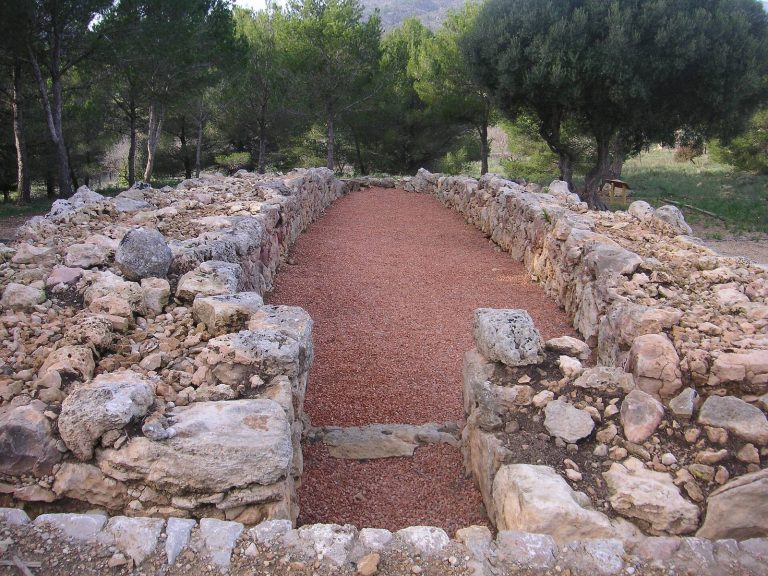
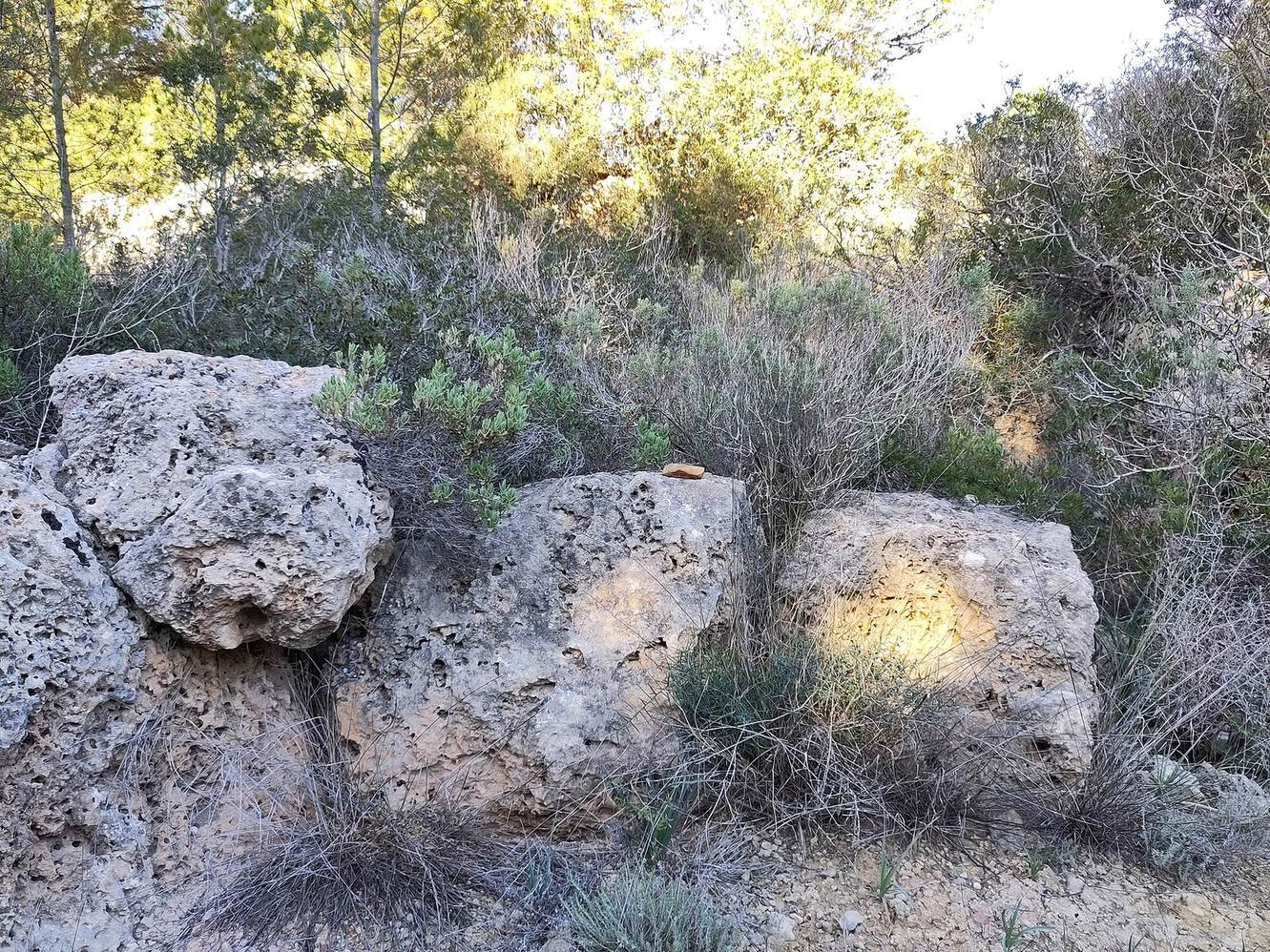
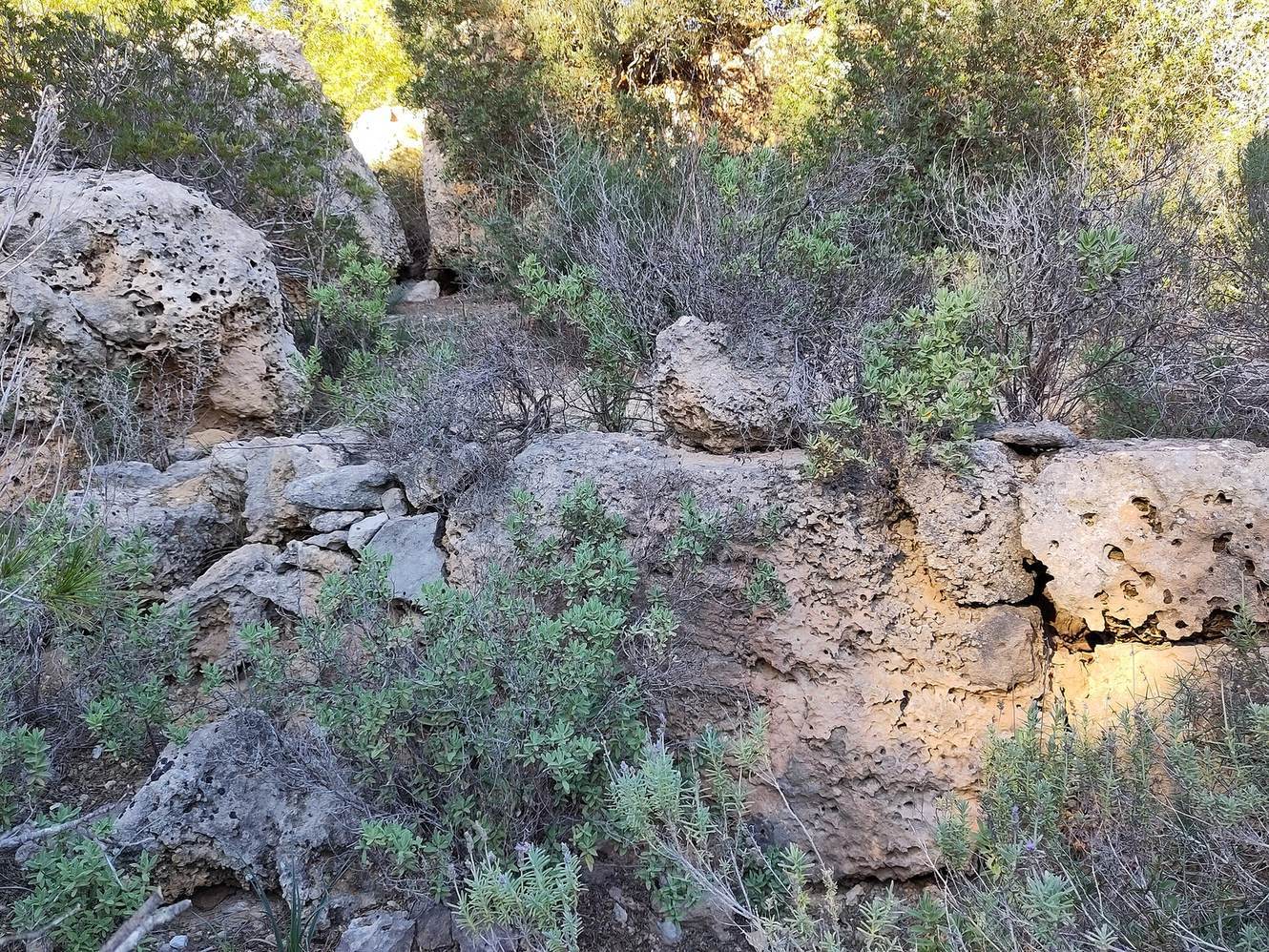
The settlement occupies the summit of a low hill with steep sides and a relatively level top. Seventeen buildings are grouped there, including three large enclosures surrounded by other structures and a long, narrow corridor linking rooms. The buildings have rounded-ended or square plans. Their entrances often face an open area of about 70 m². The largest structures measure up to 6.6 m by 5 m, while most are no larger than 4 m by 2.7 m.
Setting
The hill stands almost a kilometre from the sea, near a stand of pines. A lagoon surrounded it during the Talayotic occupation. Wetlands persisted in the area until the eighteenth century, and small wet areas remain; the nearest named watercourse, the Santa Ponça stream, is about 300 m away. Pines, cypresses, and rosemary grow in the surroundings. Exposure to sun and wind is pronounced, particularly on the north and east sides.
Buildings and construction
Walls and floors
The structures were built with cyclopean masonry, stonework assembled in large blocks, although the stones here are smaller than those used in other Talayotic buildings. Walls have two outer faces with earth, stones, and building debris packed between them. Blocks average 0.7 by 0.44 by 0.27 m, and walls reach 1.3 m in thickness. Clay was spread over irregular rocky floors to make them more even. Erosion has removed parts of the buildings; surviving structures stand about 0.2 to 1 m high. Their condition is poor, and erosion and substantial vegetation cover continue to affect the remains.
Roofs and covered areas
Roofs were formed from trunks and reeds and made waterproof with clay. Straw or branches may also have been used, but these materials have decomposed. Some buildings had porches or partly open covered areas outside them.
Other features and finds
Structures around the settlement
Remains around the main group include two rounded-ended buildings, clay deposits of uncertain purpose, and a substantial cyclopean wall. Punic amphora fragments were found inside a square-plan building.
Pottery and containers
Excavated material includes large quantities of indigenous pottery as well as Punic and Roman pottery, amphorae, and other vessels. Some pottery has been partly or fully reconstructed. After their original contents were removed, amphorae and other industrial containers were reused to hold different goods.
Production tools and materials
Finds linked to production include clay accumulations, loom weights that kept threads taut, and locally made and imported rotary millstones for grinding grain. A furnace was built with lime mortar. A large sand deposit with a channel at its base in other rooms may relate to washing or dyeing wool. Other finds include axes with iron edges, fishing harpoons, and evidence of lead recovery and melting. Natural iron-ore nodules occur in the nearby ground.