Valldemossa Charterhouse: A Carthusian Monastery in Majorca
Site at a Glance
- Popularity
- High
- Country
- Spain
- Primary era
- Early Modern
- Eras represented
- Medieval, Early Modern, Modern
- Civilizations
- Crown of Aragon, Kingdom of Majorca, Spanish
- Site type
- Religious
- Remains
- Monastery
On this page16 sections
History
Valldemossa Charterhouse is a former Carthusian monastery in Valldemossa, on the island of Majorca, Spain. The monastery was established in 1399 on the foundations of a royal palace. Most of its present buildings date from the eighteenth century, and its church is neoclassical. Carthusians are members of a Catholic order whose communities traditionally lived secluded, contemplative lives.
Royal palace and monastery
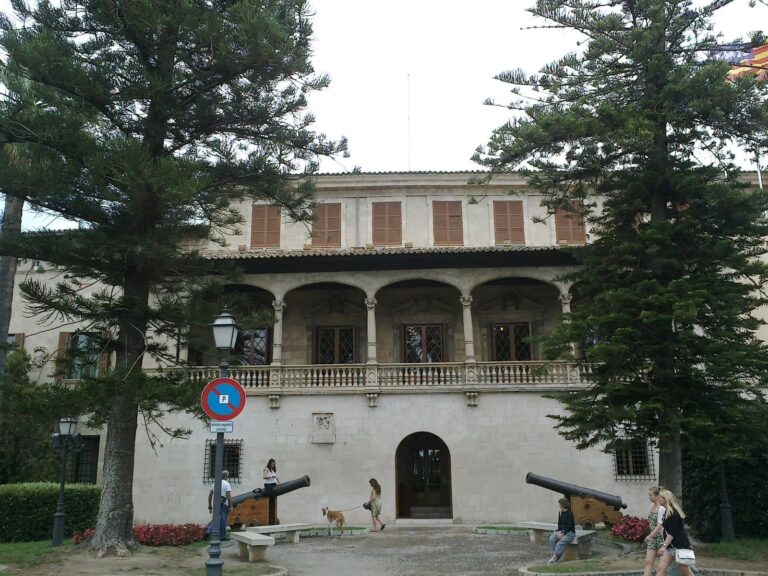
James II of Majorca chose a site more than 400 metres above sea level in the Serra de Tramuntana, the mountain range on Majorca, for a palace for his son Sancho. Sancho later became King Sancho I, and the palace served as his royal residence in the fifteenth century. In 1399, Martin I of Aragon transferred Valldemossa’s royal properties to Carthusian monks, who established their monastery on the palace foundations and remained there until 1835.
Monastic life and secularization
Saint Catherine of Palma, venerated as a patron of Majorca, was born at the monastery in 1533 and died in Palma in 1574. The Carthusian painter Manuel Bayeu (1740–1809) spent most of his life there. In 1835, the monastery was secularized and the monks were expelled. Under the nineteenth-century Spanish state confiscations associated with Mendizábal, the property passed into private ownership. Its nine cells were sold separately and remain privately owned; after the monks’ departure, individual cells were also offered for rent.
Later residents and cultural associations
Frédéric Chopin and George Sand spent the winter of 1838–1839 at the charterhouse. During their stay, Chopin completed his Preludes, Op. 28, and composed the Ballade No. 2, Op. 38, in F major; the Scherzo No. 3, Op. 39, in C-sharp minor; and one of the Polonaises, Op. 40. Sand later wrote A Winter in Majorca about their time there. Gaspar Melchor de Jovellanos, a Spanish statesman and writer, was also confined at Valldemossa for political reasons. The Spanish writer Miguel de Unamuno described the charterhouse’s buildings, landscape, and atmosphere in Andanzas y visiones españolas.
The Chopin Festival has taken place at the charterhouse each August since 1981. The complex has been protected as a Spanish Asset of Cultural Interest, a formal category for culturally significant heritage, and designated a Historic Ensemble since 8 July 1971.
Remains
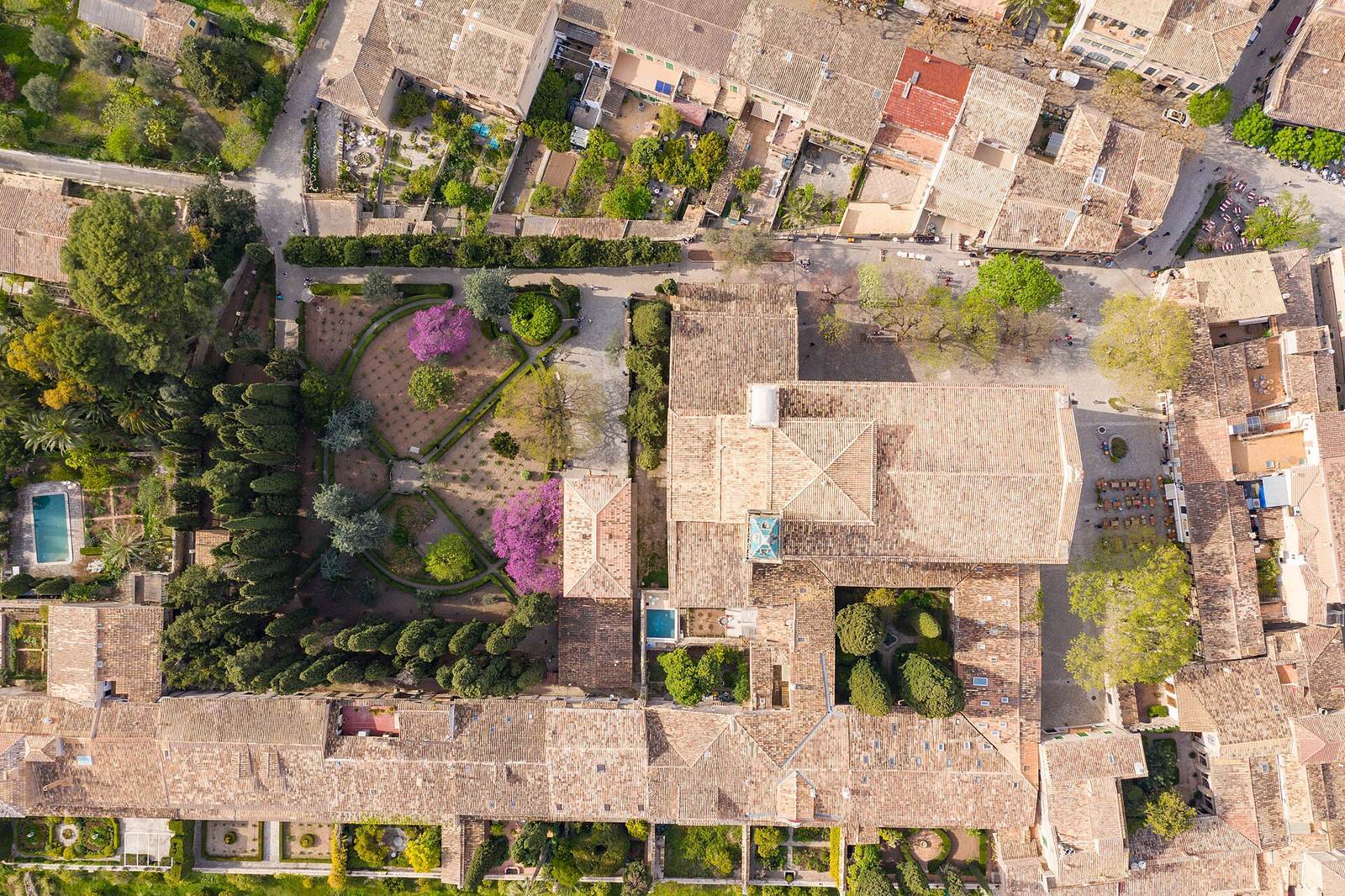
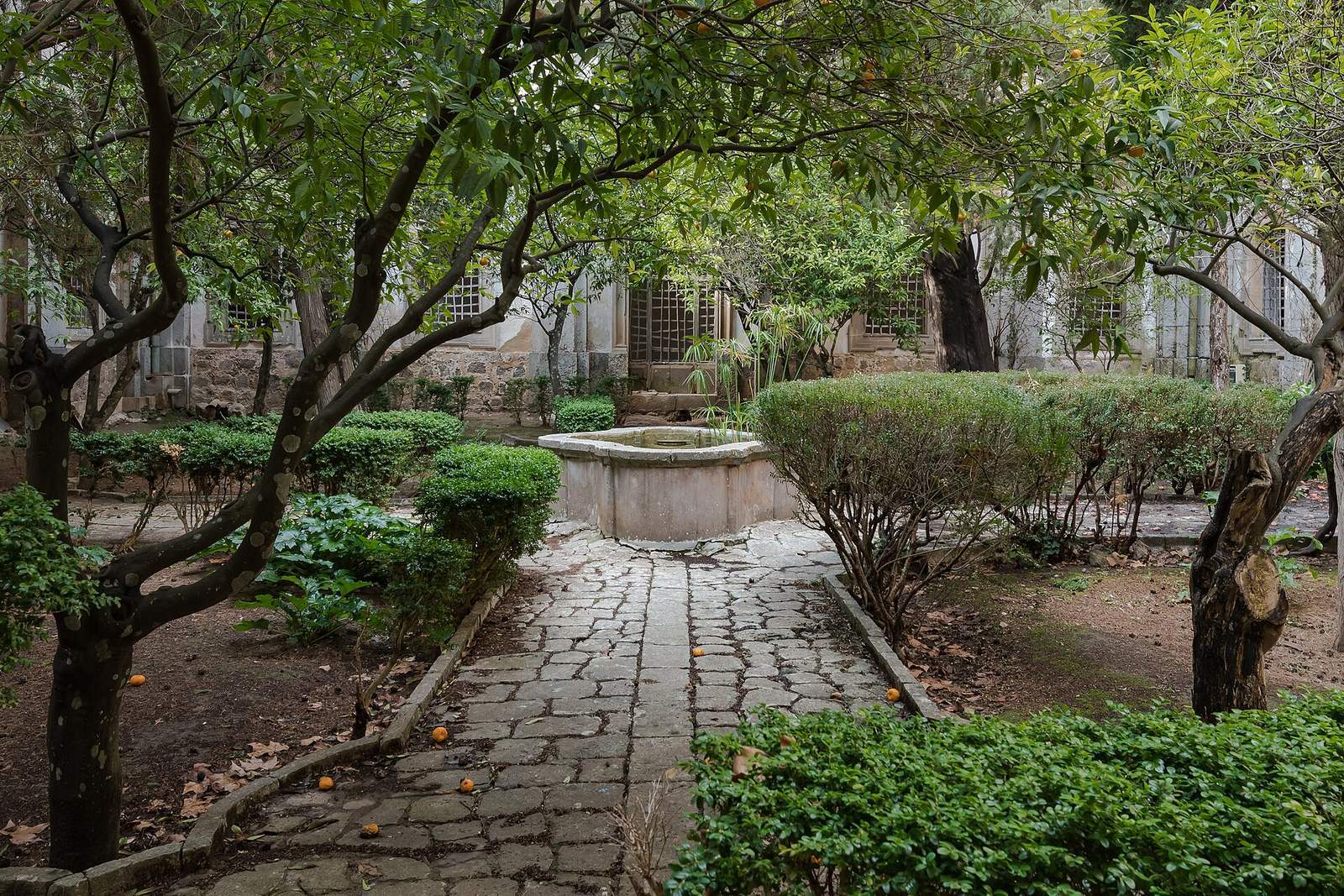
The complex comprises the former royal palace, the charterhouse, and associated gardens. Its buildings include the church, cloister, pharmacy, prior’s suite, and monks’ cells, alongside museum spaces. Most of the present structures date from the eighteenth century. Across Charterhouse Square stands the Palace of King Sancho.
Church and monastic buildings
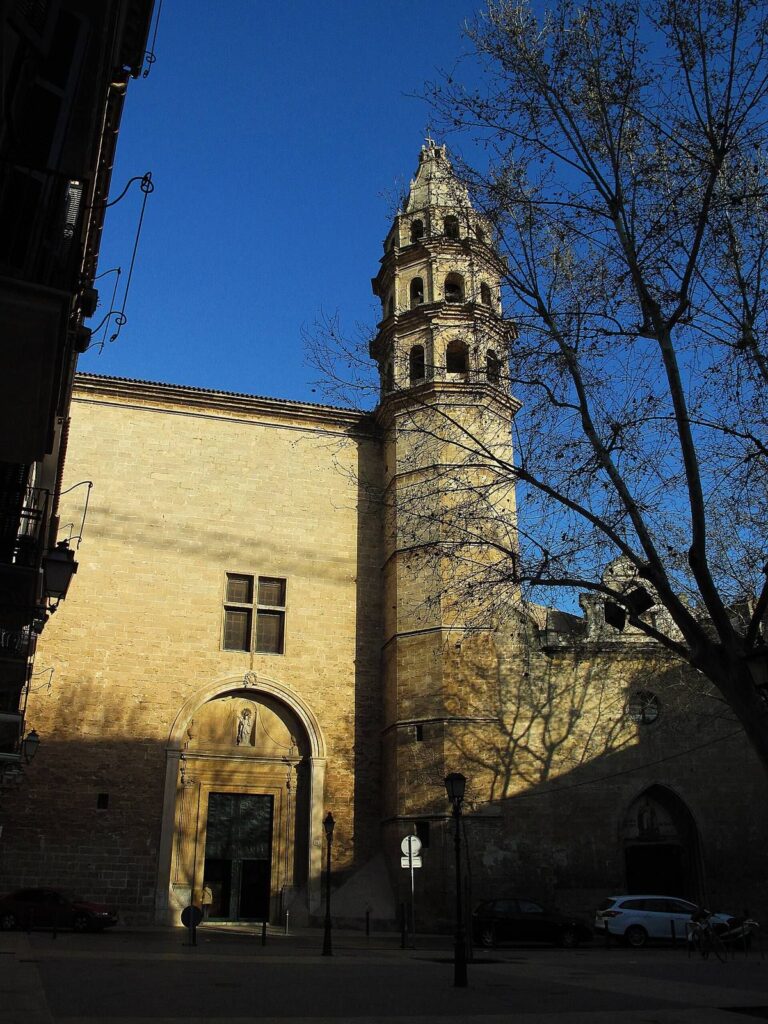
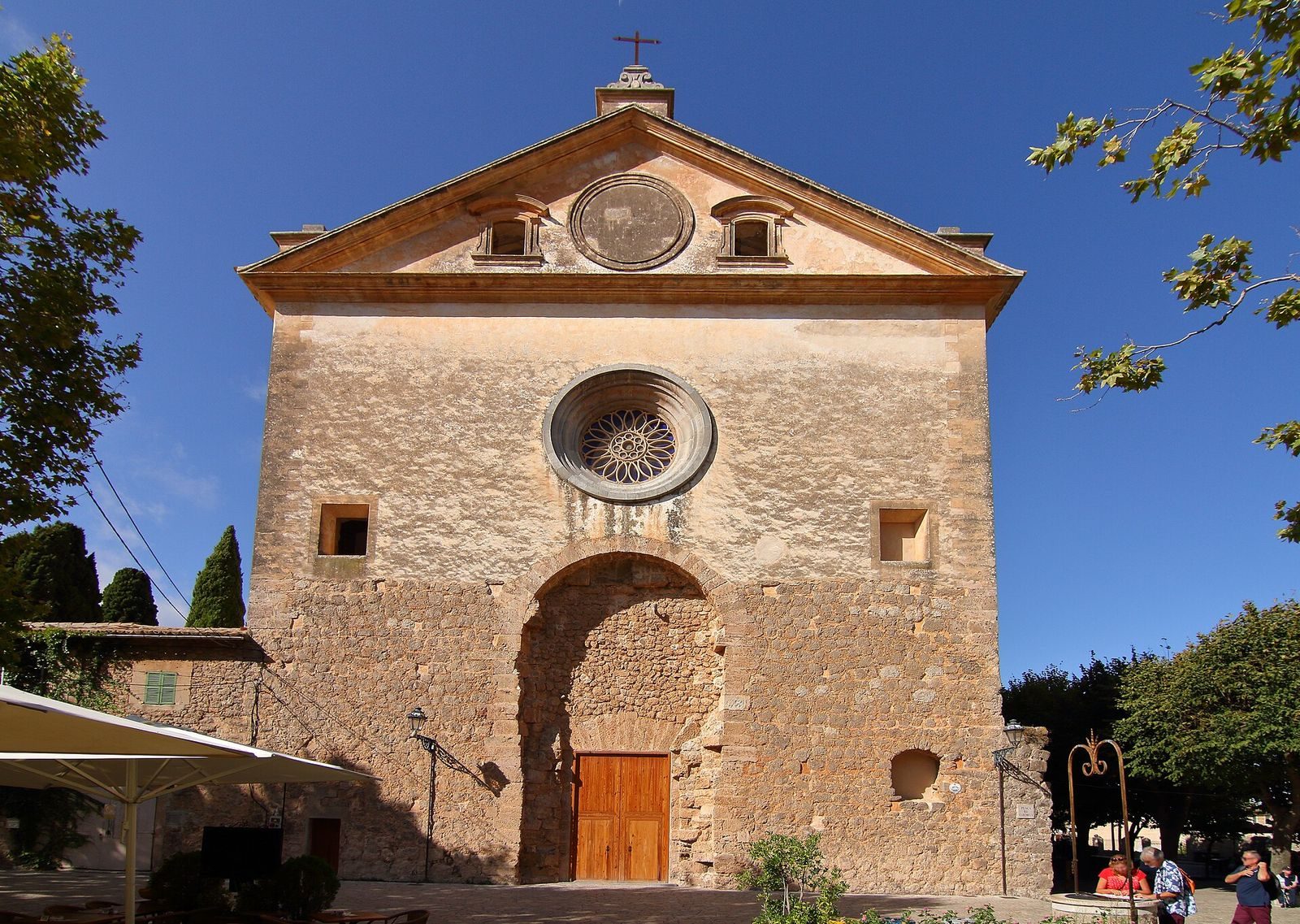
Church
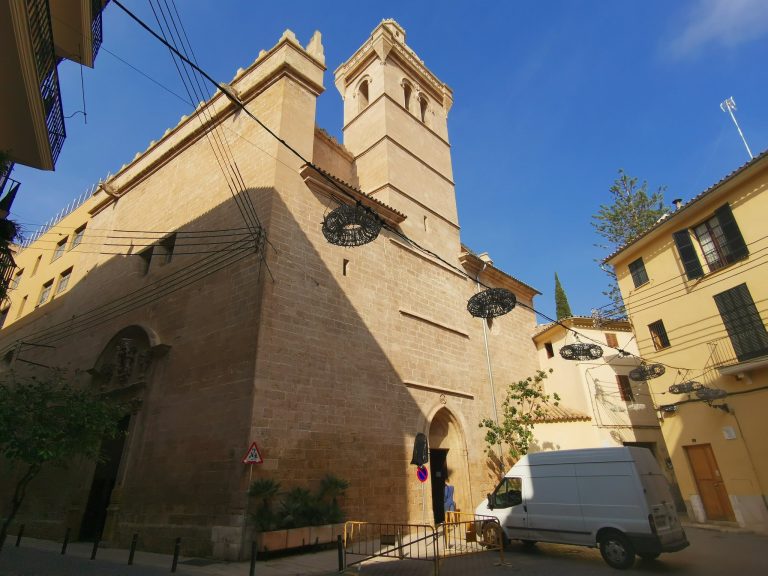
Construction of the church began in 1751 over an earlier church erected in 1446, and continued until 1812. Artists and craftspeople of the period decorated the building. The Carthusian painter Joaquim Juncosa created twelve oil paintings of the Mysteries of the Rosary, episodes from the lives of Jesus and Mary contemplated in Catholic prayer. Some are among the few surviving paintings by Juncosa.
Cloister and pharmacy
The cloister is one of the oldest parts of the present buildings. The former Carthusian pharmacy also survives within the complex, with pharmacy jars dating from the seventeenth and eighteenth centuries.
Prior’s suite
The prior’s suite contains a chapel, a former library, an audience room with the prior’s seat, and a dormitory.
Cells, gardens, and palace
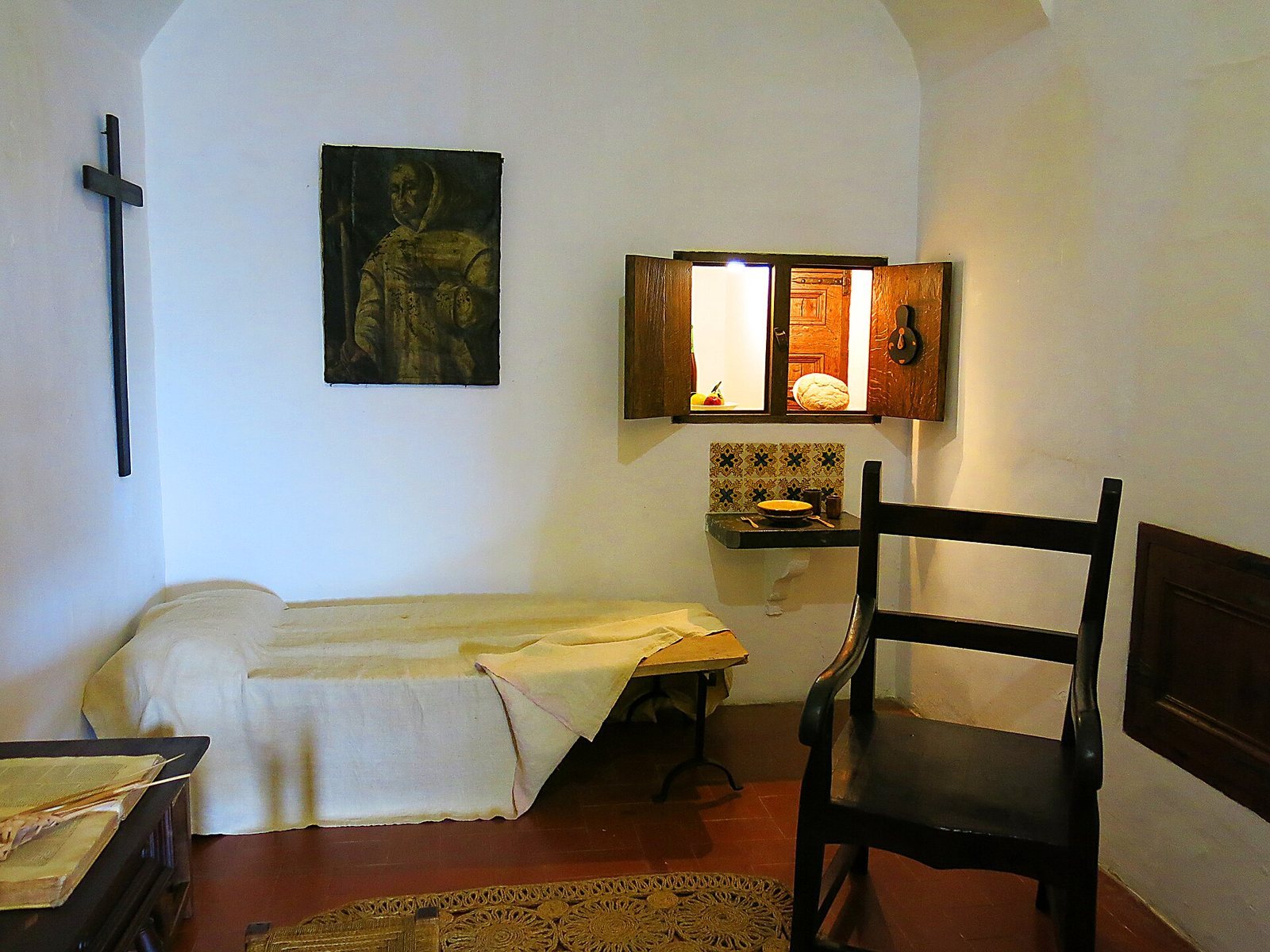
Monks’ cells
The monks’ cells form part of the charterhouse complex. Cells 2 and 4 are identified with Chopin and Sand’s stay. One cell they occupied consists of three large rooms and a garden.
Gardens
The charterhouse garden has concentric paths bordered by cypresses and other trees.
Palace of King Sancho
The palace across Charterhouse Square retains features associated with the former charterhouse, including an access staircase, a cloister, and a defensive tower.
Museums and collections
Chopin and Sand cell museum
The cell associated with Chopin and Sand has been converted into a museum. Its displays include Chopin’s Pleyel upright piano, documents, paintings, and other memorabilia. The piano was brought from France after Chopin’s departure, a difficult undertaking, and is said to be the instrument he used to compose some of his preludes. The charterhouse also preserves a lock of his hair, his death mask, and a manuscript of Sand’s A Winter in Majorca.
Printing workshop and other collections
A museum section is devoted to the Guasp printing workshop, established in 1579, and includes a printing press dating from 1662. Other museum spaces include a room devoted to Archduke Louis Salvador, a collection of paintings of the Serra de Tramuntana, and a collection of contemporary art.