Komazuka Kofun in Ikaruga: A Late Fourth-Century Burial Mound
Site at a Glance
- Popularity
- Low
- Country
- Japan
- Primary era
- Classical
- Eras represented
- Classical
- Civilizations
- Yamato
- Site type
- Burial
- Remains
- Burial Mound
On this page7 sections
History
Komazuka Kofun in Ikaruga is a burial mound in Japan, estimated to have been built in the late fourth century during the early Kofun period, an era of ancient Japanese history associated with large burial mounds.
Horse-burial traditions
The name Komazuka reflects a tradition that Prince Shōtoku’s beloved horse was buried at the mound. Prince Shōtoku was a Japanese prince and statesman traditionally associated with promoting Buddhism. The horse story appears in a work completed in 1681 and in other historical writings, but it does not accord with the mound’s estimated date.
Choshimaru Kofun lies about 100 metres south of Komazuka and is estimated to date to around the middle of the fifth century. Its name comes from a separate tradition that the person who cared for Prince Shōtoku’s horse was buried there. This story, too, conflicts with the mound’s estimated date. A settlement site forms part of the construction context for Choshimaru.
Archaeological investigations
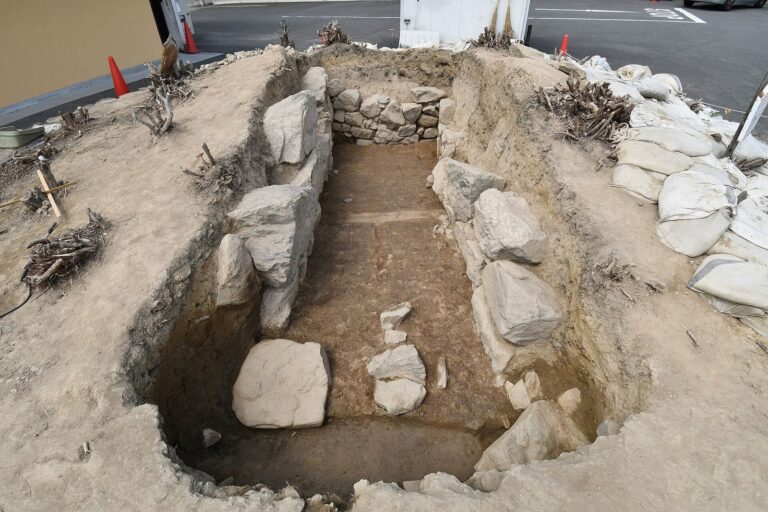
A measurement survey of Komazuka was carried out in 2000, followed by excavation of its mound in 2001–02. Choshimaru’s northern side was excavated in 2000, and an archaeological site in the surrounding area was excavated in 2003. Clusters of pits have been found near Komazuka, and a connection between them and the mound has been proposed.
Remains
Komazuka Kofun
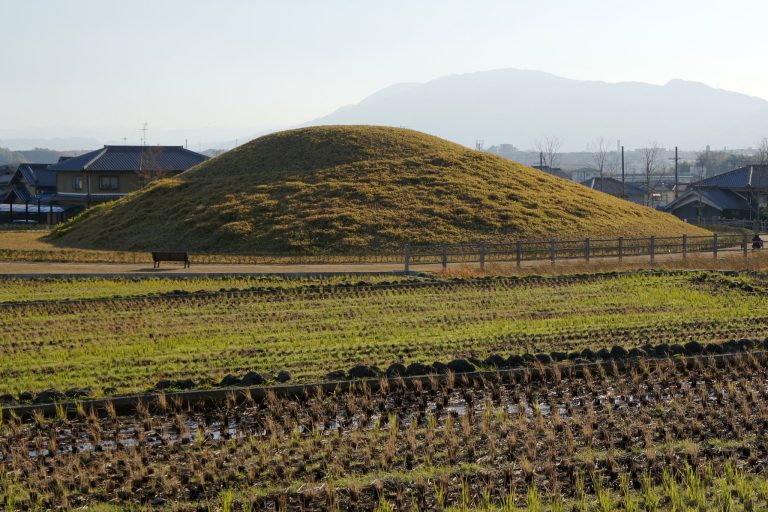
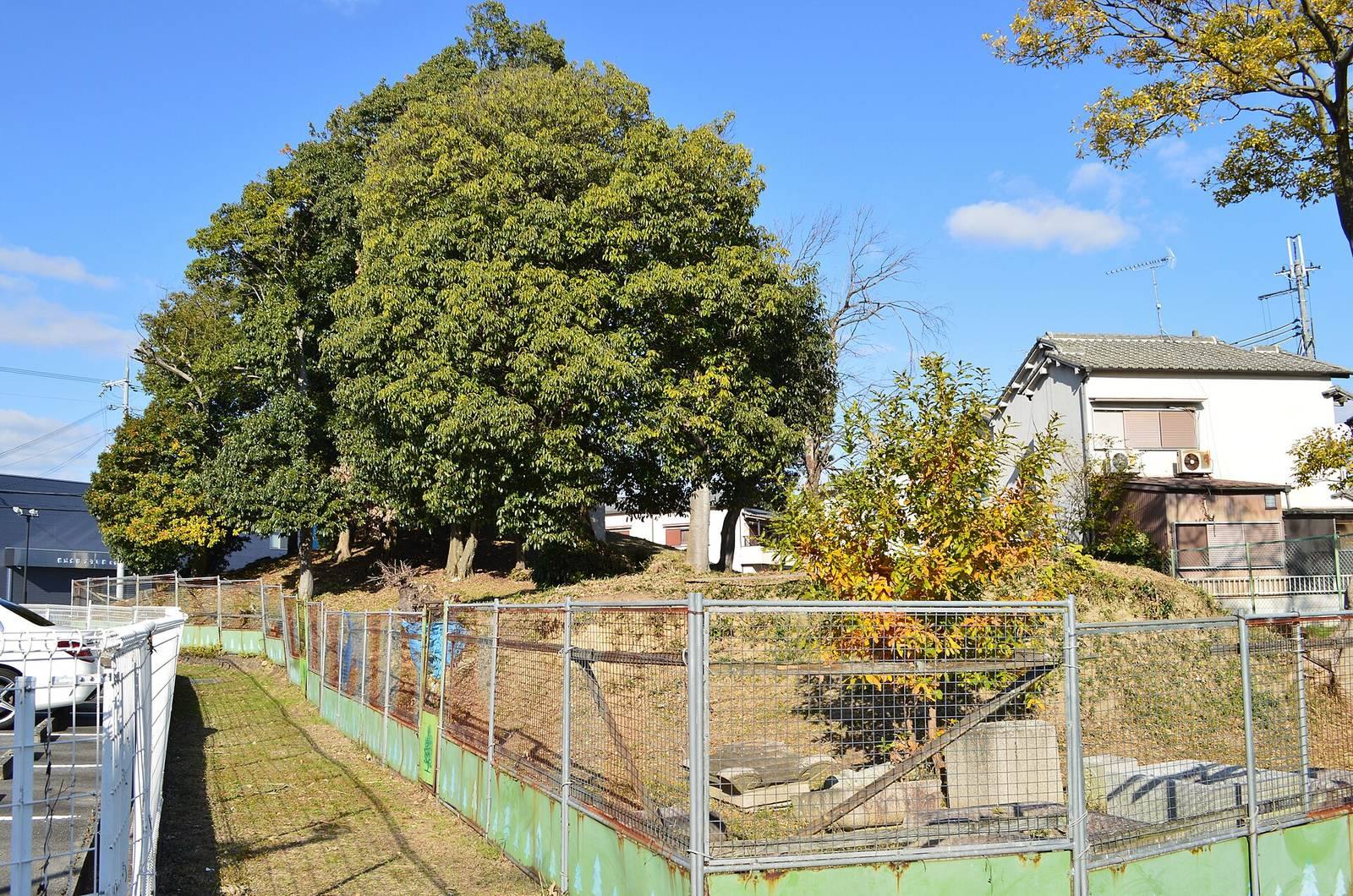
Set on flat ground in eastern Ikaruga, the two-tier mound has a keyhole-shaped plan, with its front section facing south. Its perimeter has been substantially cut down. The mound is at least 49 metres long, with an estimated reconstructed length of about 55 metres. The circular rear section measures 34 metres across and 5.5 metres high. The front section is at least 18 metres long, 22 metres wide, and 2 metres high; the narrow junction between the two sections is about 14.5 metres wide.
Stone covered the mound’s exterior, where rows of cylindrical haniwa, clay objects associated with burial mounds, were arranged. Finds include double-rimmed jars and Haji ware, an ancient Japanese earthenware pottery. Excavation identified a burial pit in the rear section that has not been investigated; it measures 9.4 metres north to south and 6 metres east to west.
Choshimaru Kofun
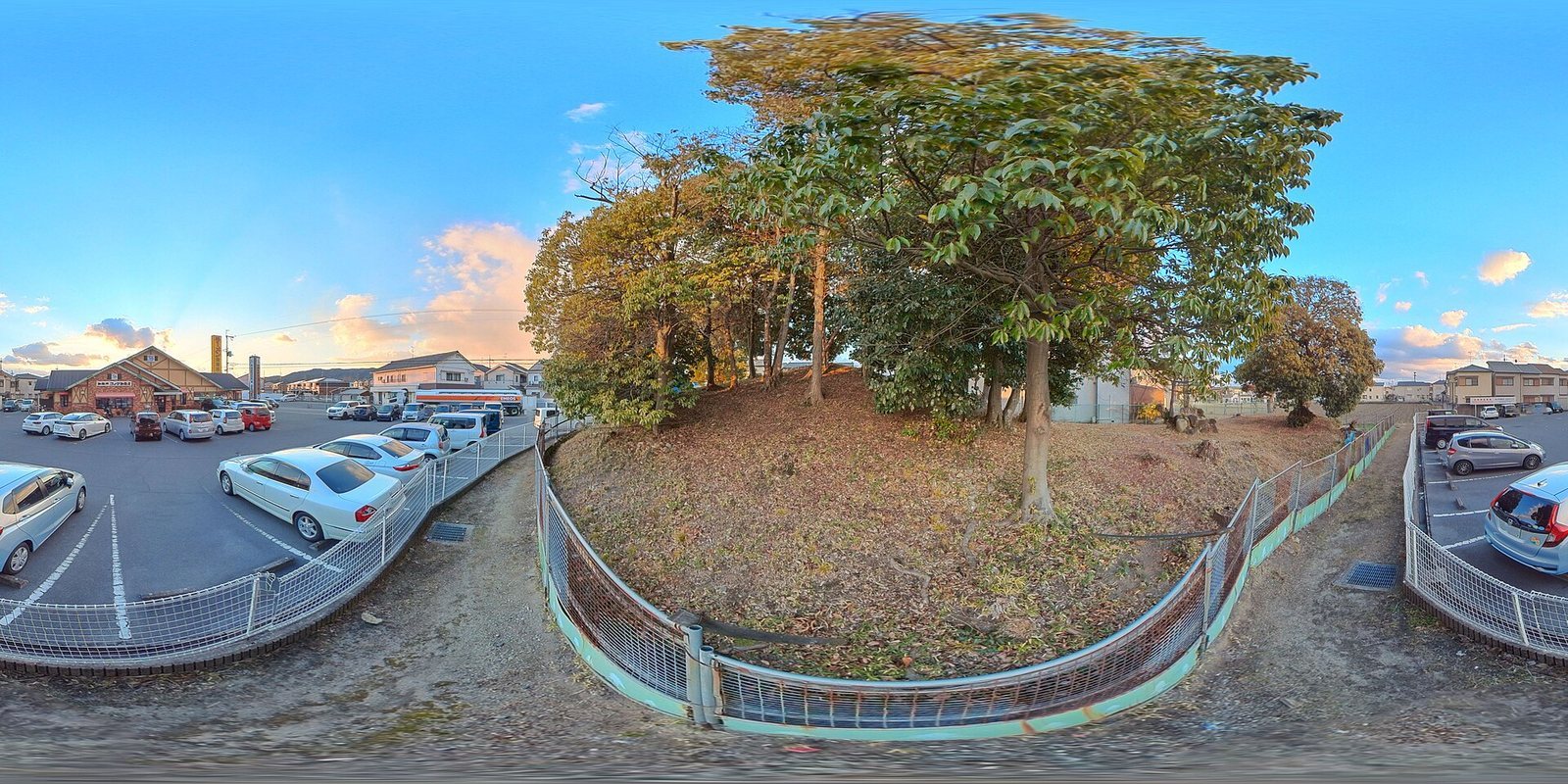
Choshimaru is a circular mound about 14 metres in diameter. Cylindrical and figurative haniwa have been found on its exterior. An excavated feature identified in 2003 has been interpreted as possibly representing a moat.
Clay horse figurine
Excavation north of Choshimaru in 2000 recovered a finely made clay figurine of a horse. Its date is unknown.