Megalithic Tombs near Lehnstedt: Neolithic Passage Graves in Germany
Site at a Glance
- Popularity
- Very Low
- Country
- Germany
- Primary era
- Stone Age
- Eras represented
- Stone Age
- Civilizations
- Unclassified
- Site type
- Burial
- Remains
- Tomb
On this page8 sections
History
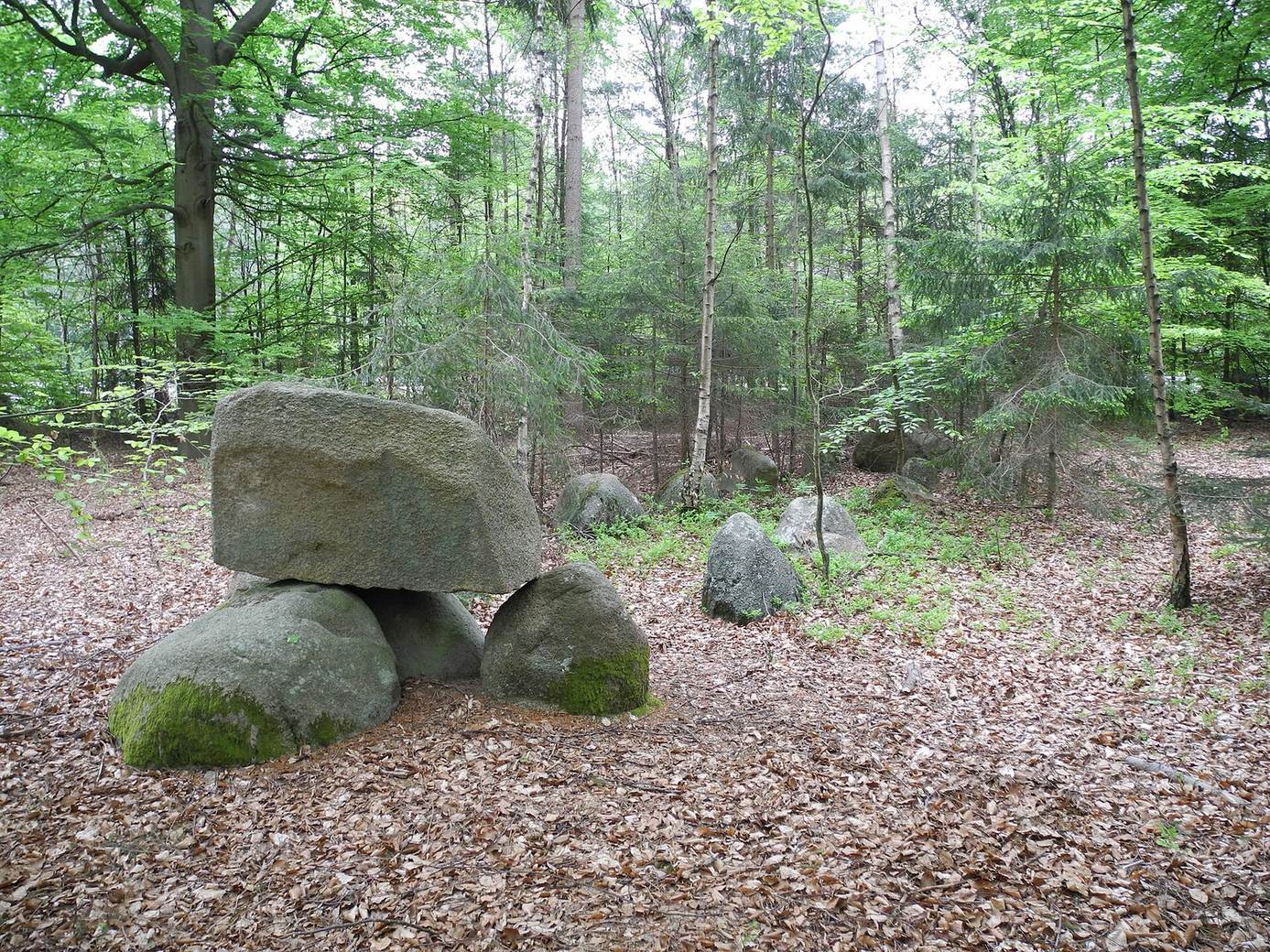
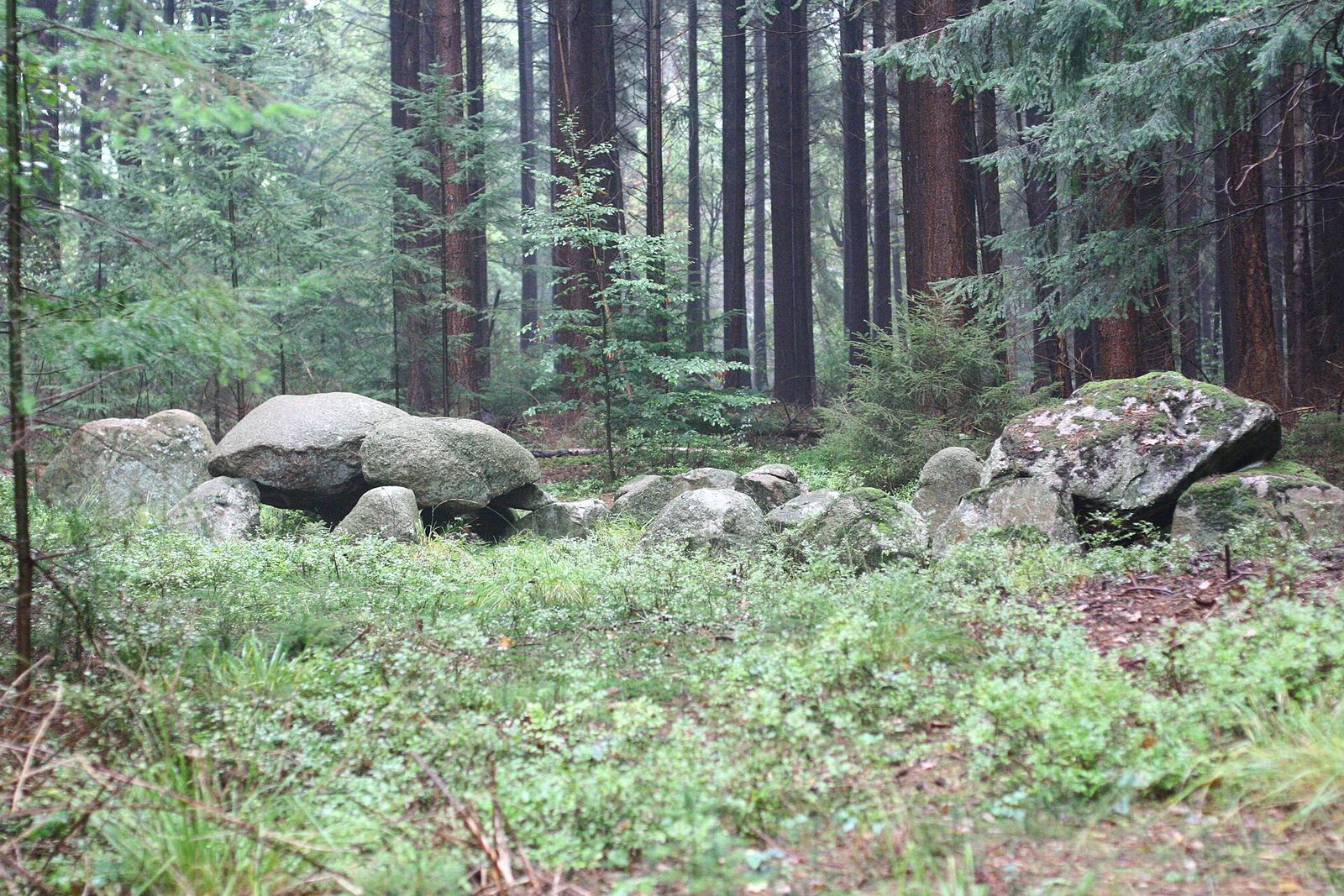
The Megalithic Tombs near Lehnstedt are two Neolithic passage graves in the Düngel forest of Lower Saxony, Germany. They are assigned to the Funnel Beaker culture, an archaeological culture named for its characteristic pottery, and date broadly to about 3500–2800 BCE. The tombs are known as Lehnstedt 82 and 83, also called Lehnstedt 3 and 4.
Neolithic construction and dating
The two graves belong to a prehistoric tradition of building burial chambers reached by a distinct passage. A radiocarbon age for Lehnstedt 83 is given as 2115 before calibration, corresponding to an estimated calendar date of about 2865 BCE. Calibration adjusts radiocarbon measurements for changes in atmospheric carbon over time. The dating of Lehnstedt 82 is indirect, based on material from 83 that is comparable to its finds.
Later activity and investigation
Finds from the disturbed chamber of Lehnstedt 82 may indicate that people of the Corded Ware culture, another prehistoric culture named for its characteristic pottery, cleared or reused the tomb. The purpose of objects found in the passages and outside the graves is disputed. They may reflect the removal of earlier grave goods, or continued ritual activity beyond the chambers.
Some chamber stones were probably blasted away in the nineteenth century, and another was stolen in 1949. Prehistorian Jürgen Deichmüller investigated and restored Lehnstedt 83 in 1971–72. H. Aust investigated and restored Lehnstedt 82 in 1975.
Remains
The tombs have long chambers and long-oval stone enclosures made from stones ranging in size from a fist to a head. This long-chamber form is associated with areas west of the Weser, especially Drenthe in the Netherlands and the Emsland. It contrasts with the generally shorter Nordic chamber, often set within a rectangular enclosure.
Chambers and enclosures
Lehnstedt 82
The chamber measures 11.20 metres internally. It originally had 18 upright support stones and eight capstones; 15 supports and three capstones survive. Along the long sides, the supports were arranged in eight facing pairs. The chamber once stood within a long-oval mound that reached the height of its capstones. Its short entrance passage opened to the south.
Lehnstedt 83
The chamber measures 9.30 metres internally. It lies on the prehistoric trail through the Düngel forest.
Finds from Lehnstedt 82
The tomb yielded 907 pottery sherds, 264 of them decorated with deep impressions. Some fragments could be joined to form shoulder vessels, bowls, and dishes, and six retain traces of inlay. Stone finds include a resharpened, thick-bladed flint axe, three transverse arrowheads, 12 blades, 22 cores, and 79 flakes. The axe, one transverse arrowhead, and many pottery sherds came from the passage and the area in front of the tomb. Finds from the disturbed chamber include a rim sherd marked with a fingernail impression and a broadly retouched triangular arrowhead with a straight base; these are generally not assigned to the Funnel Beaker culture.