Björskog Church: A Medieval Parish Church in Sweden
Site at a Glance
- Popularity
- Very Low
- Country
- Sweden
- Primary era
- Modern
- Eras represented
- Medieval, Early Modern, Modern
- Civilizations
- Swedish
- Site type
- Religious
- Remains
- Church
On this page14 sections
History
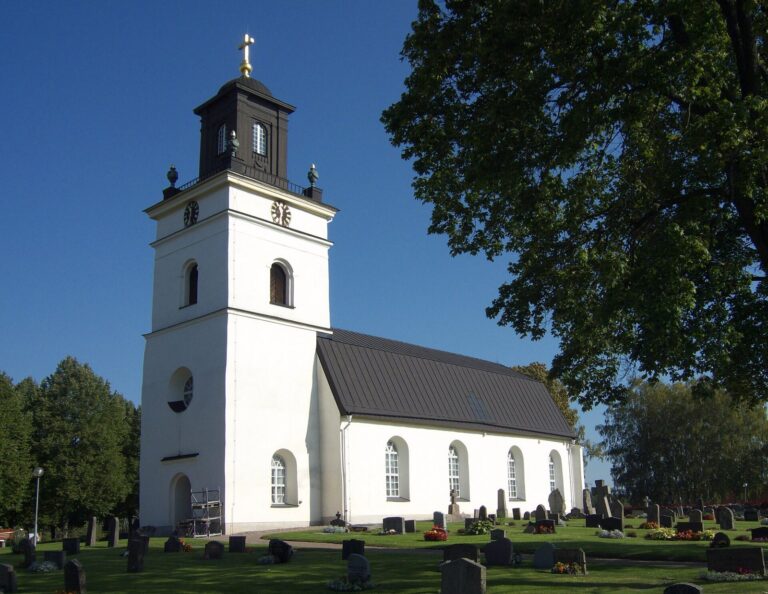
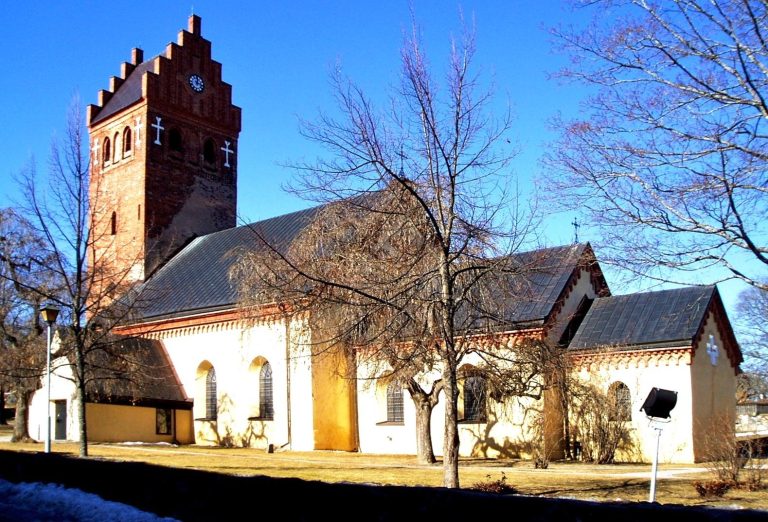
Björskog Church is a parish church in Valskog, Sweden, serving Kungsör Parish within the Diocese of Västerås and the Church of Sweden. The first church here is said to have been built around 1200, and the building was enlarged in the late Middle Ages.
Medieval church and early modern tower
The late-medieval enlargement expanded the church around its earlier structure. In 1649, the tower was remodelled with a tall, tapering spire. Lightning struck in 1693, damaging both the spire and the tower masonry; these were subsequently rebuilt.
Reconstruction and later alterations
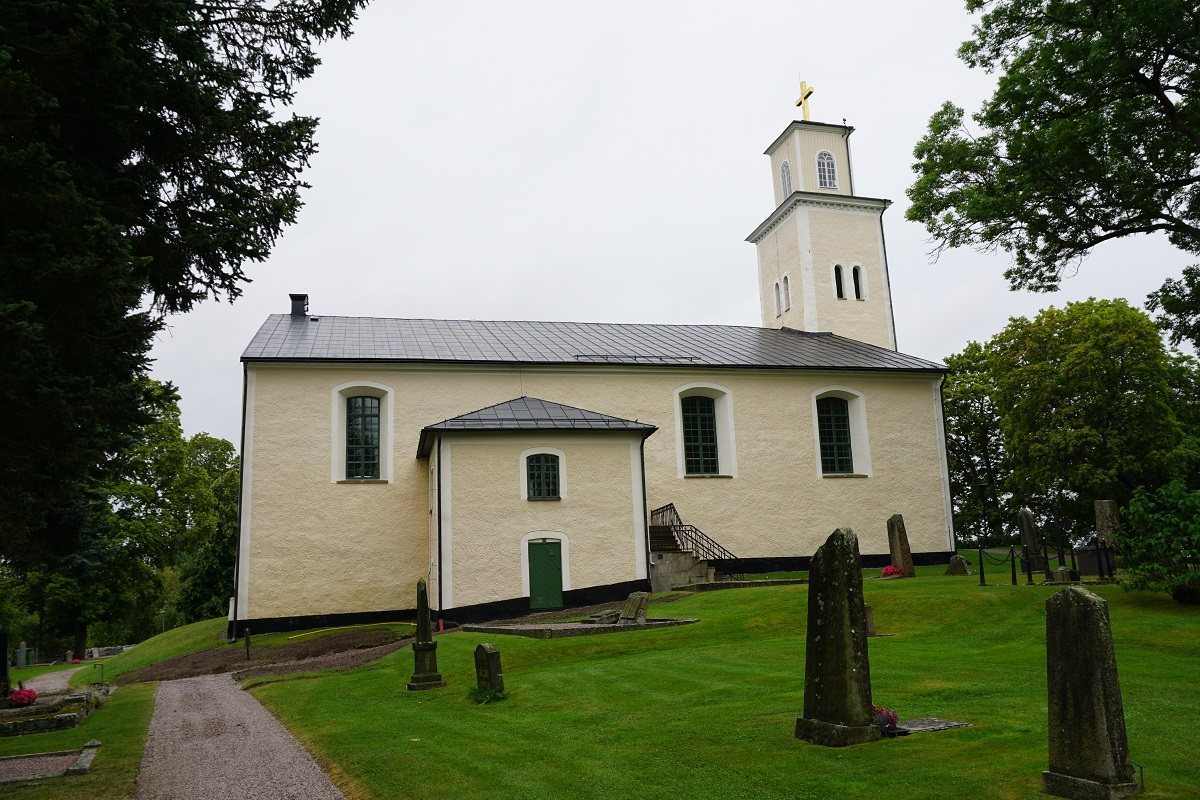
A major rebuilding based on plans drawn up in 1797 by Swedish architect Carl Fredrik Sundvall was completed in 1802. Further substantial changes followed in 1905–06 and 1955, reshaping the church’s fabric and interior.
The organs
An organ is noted at the church in 1570. A six-stop instrument, with each stop bringing a set of pipes into use, was repaired in 1632. Andreas Bengtsson built a six-stop organ in 1672–75; in 1691 it gained a pedal attachment and another stop.
In 1736, the parish assembly arranged for a new organ from Stockholm builder Olof Hedlund, whom they contacted while he was in Arboga. Their agreement called for ten stops and a payment of 2,200 daler in copper money, a Swedish currency denomination based on copper. Hedlund and two assistants installed the instrument over three weeks in late 1737. Christoffer Panninck, an organist from Arboga, inspected it on 21 December, and Daniel Lemming inaugurated it on Christmas Day.
Daniel Stråhle retuned the instrument in 1744, and Panninck inspected it again. Repairs completed in May 1768 were carried out by either Mattias Swahlberg the Younger or Niclas Söderström, then in Köping. E. A. Setterquist & Son renovated and reconfigured the organ in 1880. Eskil Lundén of Gothenburg built the present pneumatic organ in 1914. A. Magnussons Orgelbyggeri reconfigured it in 1957, and Bröderna Moberg renovated it in 1988. Bröderna Moberg also built a mechanical choir organ in 1957.
Remains
The church combines medieval masonry and timber with features shaped by later rebuilding. Two railway lines branch on opposite sides of the site.
Medieval fabric
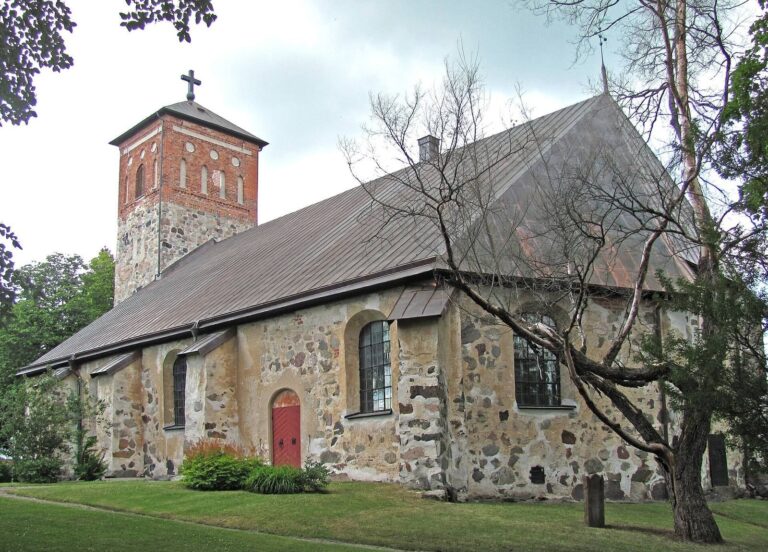
The lower part of the tower retains medieval masonry, and medieval walls are also incorporated into the church. Some roof framing is probably from the 15th century, while the tower beams are considered late medieval. During the late-medieval enlargement, the porch became part of a larger building volume.
Tower and later exterior
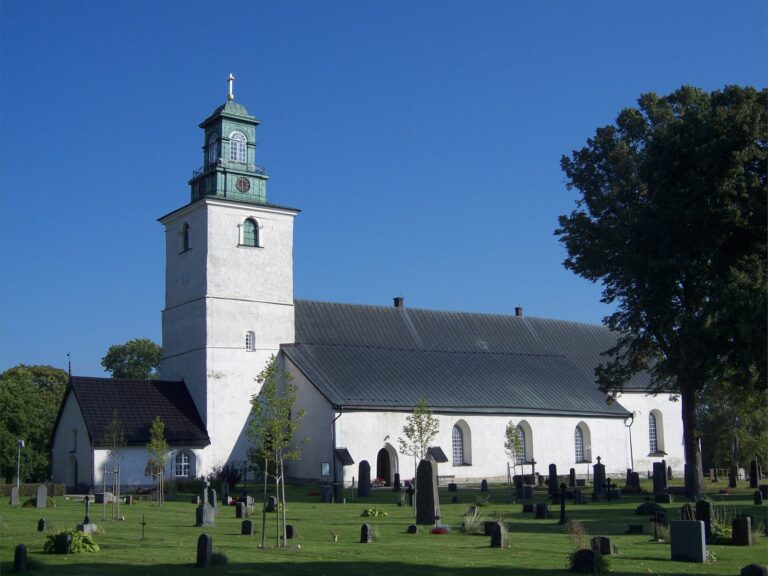
The tower contains a bell chamber, added during the rebuilding completed in 1802 after the separate bell tower was demolished and its bells moved. The church’s present roof lantern also dates to that reconstruction. Changes in 1905–06 altered the façade colours, sections of pews, and floors. Work in 1955 gave the façades a new appearance and remodelled the tower.
Interior furnishings and objects
Altarpiece
The 18th-century altarpiece centres on a crucifix made of bronzed wood, framed by four pillars.
Censer and wine jug
A 14th-century censer, recovered beneath the church floor during renovation, hangs to the left of the altar. A wine jug dated 1637 bears an inscribed curse against anyone who removes it from Björskog Church, ending with a call for the people to affirm the warning.
Baptismal font
The baptismal font stands on the south side of the chancel. Its foot dates to the 14th century.
Organs
Gallery organ
The 1737 organ had ten stops, three bellows that supplied air, and a façade with three projecting towers. It was tuned to choir pitch, the pitch level used for singing. Its façade is now incorporated into the gallery organ. The present pneumatic instrument uses air pressure to transmit movement from its keys to the pipes, and its Roosevelt-type windchests distribute air to the pipes using pneumatic control.
Choir organ
The mechanical choir organ uses linkages to transmit movement from its keys to the pipes. It can also be played from the gallery organ’s second manual, or keyboard.