Ekornavallen: A Prehistoric Burial Ground in Sweden
Site at a Glance
- Popularity
- Medium
- Country
- Sweden
- Primary era
- Stone Age
- Eras represented
- Stone Age, Bronze Age, Iron Age
- Civilizations
- Unclassified
- Site type
- Burial
- Remains
- Necropolis
On this page10 sections
History
Ekornavallen is a prehistoric burial ground near Broddetorp in Sweden, where burials began around 3000 BC. The first communities associated with the site belonged to the Funnel Beaker culture, a prehistoric farming culture named for its funnel-shaped pottery. Later groups also buried their dead here, and the place was used for ritual activity over at least 4,300 years, either continuously or in recurring periods.
Neolithic and Bronze Age
During the Neolithic, or later Stone Age, burial practices changed over time. Around 2500 BC, a successor culture made stone cists the dominant type of burial monument. Cairns were built here during the Bronze Age, a prehistoric period named for the metal central to toolmaking, including its early phase.
Iron Age
Iron Age remains generally date from about 500 BC to AD 500. The ground probably formed outlying land belonging to Hornborga village, about two kilometres away, both then and in later times. Its graves may therefore have stood apart from a settlement, unlike the pattern often proposed for other parts of Sweden. Cultivation in the 1890s destroyed many Iron Age antiquities.
Assemblies and later stewardship
Around 1100, a magistrate held assemblies and dispensed justice at Ekornavallen. This use belonged to a broader custom of gathering at prominent ancient sites, which persisted in the area as Christianity took hold relatively late. A place identified with Ekornavallen appears in thirteenth-century documents as Lincornae Wall(i)um, generally considered an early written form of the site’s name.
Ekornavallens Vänner, a historical association formed in the 1940s, works to safeguard the site’s prehistoric history and encourage interest in it.
Remains
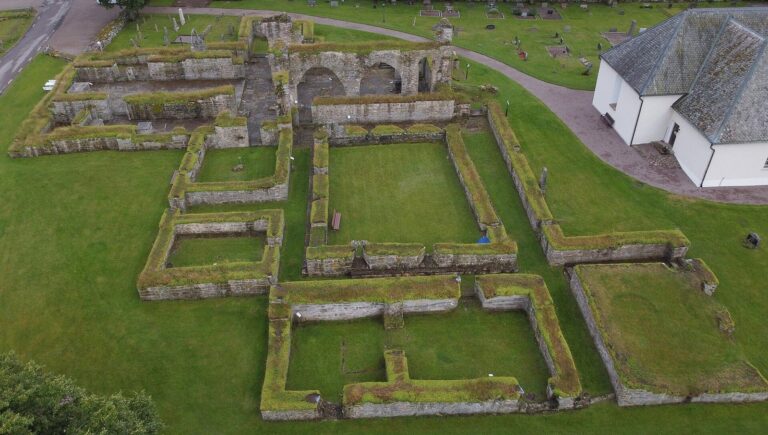
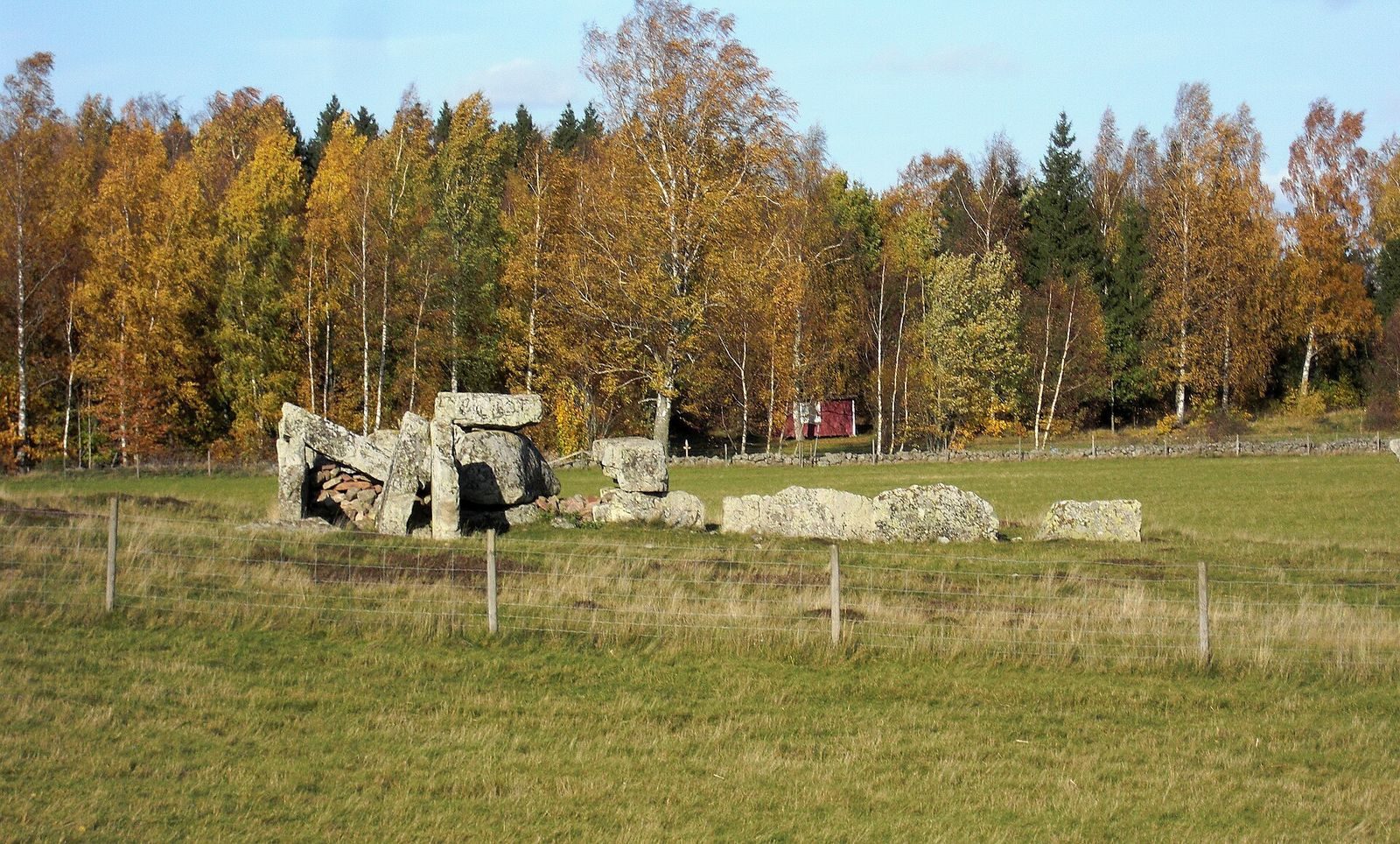
The burial ground lies in Hornborga parish, in Falköping Municipality, about 15 kilometres north of Falköping. It occupies an enclosed area east of Hornborgasjön, in the Slafsan valley between Gudhem and Varnhem. The area contains a concentration of stone-built tombs, cairns, and stone arrangements from different periods.
Neolithic chamber tombs
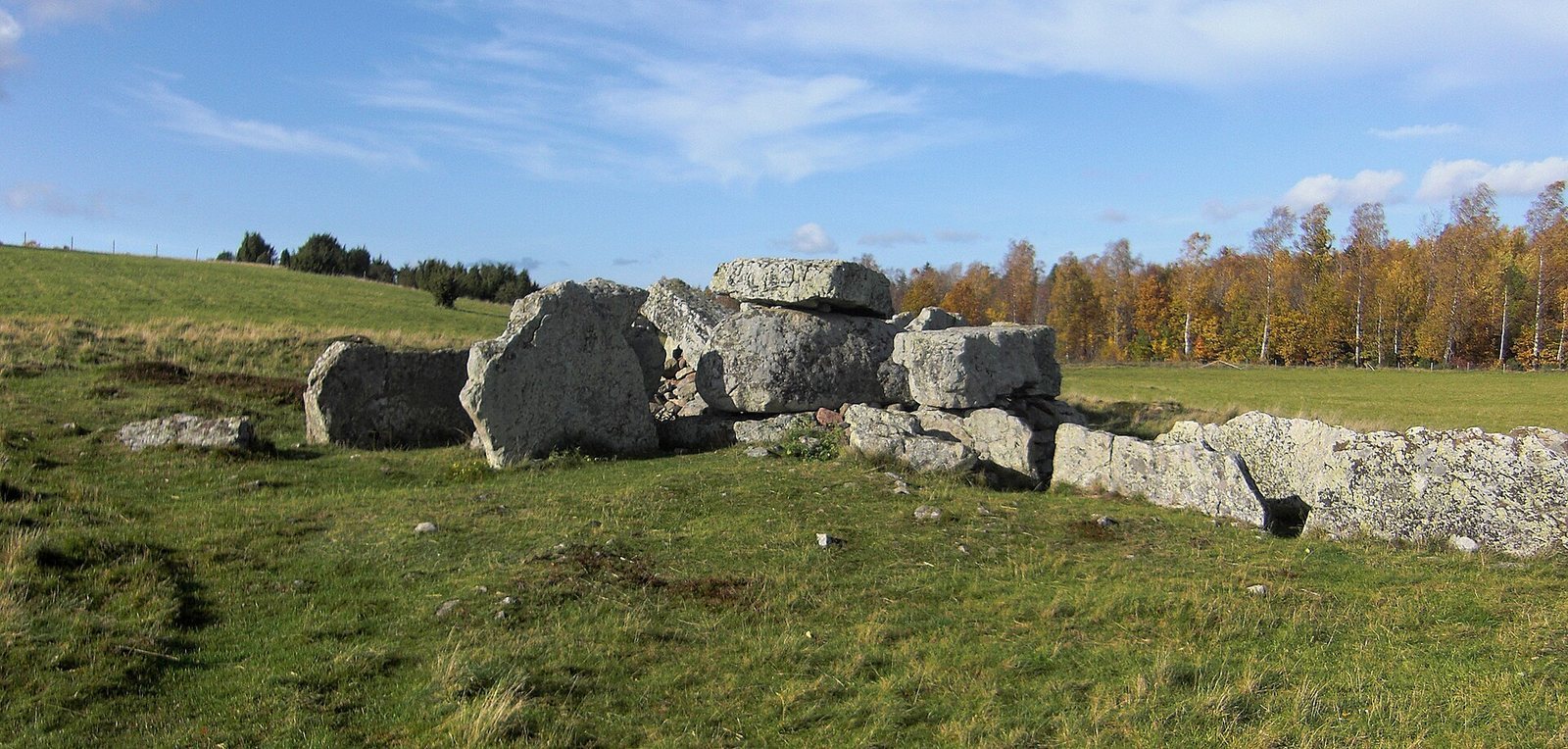
The Neolithic group comprises four passage graves, burial chambers reached through a passage, dating to approximately 3000–2500 BC, and one presumed stone cist, a burial chamber built of stone. The passage graves belong to the Funnel Beaker culture. Restoration work has been carried out on Girommen, stone cists, and another passage grave.
Girommen
Girommen is the largest passage grave at Ekornavallen. Its name is explained in local tradition as meaning the giantess’s oven. The chamber runs precisely north to south and is made of sandstone, apart from its large, thick granite capstone. This stone rests on the stones between the passage and the chamber, and was probably carried from Närke by glacial ice as a glacial erratic, a rock transported from its original location by ice. The passage extends east at a right angle to the chamber. Brunnhemsberget blocks the sunrise from view until the sun has risen higher and shifted south. Modern stone infill obscures the passage’s upright entrance stones and was installed to reduce the risk from falling roof stones.
Finds from restoration included half of a thin-bladed grey flint chisel, with rounded broad faces and ground, faceted edges, probably from the later Stone Age; four broken amber beads; and six coarse, undecorated pottery sherds. The amber beads have been interpreted as evidence of high status. A simple flint flake found during restoration of a cist and a passage grave may also have come from Girommen.
Presumed stone cist
The presumed stone cist is five metres long and surrounded by a stone setting. A flint knife was found in the surface layer during its restoration.
Bronze Age cairns
Two cairns, or mounds of stones, are attributed to the early Bronze Age. The larger stands near the highest point of the rising ground and measures about 20 metres across and two metres high. Large stones laid crosswise form an outer ring that holds the smaller stones of the mound in place. A cairn investigated and restored in 1944 yielded an object broken into thirteen pieces. The fragments, each 1–3.5 centimetres long, resemble parts of a plate.
Iron Age arrangements and cultivation
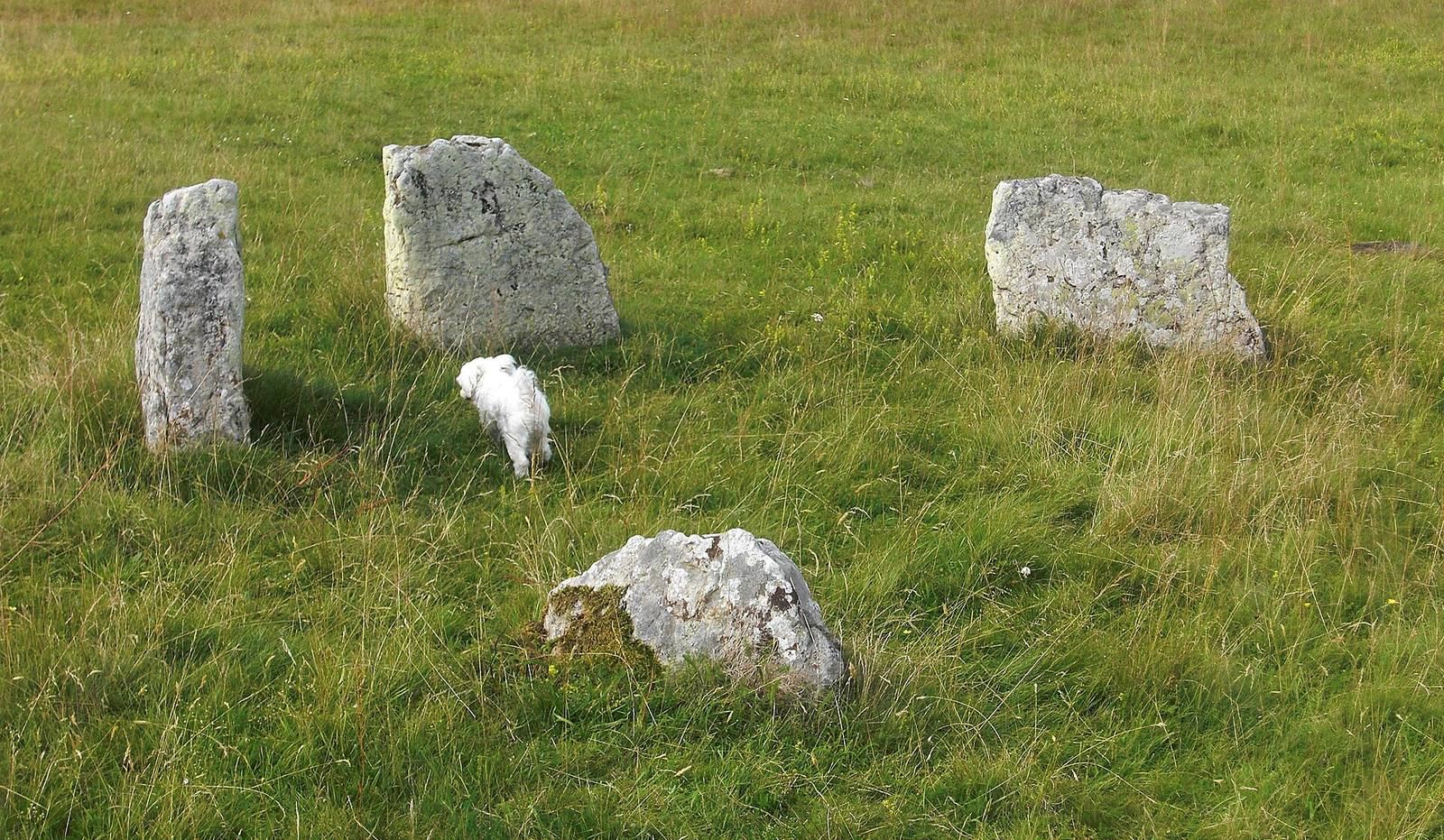
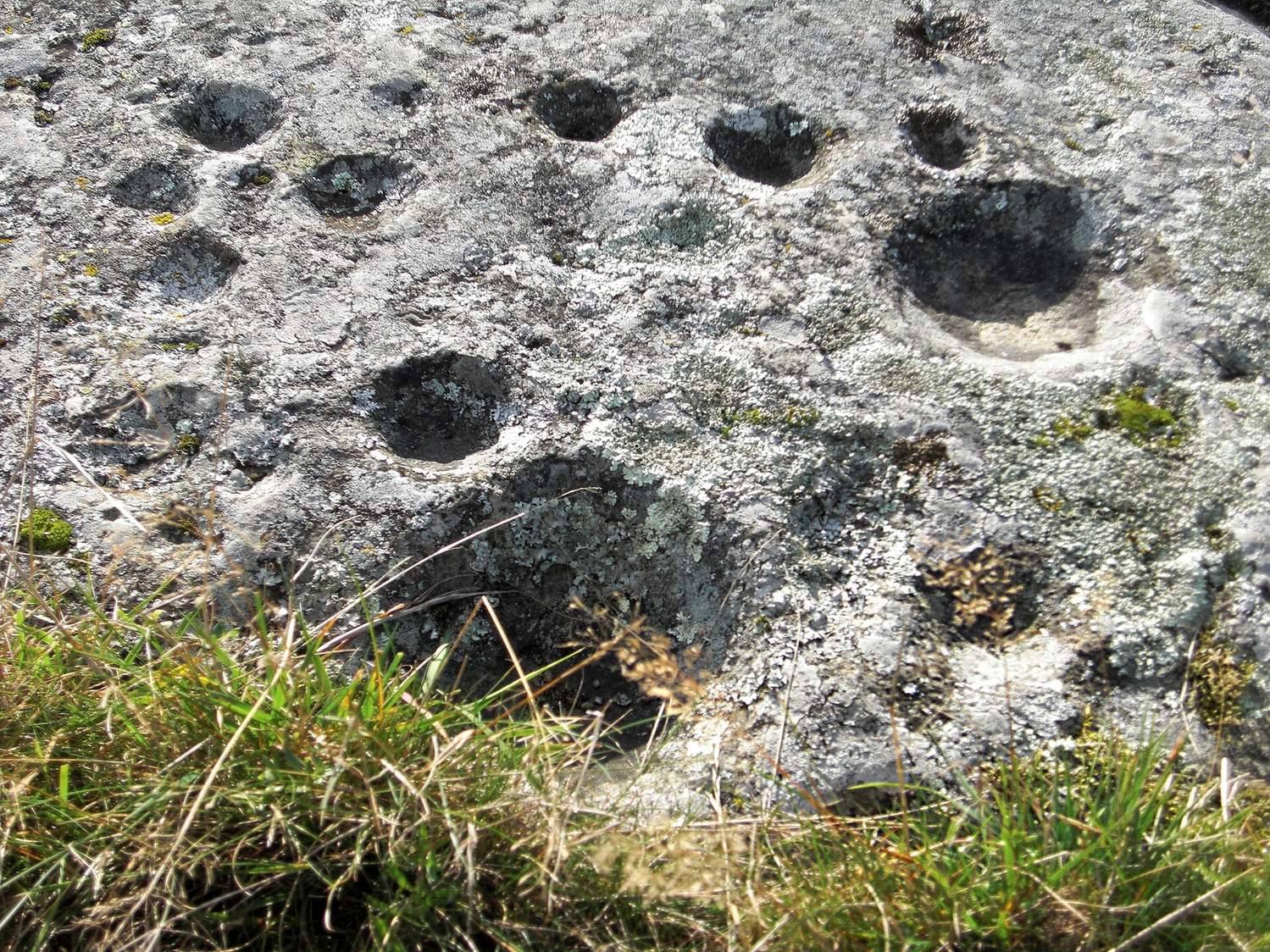
Iron Age remains include several stone settings, among them a triangular arrangement assigned to the late Iron Age, two small stone circles, and standing stones. Twelve stones form an approximate north-to-south line. The circles belong to a type generally built during the five centuries leading up to AD 500, though their purpose is uncertain. Thirteen occurrences of cup marks, small cup-shaped hollows, appear on passage-grave capstones and standing stones, with nearly 300 marks in total. East of the burial ground, traces of earlier cultivation include Iron Age ridge-and-furrow fields, with parallel ridges and furrows left by farming.