St. Ulrich’s Priory in the Black Forest: A Cluniac Monastery in Germany
Site at a Glance
- Popularity
- Medium
- Country
- Germany
- Primary era
- Early Modern
- Eras represented
- Medieval, Early Modern
- Civilizations
- Habsburg, Holy Roman Empire
- Site type
- Religious
- Remains
- Monastery
On this page9 sections
History
St. Ulrich’s Priory in the Black Forest is a former monastery in Bollschweil, Germany. It took shape around 1083 during the Investiture Controversy, a medieval conflict over who had authority to appoint senior church officials, and became a Cluniac house within the Benedictine tradition associated with Cluny Abbey in Burgundy.
From Tuniberg to Zell
The monastic community began before 1072 on the Tuniberg, near Ober- and Unterrimsingen, then moved to Grüningen, near Oberrimsingen, between 1077 and 1080. Ulrich of Zell, a monk associated with Regensburg and Cluny, took charge of the community. Hesso of Eichstetten and Rimsingen, a nobleman, and Hermann I, a territorial ruler of Baden, had helped establish its connections with Cluny.
At Ulrich’s instigation, the monks moved again, settling at Zell in the Möhlin Valley around 1087. A small monastic establishment belonging to St. Gall Abbey, a Benedictine monastery in what is now Switzerland, had been there in 868. The priory acquired land around Zell from Burkhard of Fenis, also known as Burkhard of Hasenburg, bishop of Basel from 1072 to 1107. The land had to be cleared before it could be used.
Holdings, protectors, and decline
St. Ulrich became the only Cluniac house on the Rhine’s right bank and gained estates in the Breisgau, Alsace, and Ortenau. It held the rectories of Grüningen, Wolfenweiler, Bollschweil, and Hochdorf. In 1315, it exchanged the disputed rectory of Achkarren for the one at Feuerbach.
Secular protectors included the Counts of Nimburg and the Counts of Freiburg. Bishops of Strasbourg held this role in 1200, Hohenstaufen kings in 1236, and dukes of Further Austria from 1445. The Hohenstaufen were a medieval German dynasty; Further Austria comprised Habsburg territories west of the Austrian heartlands. During the 13th century, the community dwindled to four to seven monks, besides the prior. The settlement and priory were known as both Zell and St. Ulrich until the 14th century, when the founder’s name became established.
Revival and loss of independence
Under Prior Paulus von Kůnheim, who led the priory from 1448 to 1489, the community revived. Two fires occurred during his tenure. The first, before 1464, was followed by a rapid rebuilding. As the priory declined later, Cluny placed its administration with the custodian, an officer of the Basel cathedral chapter, who in turn put it under the prior of Istein.
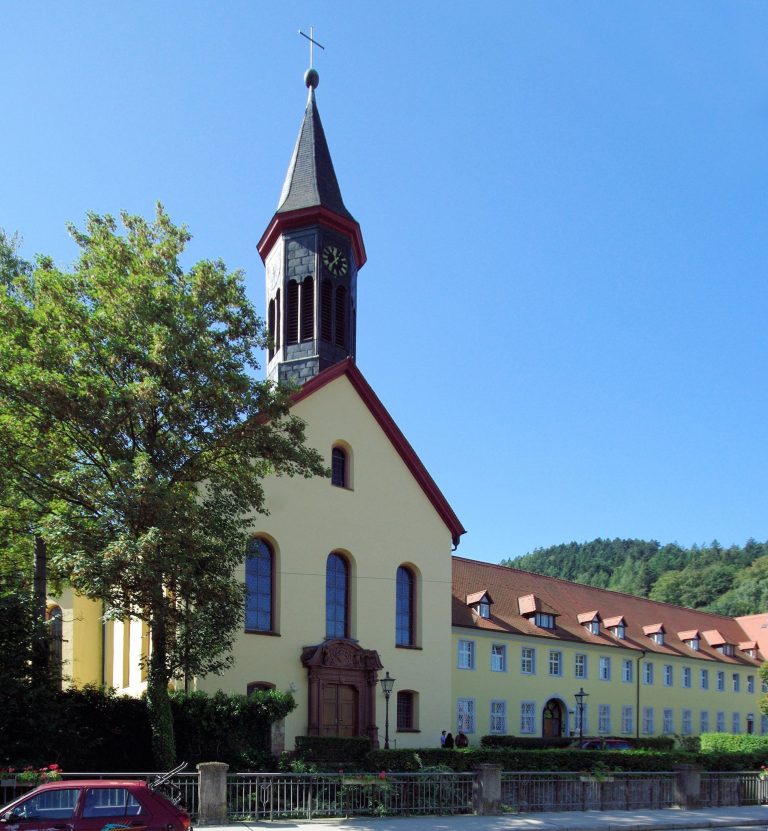
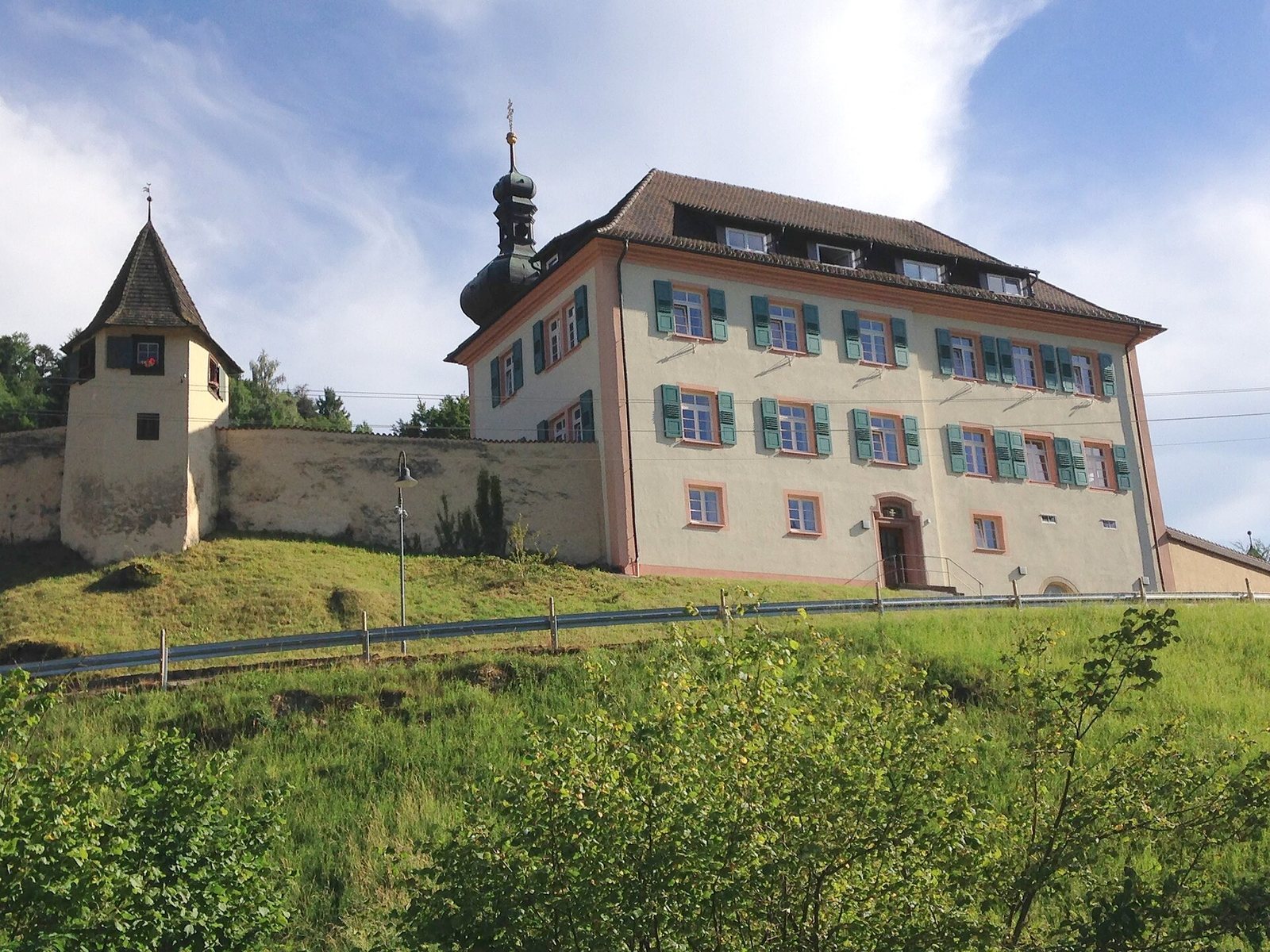
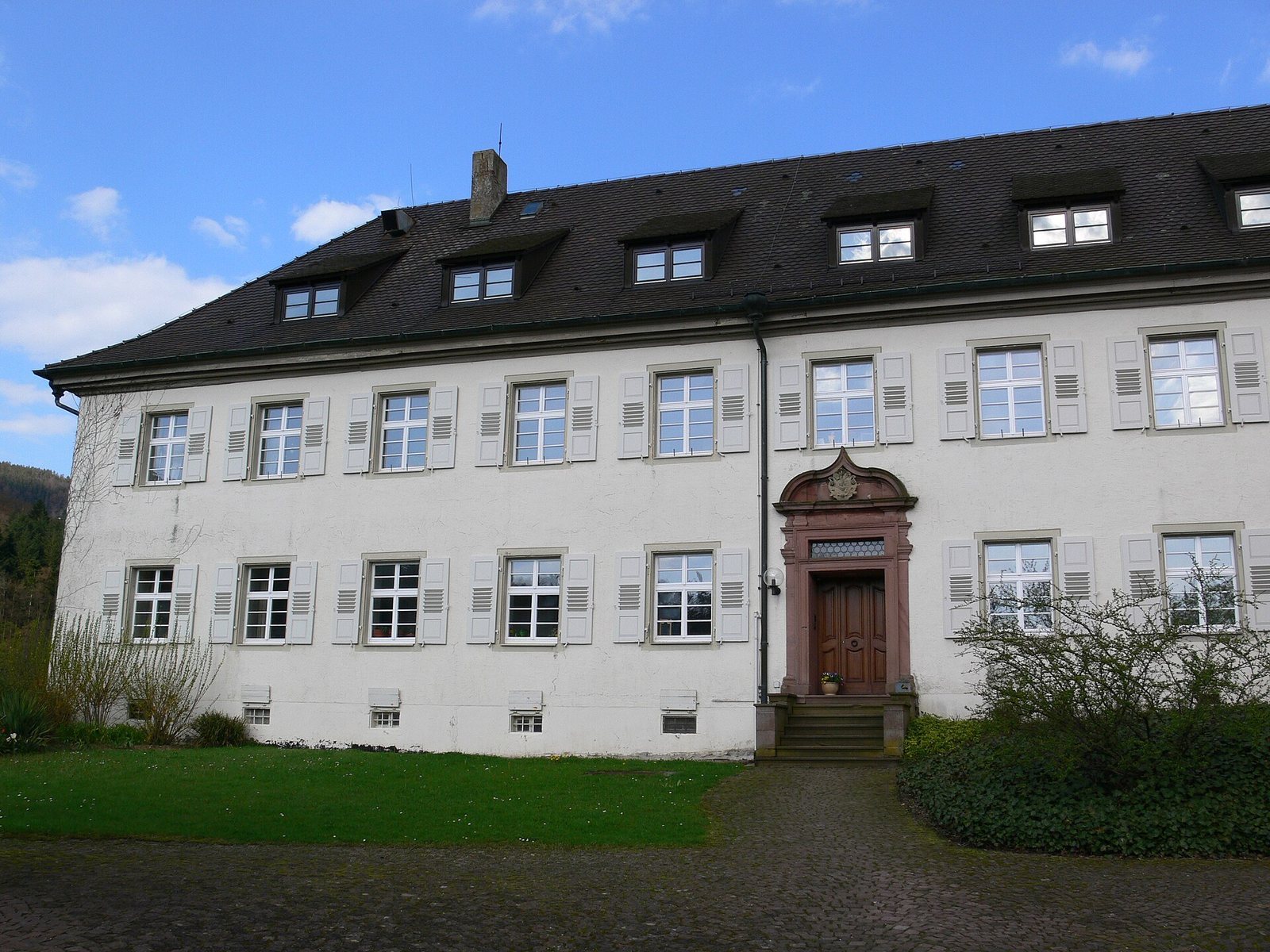
Stephan Baudin was the last Cluniac prior. In 1547, St. Ulrich became a priory of St. George’s Abbey; in 1560 it passed to St. Peter’s Abbey and was incorporated into St. Peter in 1578. The priory was secularized in 1806 along with the monastic community at St. Peter, and its former church later became a parish church. Since 1949, the Archdiocese of Freiburg has used former priory buildings as an adult education center serving rural communities. Since 1974, St. Ulrich has been part of the municipality of Bollschweil in Baden-Württemberg’s Breisgau-Hochschwarzwald district.
Remains
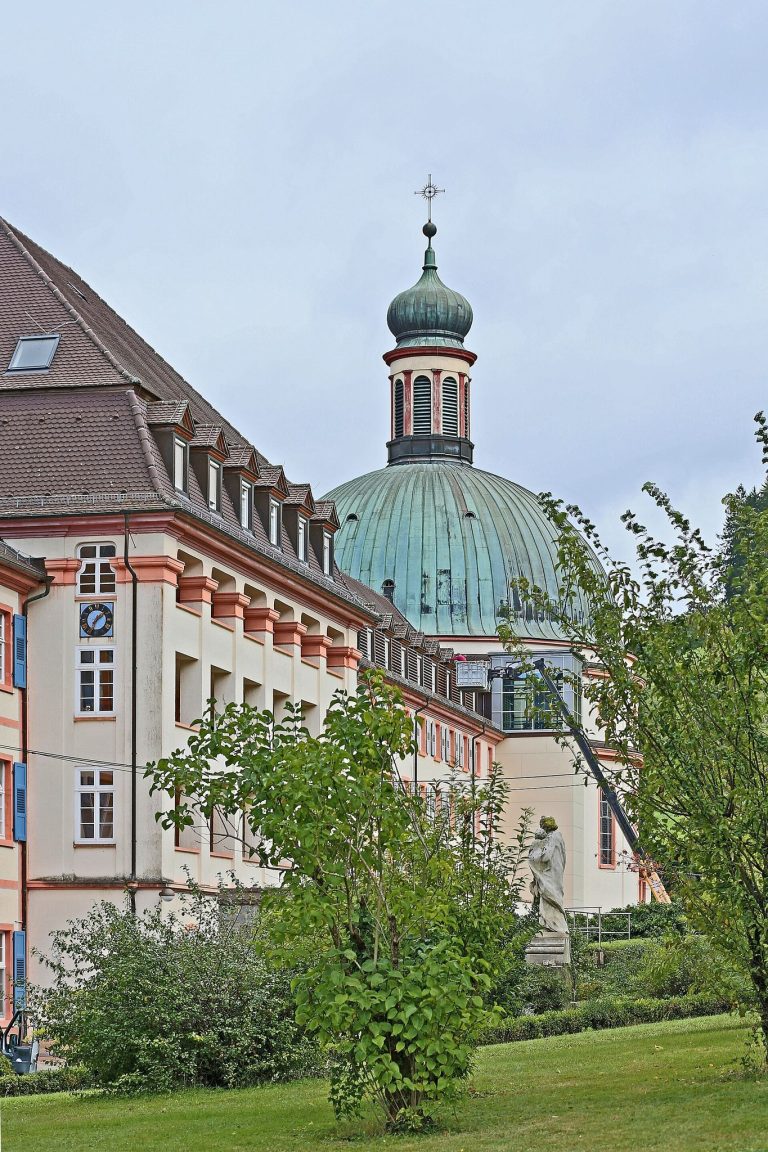
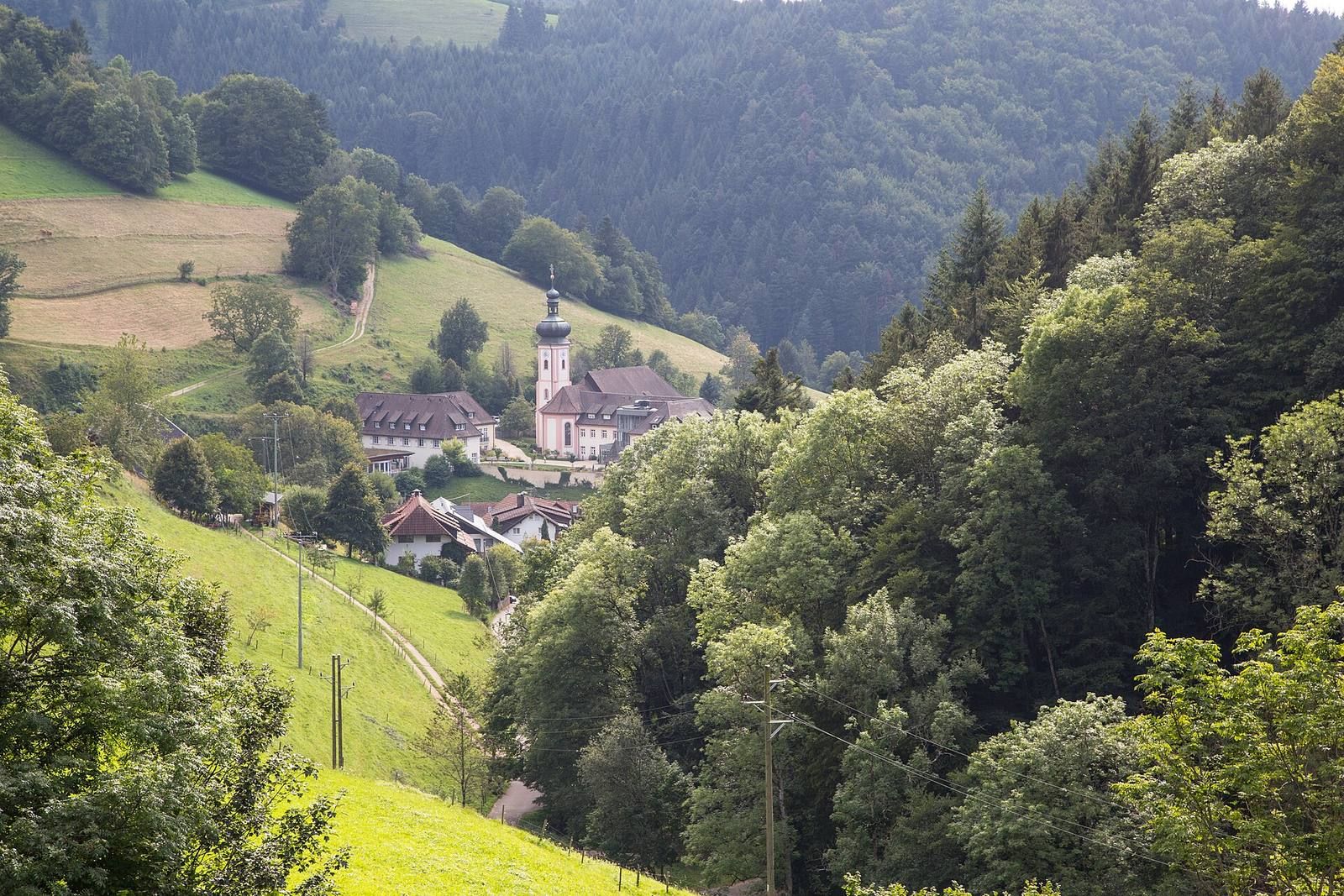
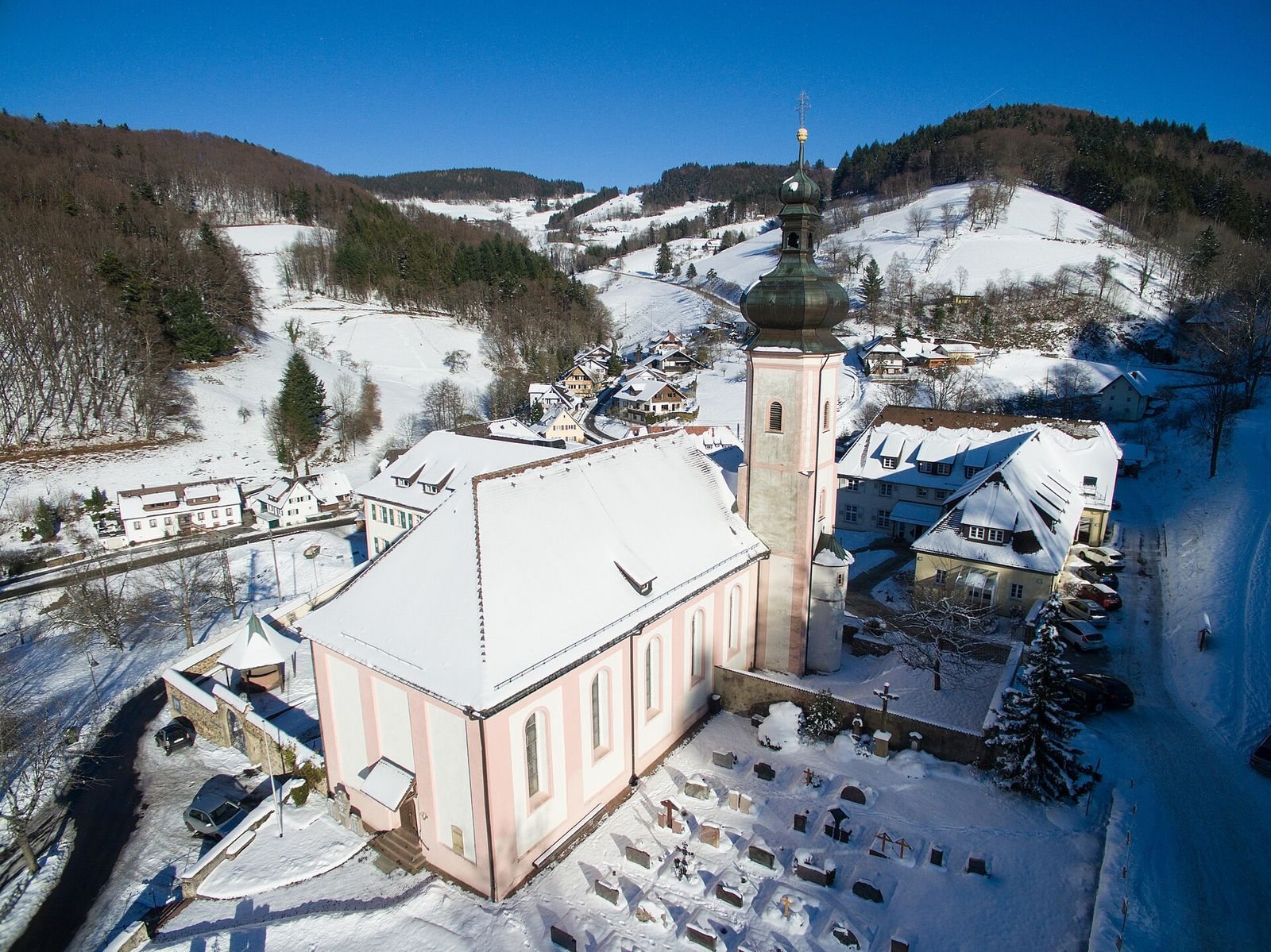
The surviving remains include a Baroque church, traces of medieval church buildings, a large basin in front of the church, and a late-13th-century sandstone sculpture.
Church and associated remains
Church
Peter Thumb built the Baroque church on commission from Abbot Benedikt Wülberz. Traces of earlier medieval church buildings remain. Their history included altar dedications, demolition, repairs, and rebuilding.
Basin
A large basin in front of the church dates to the 11th or 12th century. It measures 2.59 metres across. Its size makes it more likely to have served as a fountain or a washing basin for the monastery than as a baptismal font, which would usually be smaller.
Madonna and Child
The church houses a sandstone Madonna and Child from the late 13th century. The sculptor who made it also worked at the building workshop of Freiburg Minster.