Kozachyi Island: A Coastal Fort and Military Base in Ukraine
Site at a Glance
- Popularity
- Medium
- Country
- Ukraine
- Primary era
- Modern
- Eras represented
- Modern
- Civilizations
- Russian
- Site type
- Military
- Remains
- Fort
On this page17 sections
History
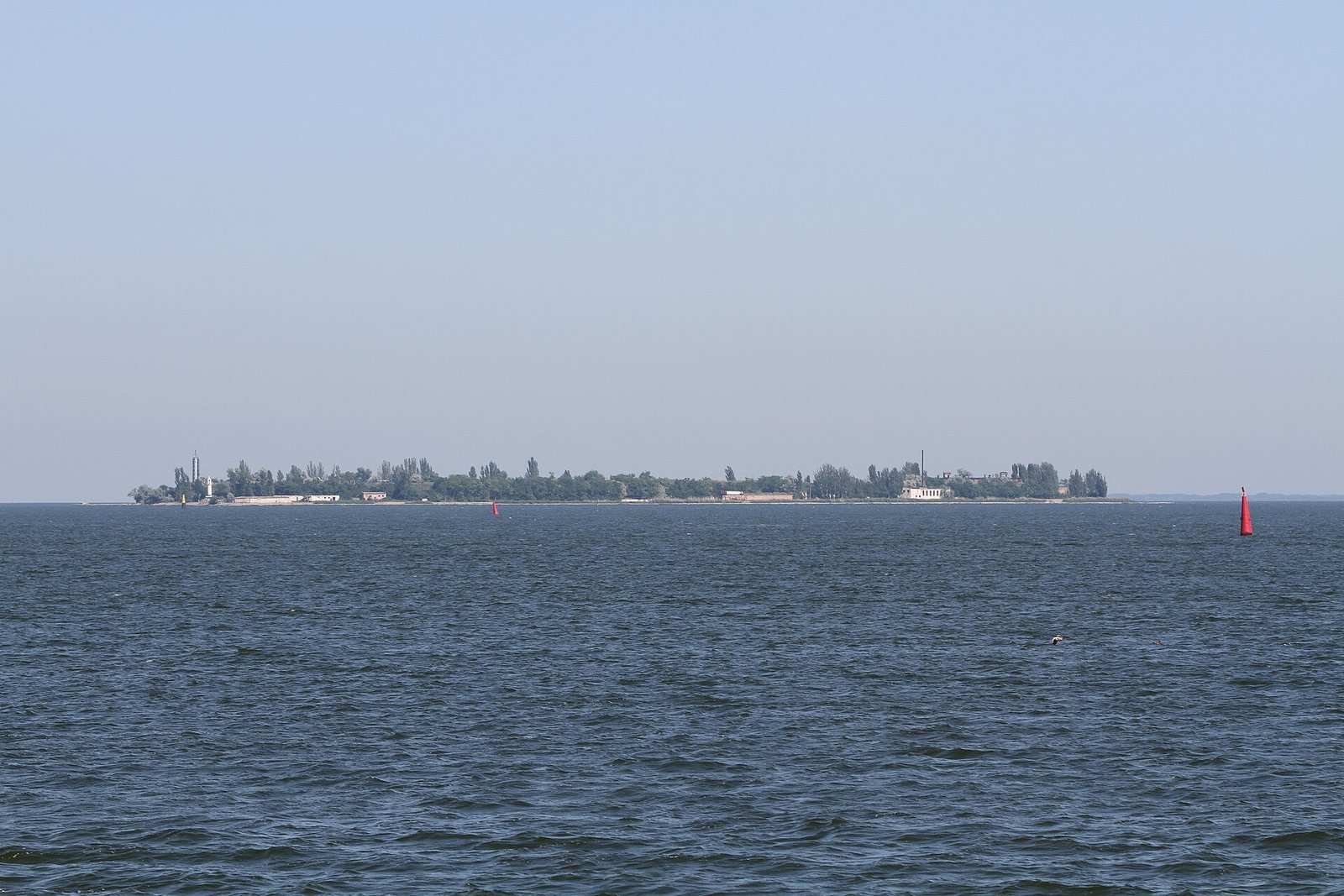
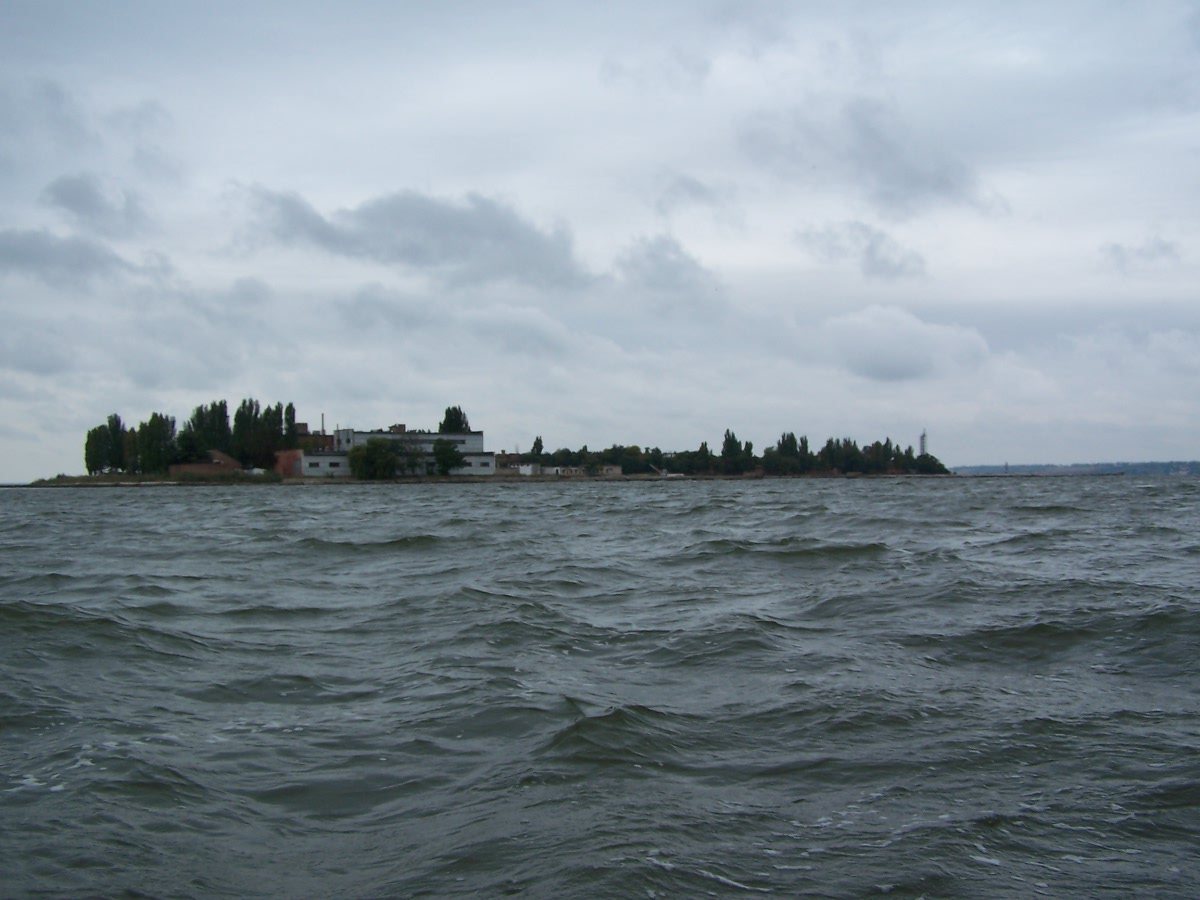
Kozachyi Island is an artificial coastal fortification in Ukraine, at the mouth of the Dnieper-Bug estuary between the Kinburn Spit and Ochakiv. Russian imperial construction began in 1874, and its block-fort was completed in 1880 to defend the estuary entrance. The island later served as a military base through several wars and political changes.
Plans for an estuary defense
After Russian forces captured Ochakiv during the Russo-Turkish War of 1787 to 1791, Prince Grigory Potemkin ordered the town’s Turkish fortifications demolished. Their destruction left the estuary entrance without its former defenses, prompting later plans to protect the waterway. In the 1850s, military engineer François Sainte de Wollant proposed building one or two artificial forts in the estuary. These proposals were rejected. One suggested site lay on the Kinburn shoal, about 150 fathoms from the channel and near a floating lighthouse.
The eventual project was associated with the Ochakiv shoal, where channel dredging by the mid-nineteenth century had stabilized underwater currents. A tradition credited the idea for an island fort to Generalissimo Alexander Suvorov and Empress Catherine II, but archival records do not support that attribution. The plan instead developed from a proposal by Dmitry Milyutin in 1857. Military engineer Eduard Totleben supported the project and helped secure its approval.
Emperor Alexander II ordered a fort in the estuary in 1873. Its construction plan received approval on 17 August 1874, and work began that autumn under military engineer Borisov, with about a thousand workers. The island was first called Battery Island, after the coastal artillery battery there. Its longer early name referred to the Nikolaev Coastal Battery on the Ochakiv roadstead, an offshore anchorage.
The imperial fort and its guns
The battery was armed during the Russo-Turkish War of 1877 to 1878, interrupting construction. The Turkish fleet did not try to enter the estuary, and the guns did not see combat. On 9 August 1878, Alexander II ordered the Ochakiv defenses retained permanently and gradually adapted for long-term use. Work on the island resumed and was completed in 1880. Planned postwar construction across the fortifications was finished by 1891.
In 1891, the Nikolaev Battery had thirteen 11-inch guns, eleven 9-inch mortars, five 6-inch guns, two 57-mm Nordenfelt rapid-fire coastal guns, and eight 9-pound field guns. The large-caliber weapons could fire only once every two to three minutes. The 57-mm guns helped crews judge range, while the field guns were intended to repel landings. Two retractable artillery installations arrived in 1898, but poor reliability kept them out of service.
By the beginning of the First World War, four rapid-firing 152-mm guns had been installed. German and Turkish ships avoided fighting the battery, and its garrison saw no combat during the war. Lieutenant Pyotr Schmidt, who had led the 1905 uprising aboard the cruiser Ochakov, was held on the island from late November 1905 until 6 March 1906. He was then transferred to Berezan Island and executed there.
The Civil War and interwar rearmament
During the Russian Civil War, fought between Bolshevik Reds and their anti-Bolshevik opponents, the Whites, the island remained in Red Army hands until a White landing force captured it on 26 July 1919. Two of its four 152-mm guns were destroyed in the assault. The other two were disabled when their breechblocks were removed and sunk. During the White siege of Ochakiv, the island helped direct artillery fire. The White forces departed in early February 1920. The battery was disabled, and although its engineering works remained intact, looting had made full restoration impractical.
In 1920, four 130-mm naval guns from the Baltic Fleet were assigned to the island. Three went into Battery No. 8, while the fourth armed a floating battery on a barge; a 76-mm field gun was added for anti-aircraft defense. On 20 July, the White cruiser General Kornilov shelled the island, which answered with seven rounds. Whether a shell hit the cruiser is uncertain: the shots may have fallen into the water nearby, though the final round could have struck its hull. The cruiser stopped firing and withdrew. White control of the island could have helped the forces seize the western Black Sea coast, including Odesa, and join troops under Józef Piłsudski.
Romanian monitors of the Danube Flotilla operated near the estuary that summer. When they came within range, the island’s battery fired, and the vessels withdrew without engaging it. In August, a White fleet under Vice Admiral Sablin attacked. The battleship General Alexeyev opened fire from about 18 km away, beyond the reach of the island’s 130-mm guns. Six of its first 21 shells, each 305 mm, hit the island. It fired 165 shells at the island and Ochakiv combined. Other ships also shelled the position, but the attack failed: all three island guns remained intact, although Red Army soldiers were killed or wounded.
The battleship and destroyer Captain Saken sailed for Sevastopol on 17 August, and the other ships withdrew later. The General Kornilov continued shelling at intervals, leaving on 5 November after Red Army forces had driven Wrangel’s troops into Crimea in late October. In the late 1920s, two 203-mm guns taken from the Baltic Fleet battleship Andrei Pervozvanny were briefly mounted on wooden bases. The 130-mm weapons were later removed, and two more 203-mm guns were installed on concrete bases. In the early 1930s, the shoreline and fortifications were further strengthened.
The Second World War
At the start of the Second World War, Battery No. 22 on the island had four 203-mm coastal guns and four 76-mm anti-aircraft guns. After the Red Army left Ochakiv on 20 August 1941, part of the city’s garrison moved to the island. By 25 August, the battery had only 24 shells for its 203-mm guns. On the night of 30 August, the motor-sailing transport schooner Shtepenko brought more ammunition under fire.
German forces shelled and bombed the island daily, firing an average of about 100 shells per day. On 22 September, four armored boats of the Danube Flotilla evacuated the garrison without casualties. The battery’s gun barrels were blown up.
Reconnaissance units and Ukrainian naval use
In June 1953, the Soviet Main Intelligence Directorate, the country’s military intelligence service, decided to establish seven naval reconnaissance posts. The Sixth Naval Reconnaissance Post was formed in Sevastopol that October and transferred to the island in March 1961. In August 1968 it became the 17th Separate Special Forces Brigade. The site was kept secret: civilian vessels could not approach, and photography was prohibited.
The brigade’s divers carried out underwater security and clearance work. Their assignments included protecting ships during a youth and student festival in Cuba, helping after the disaster involving the motor ship Nakhimov, and removing underwater ordnance near Odesa, Kherson, and Izmail. On 1 January 1990, the brigade was reorganized as the 1464th Reconnaissance Point.
After the Soviet Union collapsed, the island became a Ukrainian Navy base. In April 1992, about a thousand personnel swore allegiance to the Ukrainian Armed Forces, and the 7th Separate Special Operations Brigade was established. Those who did not take the oath left. The unit was later renamed the 17th Naval Reconnaissance Point and Special Operations Center.
In October 2003, the unit became the 73rd Naval Special Operations Center. It moved to a military town in Ochakiv in 2004, leaving a small guard detachment on the island. The unit was disbanded in December 2005, and its property was offered for sale. The buildings were abandoned, infrastructure including the well deteriorated, and a dredger deepening a shipping channel accidentally damaged the island’s power cable. After 2014, the island was again used as a base for the 73rd Naval Special Operations Center. Marine Corps cadets held exercises there in 2020.
On 1 May 1920, the island was renamed Pervomaiskyi, and Maiskyi was also used informally. Its present name, Kozachyi, means Cossack-related in Ukrainian. It became the official name on 17 January 2025 under Ukraine’s decommunization policy, which removes Soviet-era names and symbols from public life.
Remains
The island covers 0.073 square kilometres, extends about 1.4 km in length, and rises to roughly 8 m above sea level. It lies about 3.5 km from Ochakiv and approximately 500 fathoms from the end of the Kinburn Spit, at the end of the spit’s underwater extension. The fort and its artillery works were built on a shifting shoal. That shoal stretched about 500 fathoms westward and included a sandbank roughly 13 to 14 feet deep, which sometimes emerged above water and shifted 200 to 300 fathoms along the channel.
Island foundation and shoreline works
Artificial foundation
Three lines of sheet piles driven into the seabed formed the island’s foundation. Workers filled the space between them with stone and clay, then covered the fill with sand. Building materials came from Ochakiv and the Kinburn Spit.
Breakwater and harbor
A stone breakwater encircled the island to limit erosion from waves. Its large blocks came from the demolished Kinburn Fortress. A harbor was also constructed to moor ships.
Fort and artillery positions
Block-fort and casemates
The main work was a block-fort, a fortified artillery position intended to control passage through the estuary. By 1881, the island’s facilities included a pier, warehouses, 40 casemates, powder magazines, and a railway branch. A casemate is an enclosed fortified chamber used to house guns or protect people and supplies.
Gun platforms
Rotating, elevating platforms let large guns turn to fire in different directions, then descend into casemates for protection. The two installations delivered in 1898 were designed to raise and lower guns from underground positions. They were later removed.
Later defenses and memorials
Interwar strengthening
By the early 1930s, concrete had reinforced the shore, the earth ramparts had been raised, and the casemate walls had been thickened to 2.5 m. An artesian well was drilled to provide water for the garrison. After the buildings were abandoned following the unit’s 2005 disbandment, the well and other infrastructure deteriorated.
Schmidt and Potemkin memorial
One casemate served as Pyotr Schmidt’s place of confinement. A memorial on the island commemorates Schmidt and the crew of the battleship Potemkin, incorporating part of that ship’s foremast.
Military memorials
A monument to reconnaissance divers was unveiled on 11 October 2003. Made from actual diving equipment, it was based on sketches by naval officer Captain-Lieutenant Kushnarenko. Another monument honors artillery personnel from Batteries 7, 15, 22, 84, and 85 of the Ochakiv fortified sector who served from 1941 to 1945.