La Roque Saint-Christophe: A Prehistoric Cliff Settlement and Medieval Fortress in France
Site at a Glance
- Popularity
- High
- Country
- France
- Primary era
- Medieval
- Eras represented
- Medieval
- Civilizations
- Duchy of Aquitaine
- Site type
- Military
- Remains
- Fortified Town
On this page10 sections
History
La Roque Saint-Christophe is a prehistoric cliff settlement near Peyzac-le-Moustier in Dordogne, France. Its shelters were used over many millennia, and in the Middle Ages the site became a fortress and refuge.
Prehistoric and ancient occupation
Stone tools of the Mousterian, a Middle Paleolithic tool culture commonly associated with Neanderthals, date to about 55,000 BP. BP means “before present,” using 1950 as the reference year. Neanderthals are thought to have lived here around 50,000 BC, and a Neanderthal skeleton from the site dates to about 40,000 years ago. Early modern humans, sometimes called Cro-Magnon, are placed at the site around 25,000 BC.
Natural shelters were used from the Upper Paleolithic through the Iron Age. Settlement continued from the Neolithic, around 3000 BC, through the Bronze and Iron Ages, the Gallo-Roman period of Roman rule and cultural life in Gaul, and the Middle Ages.
Fortress and medieval refuge
The first written reference to the site dates to 976, when Frotaire, bishop of Périgueux, decided to build a fortress to protect local people from Viking raids. In later centuries, the cliff shelters and settlement served as refuges, including during the Hundred Years’ War, a series of conflicts between the English and French crowns conventionally dated to 1337–1453. The fortress also functioned as a fortified town against the English during that war.
Wars of Religion and destruction
In the sixteenth century, Huguenots, French Protestants, occupied the settlement and fortress, and some dwellings provided them with refuge. In 1588, during the French Wars of Religion, conflicts between Catholics and Protestants in sixteenth-century France, King Henry III ordered their expulsion and the destruction of the settlement’s buildings and fortifications.
Excavation
In 1912 and 1913, prehistorian Denis Peyrony, a scholar of societies before written records, excavated a shelter at the foot of the cliff.
Remains
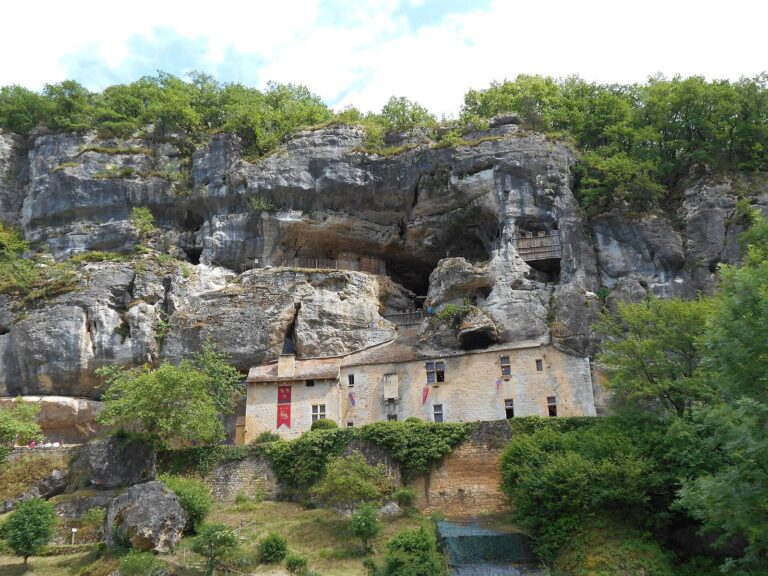
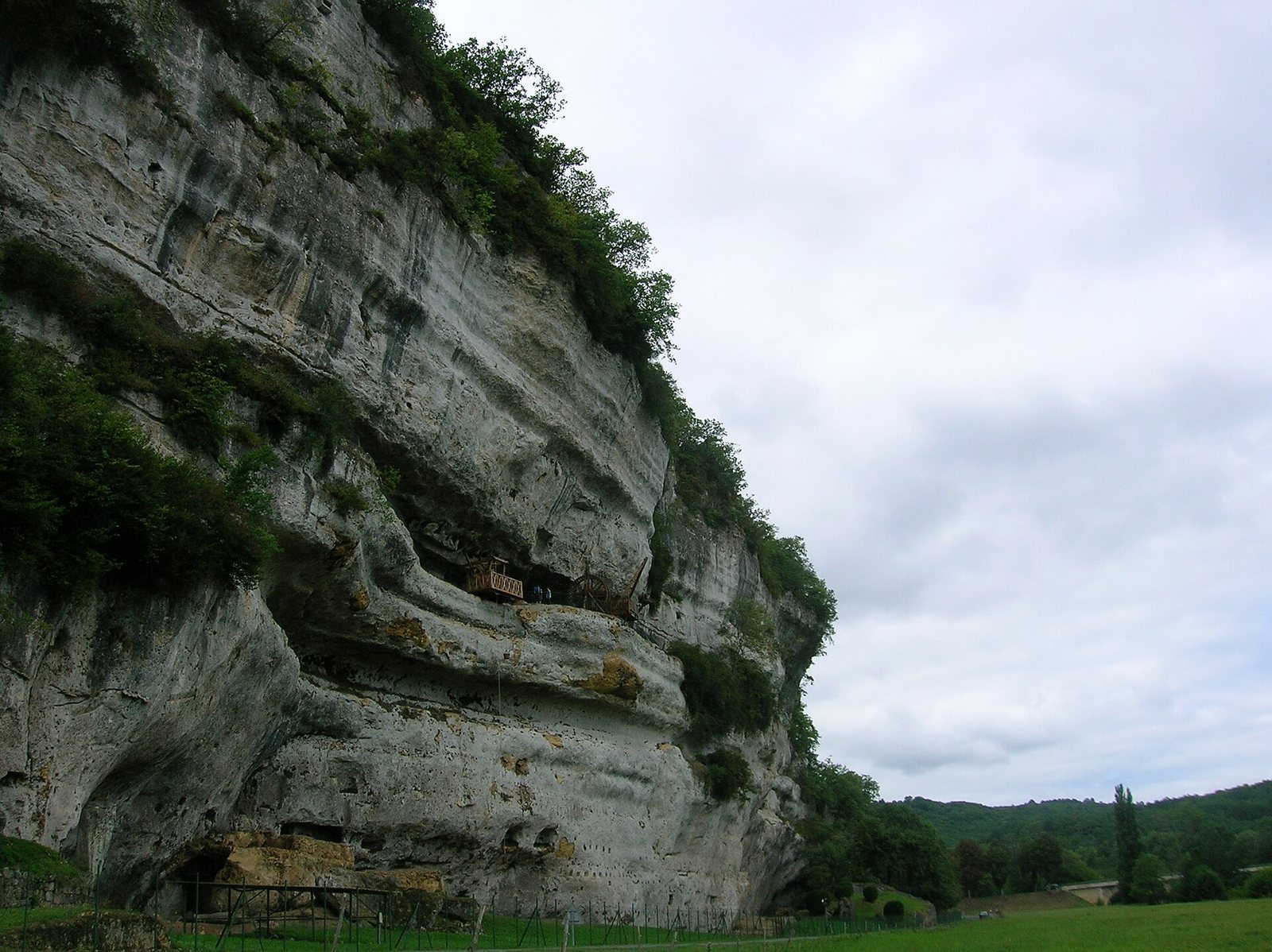
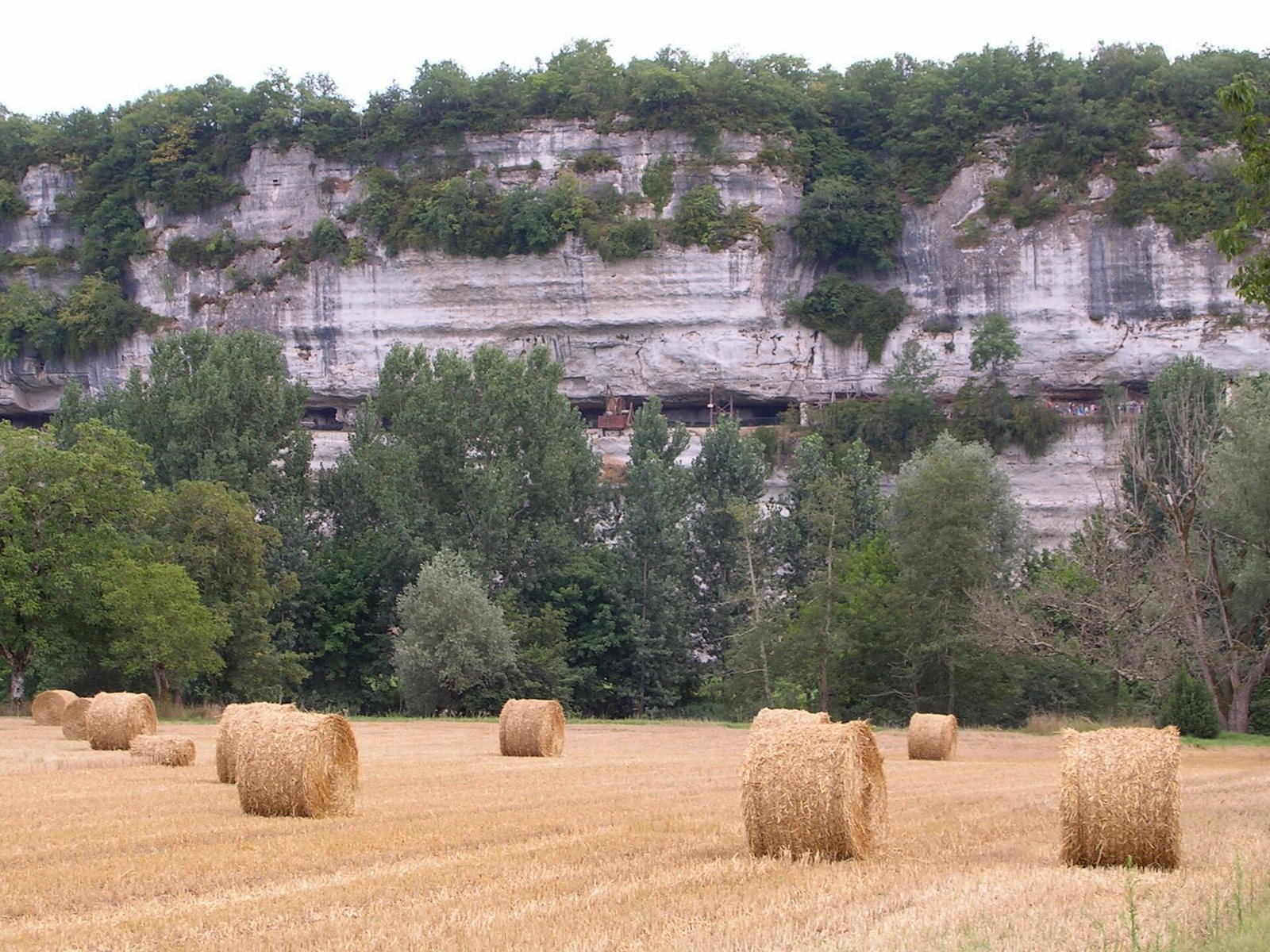
The site occupies a limestone cliff about one kilometre long and 80–100 metres high above the Vézère River and a road in the valley. Five levels of terraces and shelters extend across the rock. The cliff also supports a diversity of protected plant and animal species.
Cliff and terraces
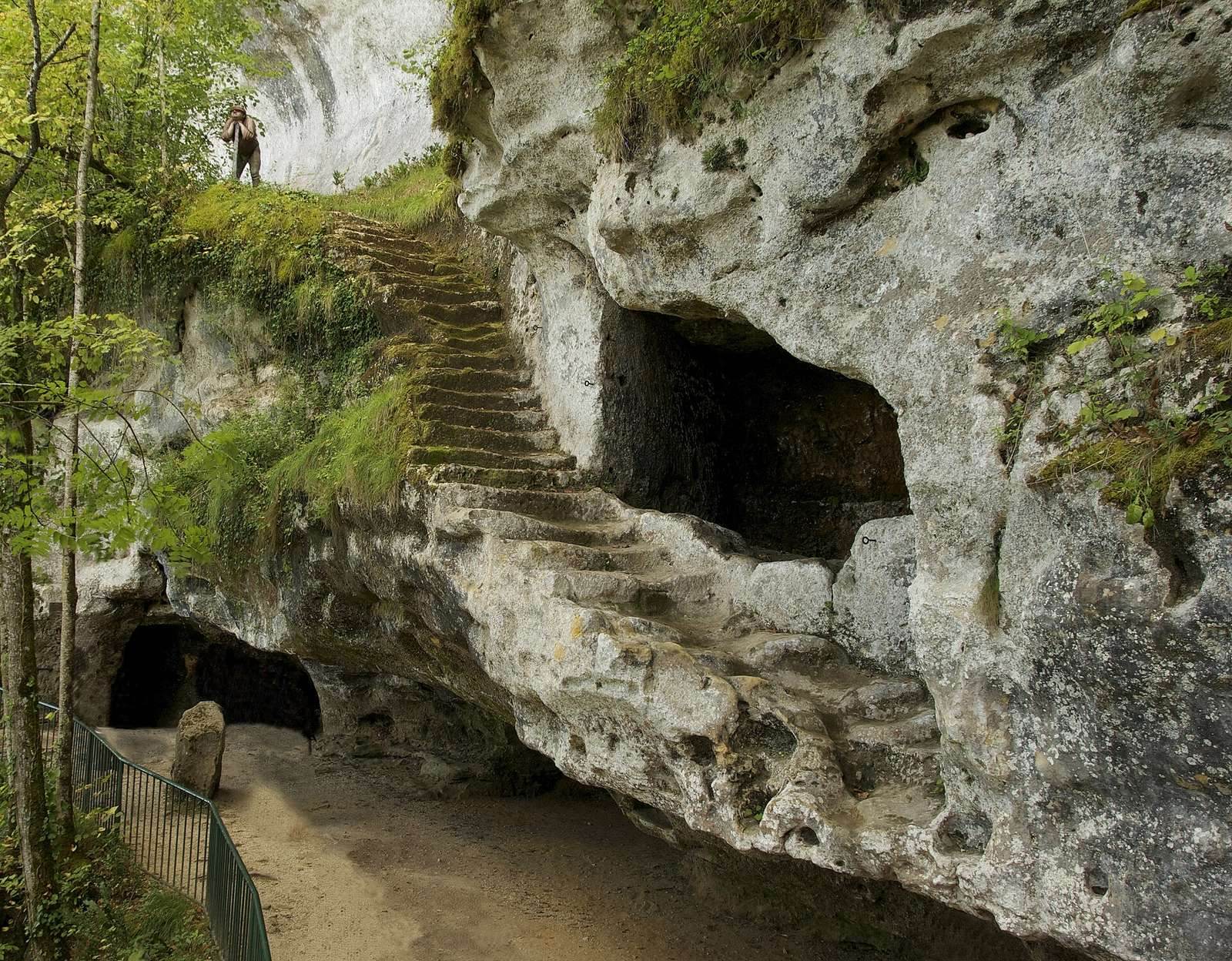
River erosion carved the limestone over approximately 60 million years, while river action and frost during the Quaternary, the most recent geological period, shaped the terraces. A natural terrace more than 100 metres long lies halfway up the cliff. A path and stairs cut into the rock reach it.
Shelters and dwellings
Natural shelters, including large cavities, open along the cliff’s base. Long terraces and shelters occur across its five levels, where artificial holes in the rock held roof timbers for successive dwellings.
Archaeological finds
Finds include the Neanderthal skeleton dating to about 40,000 years ago, Upper Paleolithic stone and bone tools, Neolithic pottery sherds, and remains from the Bronze and Iron Ages. An engraving depicting a Madonna, an image of Mary, and a fish is also among the finds.
Fortress-life reconstructions
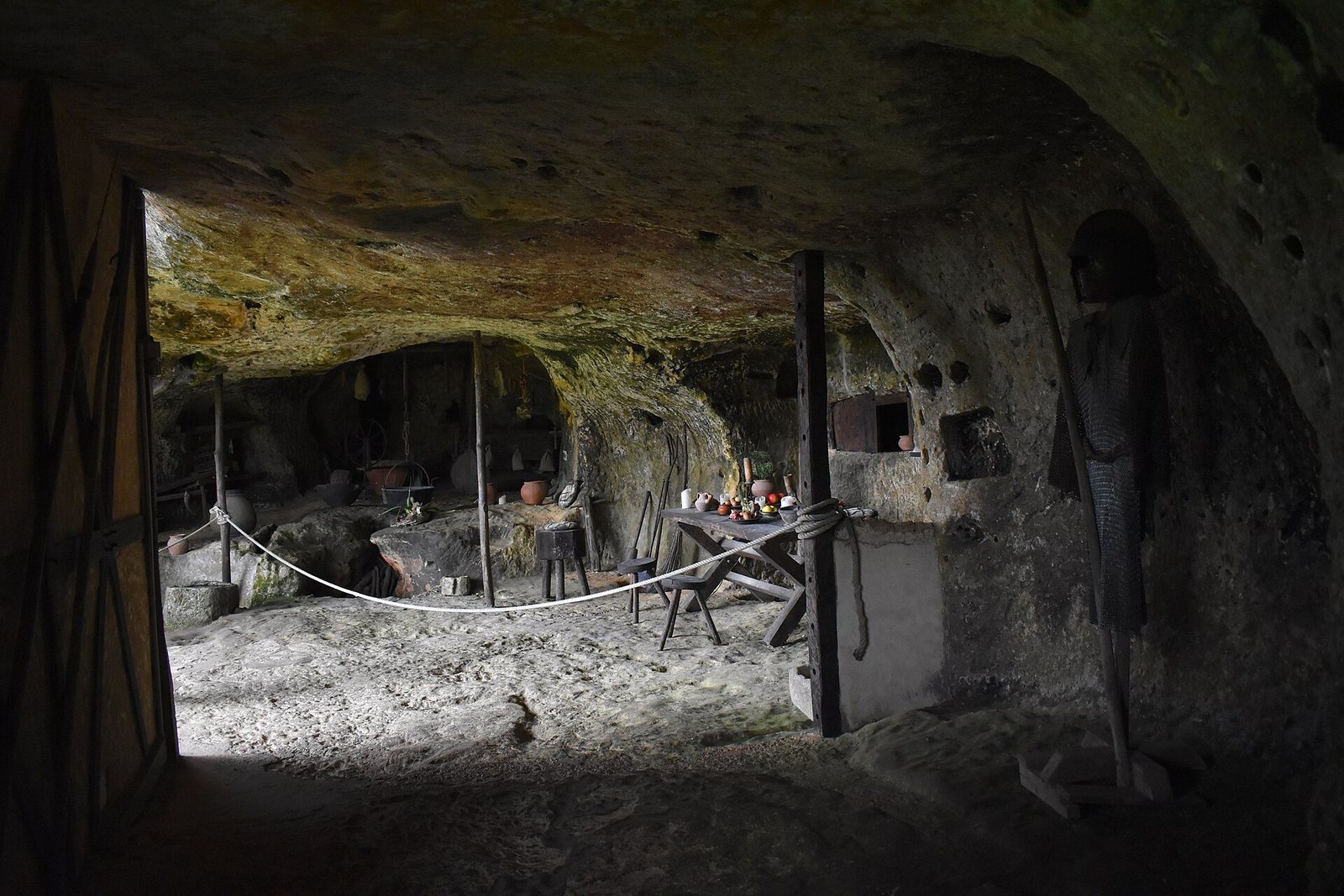
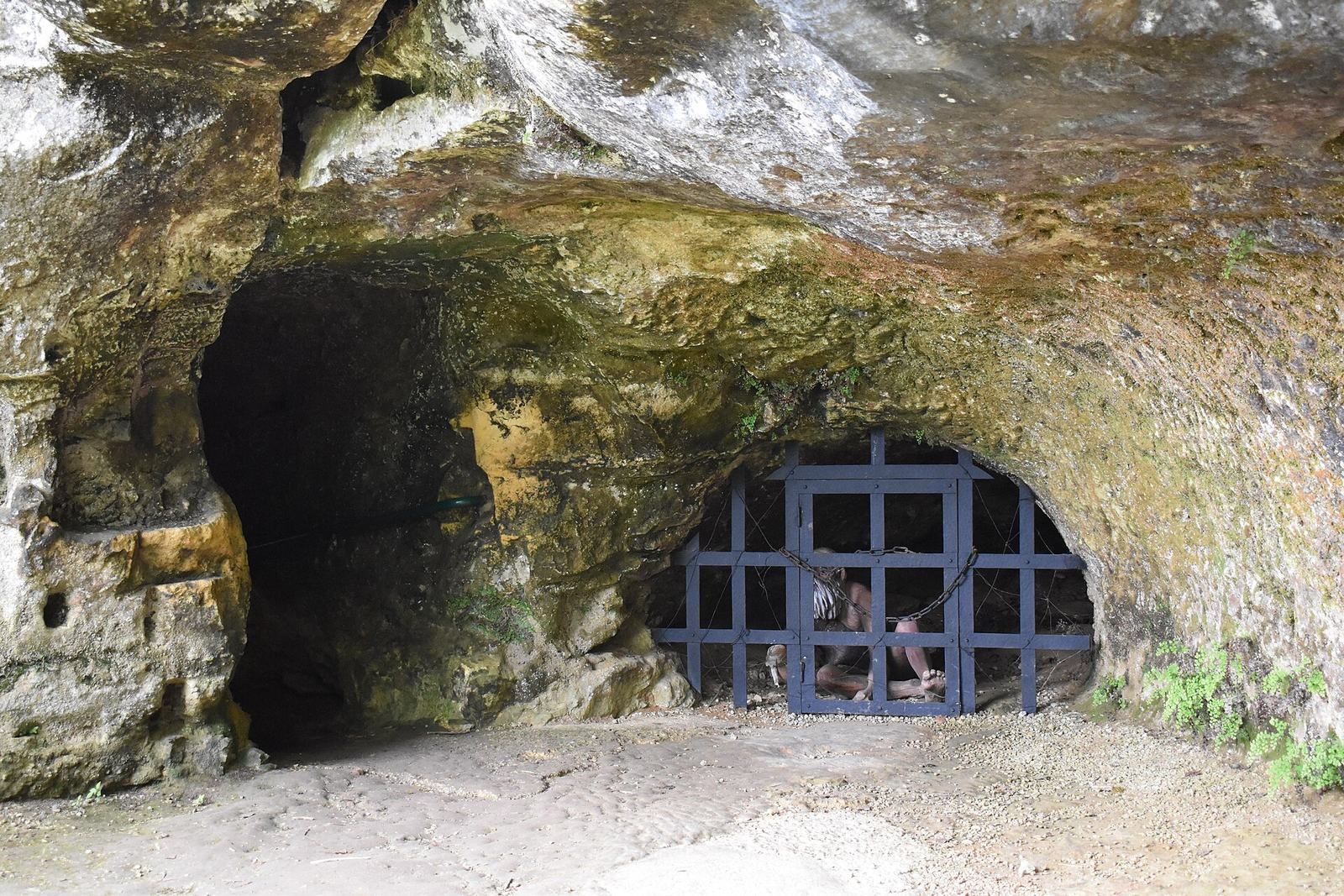
Modern interpretation presents twenty locations associated with fortress life, including a medieval building site, forge, quarry, weapons hall, kitchen, and drum winch, a device for winding or pulling loads. Reconstructions include a dwelling with a kitchen dating to the year 1000 and a medieval building site.