Niehuus Castle: A Medieval Fortification and Customs Post
Site at a Glance
- Popularity
- Low
- Country
- Germany
- Primary era
- Medieval
- Eras represented
- Medieval, Modern
- Civilizations
- Danish
- Site type
- Military
- Remains
- Castle
On this page6 sections
History
Foundation and strategic role
Niehuus Castle was a medieval lowland fortification built around 1345 near Niehuus in Harrislee, Germany, west of Flensburg. Count Klaus of Holstein-Rendsburg established it as a defensive work and customs post on the northern approach to Flensburg. The castle was also known as Nyhus and Dat niege Huus, meaning “the new house.”
Klaus and his brother Heinrich held the Duchy of Schleswig as security under a pledge, rather than as outright owners. Fearing that King Valdemar IV of Denmark would try to seize the duchy, the brothers fortified Flensburg as well as establishing Niehuus, which formed part of the city’s defenses.
The castle stood beside the Krummer Weg, a route laid out around the twelfth century between Flensburg and the Ox Road, the main medieval route through Jutland. Merchants and pilgrims traveling toward Rome, Jerusalem, and Santiago de Compostela used the road. Niehuus served as both a defensive position and a place for collecting tolls.
On June 4, 1365, the Holstein nobleman Hermann Wonsflet issued a Latin receipt at Niehuus for 150 marks in favor of the two counts of Schauenburg. A small settlement grew near the castle and was first noted in 1371.
Royal customs and the castle’s decline
Niehuus later passed to the Danish crown. Erik of Pomerania established a customs station there, and a toll was collected on the Ox Road for a few years. A complaint from 1423 says that a bailiff appointed by the Danish king demanded eight shillings for each ox.
The only known captain of Niehuus was Lorentz v. Heesten, a squire from Stovgård in North Schleswig. He held the castle under a pledge, with rights secured by the arrangement rather than outright ownership, from about 1405 to 1409. In 1411, the larger castle of Duburg was built above the western part of Flensburg’s town center. Niehuus appears to have helped protect it during construction, but Duburg’s completion ended Niehuus’s military importance. The castle was destroyed in 1431.
Remains
Mound and defensive enclosure
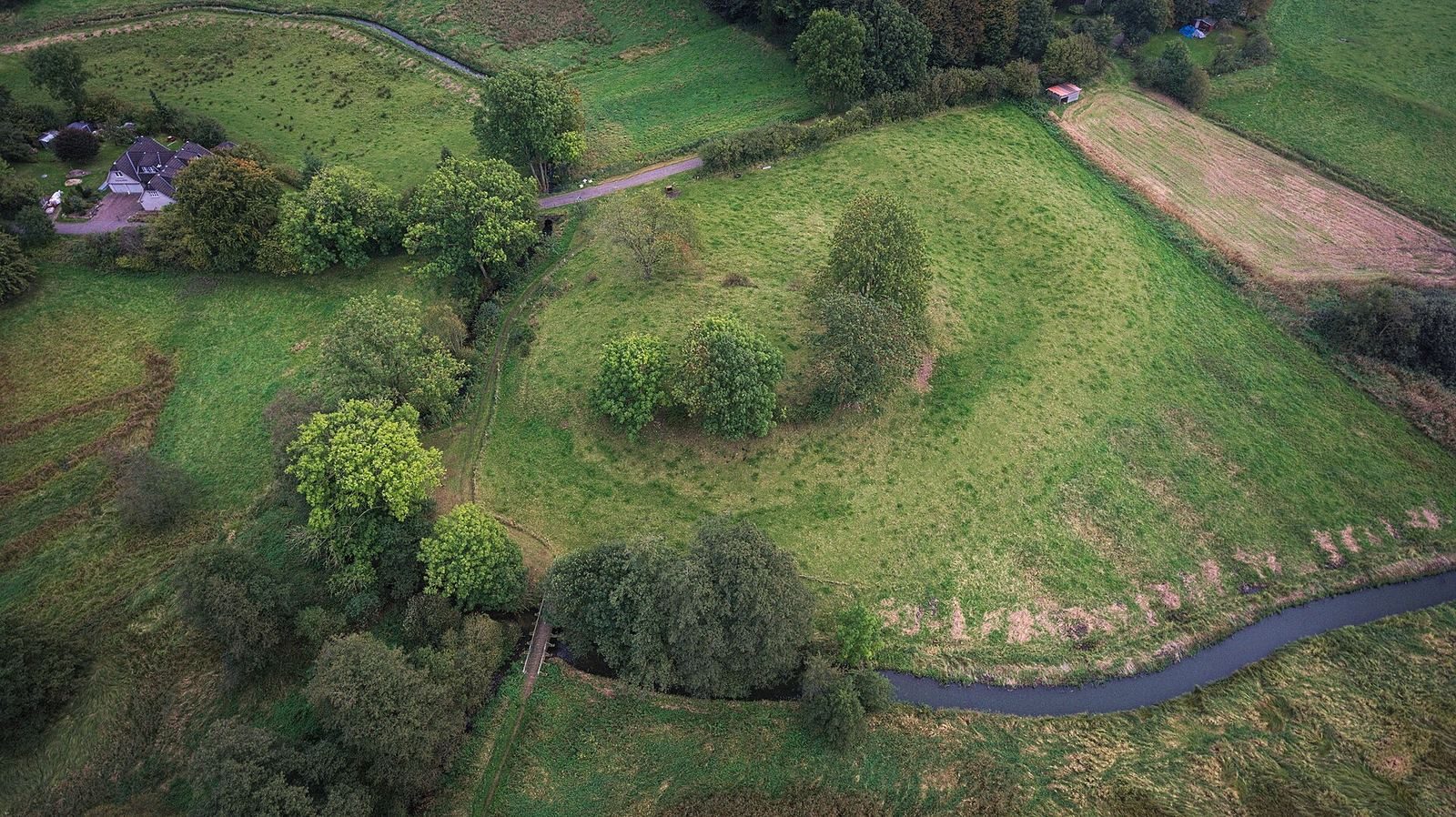
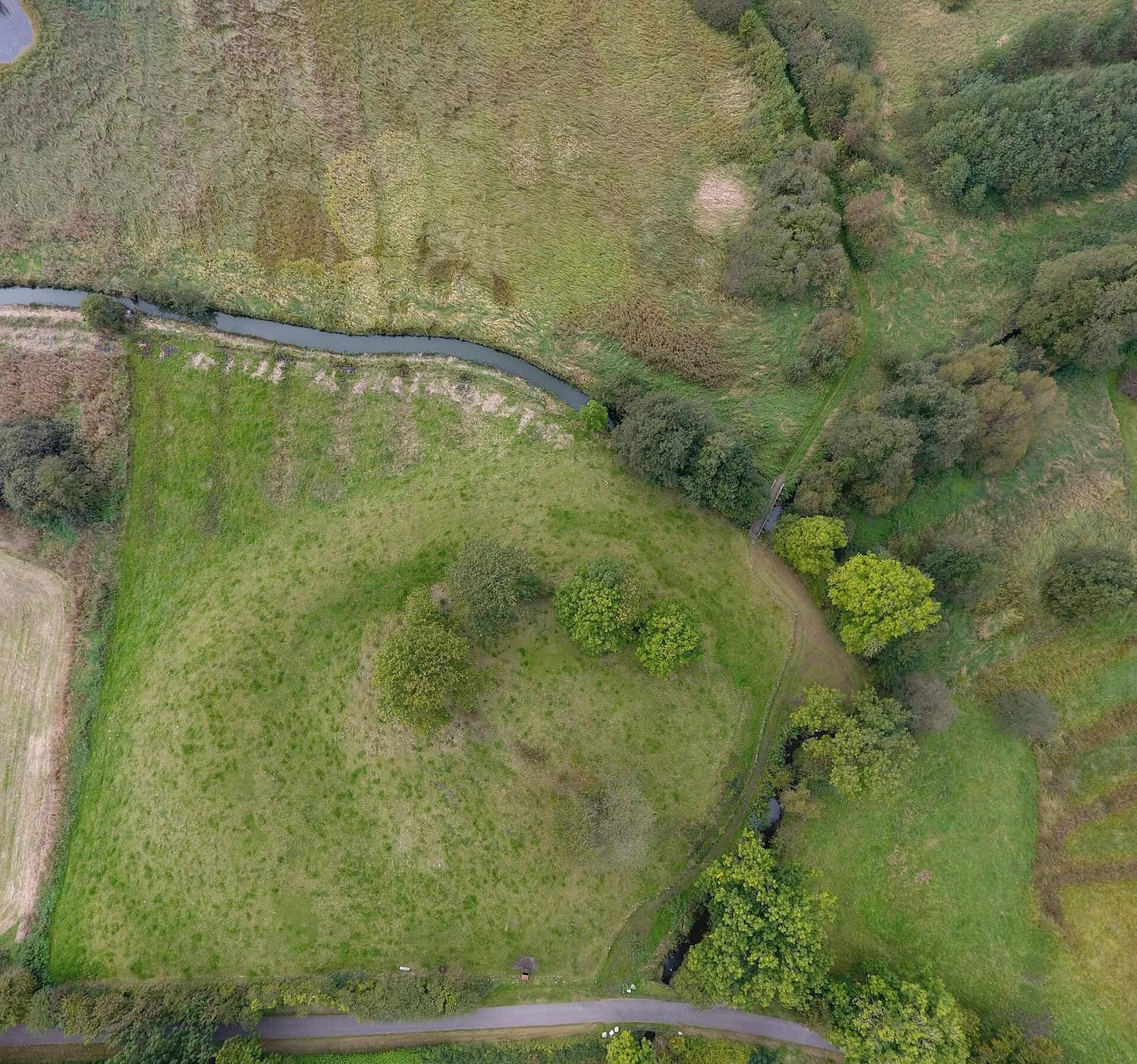
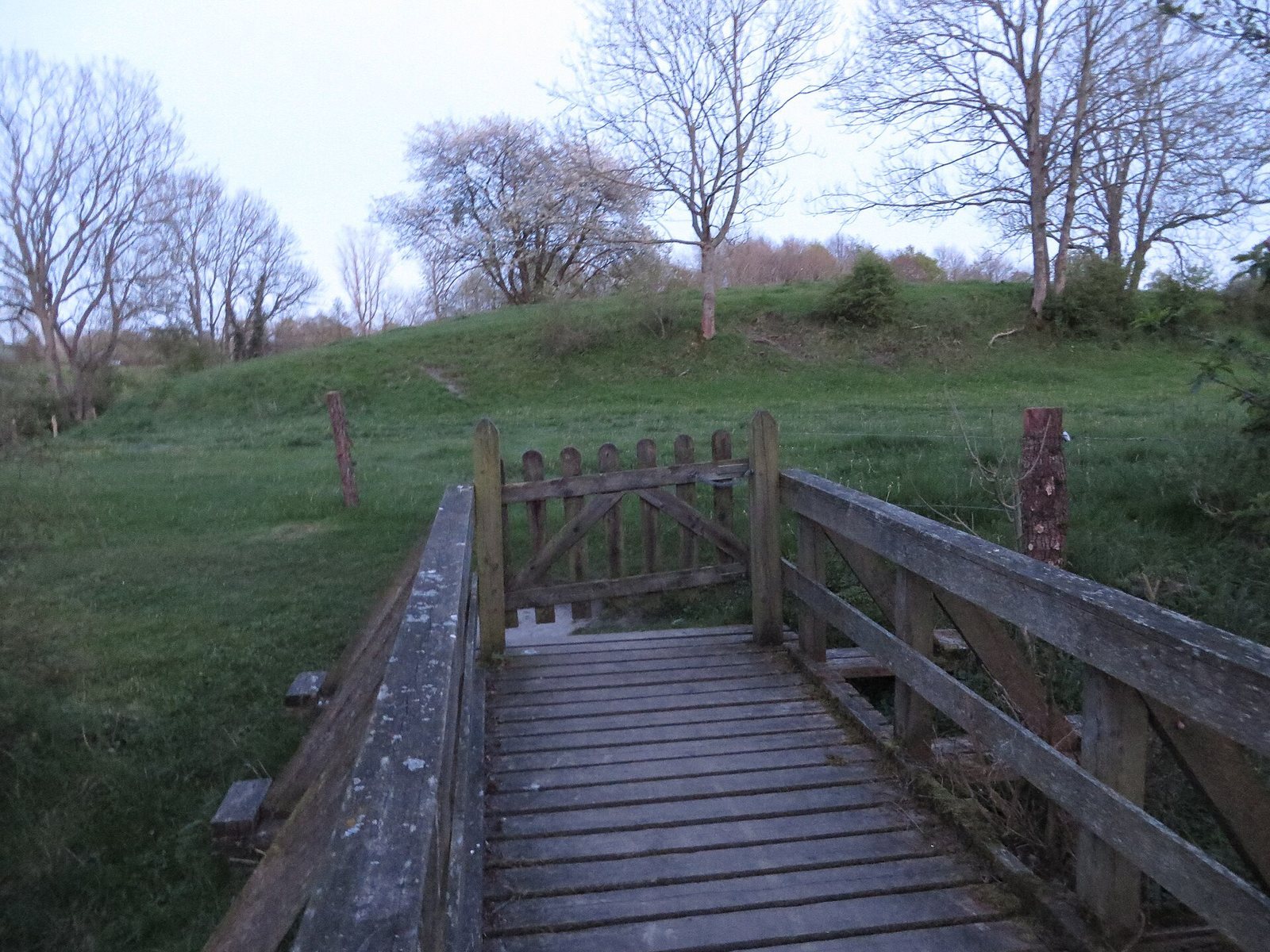
The former castle occupies low ground near Niehuus, with the Krusau stream running immediately to its west, north, and east. Its mound remains clearly recognizable, while the foundations, base, and moat can be made out as raised and sunken forms in the landscape. The castle probably followed a motte plan, a fortification centered on a mound and commonly surrounded by a ditch. Its tower keep had a footprint of 40 by 30 metres and stood within a semicircular rampart measuring 120 by 80 metres.
Krummer Weg and the river crossing
The Krummer Weg survives beside the mound. The 800-metre stretch running north from the castle site to Rønsdam forms part of the historic route. Near the mound, a wooden bridge over the Krusau was replaced by a stone bridge in 1800.