The Merry Maidens: A Prehistoric Stone Circle in Cornwall
Site at a Glance
- Popularity
- High
- Country
- United Kingdom
- Primary era
- Bronze Age
- Eras represented
- Stone Age, Bronze Age, Modern
- Civilizations
- British
- Site type
- Civic
- Remains
- Megalithic Monument
On this page10 sections
History
The Merry Maidens is a prehistoric stone circle in Cornwall, United Kingdom, generally dated to between about 2500 and 1500 BCE, across the Late Neolithic and Early Bronze Age.
Names and traditions
The name Dawn’s Men is thought to be a corruption of the Cornish Dons Men, interpreted as “Stone Dance.” Related forms include Dans Maen and Dans Mayn. Other recorded names are Boleigh Circle and Rosemodress Circle, also called Rosmodreuy. A different proposed Cornish derivation, Zans Meyn, means “sacred stone.”
Local legend tells of nineteen girls turned to stone for dancing on the Sabbath. Some versions place the dancing on a Sunday; others say it continued past midnight at a wedding that began on Saturday. In the story, the musicians fled when the clock at St Buryan struck midnight, while the girls danced on. Both the dancers and musicians were said to have become stone, and the tale is associated with The Pipers and The Fiddler. The Christian Church may have promoted the legend to discourage pagan rites connected with the circle. Another tradition says The Pipers commemorate Howel and Æthelstan, leaders who died in a tenth-century battle. Æthelstan was a tenth-century Anglo-Saxon king; the identity of Howel is unclear.
Antiquarian study and restoration
In 1769, the Cornish antiquarian William Borlase examined the circle in detail. Descriptions from the eighteenth century noted two stones lying down, but by 1879 they were no longer in that position.
Restoration and attempted reconstruction took place between 1862 and 1869. Workers added stones and moved some older ones, but the resulting arrangement did not accurately reproduce the original. In 1932, archaeologist Hugh Hencken published the circle’s first modern scientific archaeological account. In a 1982 study, archaeologist John Barnatt proposed that the circle originally had 18 stones and that a further stone was added during the nineteenth-century restoration.
Remains
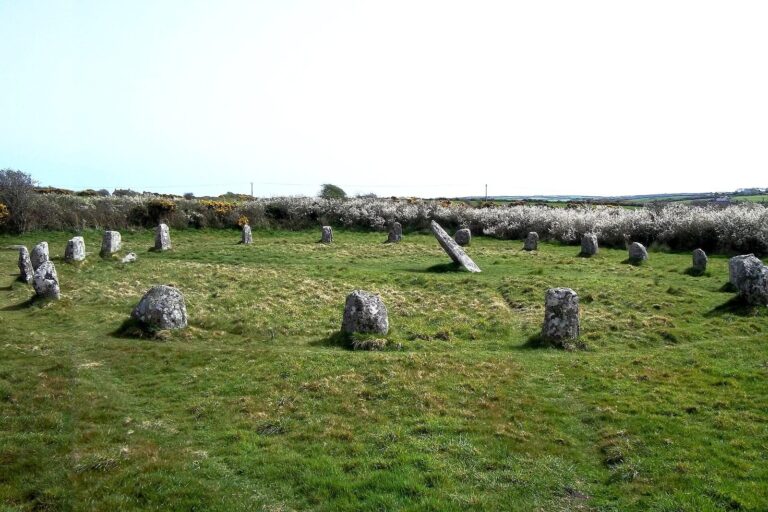
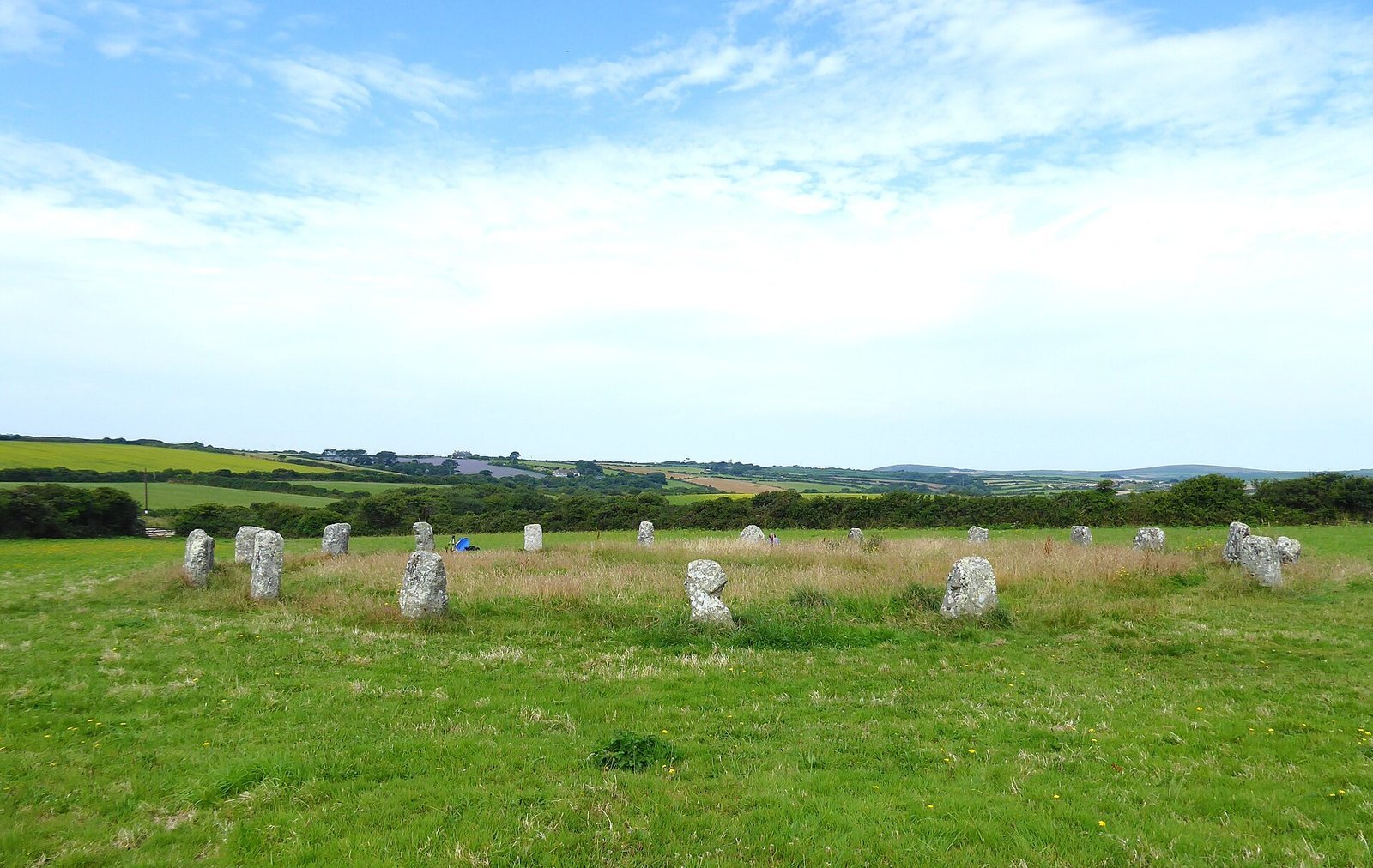
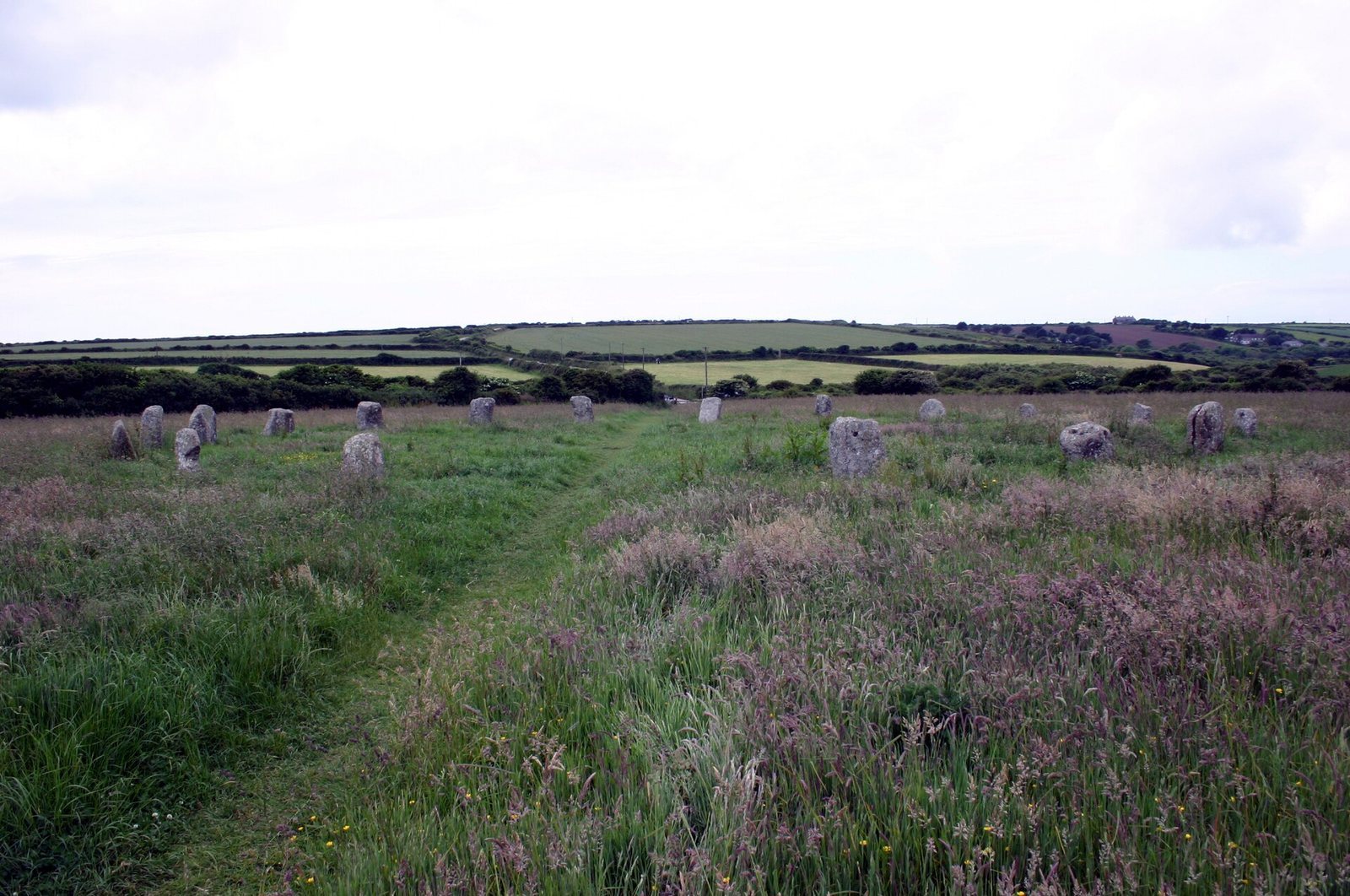
The Merry Maidens circle
The circle stands in a field beside the B3315, between Lamorna and St Buryan, roughly 2.5 to 3 km south or southeast of St Buryan. It forms part of a prehistoric landscape extending broadly northeast to southwest, with stone circles, standing stones, passage tombs, which have passages leading into burial chambers, and stone cists, small stone-built burial boxes.
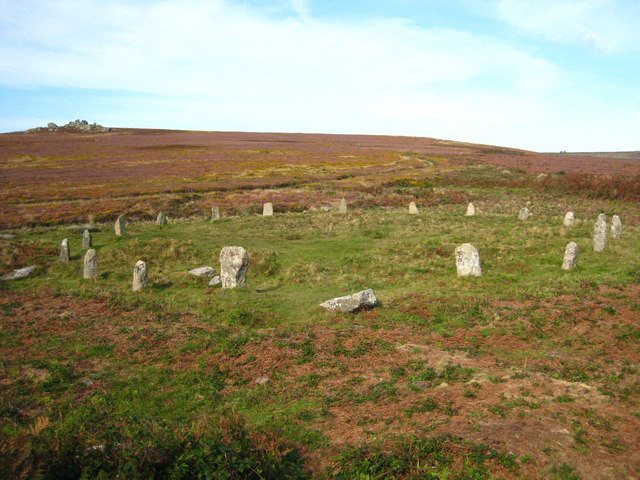
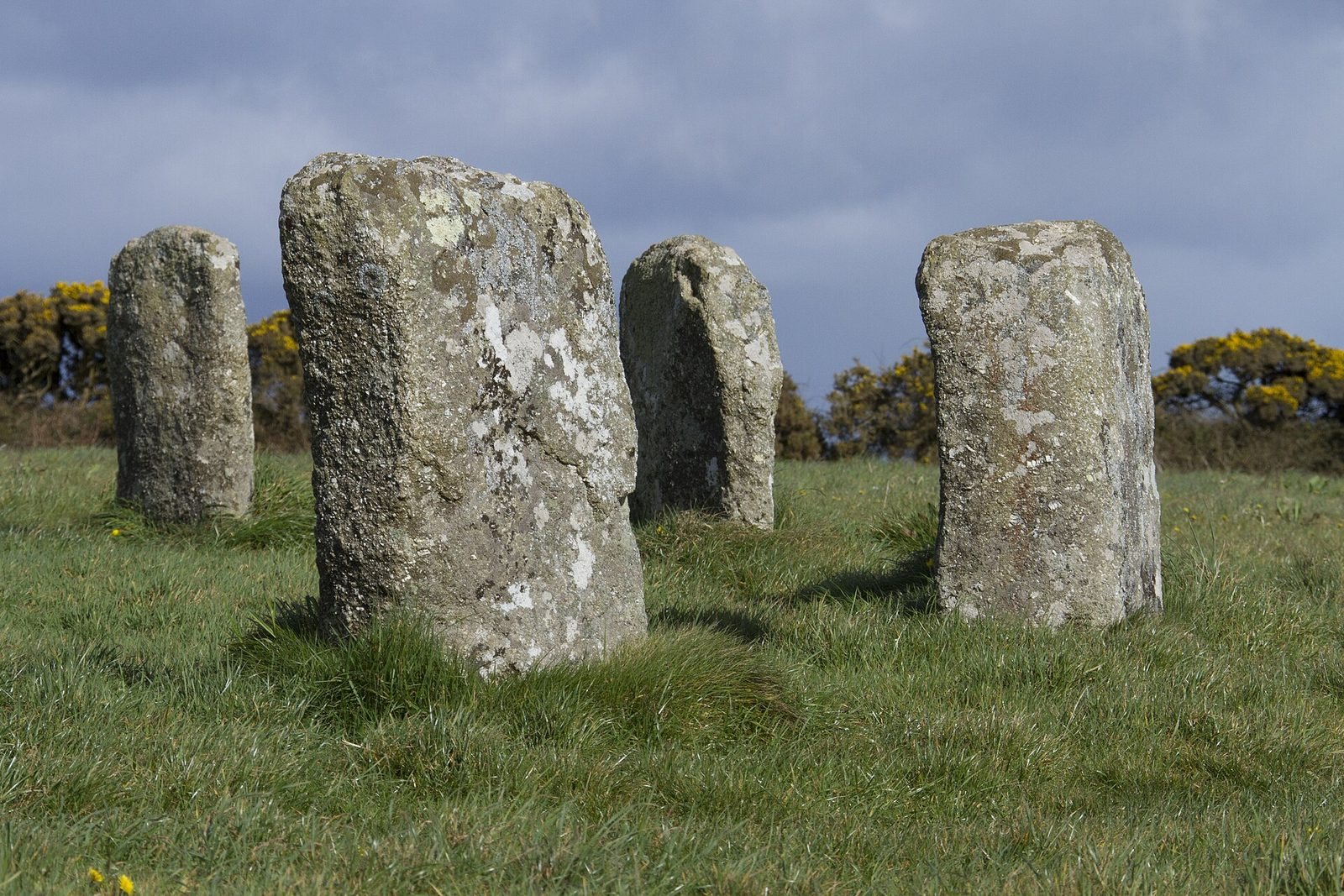
The circle is about 24 m across and consists of 19 granite stones. They average about 1.2 m high, with heights ranging from approximately 0.9 to 1.4 m. The tallest stones stand on the southwest side and the shortest on the northeast. Most are spaced 3 to 4 m apart, while the eastern gap is wider, at about 6.2 m. It may have served as an entrance, reflected a solar alignment, or marked the former position of a twentieth stone. A separate stone to the south may indicate a north–south alignment.
Nearby monuments
The Pipers
The Pipers are a pair of standing stones about 300 to 400 m northeast of the circle. They measure 5.05 m and 4.2 m high and are the tallest surviving standing stones in Cornwall.
The Fiddler
A separate standing stone called The Fiddler, also known as Gun Rith, stands a short distance west of the circle.
Tregiffian Burial Chamber
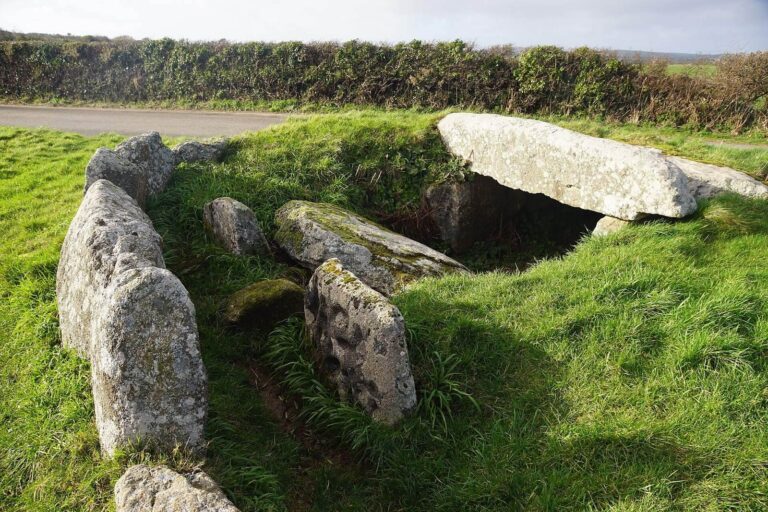
The nearby Tregiffian Burial Chamber lies southwest of the circle. Its entrance is included among the features of the surrounding megalithic complex.
The second stone circle
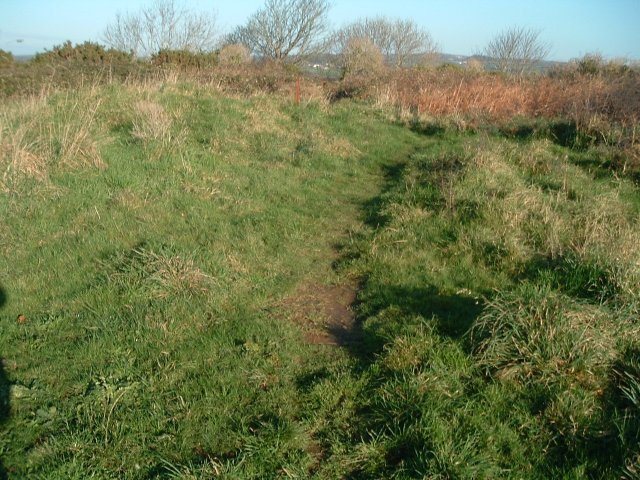
A second circle stood about 200 m away. Borlase described it in 1769 as equally large, and in 1872 his descendant William Copeland Borlase noted that seven stones remained standing. The circle had disappeared by the end of the nineteenth century.