Loc’h ar Pont Gallery Grave: A Neolithic Tomb near Pont-Aven
Site at a Glance
- Popularity
- Very Low
- Country
- France
- Primary era
- Stone Age
- Eras represented
- Stone Age
- Civilizations
- Unclassified
- Site type
- Burial
- Remains
- Tomb
On this page5 sections
History
Loc’h ar Pont gallery grave is a Neolithic tomb with a long, covered burial chamber, in Melgven near Pont-Aven in Brittany, France. The Neolithic was the later part of the Stone Age, when farming and settled communities became widespread.
Its earliest known description dates to 1835, when Christophe-Paulin de la Poix de Fréminville, a French naval officer and antiquarian known as Chevalier de Fréminville, wrote about the monument. V. de Montifault excavated it in 1875. The tomb was classified as a French historic monument on 30 January 1964.
Remains
Mound and chamber
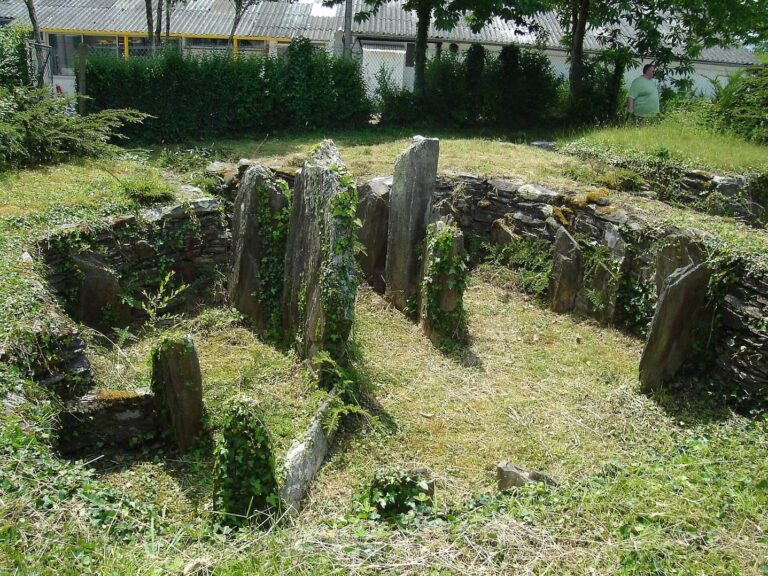
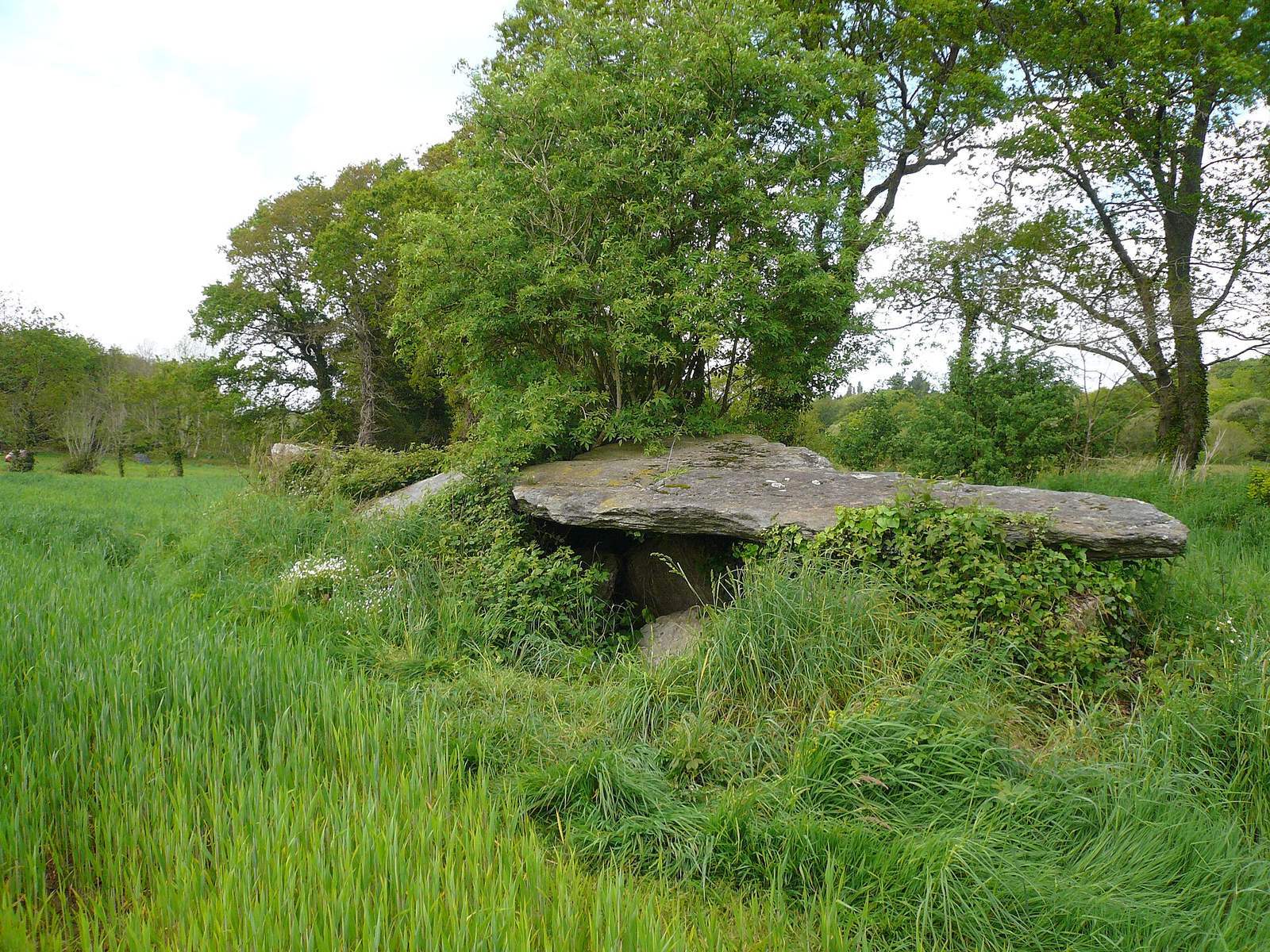
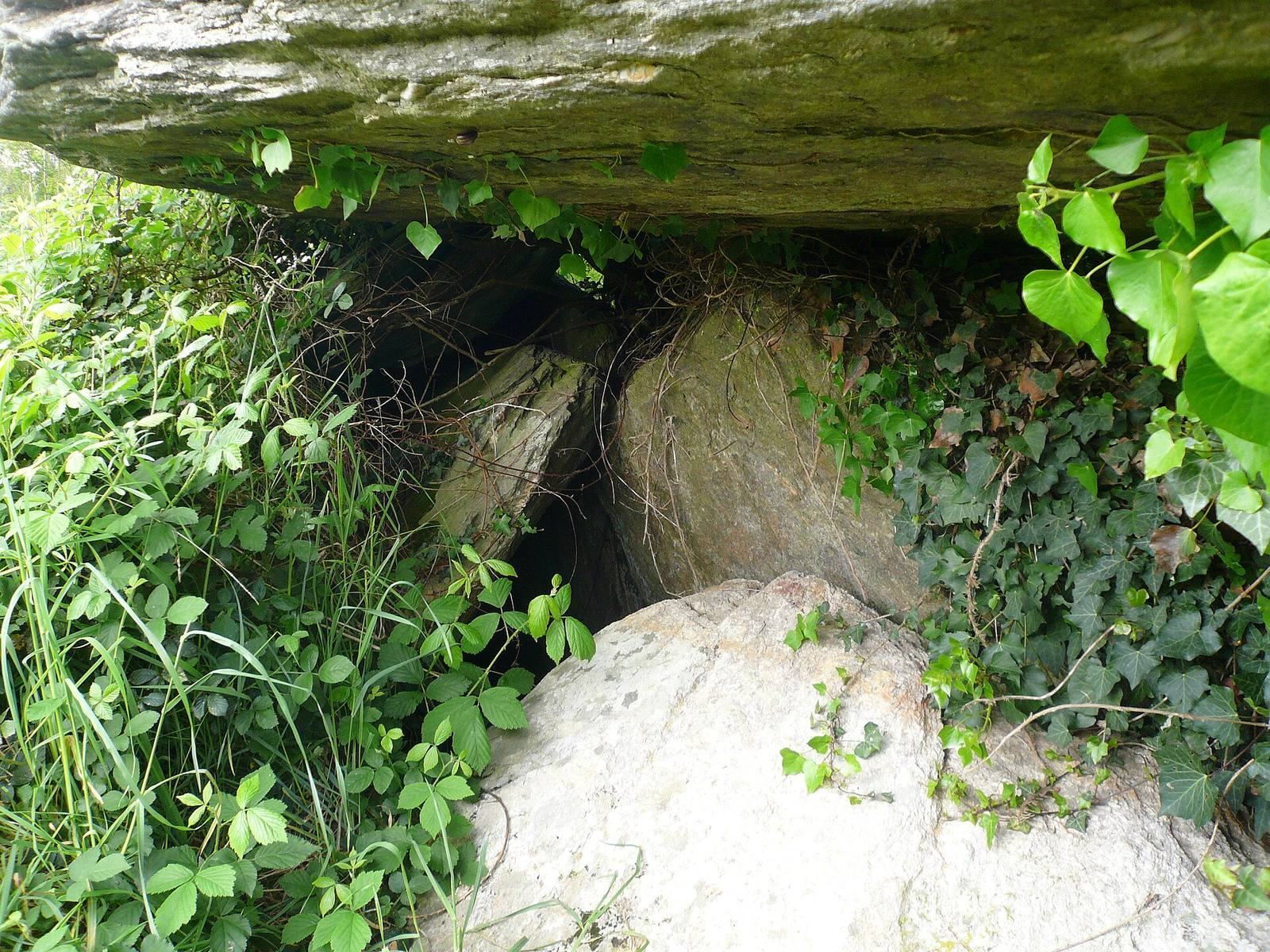
The tomb is now collapsed and overgrown among remnants of its mound. Before excavation, an oval mound about 35 by 32 metres enclosed the gallery. It consisted of quartz pebbles from the nearby river, with supporting structures set about four metres from the chamber on all sides. The gallery runs northwest to southeast on an axis of about 140 degrees and opens to the southeast. It is approximately 14 metres long and averages two metres wide. Locally sourced migmatite, a mixed-texture rock, forms its inclined slabs. Twelve upright stones, six along each side, and an end slab define the chamber. The western stones lean inward, while those on the eastern side remain upright. Slabs set over rubble and yellow clay formed the floor, and a notched slab closes the entrance.
Capstones and cup-marks
Three massive capstones are visible on the south side. Each rests on supporting slabs at one side and on the mound to the west at the other. The largest measures 5.5 by three metres and is estimated to weigh 20 tonnes. The two southernmost stones bear rounded cup-marks. The central slab has 19, each 30 to 60 millimetres wide and 6 to 16 millimetres deep, arranged without a regular pattern. The other has 28 marks. One measures 110 millimetres across and 71 millimetres deep; the rest range from 30 to 70 millimetres across and five to 13 millimetres deep. The alternative name Ty Corriganet means “house of the korrigans,” supernatural beings in Breton folklore. Local tradition says the marks are fingerprints left by these beings.
Excavated pottery
Excavation recovered coarse, undecorated black pottery and finer reddish fragments bearing parallel lines cut with a pointed tool. This pottery assemblage is associated with Bell Beaker culture, a prehistoric culture linked to distinctive bell-shaped pottery.