Hakken-gū: A Shinto Auxiliary Shrine of Atsuta Shrine
Site at a Glance
- Popularity
- Medium
- Country
- Japan
- Primary era
- Early Modern
- Eras represented
- Early Modern
- Civilizations
- Tokugawa
- Site type
- Religious
- Remains
- Sanctuary
On this page9 sections
History
Hakken-gū is a Shinto auxiliary shrine within the precincts of Atsuta Shrine in Nagoya, Japan. Shinto is a Japanese religious tradition centered on kami, divine beings or powers. Six deities are associated with the shrine: Atsuta no Ōkami, Amaterasu, Susanoo, Yamato Takeru, Miyazu-hime, and Takeinadane. Atsuta no Ōkami is identified with Amaterasu, a major sun deity. The shrine’s main building follows Shinmei-zukuri, a traditional Japanese shrine style. Tradition places the shrine’s foundation in September 708, when Empress Genmei reportedly ordered a new sacred sword made after the theft of Kusanagi no Tsurugi. The new sword was dedicated with seven swords associated with Fudō Myōō and the Kusanagi sword. Atsuta Shrine’s oldest history does not connect that theft with Hakken-gū’s foundation, and traditions about its origins differ.
Early records and medieval interpretations
The tenth-century Engishiki, a compilation of court regulations and ritual procedures, names an Eight-Sword Shrine in Aichi District, Owari Province. Owari was a historical province roughly corresponding to western Aichi. Later provincial registers assigned the deity formal honorific ranks, including Senior First Rank, and one specified the upper grade. A record from 1180 refers to the shrine as Atsuta Hakken.
Medieval writings offered different explanations of its name and identity. The Ryōjin Hishō includes the shrine among eastern Japan’s war deities. A late-twelfth-century text links the name Eight Swords to a weapon Susanoo obtained after slaying an eight-headed serpent. A text from 1285 also recounts the theft of Kusanagi and the dedication of a replacement sword at the shrine.
A Kamakura-period interpretation treated Eight Swords as a collective name for several weapons, including the Cloud-Cluster Sword, the Ten-Span Sword, Kusanagi, and the Eastern-Barbarian Sword. It also identified Fudō Myōō, a Buddhist wisdom king, as the shrine’s Buddhist counterpart. A different interpretation from the Nanboku-chō period, when rival Northern and Southern imperial courts competed for power, identified the shrine with Taro and Jiro, and named Fudō Myōō and Bishamonten, a Buddhist guardian associated with protection and war, as their Buddhist counterparts. During the Kamakura period, Hakken-gū was apparently southeast of one of Atsuta Shrine’s gates. A record from around this time mentions a fire involving Hakken-gū and another shrine.
Ritual and patronage
From the Muromachi period onward, accounts increasingly linked the shrine’s foundation to the theft of Kusanagi, an explanation that became influential in later Edo-period writing. A late-sixteenth-century account gives another identification, naming Yamato Takeru as the deity enshrined there. A Muromachi-period record describes an August 7 ceremony attended by shrine priests from Owari’s eight districts, who performed kagura, ceremonial music and dance associated with kami worship. Hakken-gū also attracted attention in writing about Noh, a classical Japanese theatre form, and in travel literature.
The shrine received devotion and support from samurai. In 1575, during the Battle of Nagashino, Oda Nobunaga, a major military leader, and his eldest son camped at Atsuta. Nobunaga found Hakken-gū badly deteriorated and ordered repairs by his chief carpenter, Okabe Mataemon. Samurai patronage continued under Tokugawa rule.
Edo period and relocation
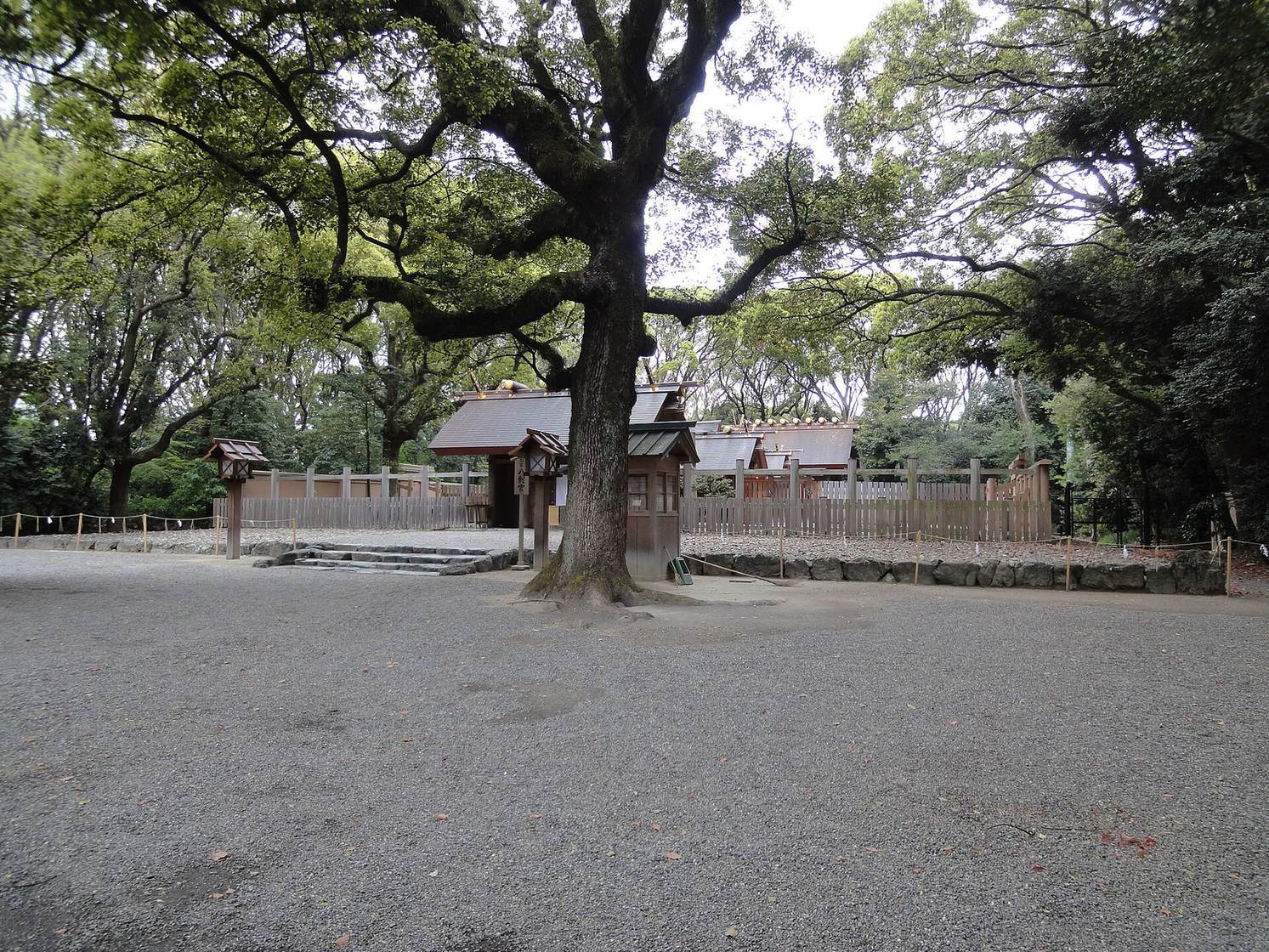
During the Edo period, the shrine was called Hakken Myojin or Hakken Daimyojin and stood somewhat east of its present position. It was renamed Hakken-gū in 1880 and moved to its current site during a rebuilding in 1893. Its ceremonies and annual rites follow those of Atsuta Shrine’s main shrine.
Remains
Buildings and sacred associations
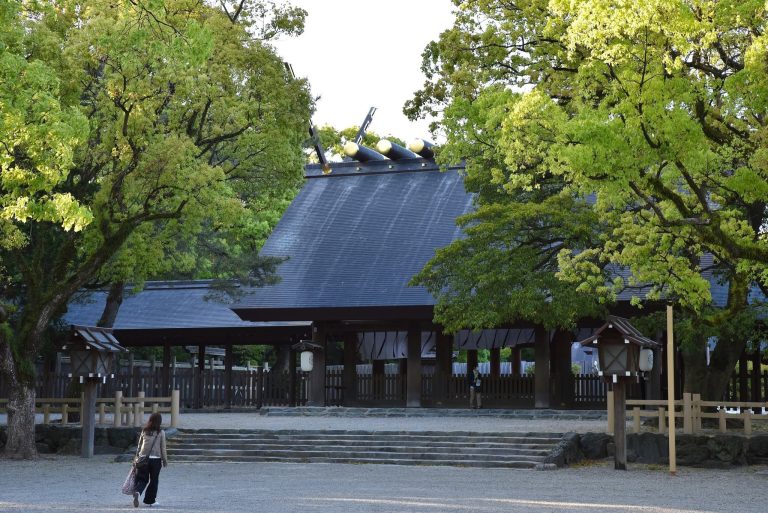
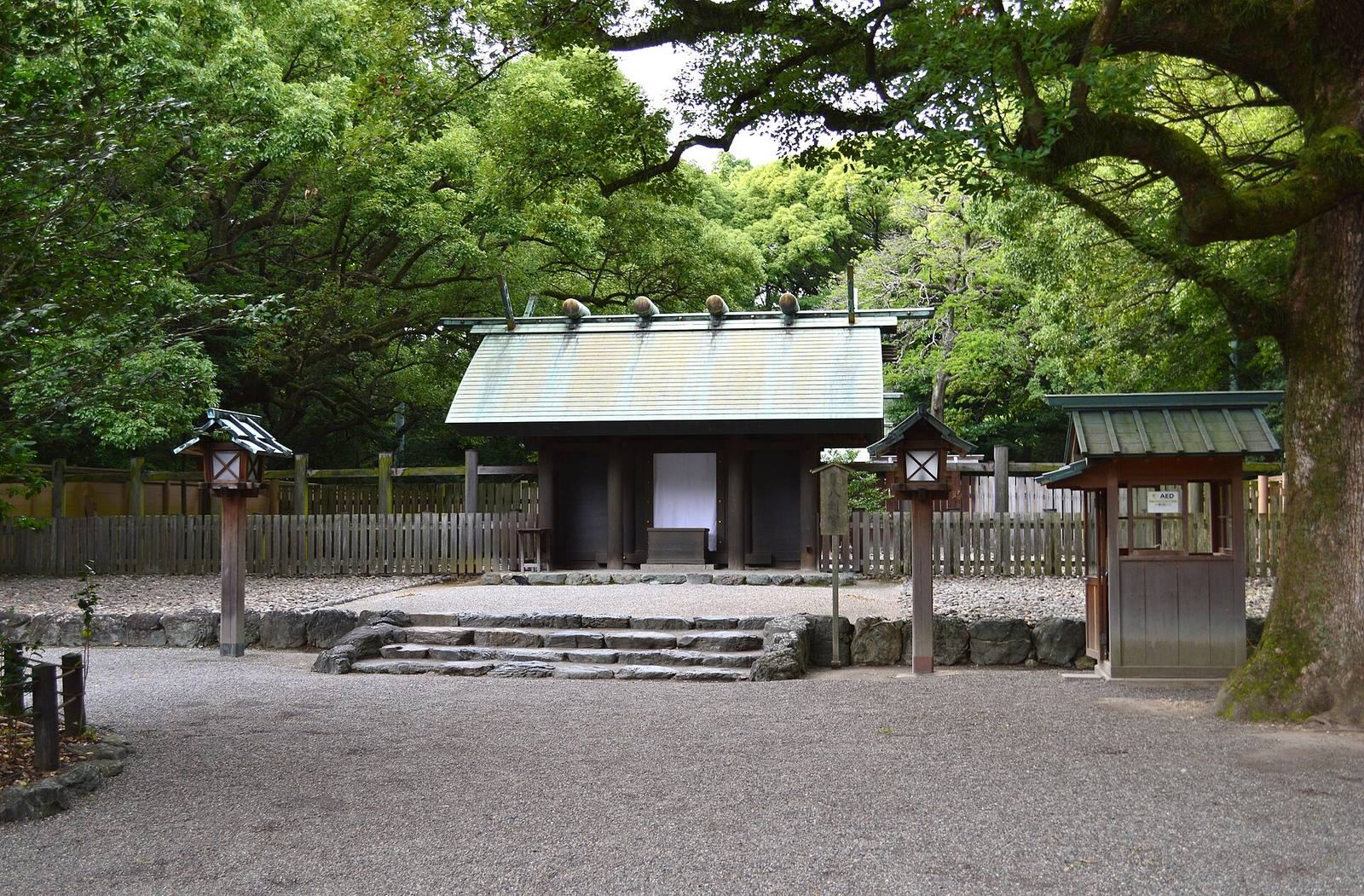
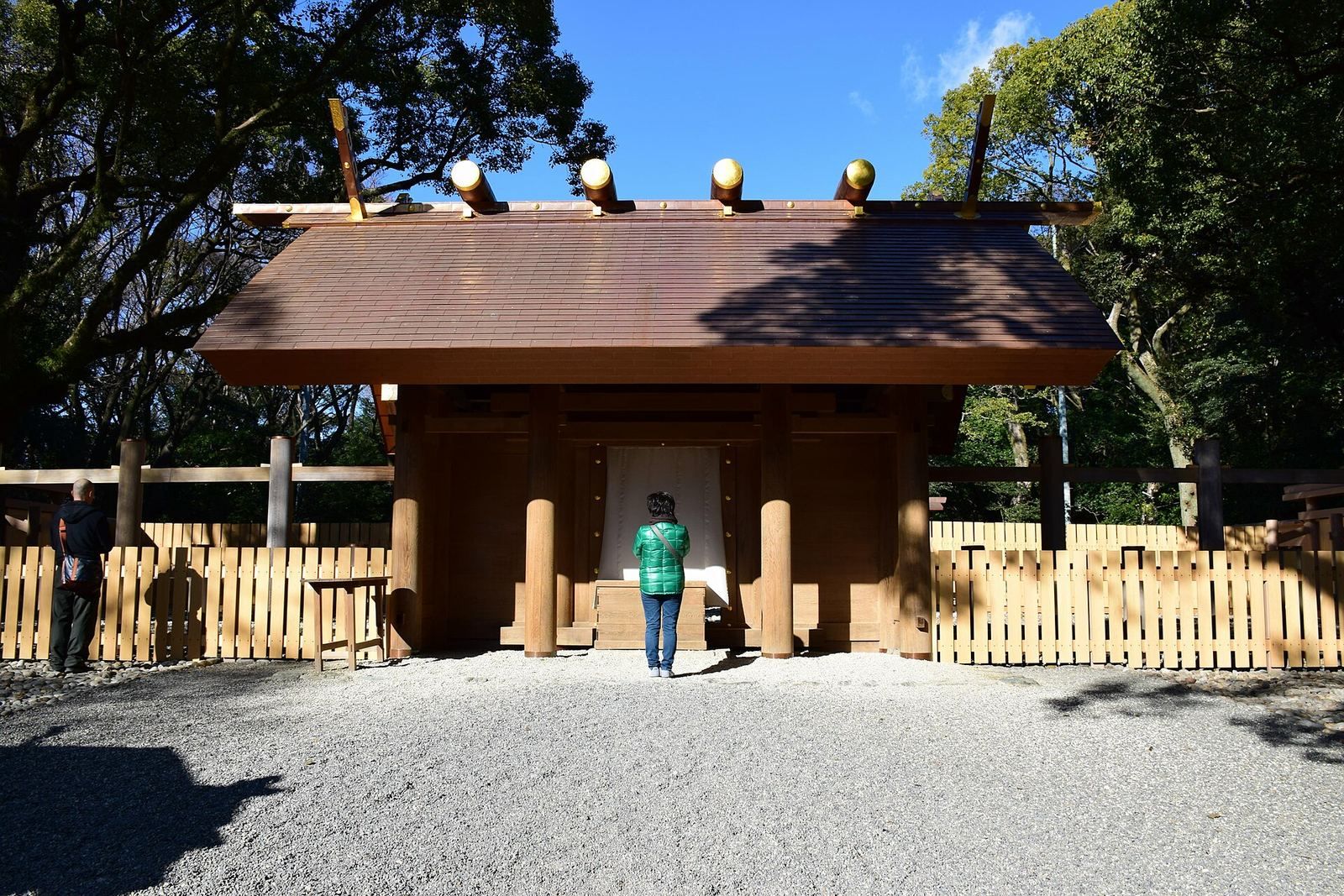
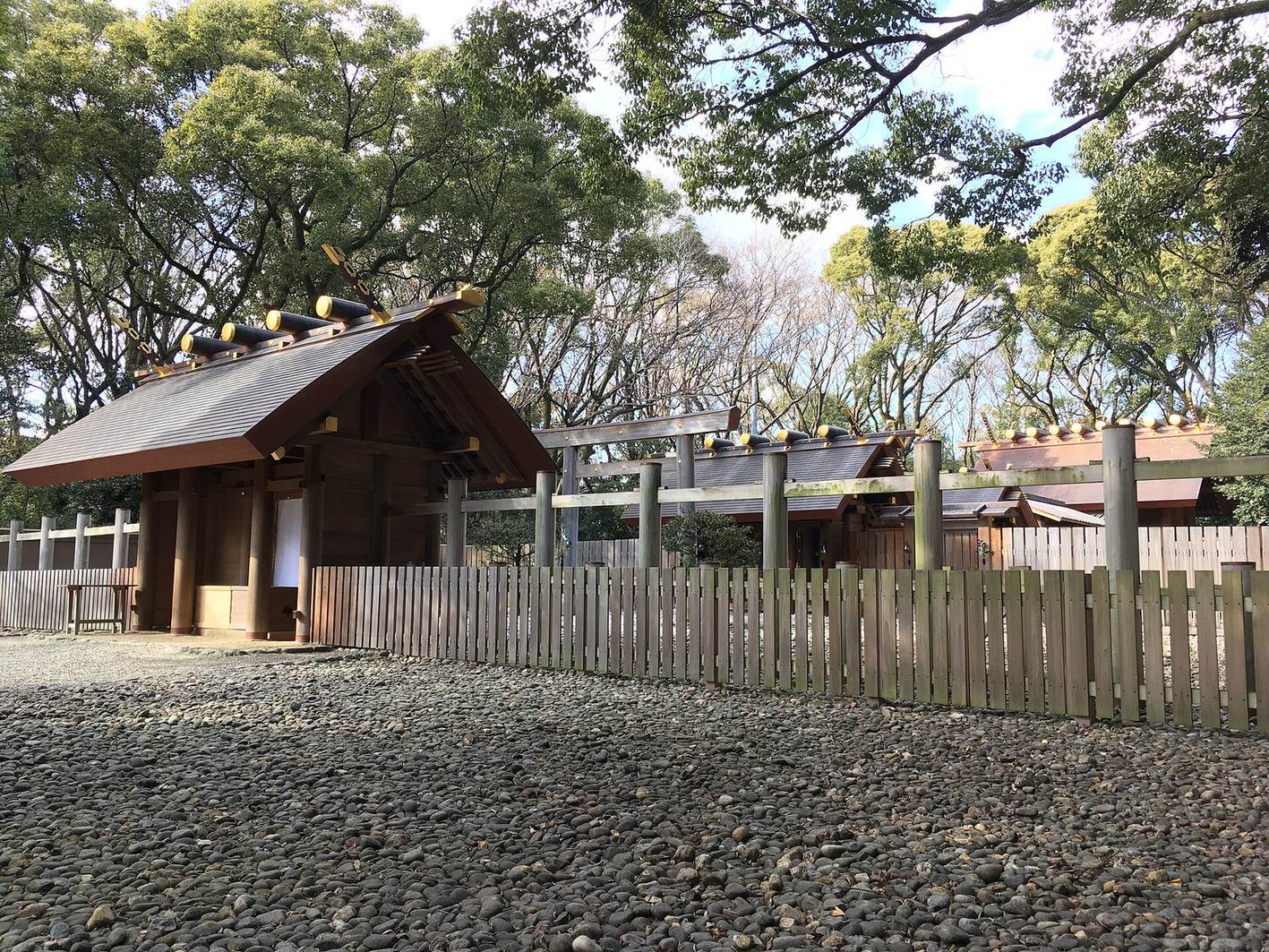
The shrine’s architectural components include a main shrine, a worship hall, corridors, and walls. These structures form the physical group associated with Hakken-gū.
Main shrine
Tokugawa Tsunayoshi, a later shogun, rebuilt the main shrine in 1686. The building is in Shinmei-zukuri, the traditional Japanese shrine style noted above.
Worship hall, corridors, and walls
Tokugawa Ieyasu, founder of the Tokugawa shogunate, repaired the worship hall, corridors, and walls in 1599.
Sacred objects and traditions
Kusanagi no Tsurugi is identified as Hakken-gū’s shintai, the sacred object associated with a shrine’s deity. The sword is traditionally counted among Japan’s three Imperial Regalia. A Kamakura-period interpretation places a sacred mirror beneath the shrine.