Anta da Aboboreira: A Prehistoric Passage Dolmen in Portugal
Site at a Glance
- Popularity
- Low
- Country
- Portugal
- Primary era
- Stone Age
- Eras represented
- Stone Age
- Civilizations
- Unclassified
- Site type
- Burial
- Remains
- Tomb
On this page6 sections
History
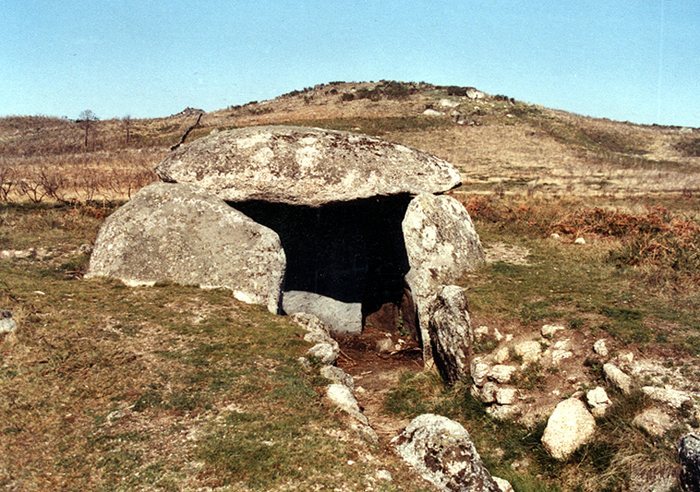
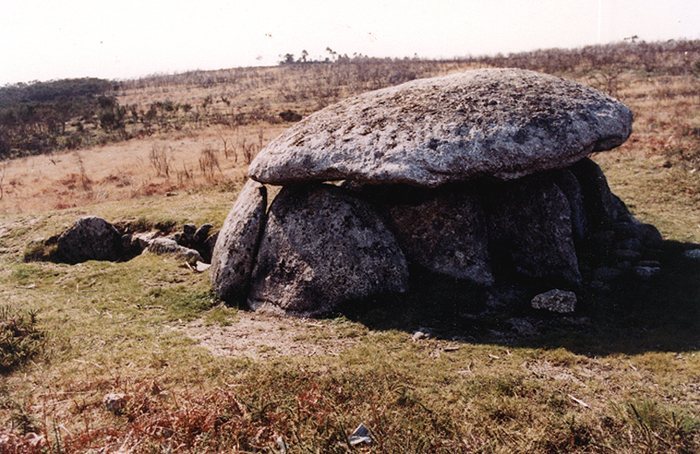
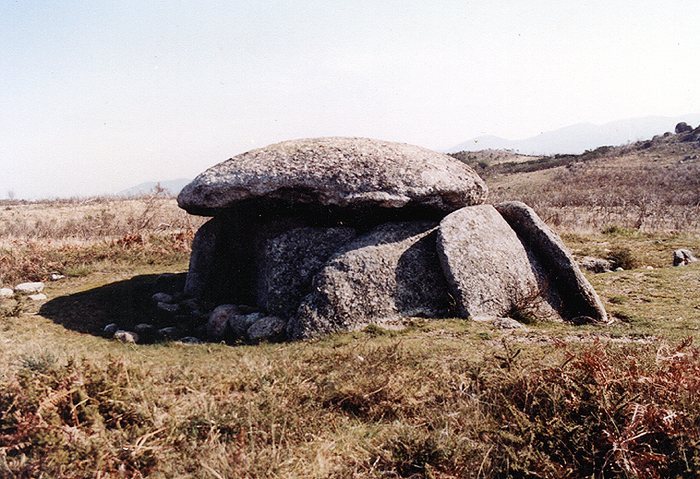
Anta da Aboboreira is a passage dolmen, a megalithic tomb whose chamber is reached by a passage, at Ovil in the municipality of Baião, Portugal. Built near the beginning of the third millennium BCE during the late Neolithic-to-Copper Age transition, its chamber forms part of Mamoa 1, an artificial burial mound at Chã de Parada. It is the large passage dolmen of Chã de Parada and the best-known dolmen in the Serra da Aboboreira, a burial landscape with about forty identified megalithic monuments.
Protection and conservation
Portugal has classified the monument as a National Monument since 1910, a high-level national heritage status. For years it was partly covered with earth for protection. Conservation and restoration work took place in July 2006.
Remains
The remains bring together a stone dolmen and the oval artificial mound that once covered it. The mound is still perceptible, although partly destroyed.
Chamber and carvings
The dolmen is about 4.5 metres long and faces east. Nine upright granite slabs support its capstone. Four jar-shaped designs appear high on the central part of the head slab. The upper design is carved in false relief, making it look raised, while the other three are incised. Similar designs occur at the Galician megalithic monuments of Dombate, Casa dos Mouros, and Espiñaredo. Their meaning is unknown; one interpretation proposes that the motif represents a sperm whale. Engravings on three slabs also include radial and stylized designs. The second slab on the right bears a radial figure. The third has two circles side by side, a small cup-shaped hollow between their bases, and a higher figure to the left that vaguely resembles an 8. Some engravings are clearest in tracings or rubbings. The head slab once carried traces of red paint.
Burial mound
The oval mound measures about 24 metres along its west-to-east axis and 20 metres from north to south. It was intended to conceal and protect the dolmen. It may also have provided a sloping track for moving the capstone into place.
Conservation measures
The conservation work cleared vegetation and lichens from the dolmen and its surroundings and applied herbicide. Workers installed drainage and laid a permeable protective fabric at the base of the chamber interior, passage, and area in front of the dolmen. Internal braces were added to support the upright slabs, along with a containment ring.