Iitti Church: A 17th-Century Lutheran Church in Finland
Site at a Glance
- Popularity
- Medium
- Country
- Finland
- Primary era
- Early Modern
- Eras represented
- Early Modern, Modern
- Civilizations
- Grand Duchy of Finland, Russian, Swedish
- Site type
- Religious
- Remains
- Church
On this page8 sections
History
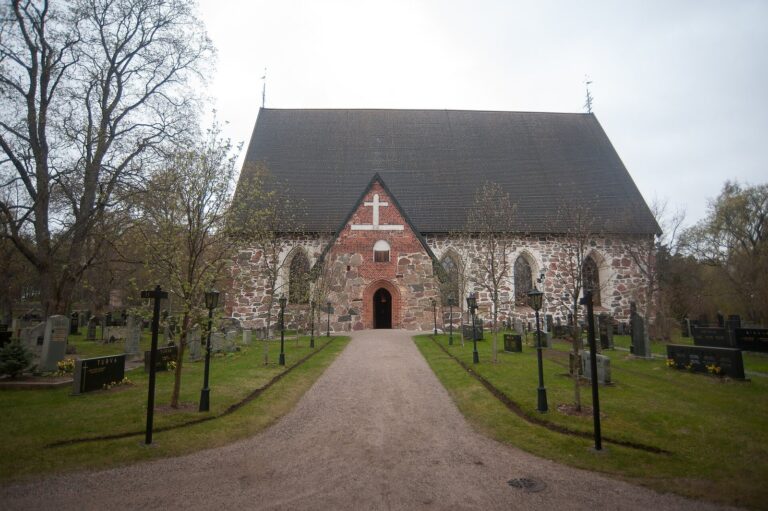
Iitti Church is a wooden Lutheran church in Iitti, Finland; the present building, the parish’s second, was completed in 1693. Lutheranism is a Protestant Christian tradition that developed from the teachings of Martin Luther.
Parish and early church
The parish traces its foundation to 2 June 1539, when Gustav Vasa, king of Sweden from 1523 to 1560, confirmed the division of the large Hollola parish. Its eastern section became Iitti parish, covering present-day Iitti and most of present-day Kouvola, including the former municipalities of Kouvola, Jaala, Kuusankoski, and Valkeala. A first wooden church was built on the present site in the late sixteenth century.
The church stands on a narrow isthmus within the Kymi water system. Its accessible position mattered when waterways were important transport routes. The Salpausselkä ridge divided the parish between an agricultural south associated with Uusimaa and a forested, water-rich north linked with Finnish Lakeland. Southern parishioners travelled by horse, while those from the north came by church boat. The tradition of gathering separately continues in part, especially at traditional services.
A changing parish center
After the Riihimäki–St Petersburg railway was completed in the 1870s, Kausala grew into the parish’s new center and the church village declined. Around the turn of the twentieth century, plans to replace the deteriorated church with a new building in Kausala were set aside. The parish chose instead to renovate the existing church.
Remains
Building and layout
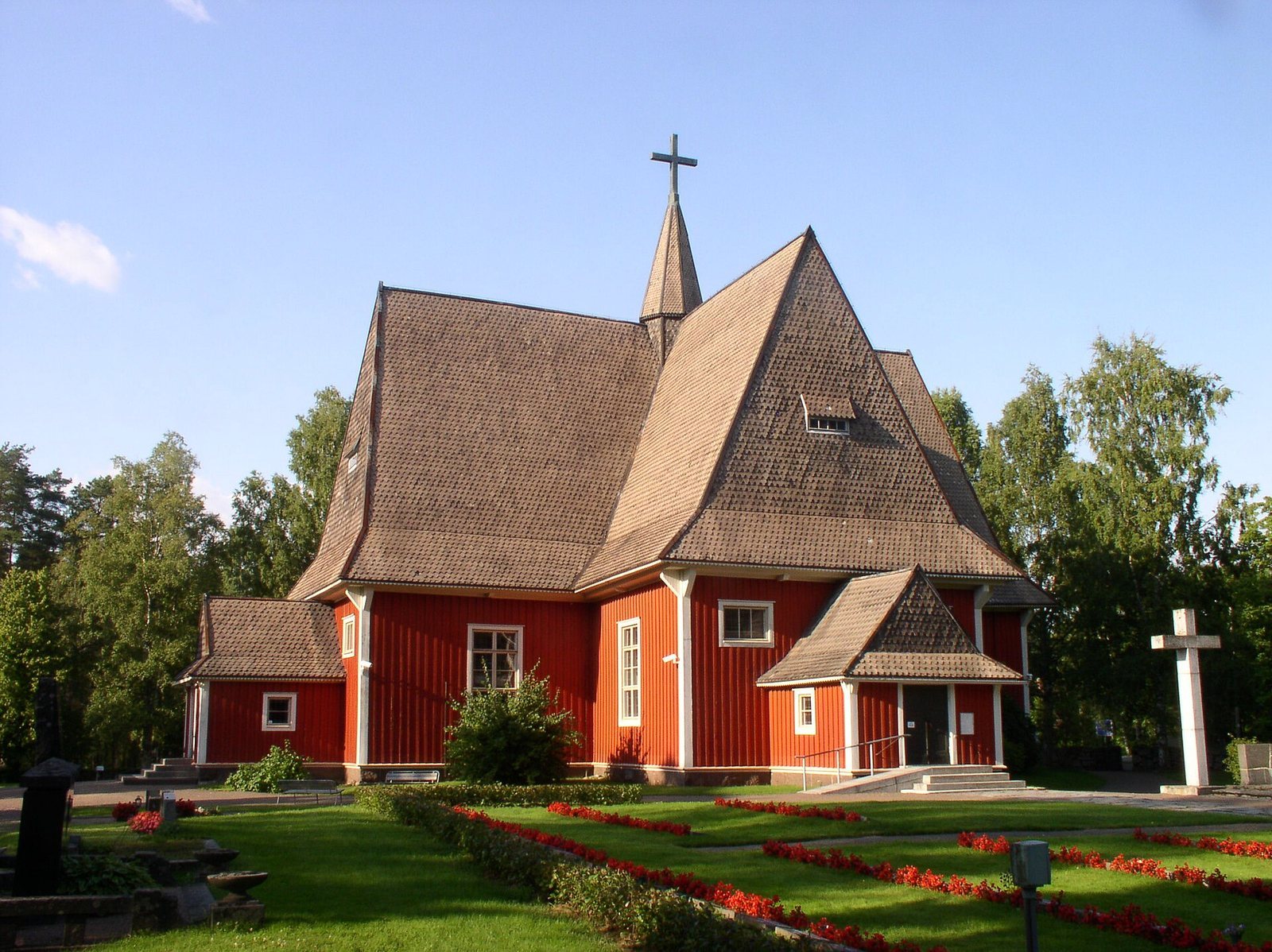
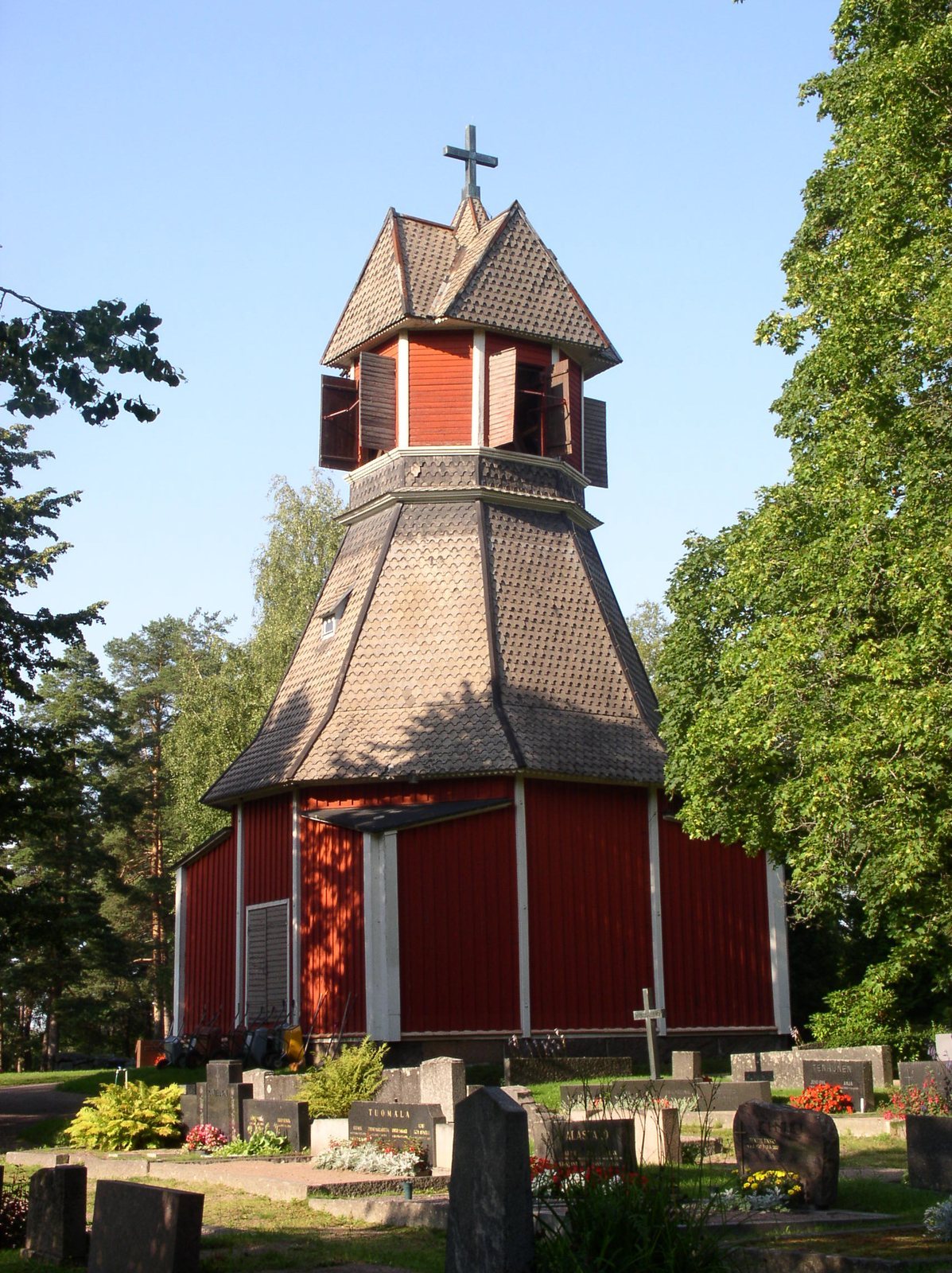
The wooden church has a cross-shaped plan with four arms of equal length and a high Dutch hipped roof, whose sloping ends and sides meet at a ridge shorter than the roof. This roof form became popular among church builders after Stockholm’s Katarina Church was completed. The exterior was first painted red in the early nineteenth century; its deep shade, known as “Iitti red,” remains a characteristic feature.
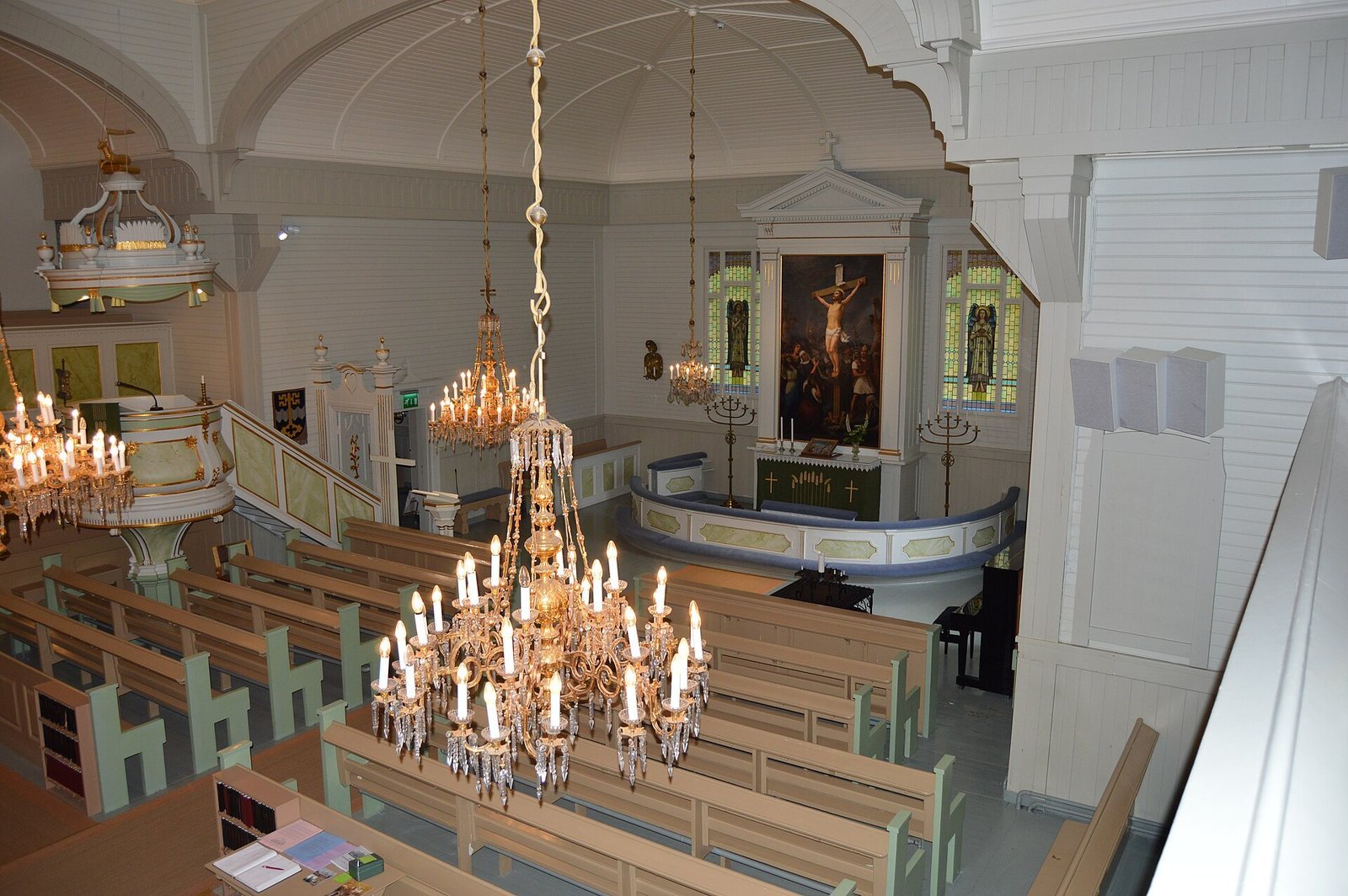
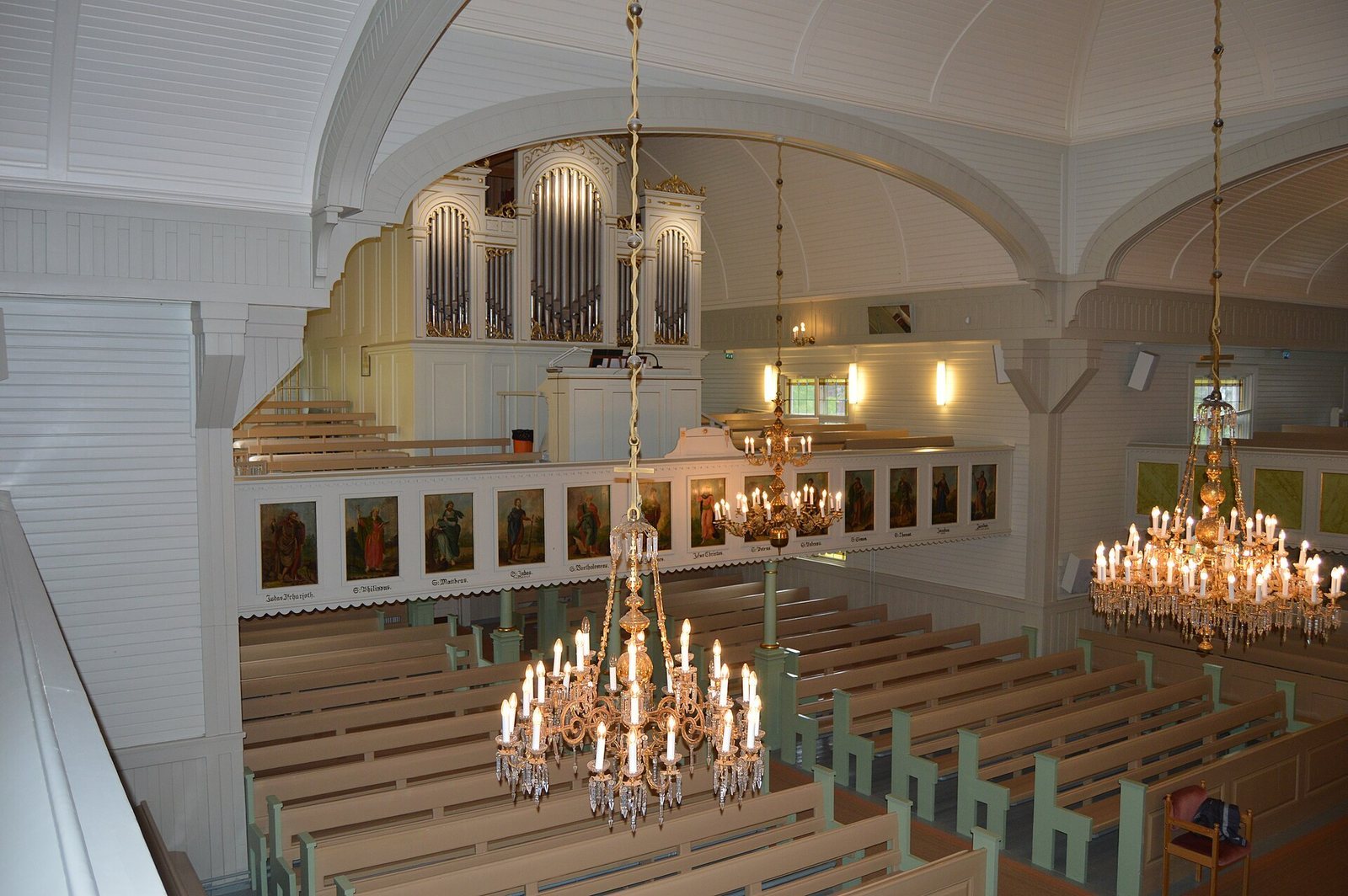
During the comprehensive renovation of 1913–1914, the building was raised by one metre onto a new stone foundation and re-clad inside and out. Enlarged windows transformed the previously dark interior into a bright, white space. Separate vestibules and seating areas reflect the parish’s regional division, with the southern side assigned to people from the land-based south and the northern side to those from the water-based north. The church has 900 seats.
Altar and stained glass
Felix Frang’s Crucifixion, made in 1917, is the current altarpiece. Carl Peter Elfström’s 1830 painting, by a self-taught artist, was removed that year and later moved from a side wall to the bell tower in the late 1930s. It went to Iitti Local History Museum in the late 1950s, was restored at Valamo, a Finnish Orthodox monastery, and returned to the church in March 2018. It now hangs on a side wall. The church’s 19 windows contain 63 stained-glass panels covering 36 square metres in total; the Italian glasswork is in the altar windows. Marjut Kalin-Eloaho restored the glass between 2013 and 2015.
Pulpit and organ
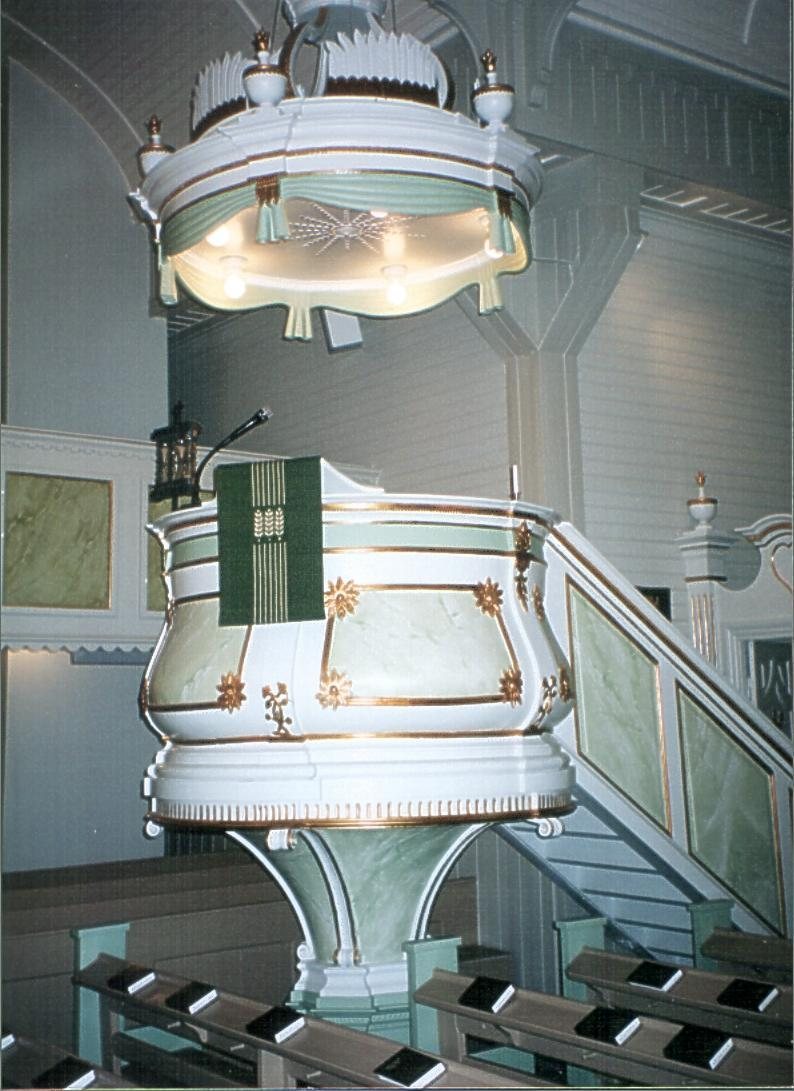
Carpenter Jacob Nygrén built the pulpit in 1833. A painted inscription on its base identifies it as a gift from the gentlemen and farm owners of Maakansa, Wuolenkoski, and Kymikunta. Installed in 2001, the present organ has 25 stops, controls that select groups of pipes for different sounds. It is a stylistic copy of the Romantic-style organ built by J. A. Zachariassen in 1884.
Gallery paintings and candlesticks
Portraits of Jesus and the apostles appear along the rail of the organ gallery. Wooden hands support the candlesticks fixed to the walls.