Tomb of Epano Phournos: An Early Mycenaean Tomb at Mycenae
Site at a Glance
- Popularity
- Very Low
- Country
- Greece
- Primary era
- Bronze Age
- Eras represented
- Bronze Age, Modern
- Civilizations
- Greek, Mycenaean
- Site type
- Religious
- Remains
- Tomb
On this page16 sections
History
The Tomb of Epano Phournos is a Mycenaean tholos (monumental round tomb) at Mycenae, Greece, built around 1500 BCE during Late Helladic IIA, a phase of the Mycenaean Bronze Age. It belongs to the earliest stage of round-tomb construction at Mycenae and is one of nine built there during the Late Bronze Age. It is among the earliest, approximately contemporary with the Cyclopean Tomb, another tomb of this type at Mycenae.
Construction and burial
The tomb was probably intended for a single burial. Local farmers called it Phournos, meaning “oven.” The findspot took its name from the tomb, giving rise to Epano Phournos, or “Upper Oven.”
The tomb was looted in antiquity, possibly by the end of the Bronze Age and perhaps around 1200 BCE. Late Helladic III pottery, from a later phase of the Mycenaean Bronze Age, near the chamber floor suggests that robbing may already have taken place during that period.
Later activity
Pottery from after the Mycenaean period, especially from the Geometric period that followed the Bronze Age, has been interpreted as evidence of a hero cult. This was ritual activity directed toward a legendary or deified figure associated with the past, and may have continued into the Archaic period that followed. Pottery in the hollow left by the collapsed chamber may have been discarded as rubbish, although some pieces could instead have been dedications.
Recording and archaeological work
Antiquary William Gell noted the tomb after visiting Mycenae in 1805, but mistook it for a gate. Soldier and antiquary William Martin Leake recorded it during a visit in 1806. The tomb was known before the major excavations at Mycenae led by Heinrich Schliemann and Panagiotis Stamatakis in 1876.
Between June and December 1892, archaeologist Christos Tsountas cleared the entrance passage, its front, and part of the chamber. Archaeologist Alan Wace’s team returned to clear the entrance passage and partly excavated the doorway in 1922. A fuller excavation planned during Wace’s 1920–22 campaigns could not proceed because a fallen lintel blocked the entrance and the chamber was unsafe.
Before 1939, Greece’s Archaeological Service, the state authority responsible for archaeological sites and antiquities, reset a fallen lintel and braced it with timber. In 1950, the Service cleared debris from the entrance and added timber support. Wace’s team excavated the remainder of the tomb from 11 to 22 July, leaving the edge of the chamber untouched because its unstable wall made work dangerous. The tomb forms part of the Archaeological Sites of Mycenae and Tiryns, inscribed as a UNESCO World Heritage Site in 1999.
Remains
Setting and plan
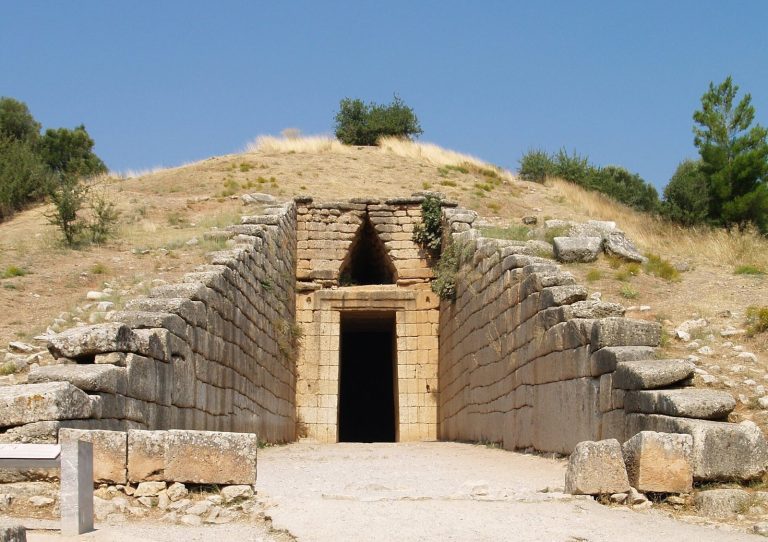
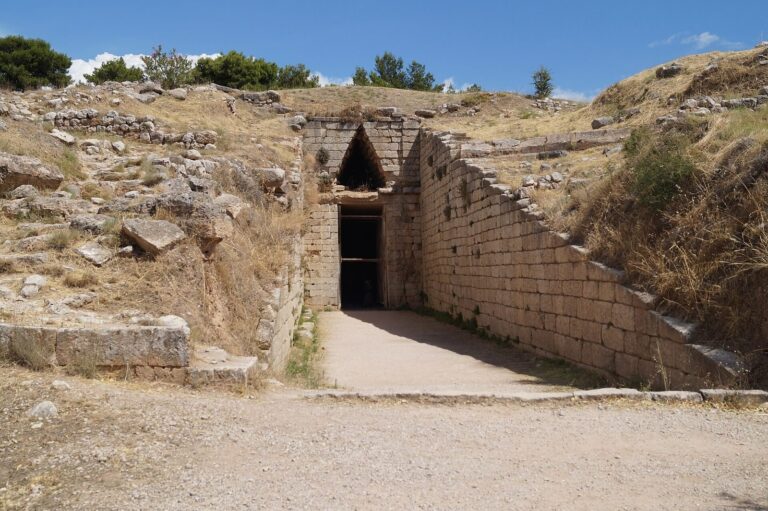
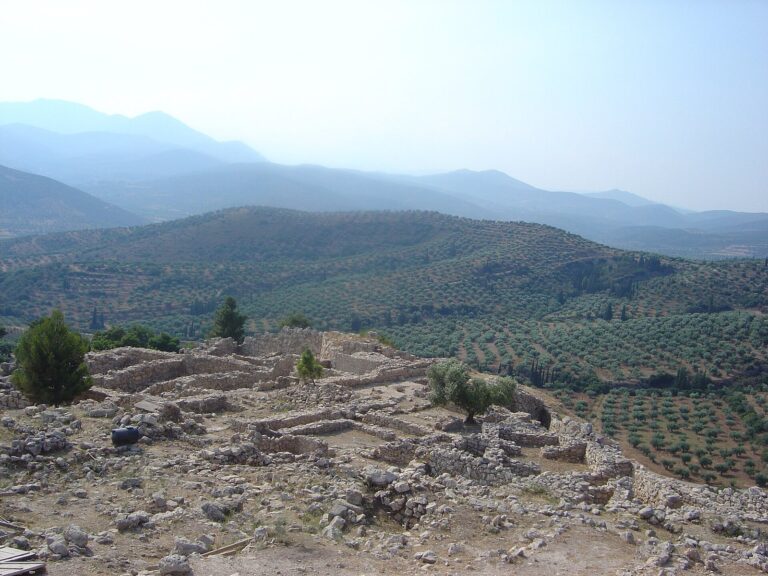
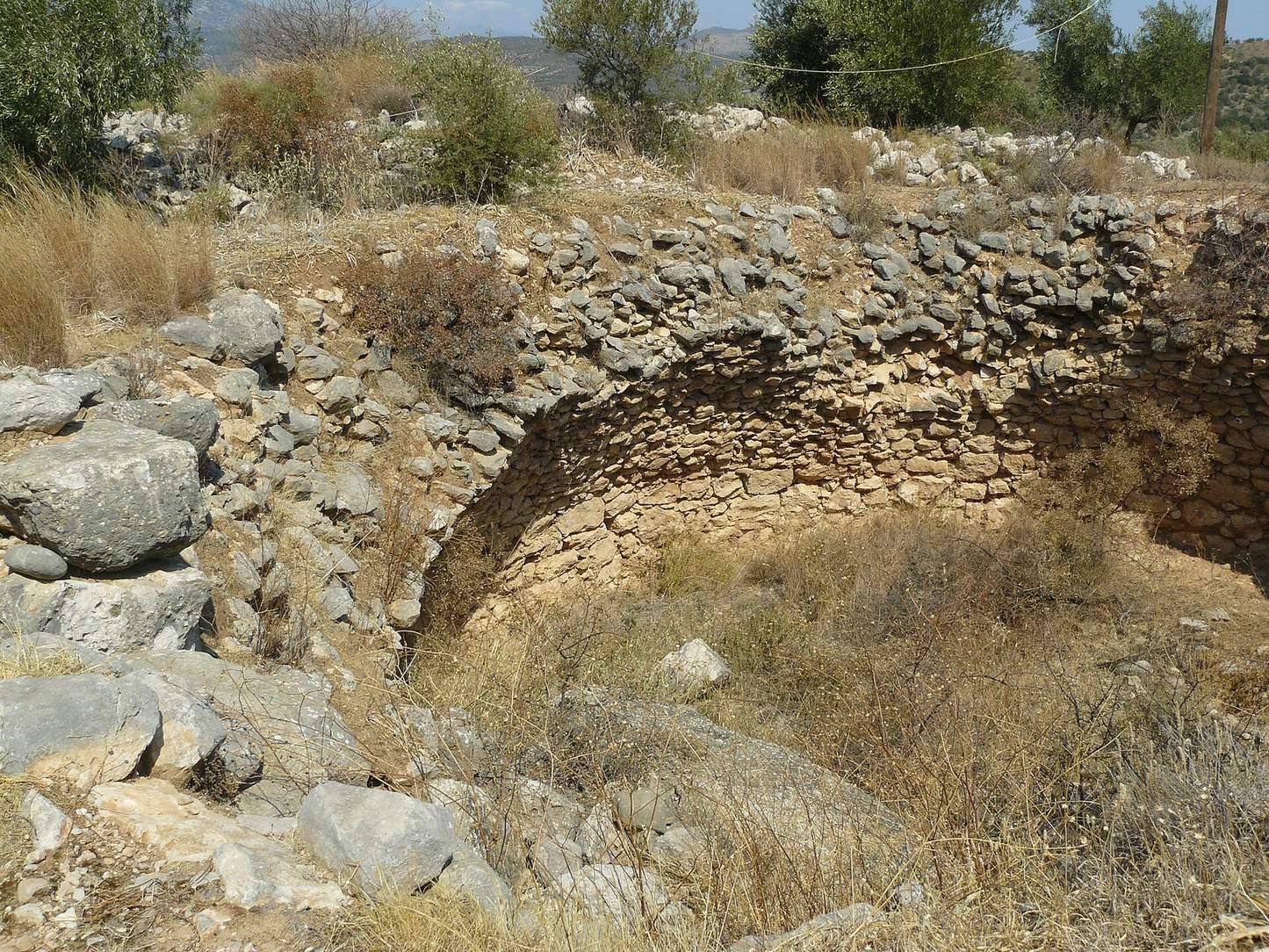
The tomb lies about 450 metres west-southwest of the Mycenae citadel, near the crest of Panagia Ridge on the western slope of Panagitsa Hill. Its plan comprises a circular underground chamber, an entrance passage called a dromos, and a doorway passage called a stomion. The rough, undressed stone construction resembles that of the nearby Cyclopean Tomb. Overlapping stone courses formed the chamber roof by corbelling, a method in which each course projects inward over the one below.
Entrance and approach
Entrance passage
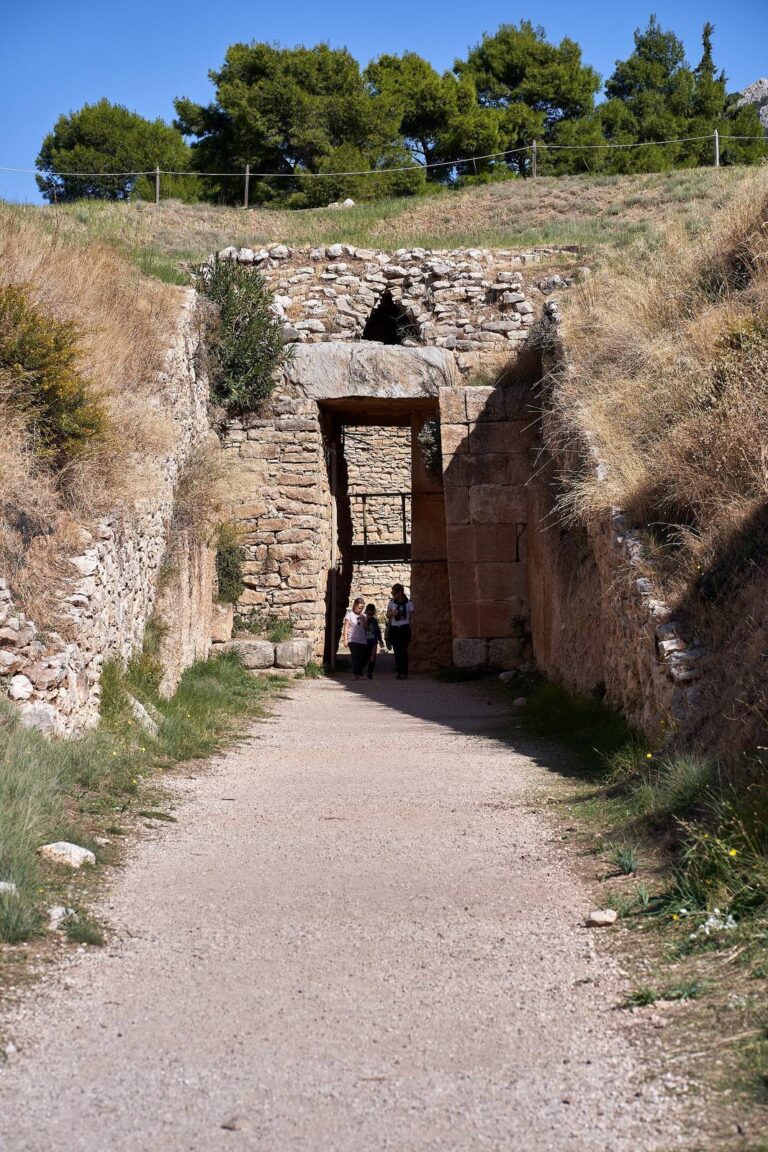
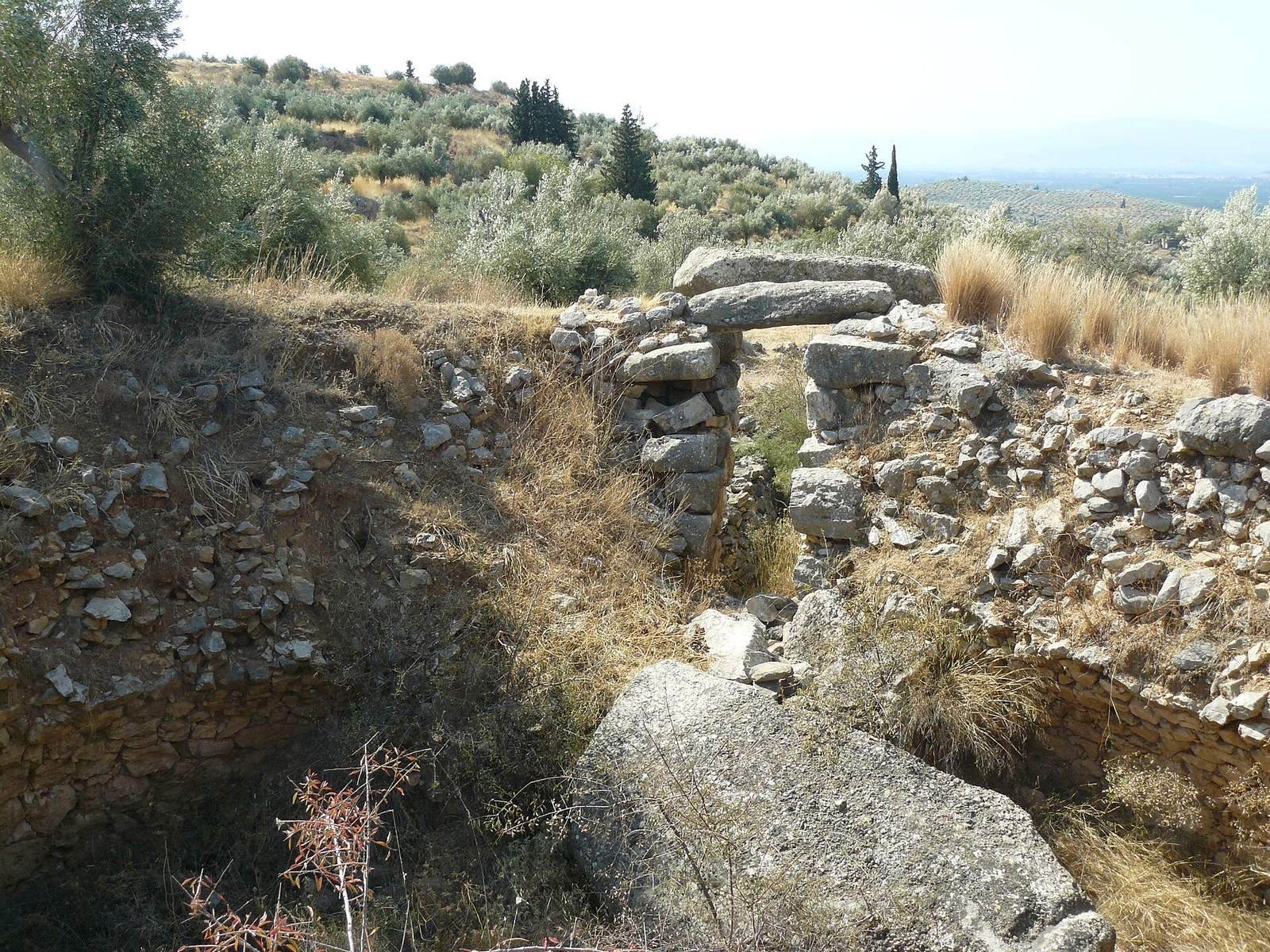
The entrance passage was cut into soft bedrock. It measures about 4–5 metres wide and roughly 10–12 metres long. Its original length may have been 6–7 metres before later excavation extended it.
Doorway passage
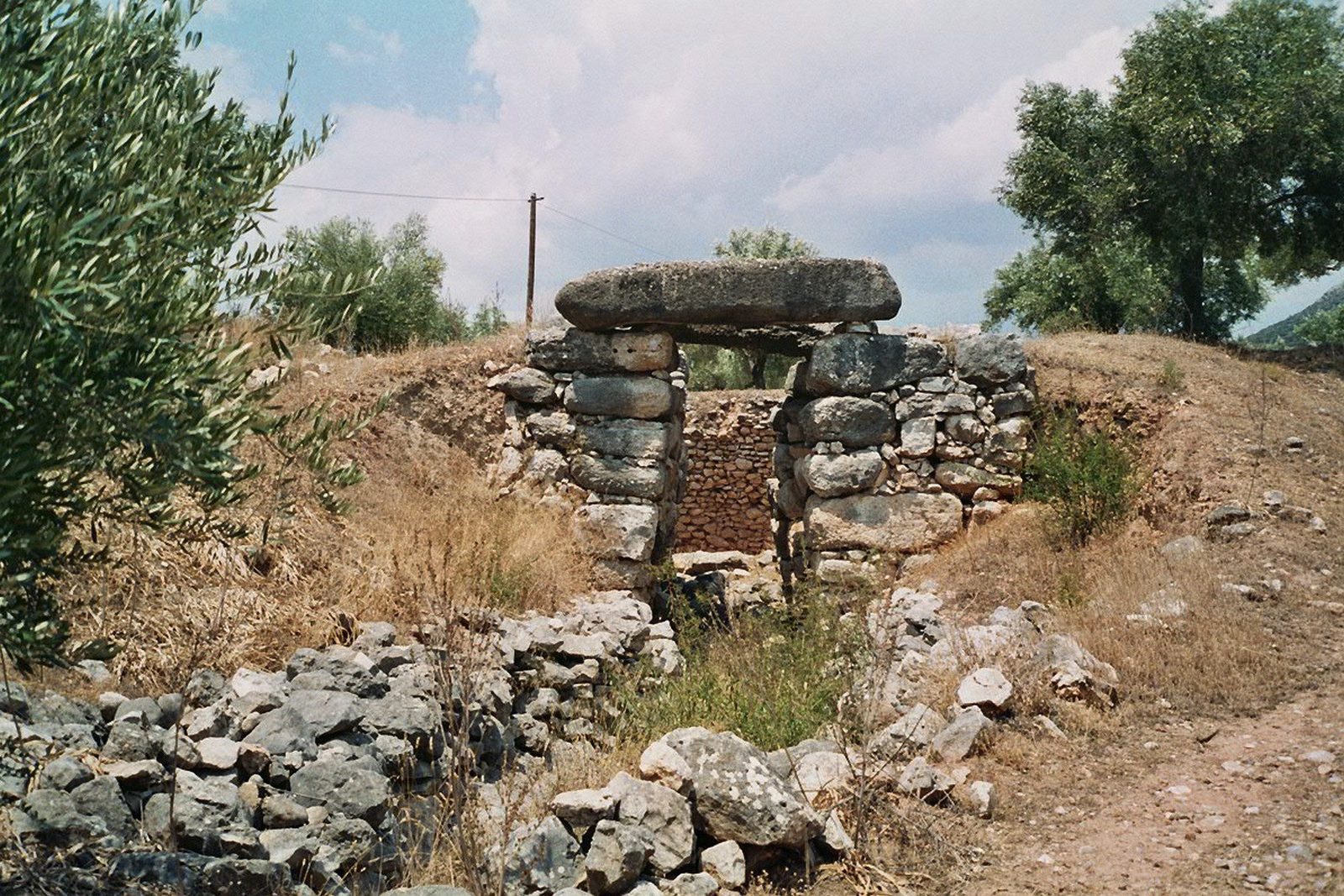
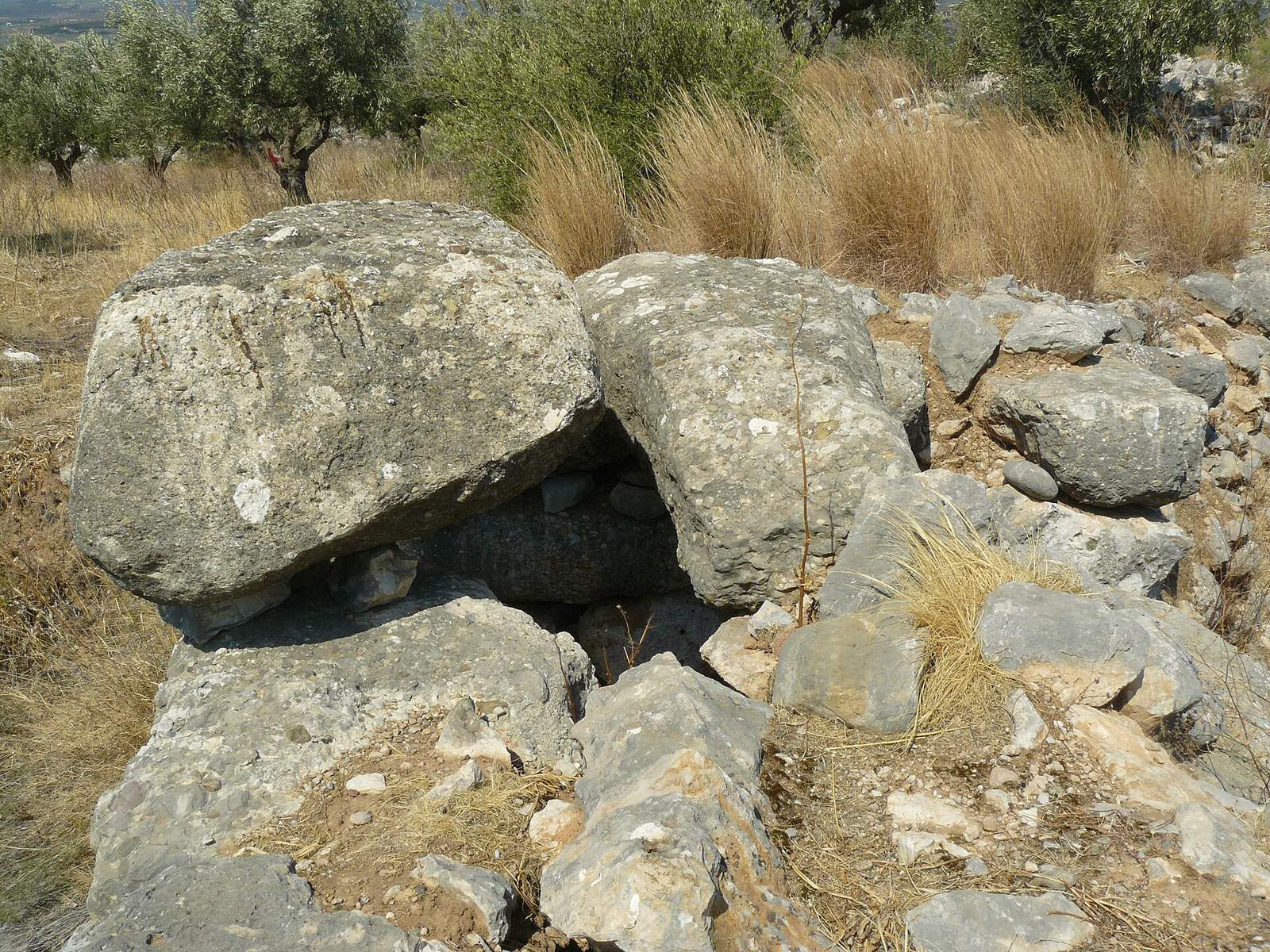
The doorway passage is about 5 metres deep and 4.5–4.6 metres high. Its entrance measures about 2 metres wide at the bottom and narrows to approximately 1.6 metres above. Roughly shaped conglomerate stone and limestone form its sides. Five large, rough conglomerate blocks originally capped the passage; the two outer blocks remain in their intended positions. Rough stones sealed the entrance after burial.
Two rectangular cuttings, each about 30 by 15 centimetres and a few centimetres deep, mark the upper surface of the outer lintel. Their date is uncertain. They may have been made before the façade above the lintels, or after the chamber collapsed to support the bases of upright stone monuments or statues.
Burial chamber
Chamber and roof
The chamber is about 11 metres in diameter, with walls approximately 1.5 metres thick. Wace estimated its original height at around 10 metres. The roof, probably made of small undressed stones and clay, had collapsed by the Geometric period at the latest, and may have fallen during the Bronze Age. Wace considered the rough construction unstable and suggested that a small disturbance or an earthquake might have triggered the collapse. The entrance is now blocked because the tomb is considered at serious risk of collapse.
Floor and burial surface
The level chamber floor was originally paved with white pebbles. The deceased and grave goods were placed directly on this surface. Small rectangular cuttings in the floor have been interpreted as probing holes made by tomb robbers searching for burial pits.
Archaeological finds
Finds from the entrance passage
Finds from the doorway passage included a Cretan-made Palace Style vessel, an elaborate class of Cretan pottery, from the early part of the Late Helladic II period. Other objects included an amethyst bead and another bead, a small ivory fragment, and gold leaf. Wace and archaeologist Sinclair Hood considered these items to have been dropped or left by tomb robbers. The passage also yielded 22 Late Helladic II pottery fragments, about 50 Late Helladic III fragments, part of a human jawbone, small pieces of gold, and a clay spool that may be Mycenaean. The jawbone and gold were thought to have come from the chamber.
Excavators recovered 88 pieces of post-Mycenaean pottery from the passage, most of them Geometric. An Archaic-period terracotta warrior’s head from a statuette was found on its floor, along with fragments of lead plate that may have served as ritual dedications.
Finds from the chamber
The chamber yielded fragments from at least eight Palace Style amphorae, or two-handled storage jars, along with gold scraps, human and animal bones, a glass-paste bead, and a piece of boar’s tusk that may have come from a boar’s-tusk helmet. These finds were considered remnants of the original burial contents. Other Mycenaean pottery could have belonged to the burial or fallen into the chamber with the roof. The same uncertainty applies to fragments of Late Helladic III figurines and several stems from drinking cups.
Geometric pottery lay in the upper layers of the collapsed chamber, alongside smaller amounts of later material. This included black-glazed pottery fragments from the fifth and fourth centuries BCE and a sherd of West Slope Ware, a Hellenistic pottery type. Excavation also recovered a bronze spearhead, traces of gold, and further pottery fragments.
Finds from a cleared area
A small area in the chamber’s southwest had been cleared by Tsountas’s workers. When examined in 1950, it contained part of a glass wine bottle, a worker’s axe blade, and an 1882 Greek coin bearing the date of the reign of George I.