Peñalosa: An Argaric Bronze Age Settlement and Burial Ground
Site at a Glance
- Popularity
- Medium
- Country
- Spain
- Primary era
- Bronze Age
- Eras represented
- Bronze Age
- Civilizations
- Unclassified
- Site type
- Military
- Remains
- Fortified Town
On this page7 sections
History
Peñalosa is an Argaric settlement and burial ground in Baños de la Encina, Jaén Province, Spain. Its construction dates to the second half of the third millennium BC, within the Argaric culture, a Bronze Age culture of southeastern Iberia. The settlement has been interpreted as a metal-producing community on the edge of that culture’s sphere of influence.
Occupation and economy
Three phases mark Peñalosa’s development, from IIIC, the earliest, to IIIA, the latest. The clearest archaeological record belongs to its final occupation, around 1750 BC in calendar-adjusted radiocarbon dating. The settlement is thought to have been abandoned around 1600 BC.
Peñalosa’s economy centered in part on obtaining and processing metal for transfer to coastal centers of power. People worked copper veins in the Sierra Morena, particularly the minerals azurite and malachite, and processed silver on a smaller scale. Weaving, metalworking, and cereal processing took place in separate working areas. Barley was the principal crop; several kinds of wheat accounted for less than a tenth of the plant remains, while legumes and flax were also grown in smaller amounts.
Community and archaeological study
Burial evidence includes roughly twice as many men as women, and women were generally buried in the same tomb as men. Grave goods differed between the middle and upper terraces, taken together, and the lower terrace. Excavators interpret the settlement as a strongly ranked community, with a militarized elite above free farmer-warriors and a dependent population attached to the aristocracy. Other researchers dispute this class-based interpretation. Excavators also report that cattle- and horse-family animal remains cluster in the upper part of the settlement; other researchers view their distribution across the terraces as broadly comparable.
Systematic excavation has taken place since 1985, alongside surface survey of the surrounding area. Research has focused on reconstructing household activities and patterns of consumption.
Remains
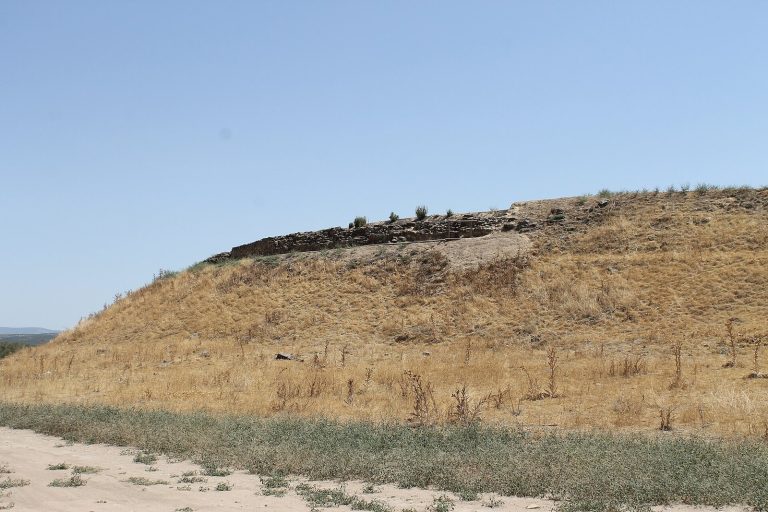
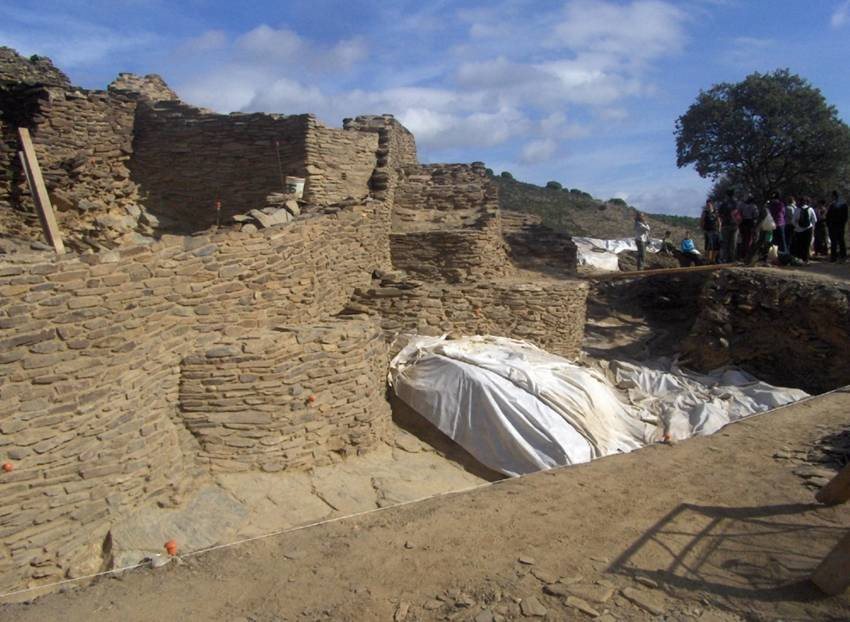
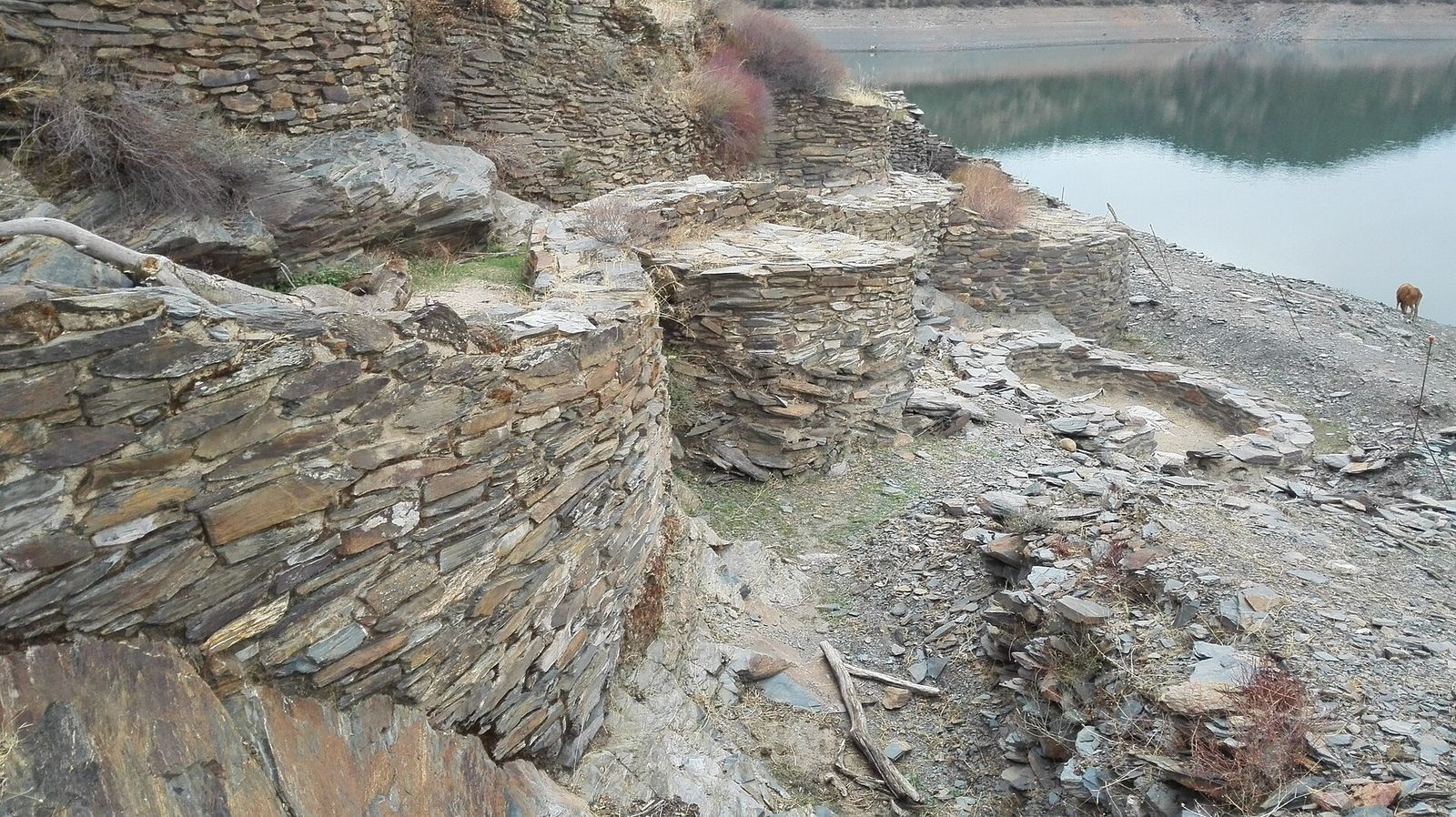
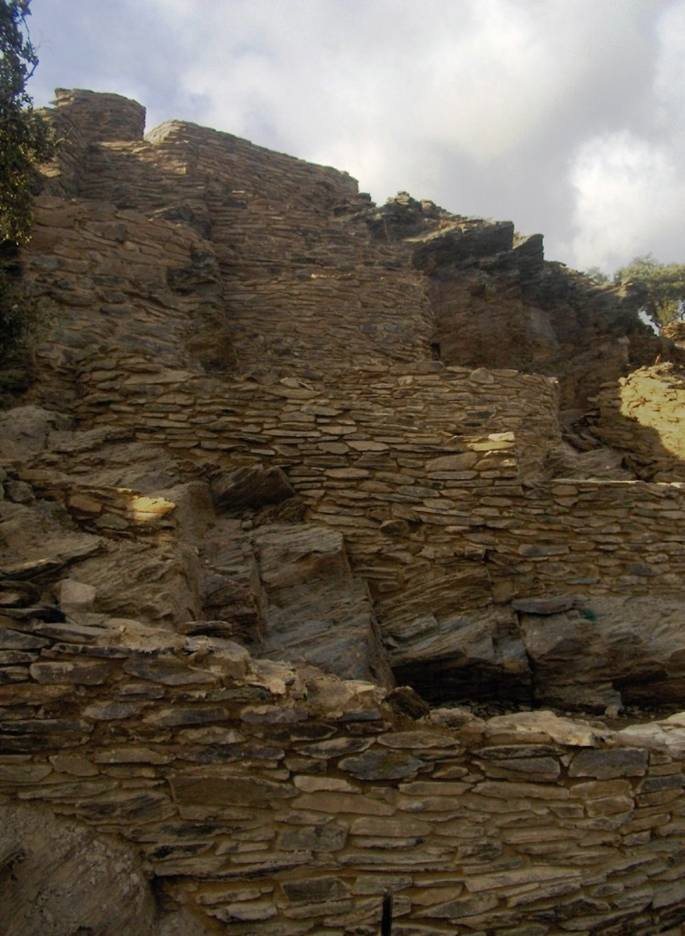
Peñalosa occupies a hill overlooking the ancient Rumblar valley, now partly covered by the waters of the Rumblar reservoir. The settlement spreads across three artificial terraces, with houses, defenses, and connecting streets; some streets were paved. Its rectangular houses were built with slate walls extending through their full height. Their roofs were probably flat, made of mud and covered with slate slabs.
Terraces and defenses
On the lower terrace, a cistern and a wall with projecting defensive structures apparently marked the settlement’s boundary. The middle terrace contains metalworking remains and a monumental tomb associated with numerous animal remains and rich grave goods. At the highest point of the upper terrace stood an acropolis, the settlement’s elevated fortified area. A winding passage protected by defensive structures and watchtowers led to it. Most burials on this terrace occupied spaces used solely for funerary purposes.
Tools and production remains
Evidence of cereal and ore processing occurs in most of the settlement’s buildings. Finds include at least five sickles, granite grinding stones, clay loom weights that held threads taut, and slate spindle whorls used to spin fibers into thread. As many as four broad pottery groups have been identified, including cups, cheese strainers, and funerary urns used only in children’s burials. Metalworking remains represent every stage of copper production and include awls, chisels, daggers, and ornaments.
Past environment
Reconstruction of the ancient environment points to vegetation dominated by holm oak and cork oak, alongside strawberry tree, wild olive, and lentisk. This landscape indicates a mild climate, with few severe frosts and greater humidity than today.