Basilica and Royal Shrine of Our Lady of Cabeza: A Gothic Marian Sanctuary in Spain


Site at a Glance
- Rating
- 4.7
- Popularity
- Medium
- Country
- Spain
- Primary era
- Medieval
- External website
- Open
- Eras represented
- Medieval
- Civilizations
- Crown of Castile
- Site type
- Religious
- Remains
- Sanctuary
On this page11 sections
History
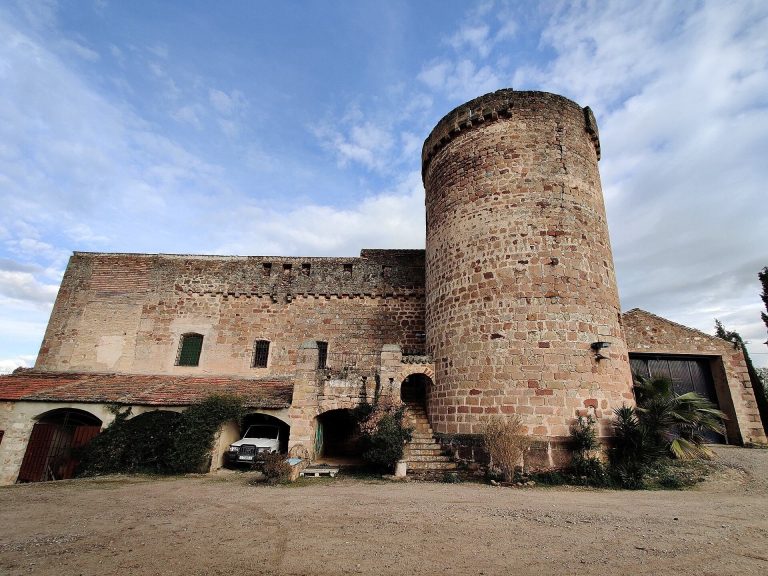
The Basilica and Royal Shrine of Our Lady of Cabeza is a Gothic Roman Catholic sanctuary in Spain, located on the Cerro de la Cabeza near Andújar, in the Sierra de Andújar Natural Park. Its origins are traditionally placed in a Marian apparition associated with 1227, while the present church was built between 1287 and 1304 and extensively renovated at the end of the sixteenth century. The shrine belongs to the Diocese of Jaén and has been served by the Trinitarians, the Order of the Most Holy Trinity, since 1930.
Medieval origins and pilgrimage
According to tradition, on the night of 11 to 12 August 1227, the shepherd Juan Alonso de Rivas of Colomera heard a bell and saw a light near Andújar. He found an image of the Virgin there, but people initially doubted his account. Tradition says that belief followed the healing of his previously disabled hand. The people of Andújar then formed a confraternity and began building a church at the place associated with the apparition.
The beginnings of the annual romería, a pilgrimage procession to a shrine, are uncertain and are traditionally connected with the reign of Ferdinand and Isabella in the fifteenth century. Its celebration on the last weekend of April is documented from 1505, and it came to be regarded as one of Spain’s oldest pilgrimages. Miguel de Cervantes took part in it in 1592 and later mentioned it in The Works of Persiles and Sigismunda, published in 1617. In 1593, Muley Xeque, Prince of Fez, was said to have converted to Catholicism after attending the pilgrimage.
Patronage and coronation
The Virgin of Cabeza became patron saint of Andújar through a papal bull, a formal document used by the pope for authoritative decisions and grants, issued by Pius X on 18 March 1909. John XXIII later made her patron saint of the Diocese of Jaén through a bull dated 27 November 1959.
Pius X had authorized the canonical coronation of the image on 10 November 1907. In April 1909, the image was taken to Andújar’s parish church of Santa María la Mayor, where José Meseguer y Costa, Archbishop of Granada, blessed the crowns of the Virgin and Child on 23 April. The image was then brought to a temporary altar and pavilion on the nearby Colón esplanade, crowned before a large crowd, returned to the parish church, and carried through the city in procession that night.
The Civil War siege
During the Spanish Civil War, a conflict fought in Spain from 1936 to 1939, the sanctuary sheltered about 200 Civil Guards from Jaén province who had joined the military uprising of July 1936. Their families and many civilians were also inside. Under Captain Santiago Cortés González, the defenders resisted a Republican siege for nine months. Some occupants left and surrendered to the attackers. Cortés was mortally wounded on 1 May 1937, and the Republicans captured the sanctuary after bombardment had reduced it to ruins.
The bombardment destroyed the sanctuary’s artistic heritage and the original image of the Virgin. Republican military commanders treated the capture and evacuation as a symbolic achievement rather than a strategically important victory. The siege later became the subject of the 1949 film El santuario no se rinde, which portrayed the Nationalist defenders heroically.
Reconstruction and modern status
In 1950, the Virgin was designated captain general of the Spanish armies. Because the original image had been lost during the siege, a replacement was transferred to Andújar and crowned in 1960 by Félix Romero Mengíbar, Bishop of Jaén.
Pope Benedict XVI granted plenary indulgences to the sanctuary on 25 October 2008 and awarded it the privilege of the Golden Rose in 2009. The Golden Rose is a papal honor traditionally given to important Catholic churches, sanctuaries, or religious figures. The church became a minor basilica on 21 April 2010, a status granted by the pope to churches of special religious and pastoral importance, and a new basilica altar was consecrated on 3 July 2011. The sanctuary was declared a cultural-interest property on 24 April 2013.
Remains
Sanctuary on Cerro de la Cabeza
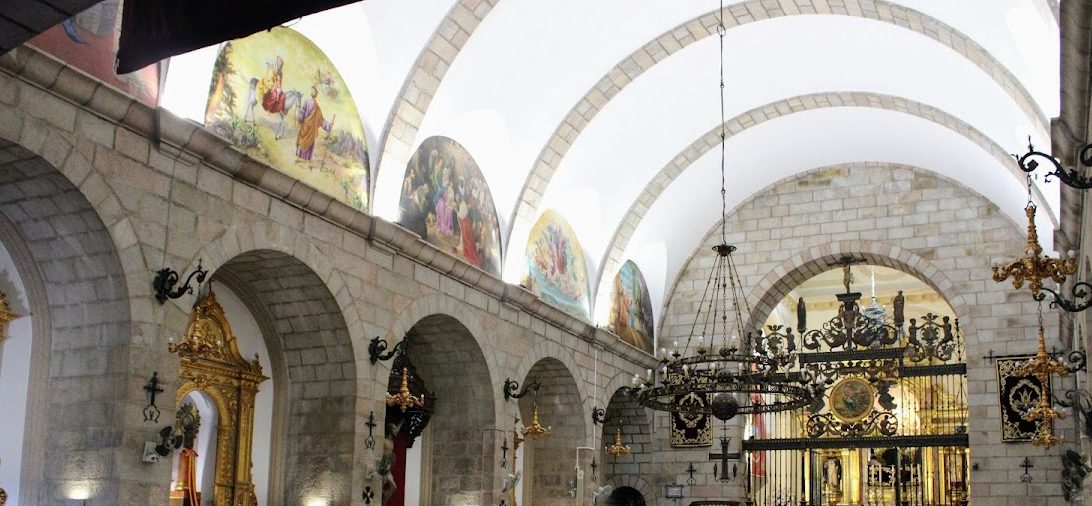
The basilica is a Gothic sanctuary on the Cerro de la Cabeza, also known locally as Cerro del Cabezo, within the Sierra de Andújar Natural Park. The hill’s name is linked to the traditional discovery of the Virgin’s image, and its summit also contained a large rock said to resemble a head. The church was constructed between 1287 and 1304 and underwent extensive reform at the end of the sixteenth century. Its later physical history includes the destruction caused by the Civil War bombardment and the subsequent restoration of the sanctuary as a functioning basilica.
Surviving religious images
Virgin of Cabeza
The original image of the Virgin of Cabeza, traditionally connected with the foundation of the shrine, was lost during the Civil War siege. The replacement image was transferred to Andújar and crowned in 1960.
Sacred Heart
The sanctuary preserves an image of the Sacred Heart sculpted by Mariano Benlliure in 1943. In 1939, General Queipo de Llano asked Benlliure to provide an image to replace works destroyed in the bombardment. The sculptor supplied a work that was already in his studio, based on a plaster model from which further copies were made for Madrid and Alicante.
Agonizing Christ
Benlliure also created an image of the Agonizing Christ, commissioned by the organization Obra Pro-Imágenes en los Frentes de Combate. The figure is fixed to a flat cross, with a halo at the crossing, and is venerated in a niche on the left side of the church.