Castle of Espelúy: A Medieval Fortress at a Guadalquivir Crossing


Site at a Glance
- Rating
- 3.9
- Popularity
- Very Low
- Country
- Spain
- Primary era
- Medieval
- Eras represented
- Medieval, Modern
- Civilizations
- Crown of Castile
- Site type
- Military
- Remains
- Castle
On this page7 sections
History
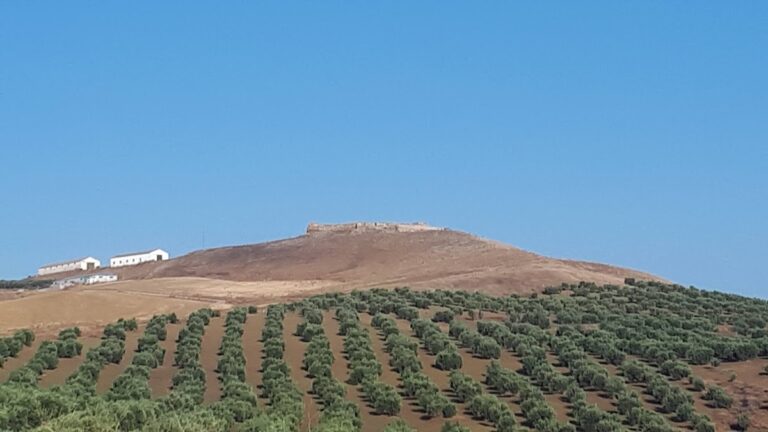
Castle of Espelúy in Spain is a medieval fortress whose Muslim predecessor stood at the site by at least the Caliphal period, when Muslim caliphates ruled parts of the Iberian Peninsula, particularly under the Umayyad Caliphate of Córdoba. The castle occupied one of the principal crossings of the upper Guadalquivir, where several roads converged, giving the site a strategic role in movement across the region.
Muslim and Castilian phases
During Ferdinand III’s 1224 campaign against Quesada, the castle was among the fortifications of Jaén devastated by his forces. Ferdinand III, the king of Castile and León, led campaigns that expanded Christian rule across much of al-Andalus. When his troops reached Espelúy, they found the castle without defenders.
After Castilian control of the territory had been firmly established, the stronghold was rebuilt to guard the important river ford and the roads that met there. The Christian castle was probably constructed in the late thirteenth or possibly the early fourteenth century.
Lordship and Saint Teresa
For many years, Espelúy formed part of the lordship of the Benavides, a Castilian noble lineage whose members held the titles Count of Santisteban and Duke of Medinaceli.
In The Book of the Foundations, Saint Teresa of Jesus described receiving treatment at the castle after an accident while crossing the Guadalquivir. She and three friars were attempting to cross in a local boat when a rope broke and the boat capsized. Teresa nearly fell into the river and was treated at Espelúy for scratches sustained in the incident.
Today, the castle is protected in Spain as a Property of Cultural Interest and is registered as a monument under code RI-51-0007904.
Remains
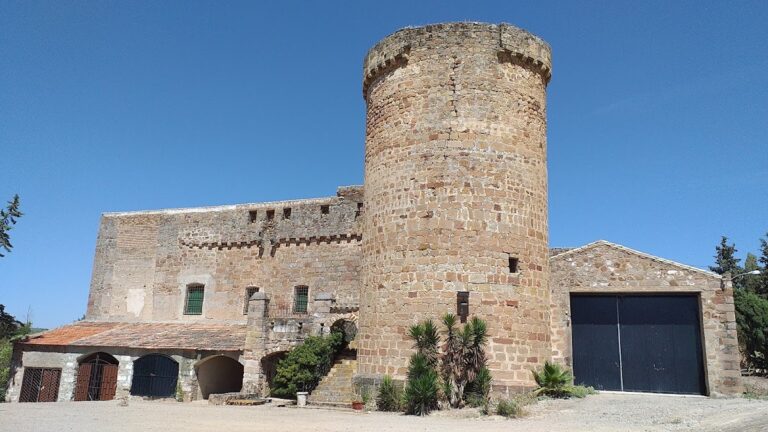
The surviving castle fabric is centered on a rectangular keep attached to the stately house of its present owners. The tower contains two rooms arranged one above the other, each covered by a barrel vault, a continuous stone ceiling formed by extending an arch along its length.
Surviving structures
Rectangular keep
The rectangular keep preserves the principal fortified element of the medieval castle. Its two superimposed rooms retain their barrel-vaulted coverings, while the upper finishing elements of the tower are recent constructions. The keep’s attachment to the present stately house reflects the way the surviving fortress fabric has been incorporated into the current estate.
Estate entrance
Access to the estate is marked by a recently built portal designed in a medievalizing manner. It forms part of the present entrance arrangement associated with the keep and the stately house.