Chin’ooka Kofun: A Late-Fourth-Century Burial Mound in Japan
Site at a Glance
- Popularity
- Low
- Country
- Japan
- Primary era
- Classical
- Eras represented
- Classical, Early Modern
- Civilizations
- Tokugawa, Yamato
- Site type
- Burial
- Remains
- Burial Mound
On this page4 sections
History
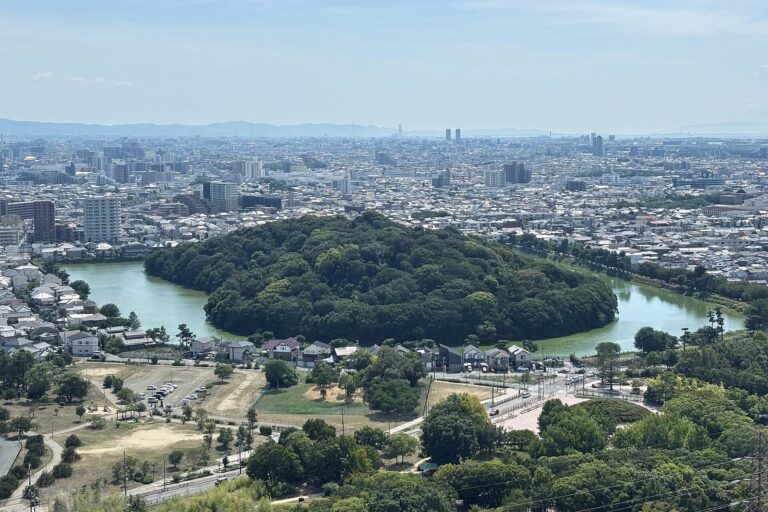
Chin’ooka Kofun is an ancient Japanese burial mound, or kofun, in Sakai, Osaka, Japan. Built in the late fourth century, it is considered one of the earliest burial mounds in the Mozu Kofun Group, a cluster of ancient tombs in Sakai. A premodern record proposed two possible occupants: Nomi no Sukune, a figure in early Japanese tradition associated with the imperial court and stories of sumo’s origins, or a court noble.
In 1703, a Buddhist temple connected with a local shrine was built on the rear mound. People came to call it the “temple on the mound.” An investigation of the mound’s internal structure took place in 1972, after which the temple was moved. The kofun received National Historic Site designation in 1974; in 2014, that designation became part of the broader designation for the Mozu Kofun Group, which includes 19 burial mounds.
Remains
Mound and moat
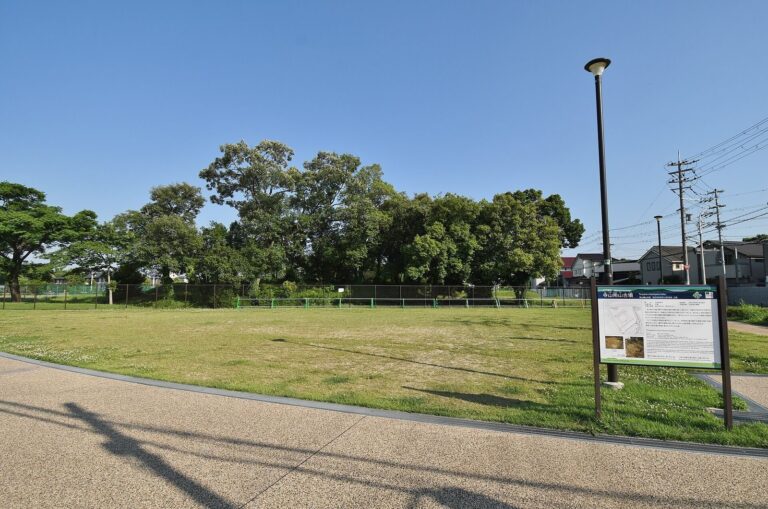
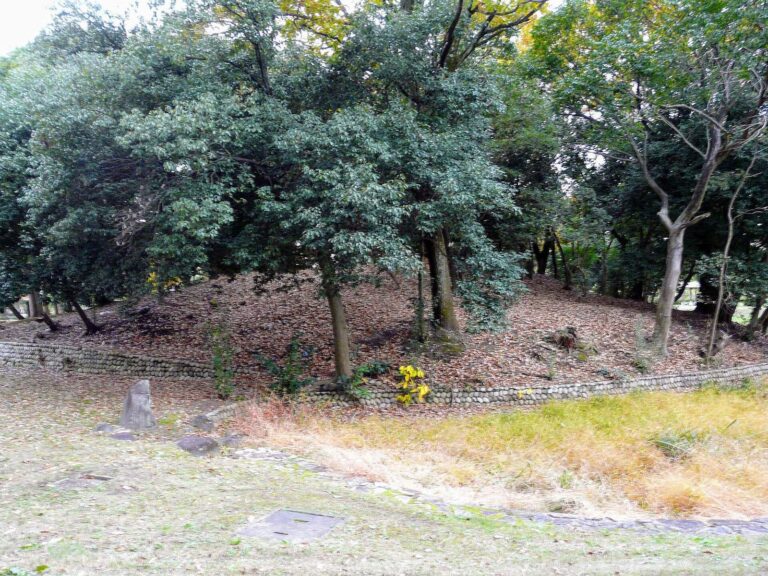
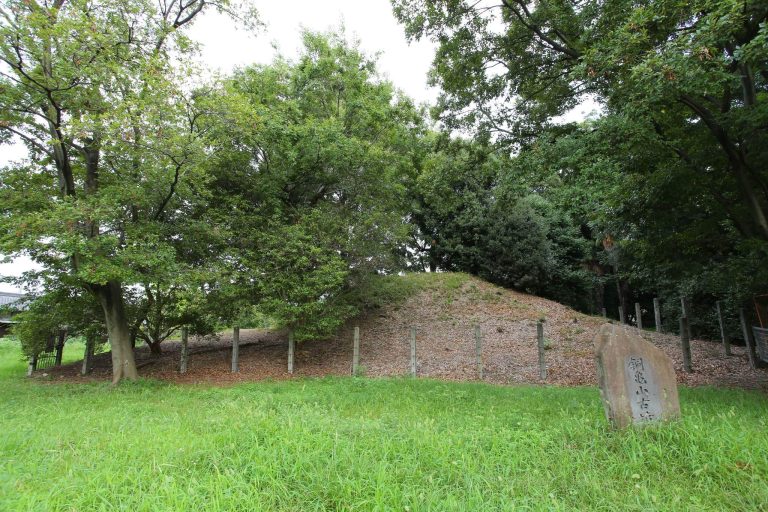
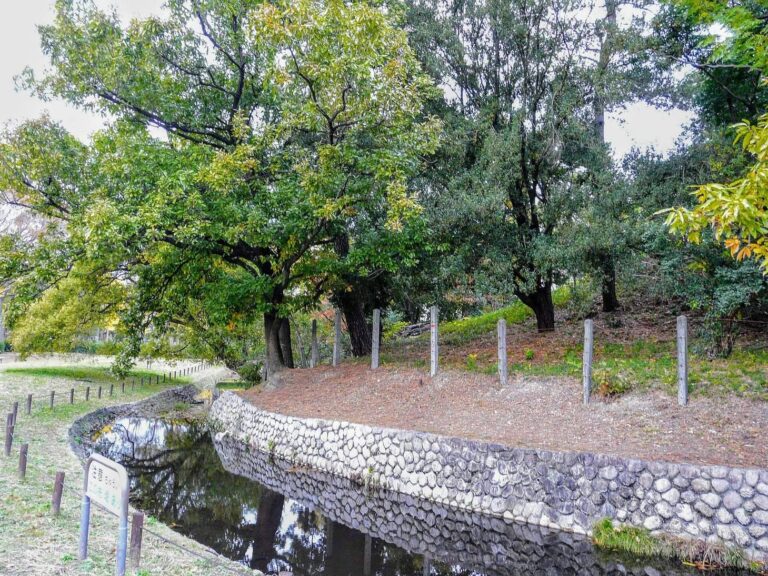
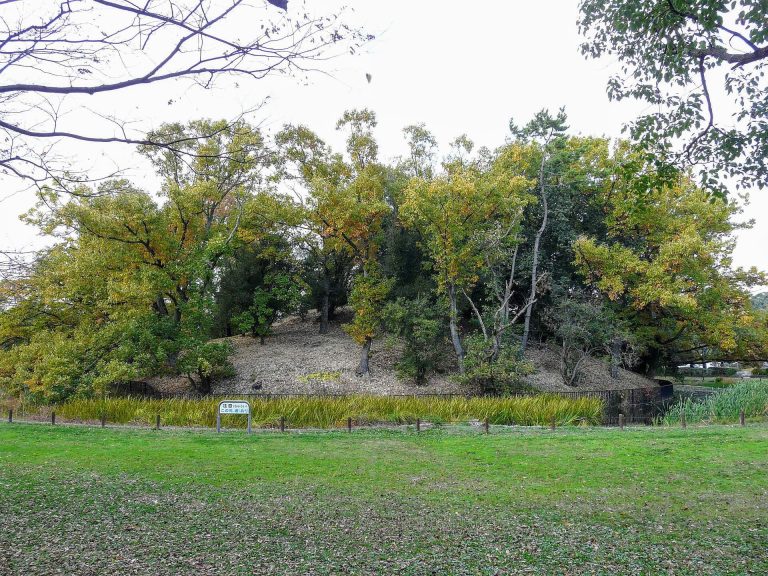
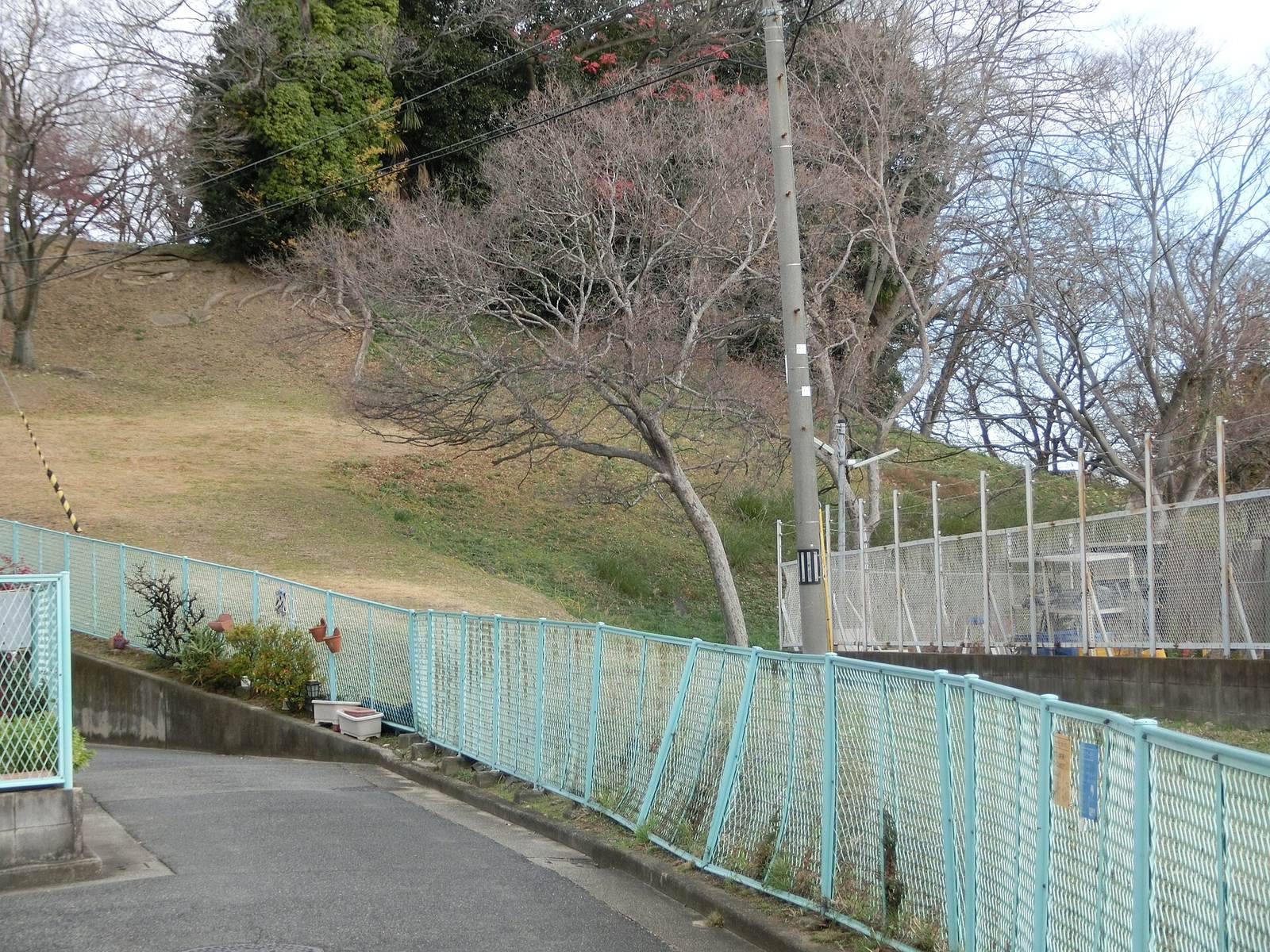
The mound stands on ground about 6 metres above sea level, near the coast at the southwestern edge of the Mozu Kofun Group. It was originally a keyhole-shaped mound, with a circular rear section and a projecting front directed southwest, and is estimated to have measured 155 metres long. Most of the front was cut away in the early twentieth century. The altered rear section survives in three tiers and measures 94 metres across and 14 metres high. Its broad, level summit appears to have been lowered when the temple was built; a raised patch near the centre may preserve part of the uppermost tier. A moat once surrounded the mound and is now filled in. Excavation west of the rear section exposed a portion about 30 metres wide. Stones covered the mound’s surface, where haniwa, fired-clay objects placed on burial mounds, were set. A small number, including finned examples, also came from the moat.
Stone coffin and ornaments
At the centre of the rear mound, a long, chest-shaped stone coffin was found beneath a covering of clay. Six fitted slabs form the coffin: a lid, a base, and four sides. Marks left by tools indicate that the stone was relatively soft, rather than the hard Izumi sandstone once thought to have been used. The arched lid measures 86 centimetres long and 75.3 centimetres wide. It is unusually small beside coffins from mounds of comparable size, so it may not have held the principal burial, or it may represent an early form of this coffin type. The coffin has been reburied. Clay around it contained three hoe-shaped jasper ornaments, 18 wheel-shaped jasper ornaments, and one object of another type. These stone burial ornaments are displayed at the Sakai City Museum.