Villa Imperiale of Pesaro: A Renaissance Suburban Residence
Site at a Glance
- Popularity
- Medium
- Country
- Italy
- Primary era
- Early Modern
- Eras represented
- Medieval, Early Modern
- Civilizations
- Duchy of Urbino, Papal States
- Site type
- Domestic
- Remains
- Palace
On this page13 sections
History
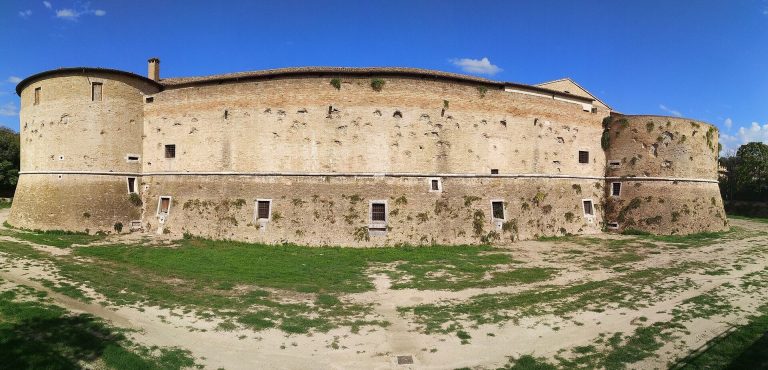
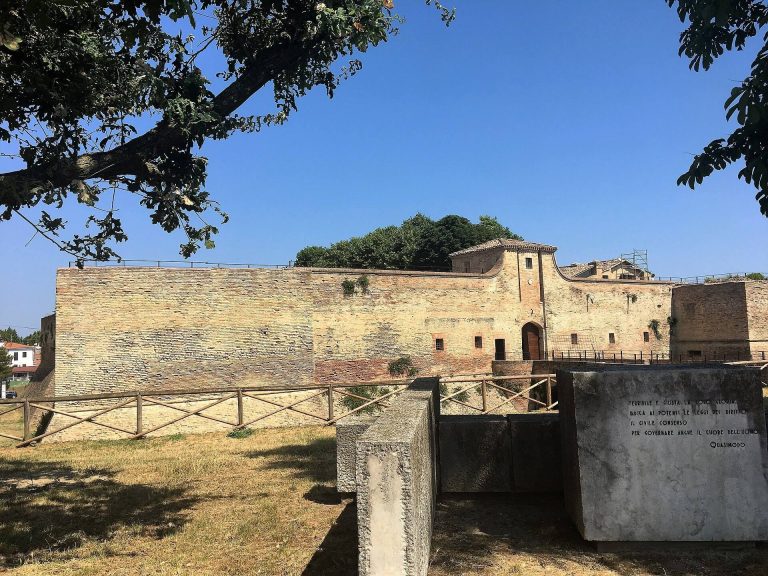
The Villa Imperiale of Pesaro is a suburban residence on the hills of Monte San Bartolo in Italy, originating in a castle attributed to Alessandro Sforza and dated to about 1452. Enlarged in the early sixteenth century for Francesco Maria I della Rovere and Eleonora Gonzaga, it became a Renaissance court residence. Its “Imperial” name comes from a tradition that Holy Roman Emperor Frederick III laid its first stone in 1469 while travelling to Rome for his coronation.
Sforza origins and the Della Rovere court
Francesco Maria I conquered Pesaro in 1521. After a long exile in Cesena and Mantua, he recovered the Duchy of Urbino, a state in central Italy, and he and Eleonora chose to establish their court in Pesaro. In the 1520s and 1530s, they commissioned Girolamo Genga to renovate and enlarge the existing castle.
Eleonora later commissioned further alterations, including completion of the courtyard of honor. The writer and humanist Pietro Bembo was also associated with this work.
Papal, Medici, and Jesuit phases
In 1631 the Duchy of Urbino returned to the Papal States, territories governed by the papacy. The villa later entered the holdings of the Medici, a powerful Florentine family, in connection with the 1635 marriage of Grand Duke Ferdinando II de’ Medici and Vittoria della Rovere.
Following a period of neglect, the villa came under the Apostolic Camera, the papacy’s central administrative and financial office, in 1763. Until the end of the century, it housed Spanish and Portuguese Jesuits exiled after the order was suppressed in their countries. In 1777, while the Jesuits still occupied the villa, Pope Pius VI granted it to Prince Orazio Albani as a perpetual, inheritable form of long-term land tenure. Orazio was the brother of former Pope Clement XI and father of Cardinal Alessandro Albani.
Restoration and later use
The Castelbarco Albani family began the villa’s first restorations in the second half of the nineteenth century. Carlo Castelbarco Albani initiated further work in the early twentieth century to recover the complex’s earlier structures. During the Second World War, parts of the villa without decoration were damaged. At the request of Counts Archinta and Guglielmo Castelbarco Albani, another restoration campaign began in 1945 and continued into the 1970s. Work with Florence’s restoration laboratory and the heritage-protection authority returned painted walls to their earlier appearance, while restoration in the 1960s revealed substantial original sixteenth-century work. The villa remains a private residence.
Remains
The complex brings together the earlier castle and Genga’s quadrangular addition, with a system of gardens behind the original core. Its buildings and grounds include loggias, a courtyard of honor, terraced gardens with water features, and other Renaissance-style garden areas.
Buildings and grounds
The original castle
The castle combined the character of a country retreat with defensive elements. It had turrets and crenellated parapets, which were later removed.
Genga’s addition
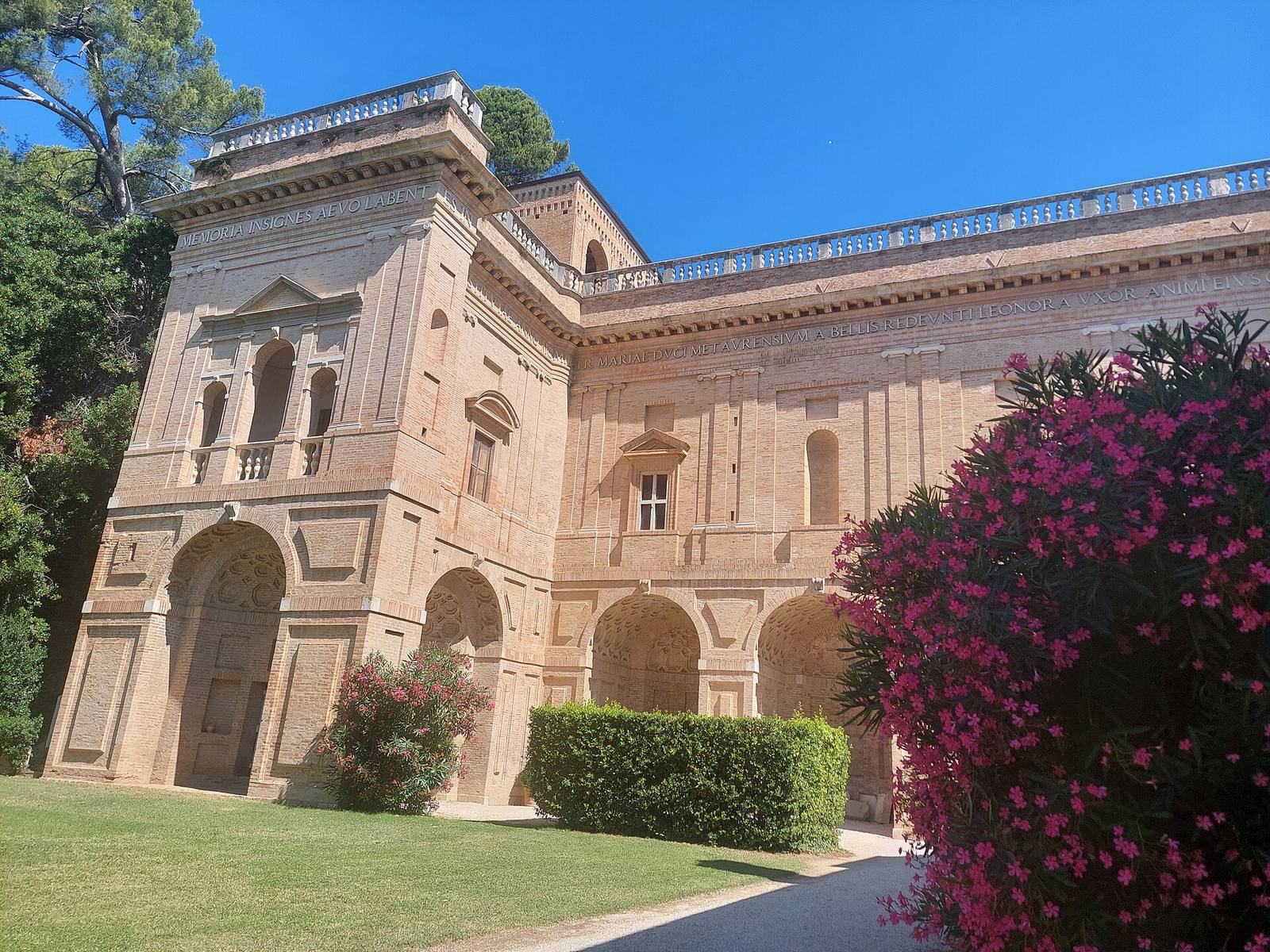
Genga’s enlargement is a distinct quadrangular structure alongside the earlier building. Built with exposed brick masonry, it has loggias on all four sides. An inscription on the western projecting section of the Della Rovere front commemorates Carlo Castelbarco Albani’s early twentieth-century restoration work.
Gardens and courtyard
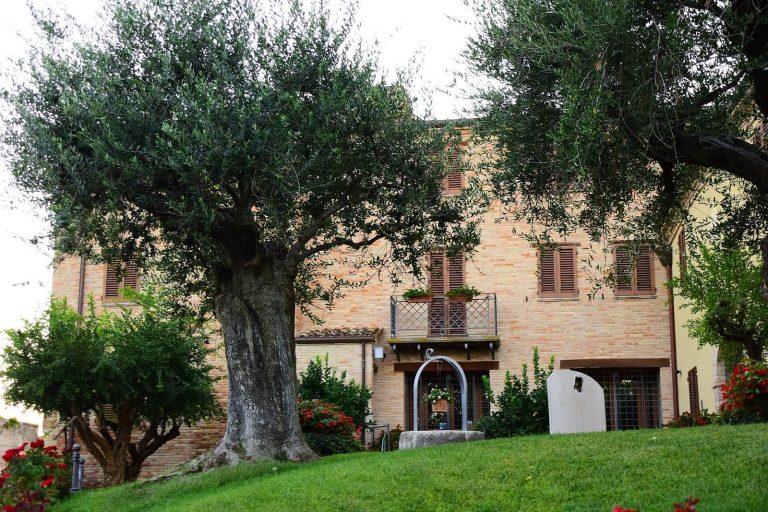
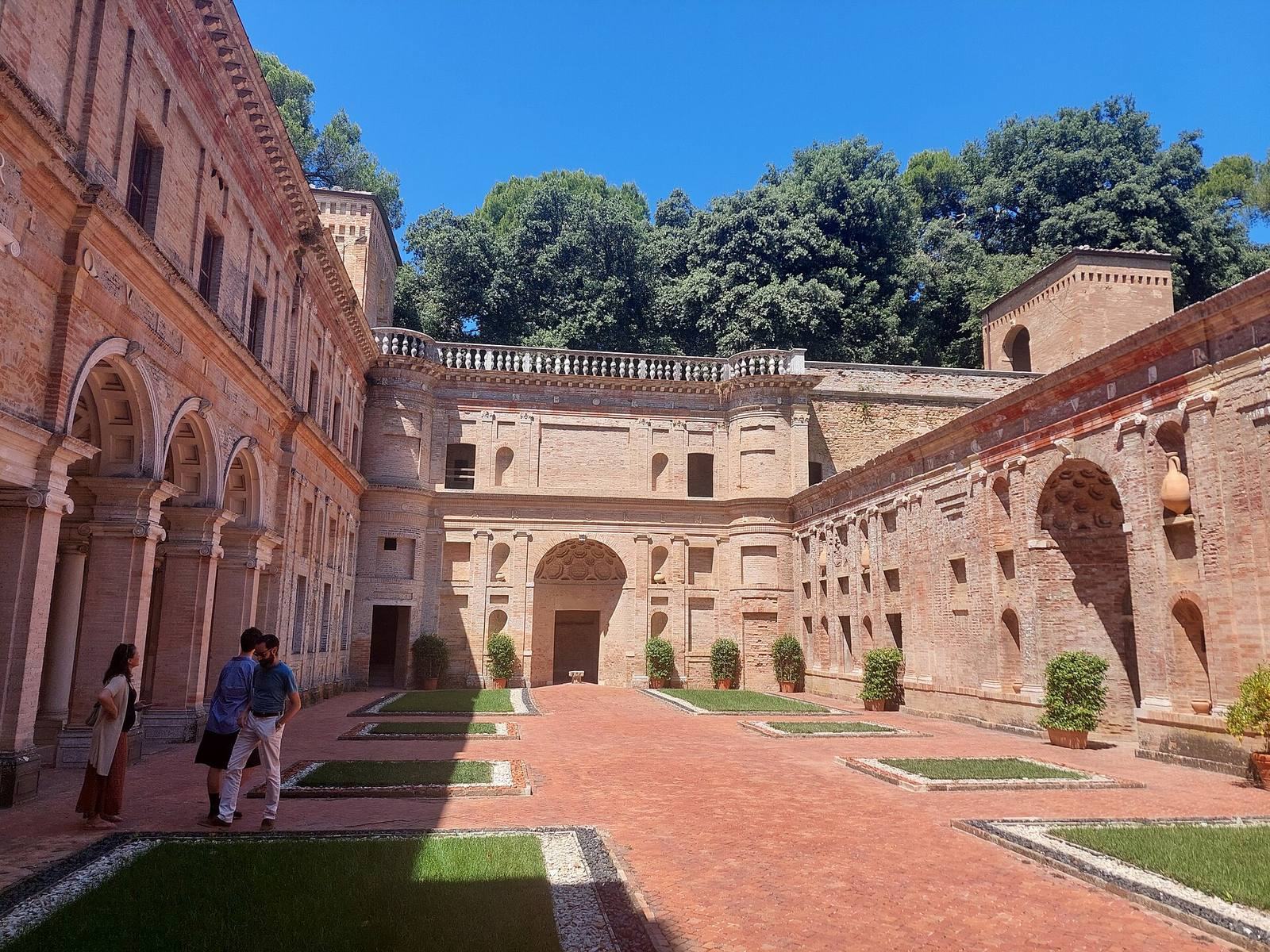
Behind the original core, terraced gardens incorporate water features. The grounds also include elaborate Renaissance-style gardens, an inner garden, a tower, passage arches, and the courtyard of honor.
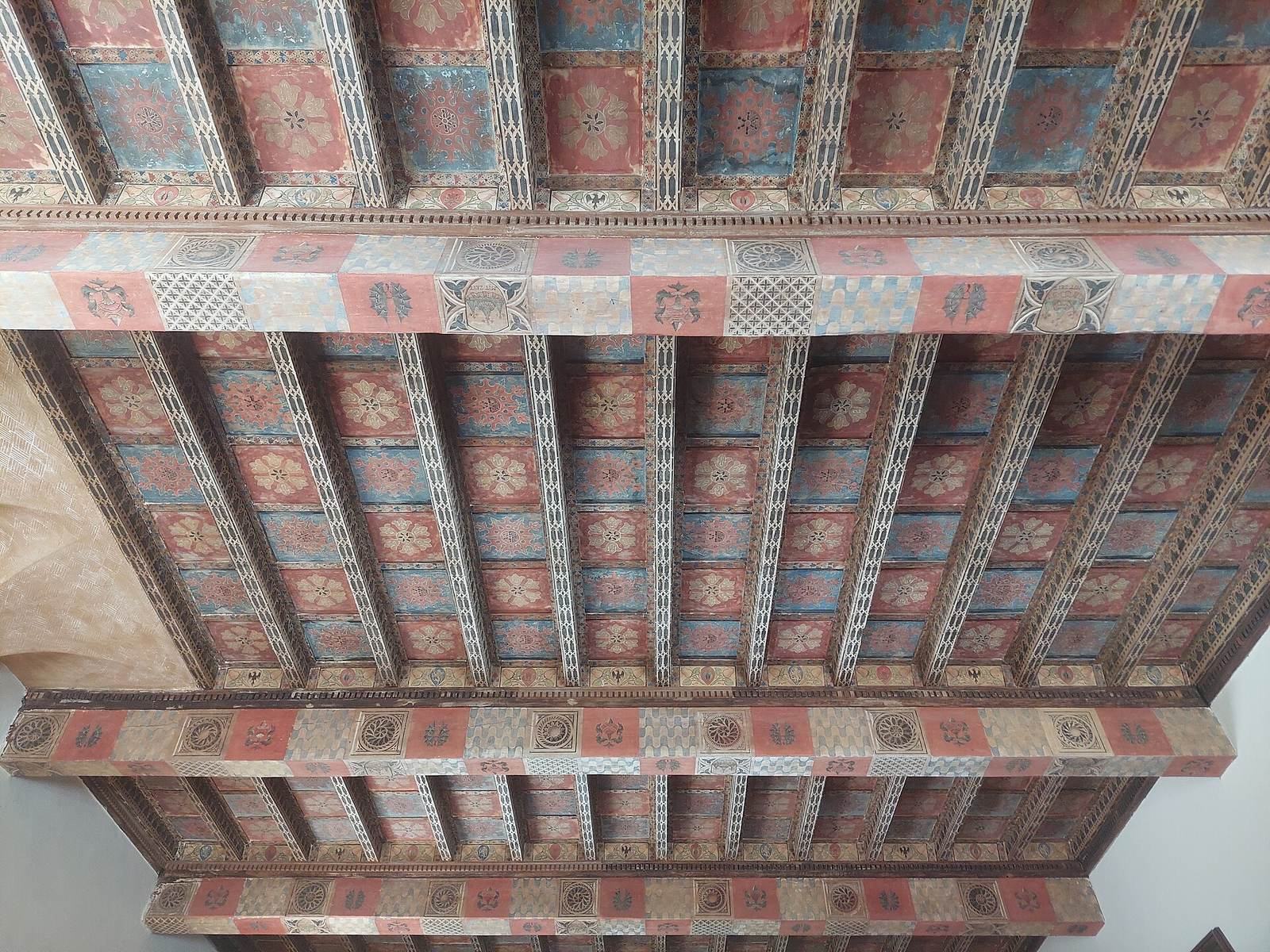
Interior and painted decoration
Jesuit alterations
During the Jesuit occupation, rooms and loggias were converted into cells and oratories. The roof terraces were enclosed, and an additional floor was built above them.
Wall paintings
Genga coordinated a major painting campaign carried out in stages by Dosso and Battista Dossi, Raffaellino del Colle, Francesco Menzocchi, Agnolo Bronzino, and Camillo Capelli. The murals include episodes from the Labors of Hercules and the history of the Della Rovere family, as well as the Hall of Calumny, caryatids, and winged child figures known as putti. Ceiling paintings show the Oath of Sermide and Francesco Maria della Rovere leading his troops. Another depicts Charles V’s arrival at the Basilica of San Petronio in Bologna for his imperial coronation in 1530. In the nineteenth century, Giuseppe Gennari repainted many rooms over earlier murals. Twentieth-century restorations removed much of that later paint, leaving original sixteenth-century painted areas visible.
The Albani collection
Eight large zinc chests containing papers belonging to Clement XI were moved to the villa from Palazzo Albani in Urbino after that palace was sold in 1915. The collection also includes 23 music books for lute and other instruments, including harpsichord and viola da gamba. Mostly by composers from the Roman circle, the music dates from 1576 to 1653. Scientific books and works on a range of subjects, dating from the late Renaissance through the eighteenth century, are also part of the collection.