Gradara Castle: A Medieval Fortress and Walled Settlement in Italy
Site at a Glance
- Rating
- 4.6
- Popularity
- Very High
- Country
- Italy
- Primary era
- Medieval
- External website
- Open
- Eras represented
- Medieval
- Civilizations
- Unclassified
- Site type
- Military
- Remains
- Fortified Town
On this page7 sections
History
Gradara Castle is a fortified medieval settlement in Italy, first built around 1150 by the De Griffo family as a fortress. Its position at a crossroads of trade routes made it an enduring point of conflict between forces loyal to the papacy and the lordships of the Marche and Romagna.
The De Griffo and Malatesta Foundations
After the De Griffo family fell out of favor with the papacy, its investiture of Curte Cretarie was withdrawn and the territory was assigned to Malatesta da Verucchio, known as Mastin Vecchio and regarded as the founder of the Malatesta dynasty. Under Malatesta rule, two defensive walls were built during the thirteenth and fourteenth centuries, strengthening the fortress and the settlement around it.
Conflict between the Malatesta and Sforza
Gradara became the focus of a succession dispute in 1445, when Galeazzo Malatesta agreed to sell it to Francesco Sforza for 20,000 gold florins. Sigismondo Pandolfo Malatesta, who controlled the fortress, refused to surrender it or repay the money.
In 1446, Francesco Sforza joined forces with Federico da Montefeltro and besieged Gradara for 40 days. The attackers used cannon, bombards, and firearms, but heavy rain and the expected arrival of Malatesta reinforcements forced them to withdraw. Sigismondo Pandolfo Malatesta therefore retained control of the fortress.
Malatesta rule ended in 1463, after Sigismondo Pandolfo Malatesta was excommunicated by Pope Pius II and confronted by Federico da Montefeltro, who attacked Gradara on behalf of the Church. The garrison surrendered, and the pope granted Gradara as a vicariate, a territory governed for a higher authority, to the Sforza of Pesaro.
Aristocratic Residence and Papal Administration
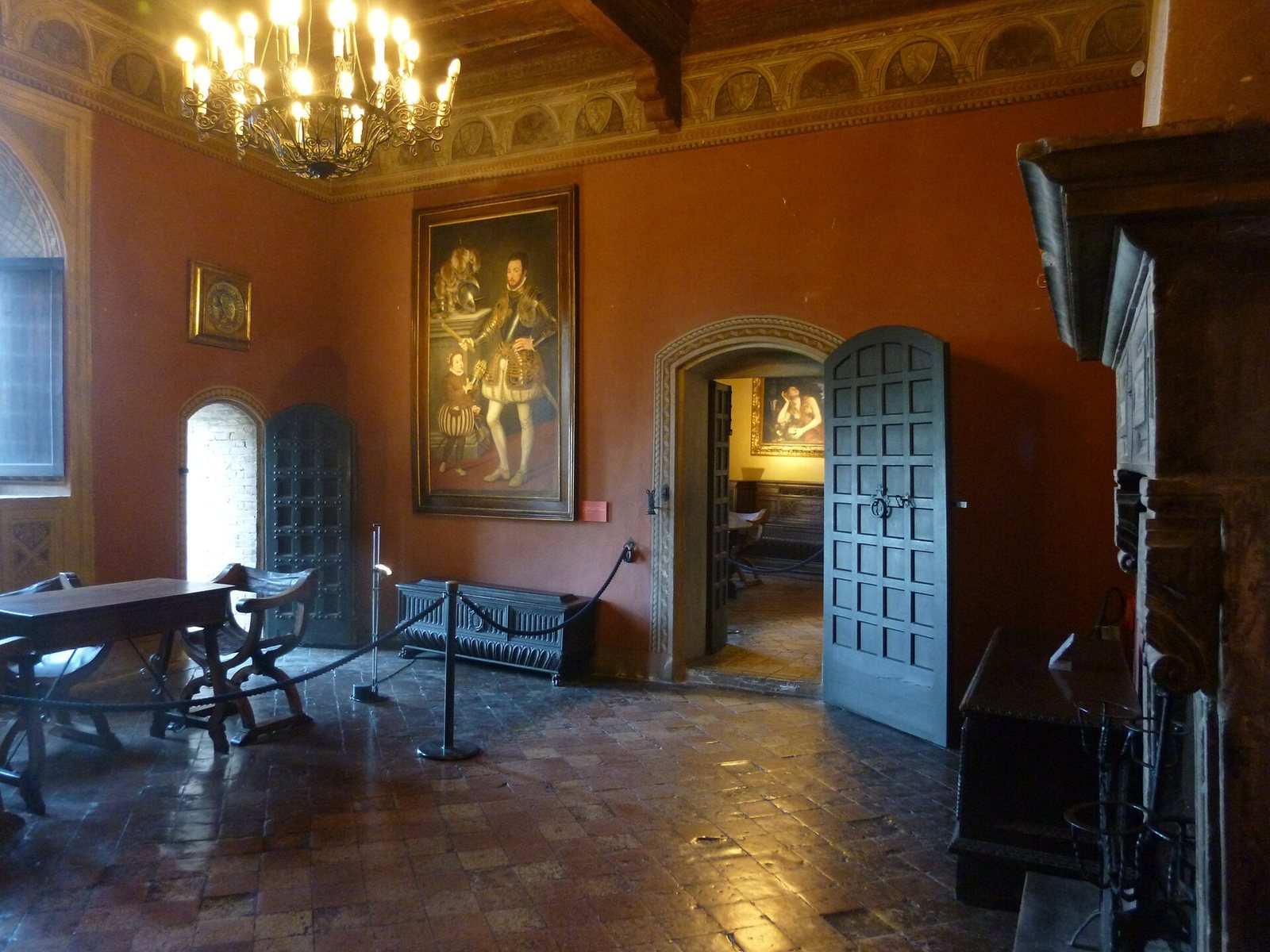
During the rule of Giovanni Sforza, the castle was substantially transformed into a secure residence and a setting for ceremonial representation. Gradara later passed among the Malatesta, Sforza, Borgia, and Della Rovere families, whose rivalries shaped the politics of territories governed by or associated with the Papal States.
From 1641, Gradara came under the direct control of the Papal States, territories governed directly or indirectly by the pope. Papal legates administered the complex instead of aristocratic families. From the early seventeenth century, its outer fortifications deteriorated and the residential buildings received less frequent repairs. The fortress eventually lost its military function and became uninhabited, leaving the main castle effectively ruined by the end of the nineteenth century.
Restoration and the Francesca Legend
The Zanvettori family acquired the fortress and its surrounding walls in 1920. Umberto Zanvettori financed a restoration that was interpretative rather than strictly philological, seeking to recreate the appearance of a traditional medieval Italian fortress. After the complex was sold to the Italian state in 1928, Zanvettori’s widow, Alberta Porta Natale, retained usufruct, the legal right to use property owned by someone else, over part of it and lived there until 1983.
Since December 2014, the complex has been managed by the Ministry of Culture through the Museum Network of the Marche, renamed the Regional Museums Directorate in December 2019. The restored complex now functions as a museum and hosts museum, musical, and artistic events.
A longstanding legend connects Gradara with the story of Francesca and Paolo. Around 1275, Guido da Polenta, lord of Ravenna, arranged his daughter Francesca’s marriage to Giovanni Malatesta, lord of Rimini. Francesca and Giovanni’s brother Paolo fell in love, and Giovanni killed them after discovering the affair. Dante Alighieri later made the story famous in the Divine Comedy, and tradition places the events within Gradara’s walls.
Remains
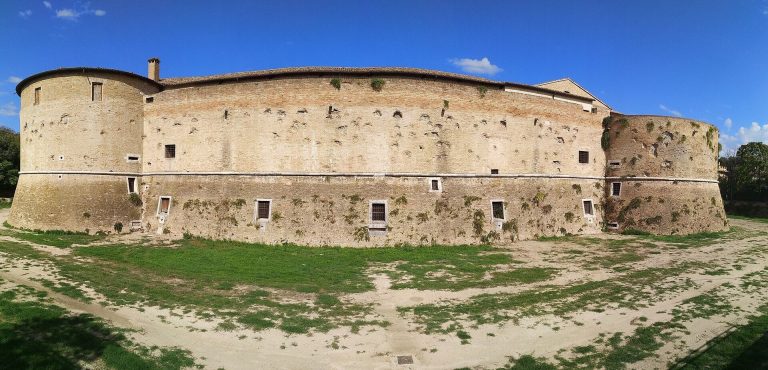
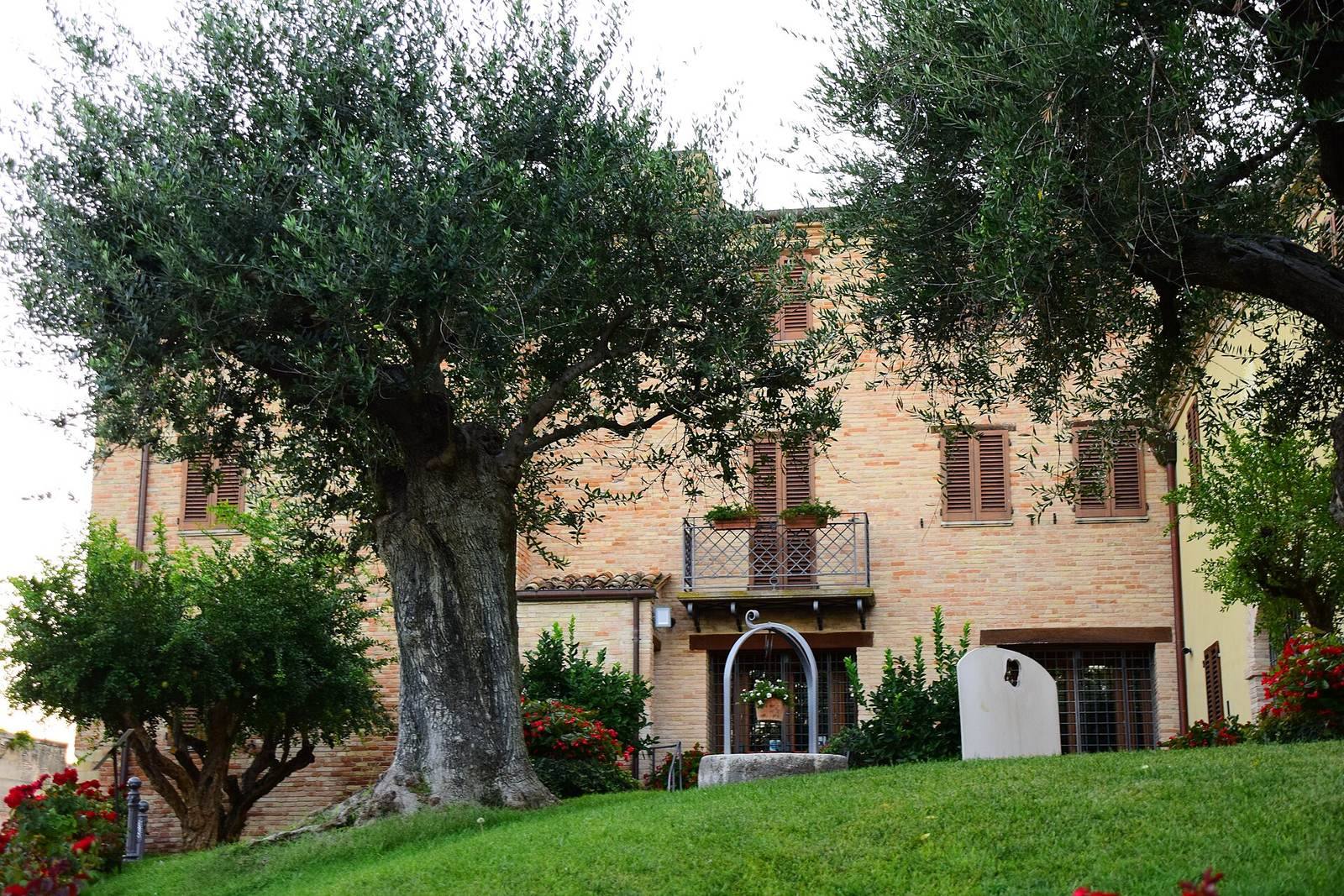
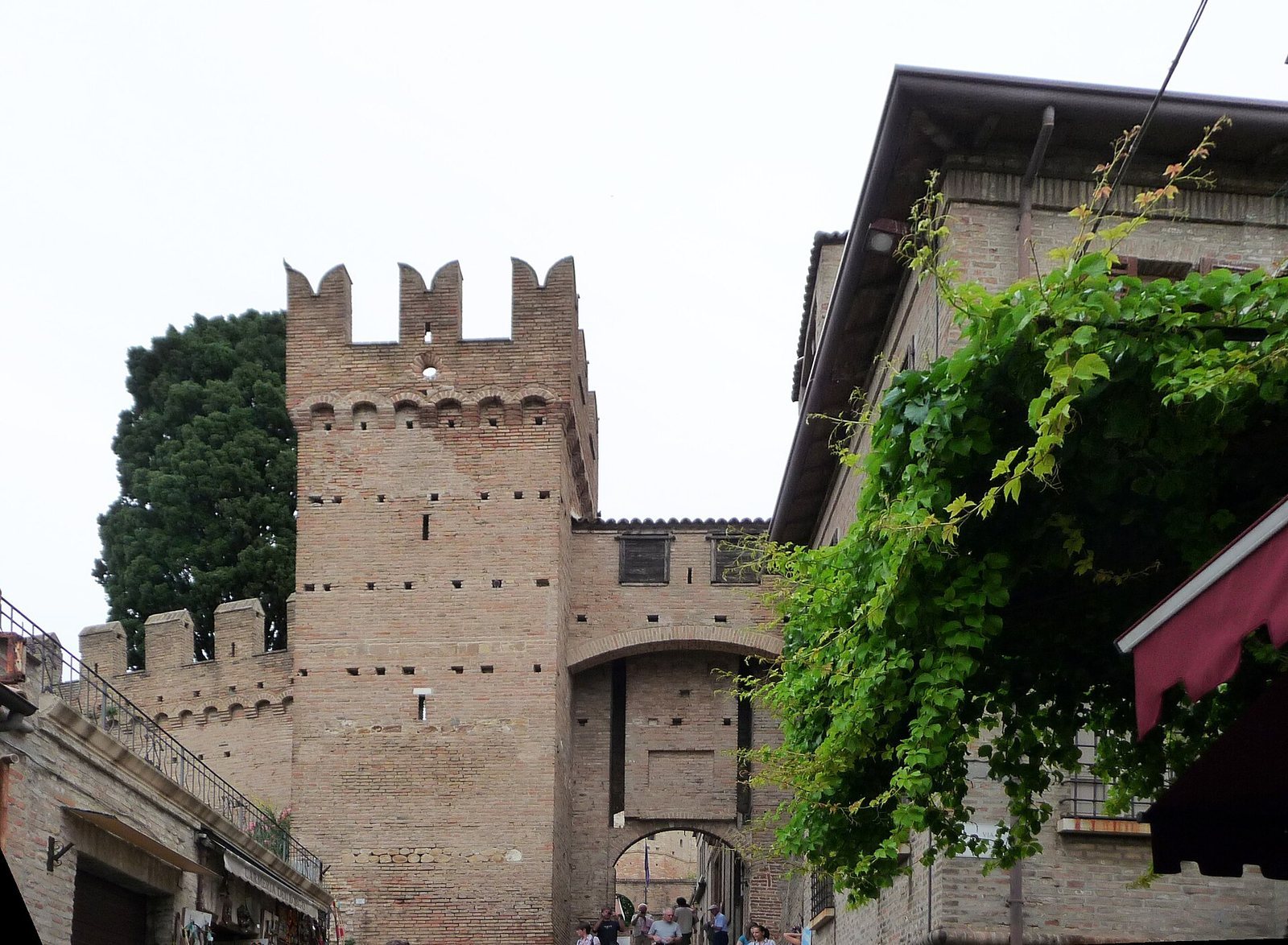
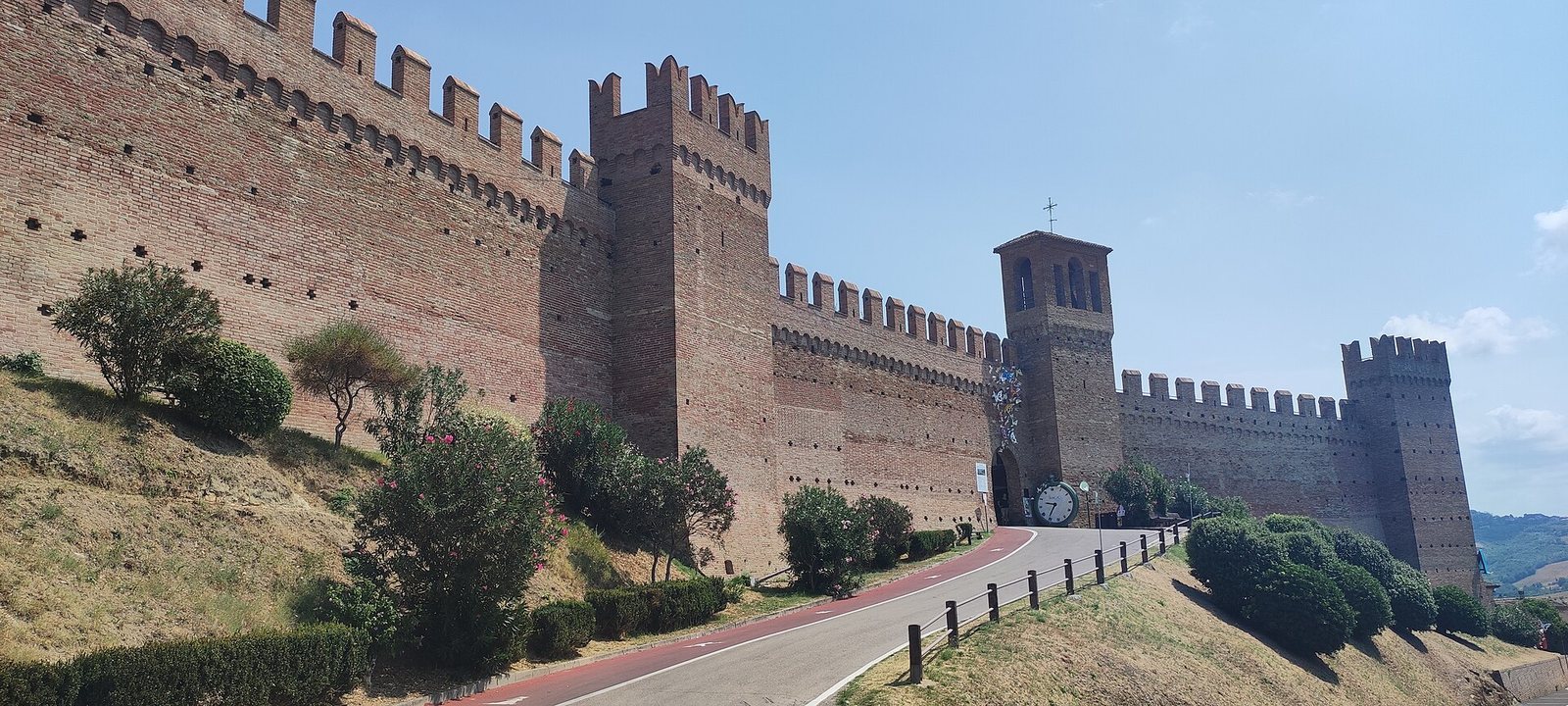
The complex occupies a hill 142 metres above sea level and combines the elevated medieval fortress with the adjacent historic settlement. An external circuit of stone and brick walls, nearly 800 metres long, encloses the settlement. The fortified town formerly served as an outer defensive area supporting the main fortress, while the oldest and highest core formed the ancient citadel.
Citadel and Defensive Circuit
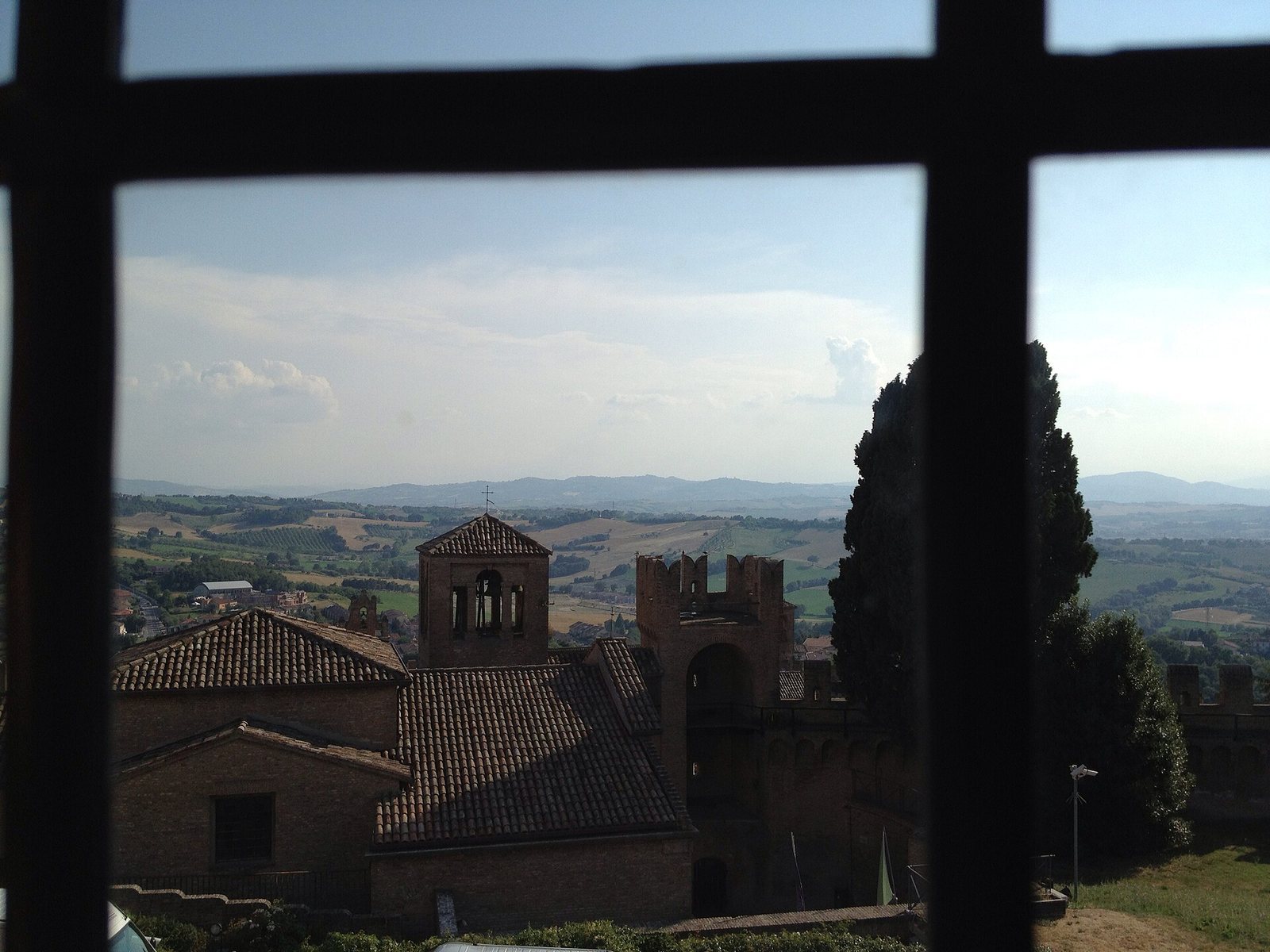
The citadel, known in the complex’s terminology as the rocca, is a fortified core occupying the strongest and highest part of the settlement. Its 30-metre-high main tower, or keep, dominates the surrounding valley. Access to the citadel was possible only by crossing a drawbridge. From the tower, the landscape extends toward the Adriatic Sea to the north and Mount Carpegna to the west.
The castle and its surrounding walls are constructed from stone and brick. The complex was in ruins when the Zanvettori family acquired it in 1920, after which both the castle and the settlement walls were restored. The surviving fabric therefore combines historical material with the interpretative reconstruction that shaped the restored appearance of the fortress.