Postigo del Aceite: Seville’s Medieval City Gate
Site at a Glance
- Popularity
- Medium
- Country
- Spain
- Primary era
- Medieval
- Eras represented
- Medieval, Early Modern, Modern
- Civilizations
- Almoravid, Crown of Castile, Spanish
- Site type
- Military
- Remains
- Gate
On this page10 sections
History
Postigo del Aceite is a medieval secondary city gate in Seville, Spain, built in 1107 during the rule of Ali ibn Yusuf of the Almoravid dynasty, which ruled parts of North Africa and Muslim-ruled Iberia. It controlled entry to Seville’s historic center until the mid-19th century.
Medieval gate
During the 12th-century Almohad period, another Muslim dynasty that ruled in the medieval period, the gate was known as the Gate of Boats. The name reflected its connection to the port and the nearby Royal Shipyards, where ships were built. Other names included the Gate of the Granary, Gate of the Oil, Gate of the Olive, Gate of the Shipyards, and Gate of the Water Carriers. Its current name refers to nearby oil warehouses and oil brought into the city through the gate.
Renovation and later use
In 1572–1573, architect Benvenuto Tortello renovated the gate under the authority of Francisco Zapata y Cisneros, the first Count of Barajas and then Seville’s mayor. The work changed its appearance. The gate also became a favored place to watch Holy Week processions, partly because of its narrow setting.
Demolition and preservation
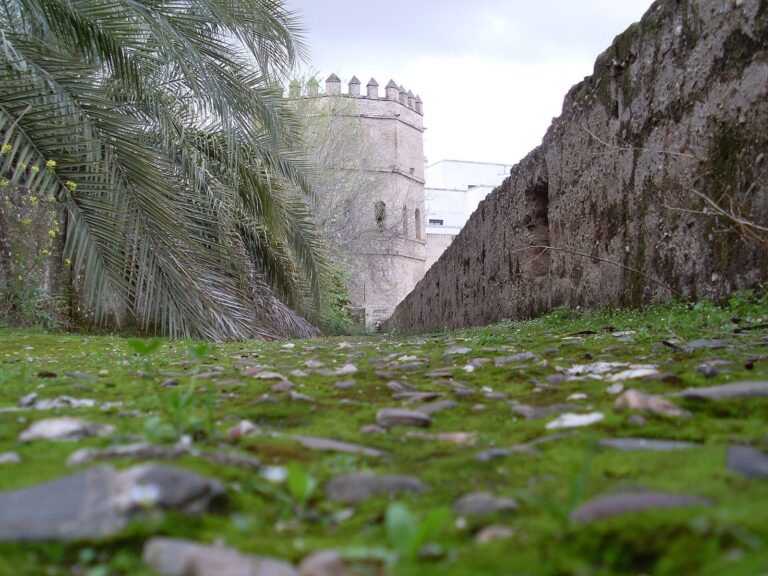
During 19th-century urban expansion, particularly after the 1868 Revolution, a political upheaval in Spain, much of Seville’s wall system was demolished. Postigo del Aceite is among the few gates or wall remnants that survive. Other remains include the Puerta de la Macarena, Puerta de Córdoba, Puerta Real, Postigo del Carbón, towers, and sections of wall.
Since 1985, the gate has held Spain’s Bien de Interés Cultural designation, a status protecting cultural heritage. On Holy Monday in 1999, costalero Juan Carlos Montes, a carrier of a religious float, died beneath the arch in an incident associated with the cry “To heaven with Him.”
Remains
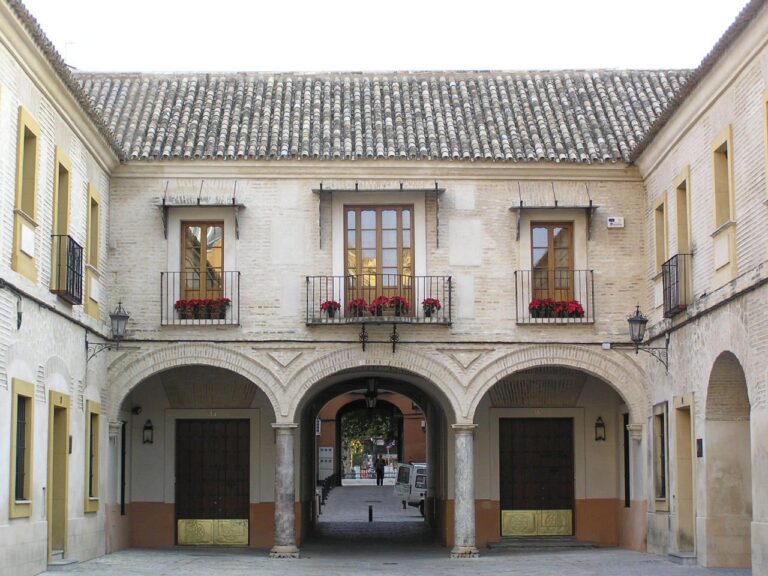
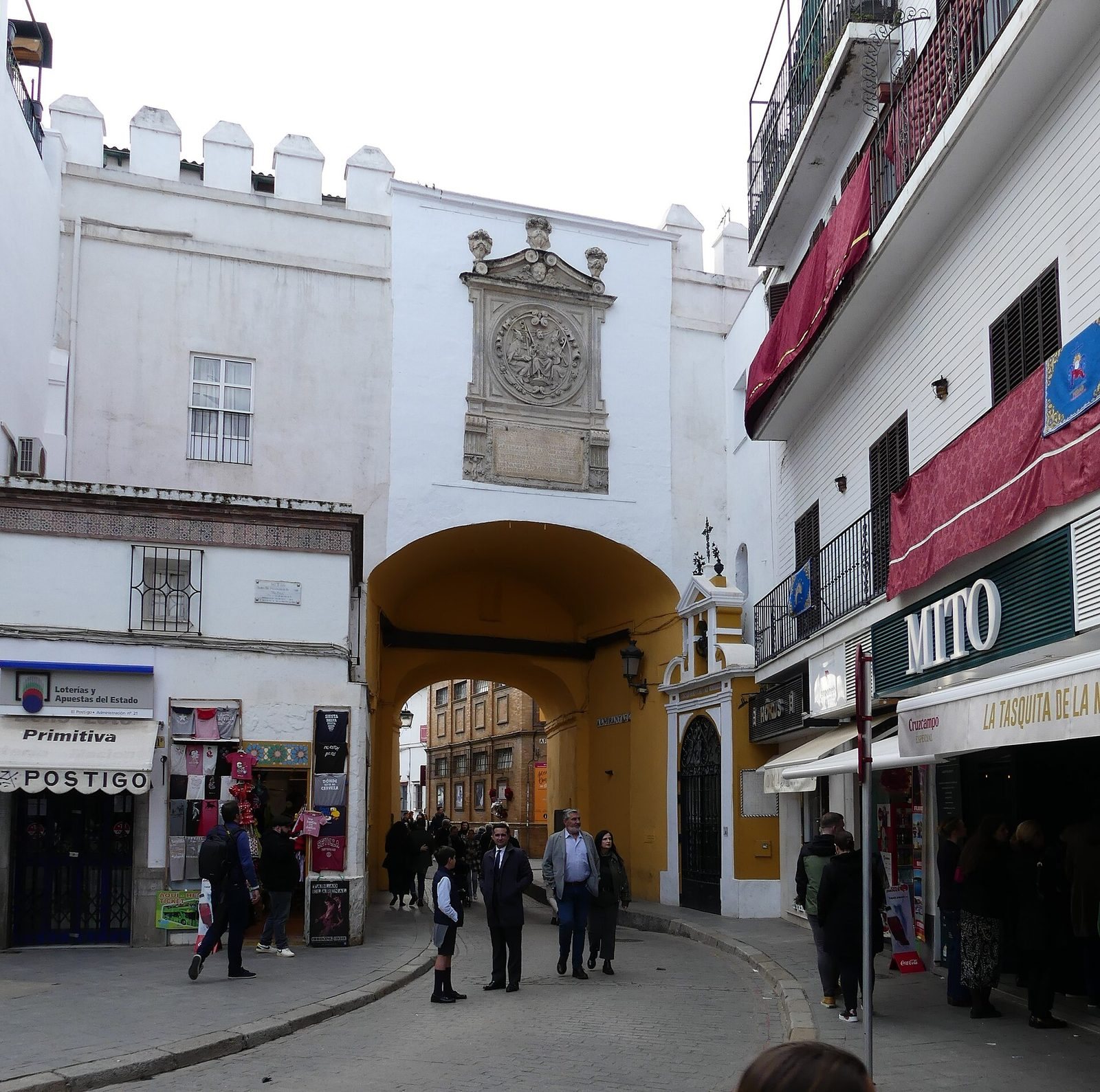
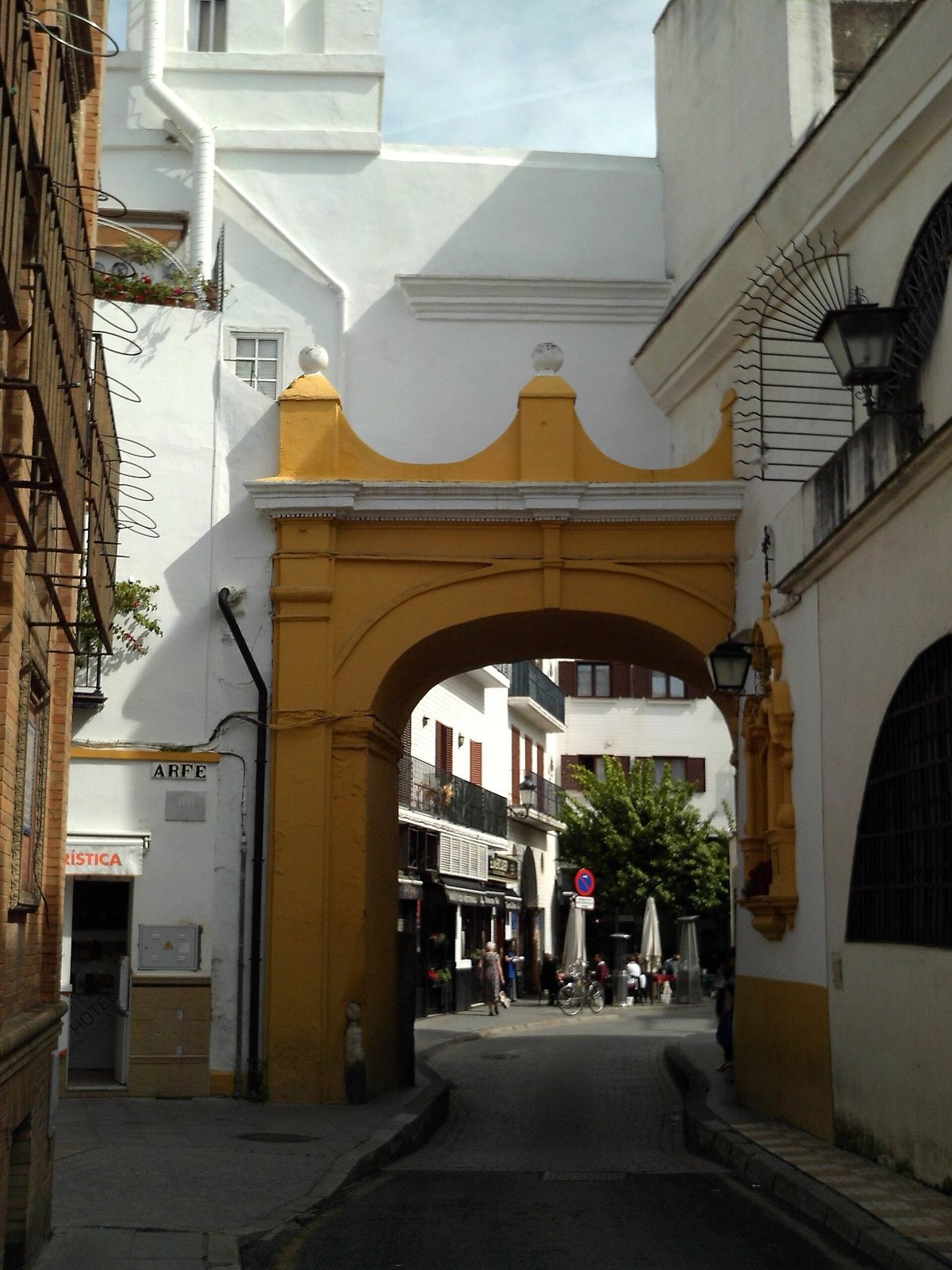
The gate retains the classical appearance associated with Tortello’s 1572–1573 renovation, while its original entrance followed a bent plan. It stands in Seville’s Arenal district, in the former Puerto de Indias, the historic port area, southwest of the original walled enclosure. The gate lies between Dos de Mayo and Almirantazgo streets, at the corner of Almirantazgo and Arfe, beside the former Royal Shipyards and the Correos building.
Opening and flood protection
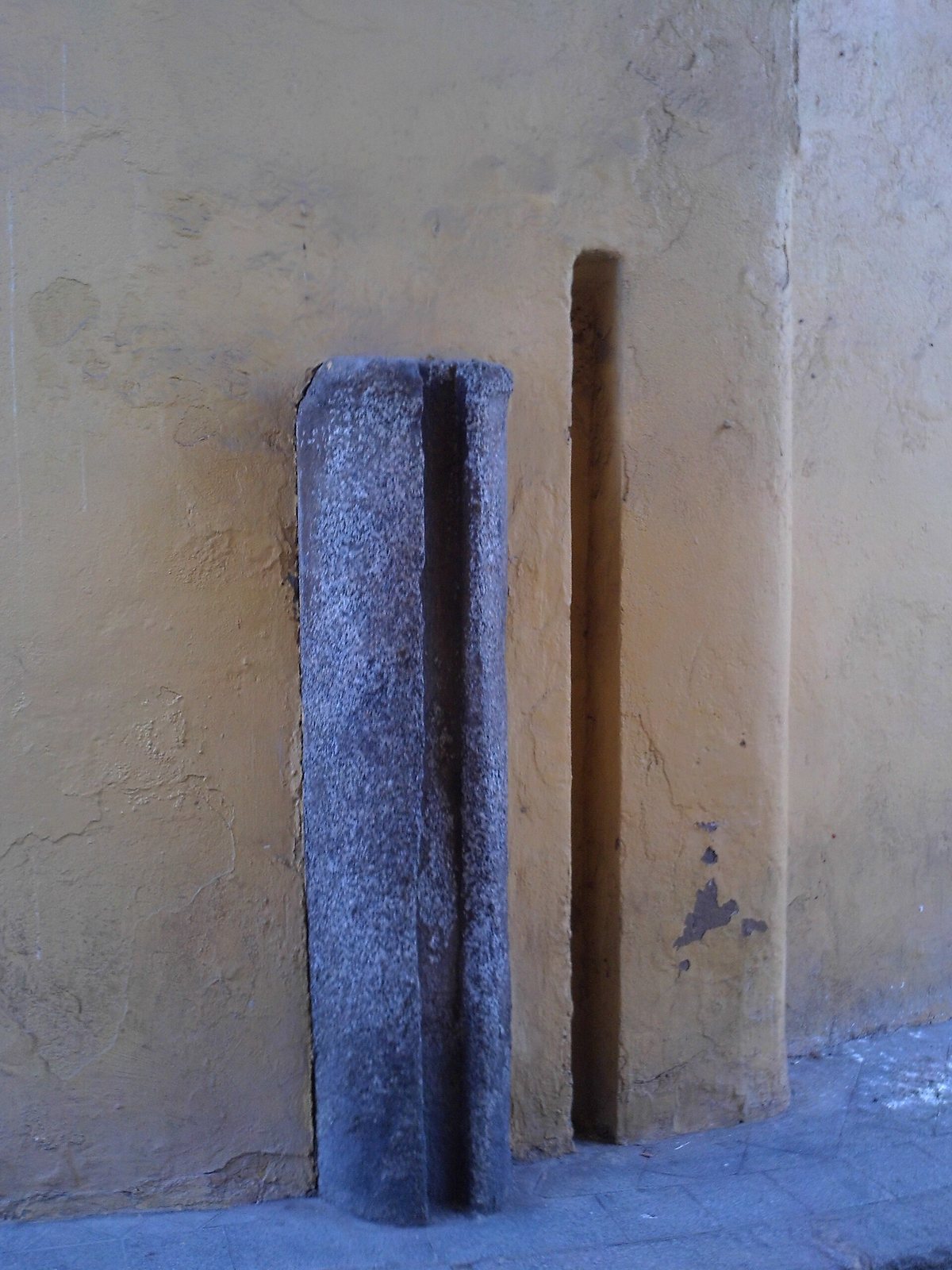
Rails beneath the arch were used to hold boards across the opening when the Guadalquivir River flooded. This arrangement allowed the entrance to be blocked against rising water.
Inscription and city arms
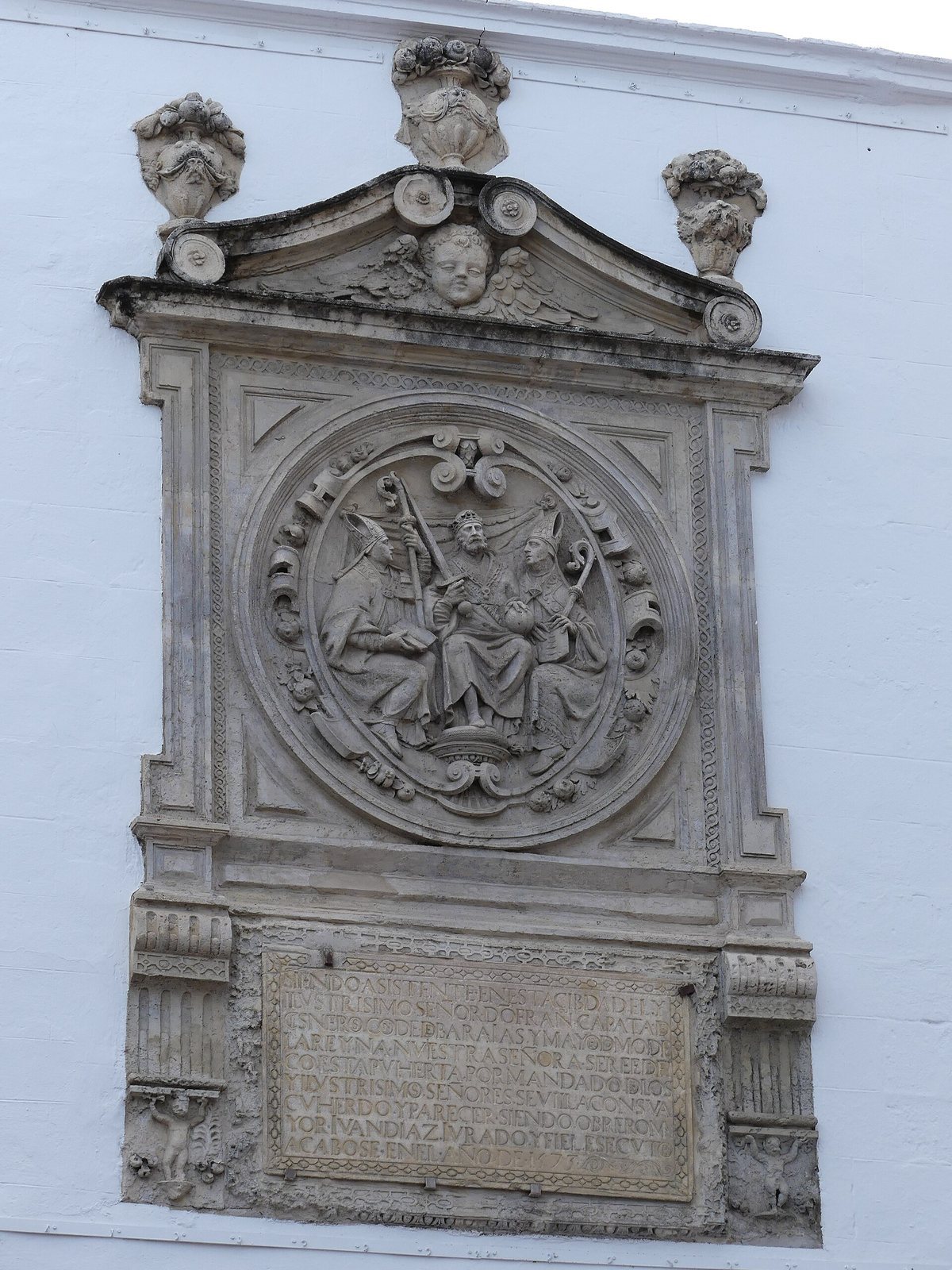
On the inner side, an inset stone above the entrance bears an inscription commemorating the renovation and the city arms. Sculptor Juan Bautista Vázquez the Elder made the arms, which show Saint Ferdinand, Ferdinand III of Castile, alongside Seville’s bishops Isidore and Leander.
Chapel and devotional works
Inner chapel
A small chapel on the inner side contains a Baroque altarpiece, a decorated structure behind an altar, and an 18th-century image of the Immaculate Conception. This Catholic doctrine holds that Mary was preserved from original sin from the moment of her conception. Popularly called the Pura y Limpia or Virgencita del Postigo, the image has uncertain authorship but has been attributed to Pedro Roldán, a Seville-based Baroque sculptor.
Outer-wall images
A glazed ceramic-tile image of the Pietà of El Baratillo, made by artist Alfonso Chavez in the early 1940s, is set into the outer right-hand wall. A print showing the El Baratillo confraternity, a Catholic lay association that takes part in Holy Week observances and processions, is also located there.