Weißenborn Evangelical Church: A Historic Parish Church in Germany
Site at a Glance
- Popularity
- Very Low
- Country
- Germany
- Primary era
- Early Modern
- Eras represented
- Early Modern, Modern
- Civilizations
- German, Holy Roman Empire, Kingdom of Prussia
- Site type
- Religious
- Remains
- Church
On this page6 sections
History
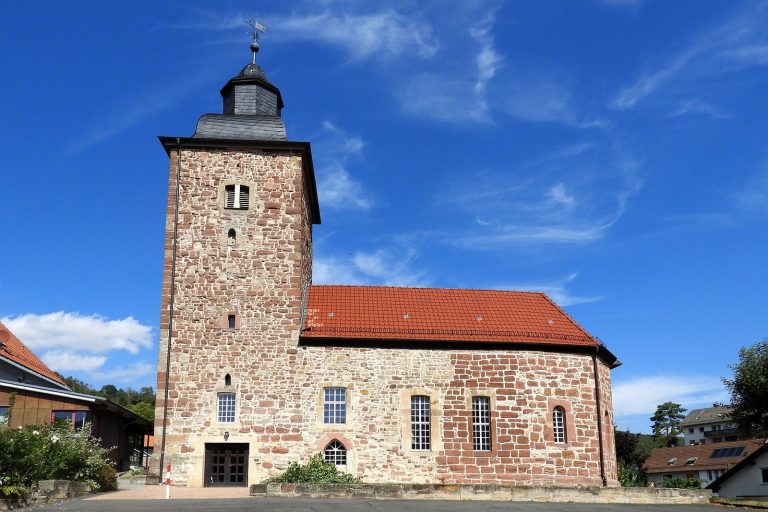
The Weißenborn Evangelical Church is a historic church in the center of Weißenborn, Germany.
Parish affiliation
Since 1585, the church has served as a branch church of the Rambach parish, a connection that continues. In 2013, the congregations of Weißenborn and Rambach and those of Lüderbach and Rittmannshausen became pastorally linked in a shared parish grouping. Each village has its own church council.
The congregations belong to the Werra-Meißner church district and the Kassel ecclesiastical district within the Evangelical Church of Kurhessen-Waldeck, a Protestant regional church.
Building and later changes
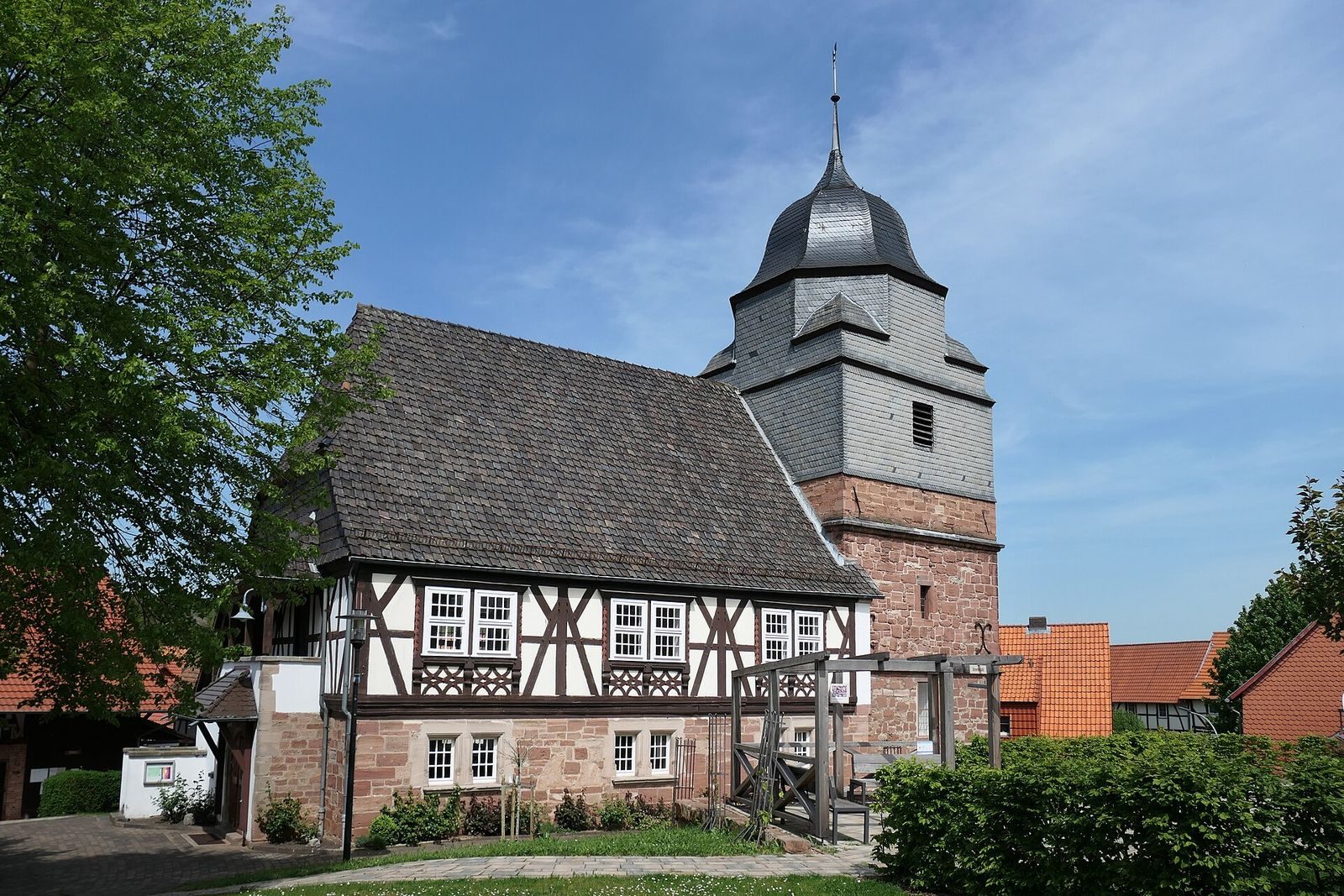
The church has a Gothic core. Its tower bears the year 1577, apparently marking its completion, and the nave was added in 1697. After the nave fell into disrepair, it was remodeled in 1913–14. The tower was also altered. Renovation work in the 2010s refreshed the church’s interior.
The church is protected as a cultural monument for its historical, artistic, and town-planning value. It also lies within the protected Weißenborn ensemble, which covers the former village center.
Remains
The church’s surviving layout centers on its nave and tower, with an elaborate timber-framed upper story and a decorated interior. The building retains its Gothic core.
Exterior
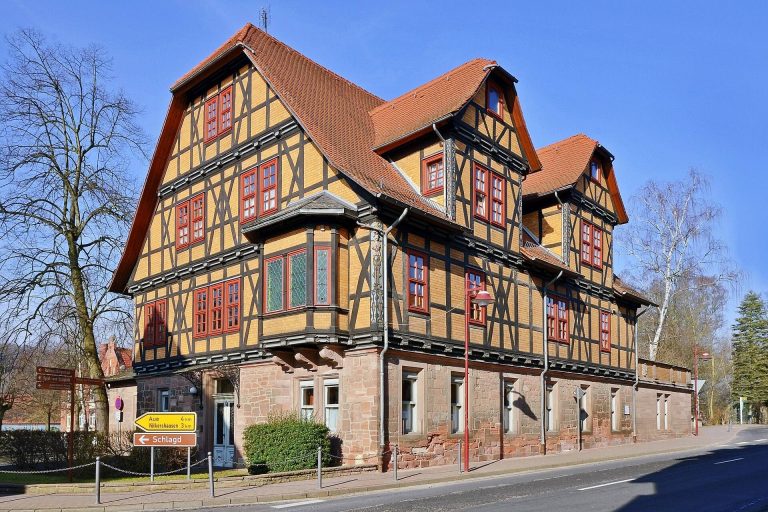
The oldest part is the chancel tower, a tower rising above the church’s chancel. Its bell chamber is clad in slate, and a tower roof was added in 1913. The nave has an elaborate half-timbered upper story, built with a structural timber frame and infill panels. Its exterior reflects Thuringian timber-framing influence, with prominent K-shaped braces and diamond-patterned panels beneath the windows.
Interior
The interior has a barrel-vaulted ceiling, a long, curved ceiling shaped like half a cylinder. More than 400 matte-gold celestial bodies are painted among its ornamental motifs, creating a starry-sky design. The furnishings include a sixteenth-century baptismal font, a pulpit with a sounding board, and a pastor’s pew dating to around 1700. The sounding board is a canopy above the pulpit that helps project the speaker’s voice.