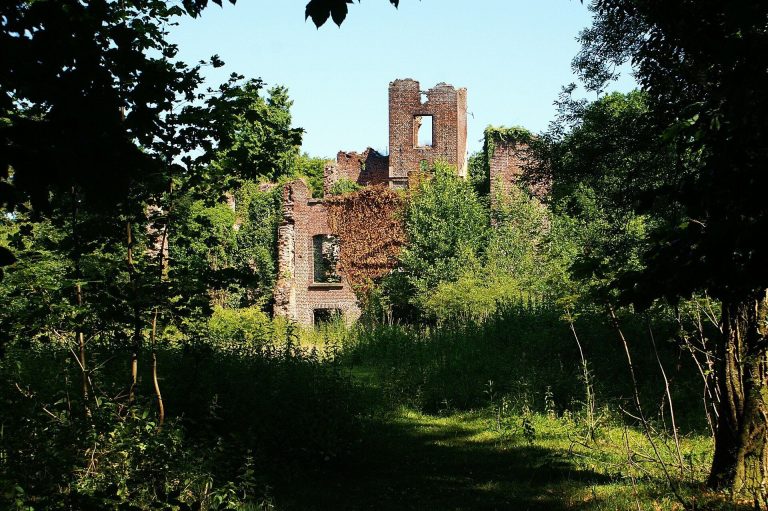
Aspermühle: A Historic Watermill in Asperden, Germany
Site at a Glance
- Popularity
- Very Low
- Country
- Germany
- Primary era
- Early Modern
- Eras represented
- Medieval, Early Modern, Modern
- Civilizations
- Duchy of Cleves, Holy Roman Empire, Kingdom of Prussia
- Site type
- Economic
- Remains
- Watermill
On this page9 sections
History
The Aspermühle is a historic mill complex in Asperden, within Goch, Germany. It was operating before its first recorded mention on 18 May 1301, when Count Rainald I of Guelders gave the watermill on the Niers to the Cistercian nuns of Graefenthal in return for a daily Mass for the House of Guelders.
Medieval mill and Graefenthal
The mill had already been held as leased property before Graefenthal was founded in 1248 by Rainald’s father, Count Otto II of Guelders. The counts initially connected the mill with the nunnery, and it later passed fully into Cistercian ownership. Graefenthal, a Cistercian religious house for nuns, lay about 15 minutes downstream and remained closely linked to the mill.
For centuries, the nunnery’s abbess leased the mill for fixed terms to the von Wachtendonk family, whose head miller ran its operations. As part of the monastery, the mill was exempt from compulsory milling, a system requiring people in a designated area to use a particular mill, and ground only for the nuns. Because this arrangement did not provide enough income, Duchess Isabella of Guelders ordered cloth fulling, the cleaning and thickening of woollen cloth, to be added. Goch was a neighboring weaving town, but its own fulling mill gave priority to local cloth. It is therefore likely that cloth from surrounding areas was processed at the Aspermühle.
New production and rebuilding
A bark mill, which ground bark to produce substances for tanning, was established during the sixteenth century. In 1595, amid the Eighty Years’ War, the long conflict between the Spanish crown and Dutch rebels, fire destroyed the mill. It was then granted to Hendrick van den Loe on a hereditary lease, which could pass from one generation to the next. He rebuilt it, and his descendants continued to operate under the family name, which changed from van den Loe to van de Loo around 1800.
Ownership and changing industry
During secularization, the transfer of religious property into secular control, Engelbert van de Loo became the mill’s owner in 1805. The fulling operation closed in 1820 as wool lost ground to cotton, industrialization advanced, and textile production shifted to large cities. Fulling was no longer profitable in the economically weak rural area. Wilhelm van de Loo, mayor of Asperden and Kessel, took over in 1833 and continued the mill’s operation.
Twentieth-century transition
After the Niers was straightened and its weirs removed in 1932, the mill switched from water power to steam and electricity. A fire in 1959 ended milling at the site. Although the building was rebuilt, the mill did not resume production under the 1957 Mill Law, German legislation governing the milling industry. The premises were first used for grain trading and animal-feed production.
A cocoa dealer and a publishing house later occupied the mill, followed by several years of vacancy. Since late 2009, naturwaren-niederrhein GmbH has operated there, trading in beekeeping and natural products. Restoration work renewed the roof structure and restored the wheelhouse and warehouse.
Remains
Buildings and machinery
Mill complex and setting
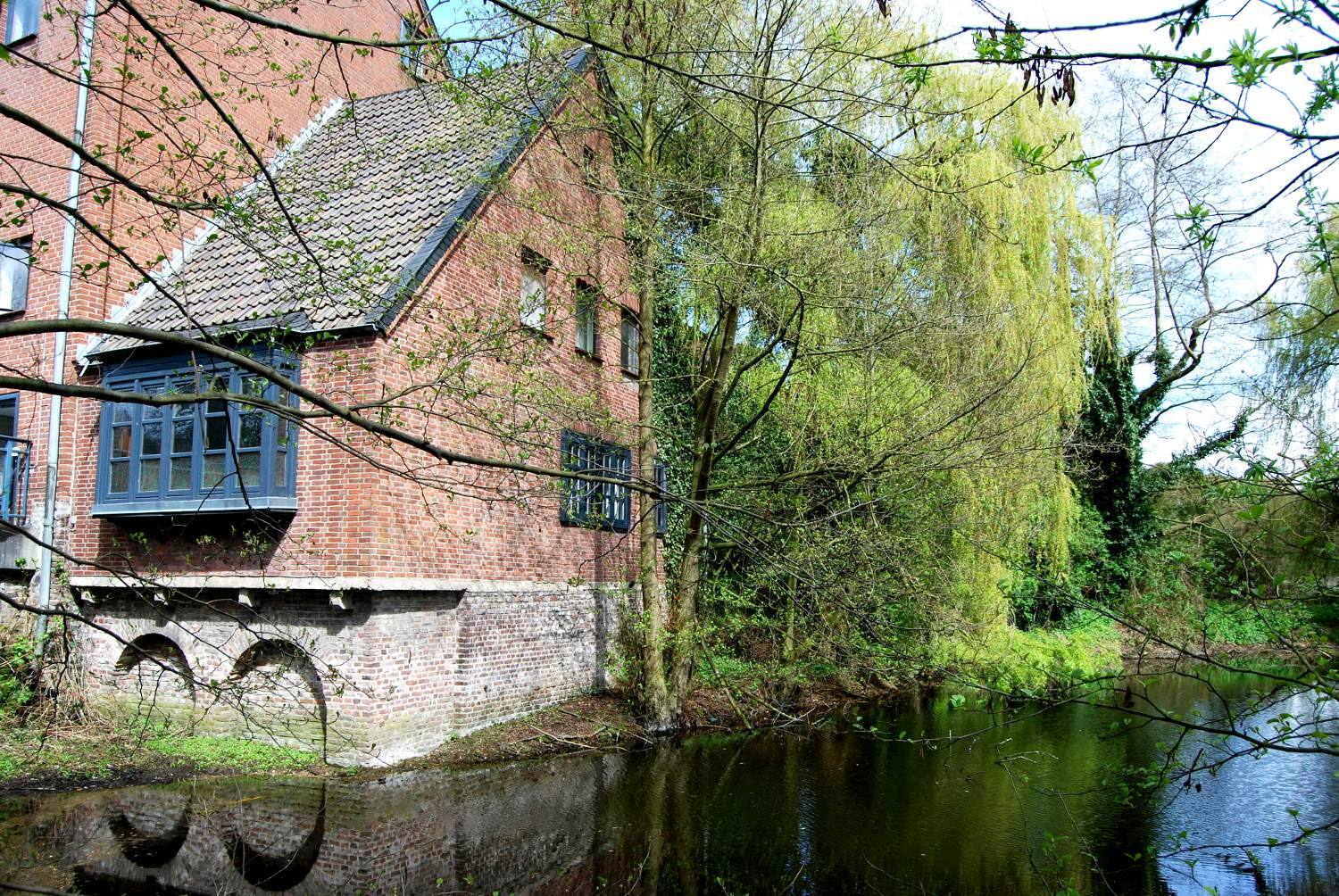
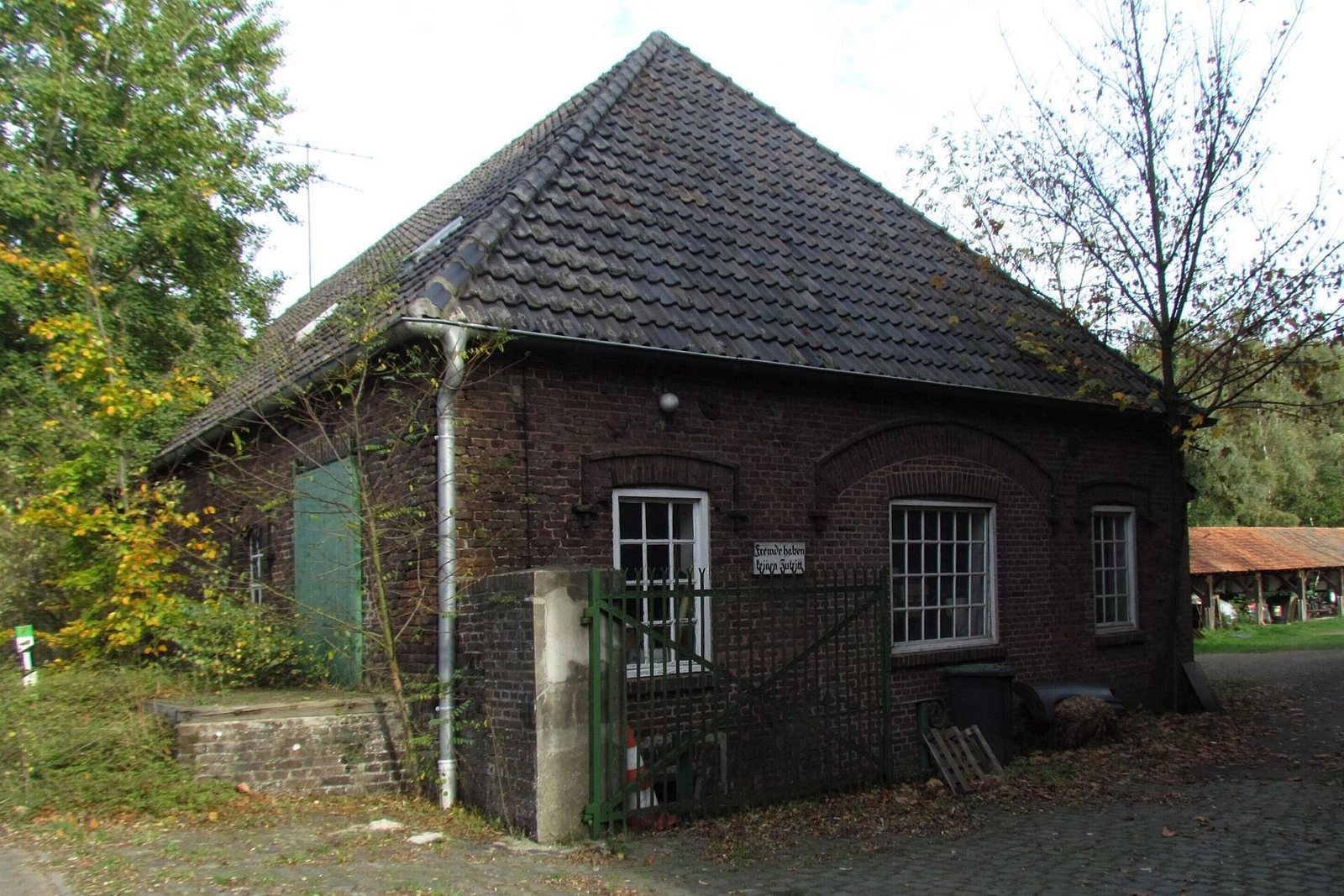
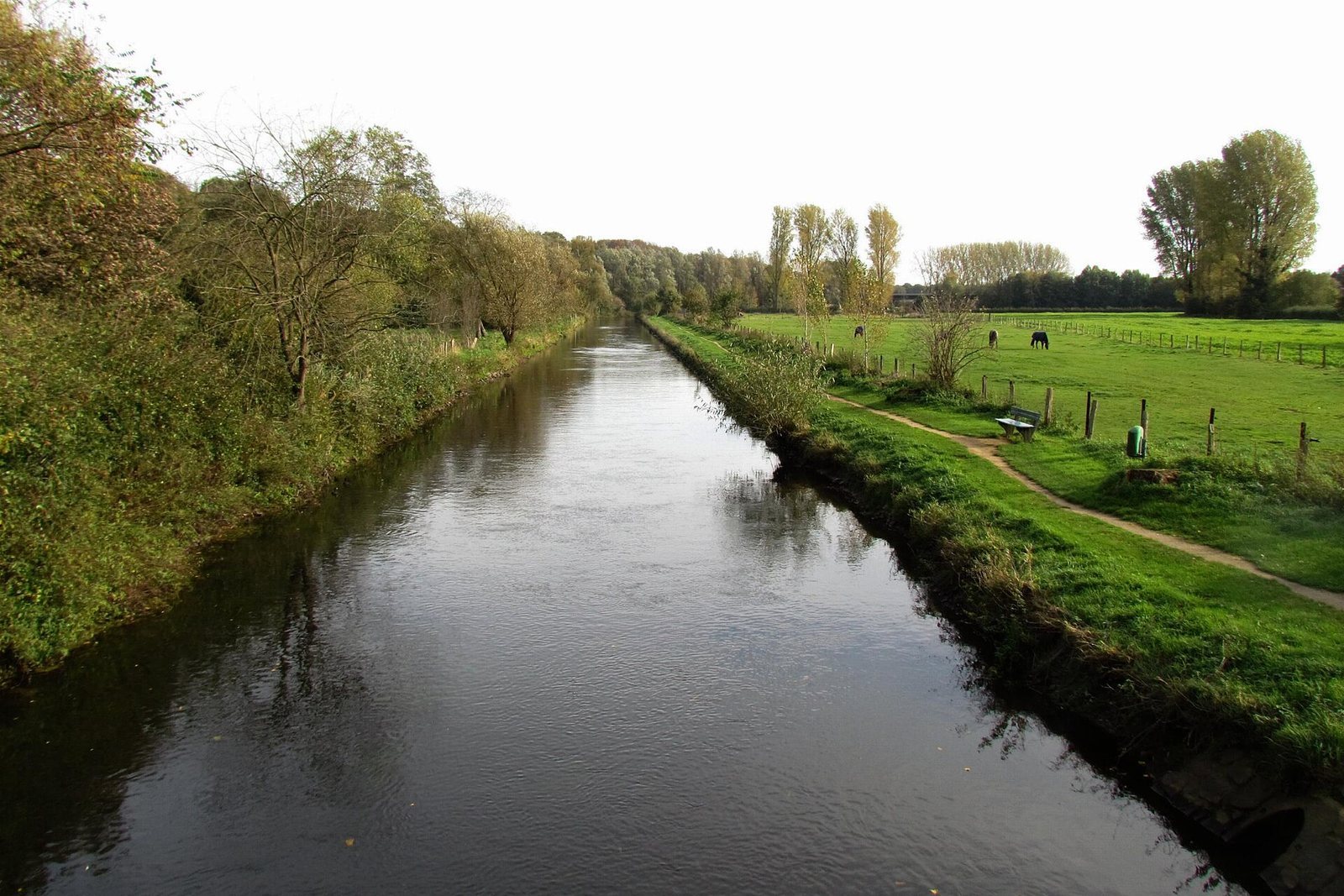
The complex consists of a mill building, wheelhouse, and warehouse on the right bank of the Niers. It lies south of the Reichswald, near the river and the Lower Rhine Heights; the Niers is about 15 metres above sea level at this point. The Bimmener Mühle lies upstream and the Viller Mühle downstream.
Water power and production equipment
The mill was water-powered, with an undershot wheel driven by water flowing beneath it. Its equipment included two grinding runs, the mill’s grain-processing units, and two oil presses. A second wheel added in 1864 drove an oil press and a gang saw, a frame saw used to cut timber. The operation combined grain milling, oil pressing, and sawing.