Phellus: An Ancient Lycian City in Turkey
Site at a Glance
- Popularity
- Medium
- Country
- Turkey
- Primary era
- Classical
- Eras represented
- Classical
- Civilizations
- Lycian
- Site type
- City
On this page10 sections
History
Phellus was an ancient Lycian city near Çukurbağ in Turkey and an important political center in the fifth century BC. Tombs at the site provide some of the earliest evidence for Lycian settlement in the region.
Classical Lycian center
Scylax of Caryanda referred to Phellus in the late sixth or early fifth century BC. Around 500 BC, Hecataeus of Miletus mentioned the city but placed it in neighboring Pamphylia. Strabo included it in a later geographical work. The name also appears as Phellos. Its Lycian forms include Wehnti and, in Hecataeus, Vehinda. The Greek name means stony ground, and it is the form used today.
Phellus belonged to the Lycian League, a confederation of cities in Lycia, and remained a member during the Hellenistic and Roman imperial periods. When it controlled territory in the region, its holdings included the fortresses of Bayındır and Limanı. Members of Xanthos’s Harpagid ruling family lived at Phellus in the fifth century BC, when the city held a central political role. It also produced coins until the fourth century BC. Assessments based on Lycian tombs place Phellus, with Limyra and Patara, below Xanthos in importance during the Classical period.
Conquest and decline
The city’s role as a dynastic center ended when Perikle of Limyra, a Lycian ruler associated with that city, conquered it in the 390s BC. Phellus lay inland, while Antiphellus to the south served as its port. During the Hellenistic period, Antiphellus overtook Phellus and grew into a prosperous commercial center as the inland city declined. Phellus was also known for a shrine dedicated to a hero.
Byzantine period and modern identification
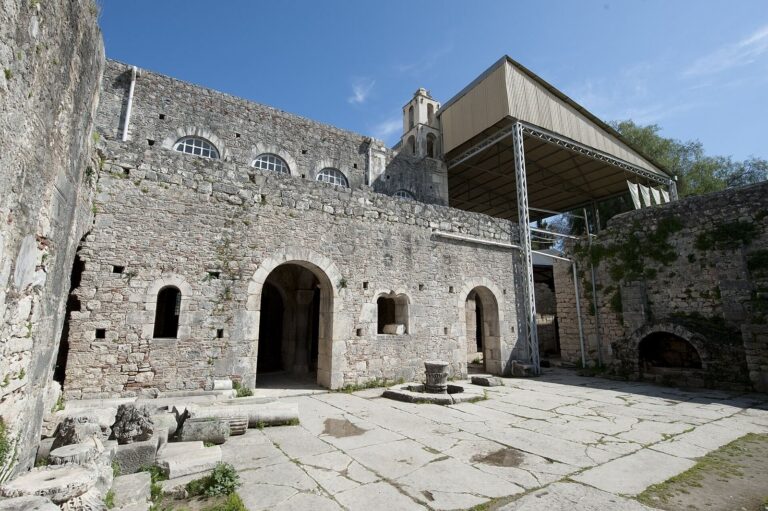
Under Byzantine rule, Phellus became a Christian bishop’s seat with metropolitan rank. It remains a titular see of the Catholic Church, a church title that does not necessarily indicate an active diocese.
An excavation at the site is dated to 1840, the year Charles Fellows placed Phellus near the village of Saaret, drawing on Greek inscriptions that were difficult to read. In 1842, Thomas Abel Brimage Spratt identified a site on Mount Felendağı near Çukurbağ as Phellus. He considered Livy’s account of a town near Phoenicus serving as the city’s port, along with Pliny the Elder’s placement of Phellus north of Habessus, an earlier name for Antiphellus. Otto Benndorf challenged Spratt’s identification in 1892, placing Phellus on the coast across the bay from Antiphellus. Later surveys have not established a town on the scale of Xanthos. Subsequent building activity has obscured architectural details, and the city’s social and economic organization remains unclear.
Remains
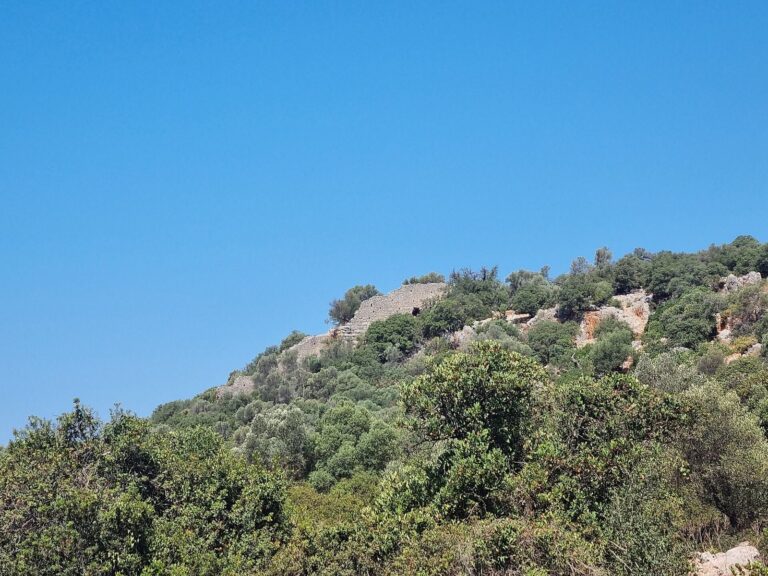
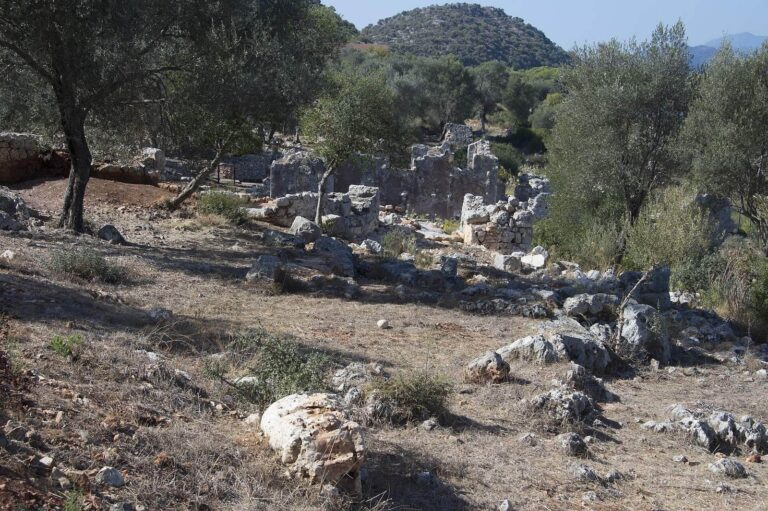
The ruins occupy a hilltop in mountainous Lycia near Çukurbağ and extend about 550 metres in length and 150 metres in width. City walls enclose a fortified upper area, while rock-cut tombs and other remains occupy parts of the site. A natural spring lies nearby.
City enclosure and buildings
Walls and theatre
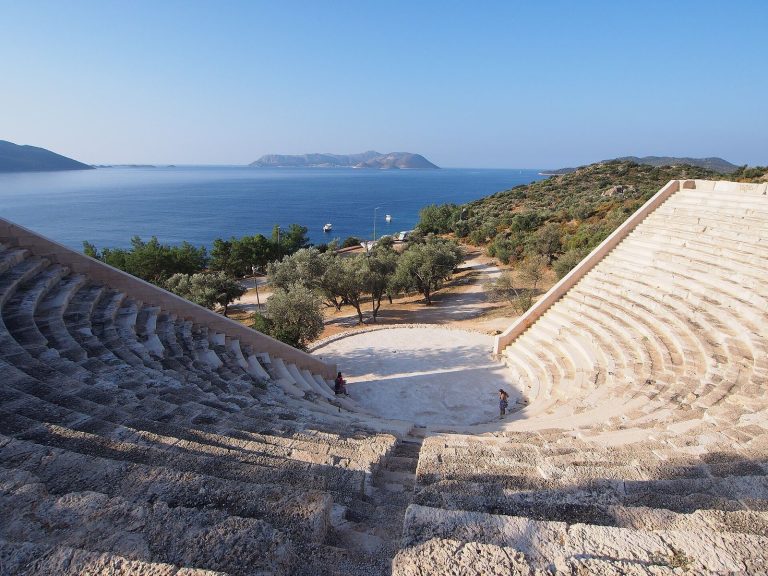
The principal remains are the walls around the hilltop enclosure. Sections of the northern wall can be seen, while the southern line is only faintly recognizable. Structures adjoining the walls were probably watchtowers. A small theatre was also part of the city’s built fabric.
Tombs and carved features
Rock-cut tombs and reliefs
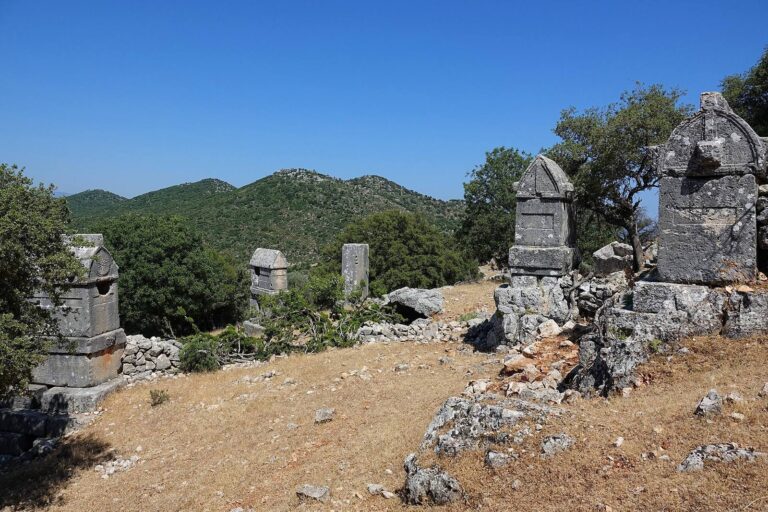
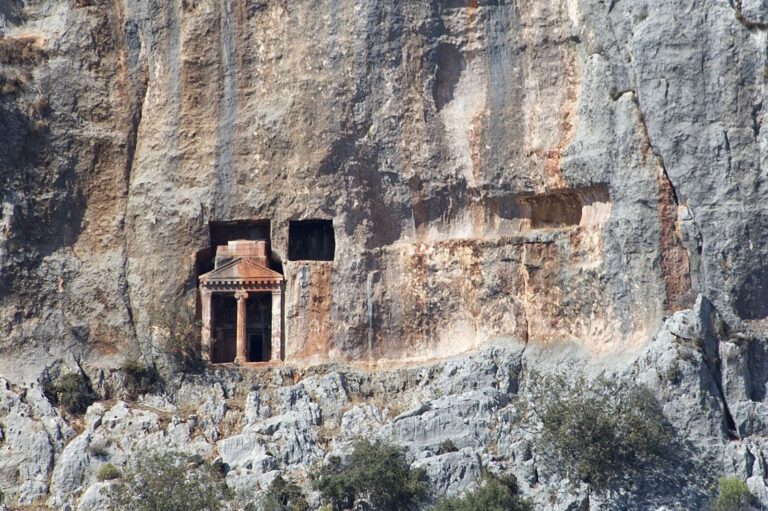
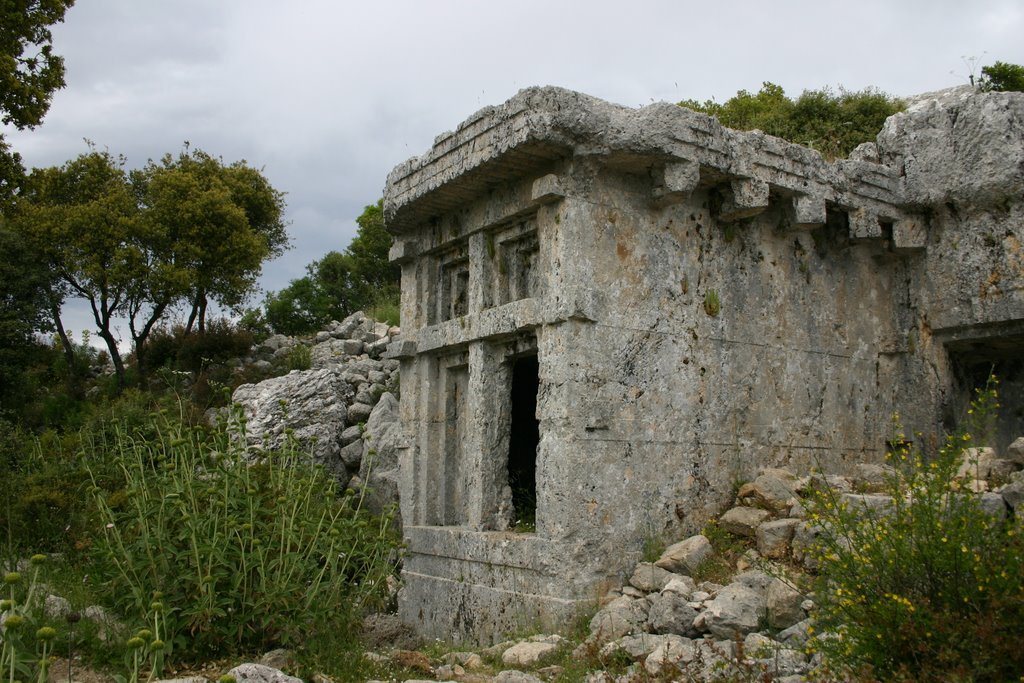
Fully and partly exposed rock-cut tombs include a freestanding, house-shaped monument near the western end of the site. Its chamber has benches along three sides. Other burial remains include house-tombs and smaller tombs in varying states of preservation. A Greek inscription appears among the tombs, as does a Lycian epitaph. Nearby features include a semicircular wall and a rock face carved with a bull relief.
Sarcophagi
A well-preserved sarcophagus stands close to the walls and has reliefs on three sides. One shows two birds and three people, including a reclining man holding a cup. Another depicts a warrior and is damaged by a large hole through the tomb. The lid bears a pair of griffins and two figures. A Greek inscription on a sarcophagus remains legible, and five more sarcophagi lie beyond the main site area.