Loch Leven Castle: A Scottish Fortress and Royal Prison
Site at a Glance
- Rating
- 4.7
- Popularity
- Low
- Country
- United Kingdom
- Primary era
- Medieval
- External website
- Open
- Eras represented
- Medieval, Early Modern
- Civilizations
- Kingdom of Scotland
- Site type
- Military
- Remains
- Castle
On this page12 sections
History
Loch Leven Castle is a medieval fortress and former state prison on Castle Island in Loch Leven, near Kinross in the United Kingdom. It was probably built around 1300, although a castle may have stood on the island as early as 1257, when the 16-year-old King Alexander III of Scotland was brought there by force by his regents. Its position between Edinburgh, Stirling, and Perth gave it strategic value during the Wars of Scottish Independence, a series of conflicts in which Scottish forces resisted English attempts to control Scotland.
Wars of Scottish Independence
During the First War of Scottish Independence, which lasted from 1296 to 1328, an invading English army occupied Loch Leven Castle. Scottish forces recaptured it before the end of the thirteenth century, possibly under the command of William Wallace. English troops besieged the castle again in 1301, but Sir John Comyn relieved its garrison.
Robert the Bruce, king of Scots from 1306 to 1329 and a leading figure in the Scottish struggle against English rule, visited the castle in 1313 and 1323. After his death, English forces returned in 1335 to support Edward Balliol’s claim to the Scottish throne. A fourteenth-century chronicle describes an attempt to flood the castle by damming the outflow of Loch Leven. The defenders, commanded by Alan de Vipont, allegedly destroyed the dam and sent floodwater into the English camp, although later historians questioned this account.
A Douglas stronghold and state prison
The castle was strengthened during the fourteenth or early fifteenth century with the addition of a five-storey tower house, a fortified residential tower combining accommodation and defensive features. From the fourteenth century, it also served as a state prison, a place used by the Scottish crown to confine prisoners regarded as matters of state. Robert II, king of Scots from 1371 to 1390 and the first Stewart monarch, was held there in 1369 before becoming king. Archibald Douglas, 5th Earl of Douglas, was imprisoned at the castle early in the fifteenth century, and Patrick Graham, Archbishop of St Andrews, died in captivity there in 1478.
In 1390, Robert II granted Loch Leven Castle to Sir Henry Douglas, who was married to the king’s niece, Marjory. The castle remained in Douglas hands for approximately three centuries. Around 1546, Margaret Erskine and her son William Douglas built a shore-side house called Newhouse. It replaced the island castle as the legal centre of the estate in 1619. On 12 May 1589, William Douglas, 6th Earl of Morton, entertained the Danish admiral Peder Munk at Newhouse.
Mary, Queen of Scots
Mary, Queen of Scots, who ruled from 1542 until her forced abdication in 1567, stayed at Loch Leven for a week in May 1562 while recovering from a fall from her horse during a ride from Falkland Palace. In April 1563, she held an interview at the castle with John Knox, a preacher associated with Calvinism, the Reformed Protestant tradition linked to John Calvin. Mary returned in September 1565 as a guest of William Douglas of Lochleven.
After Mary’s defeat and surrender at the Battle of Carberry Hill on 15 June 1567, she was taken to Loch Leven Castle and placed in William Douglas’s custody. She was imprisoned there from 17 June 1567 until her escape on 2 May 1568. During her captivity, she became ill, suffered a suspected poisoning, and miscarried twins conceived with the Earl of Bothwell before 24 July 1567. The twins were hastily buried on the island. Mary was then forced to abdicate in favour of her infant son James, later James VI of Scotland and James I of England.
Mary’s household included William Douglas’s mother, Lady Margaret Douglas, his brother George Douglas, and their orphaned relative Willie Douglas. Five or six ladies, four or five gentlewomen, two chamberers, female attendants responsible for chamber or household service, a cook, and a surgeon or doctor were also present at different stages. Mary requested an apothecary, a valet, and an embroiderer, and asked her servant Servais de Condé to send materials for textile work and embroidery.
She made several unsuccessful attempts to escape. On one occasion she disguised herself as a laundress and planned to climb a wall seven feet, or 2.1 metres, high. During the successful attempt, she disguised herself as a servant. Willie Douglas stole the keys, while Marie Courcelles helped her leave the castle. Mary was rowed across the loch to George Douglas, who waited with 200 horsemen. She then fled to Niddry Castle in Lothian.
Later decline and preservation
In 1570, the English Earl of Northumberland was imprisoned at Loch Leven for two years after offending Elizabeth I of England. He was later returned to England for execution. In 1578, Regent Morton retired to the castle and worked on levelling the garden alleys.
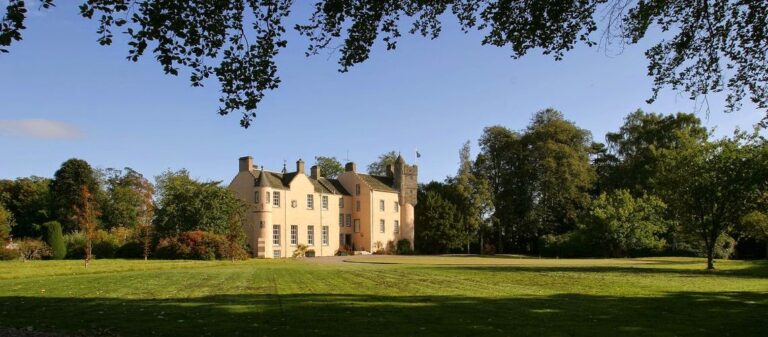
When William Douglas of Lochleven became the sixth Earl of Morton in 1588, he inherited other properties, including Aberdour Castle. Loch Leven Castle was used less often and eventually ceased to function as a residence. Sir William Bruce, the royal architect of Scotland, bought the Loch Leven estate from the Douglases in 1675. From 1686, he built Kinross House on the loch shore and aligned the house and garden’s principal axis with the distant castle. The castle was thereafter retained as a picturesque focal point for Bruce’s gardens rather than used as a dwelling. Newhouse, north of Bruce’s site, was demolished in 1723. Kinross House was among the first buildings in Scotland constructed in the classical style.
Loch Leven Castle fell into ruin during the eighteenth century. Its ruins were cleared of rubbish and conserved in 1840. The estate passed from the Bruces to the Graham family in the eighteenth century and to the Montgomery family in the nineteenth century. The castle was placed in state care in 1939 and is now managed by Historic Environment Scotland. It is protected as a Scheduled Ancient Monument, a site safeguarded under United Kingdom law for national archaeological or historical importance, and as a Category A listed building, Scotland’s highest category for buildings of special architectural or historic interest.
Remains
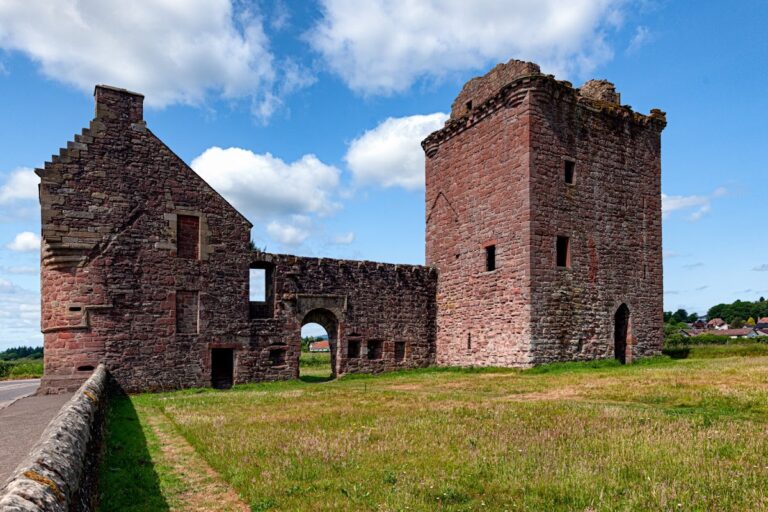
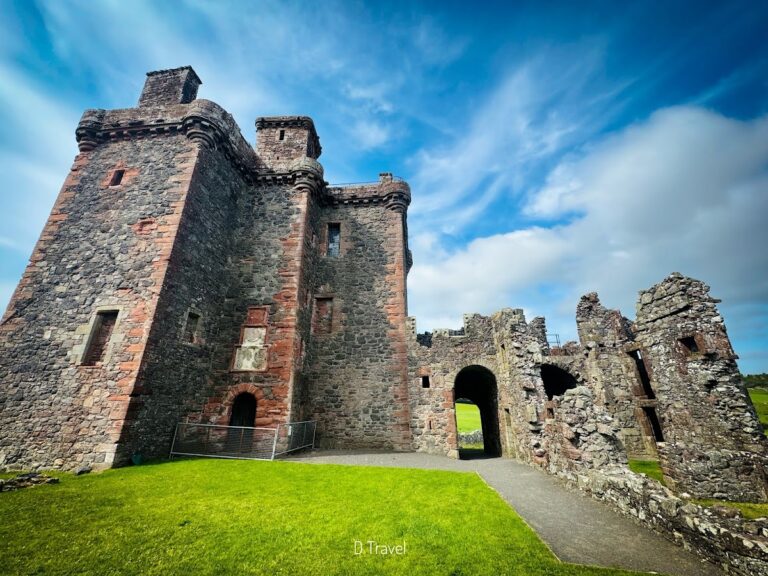
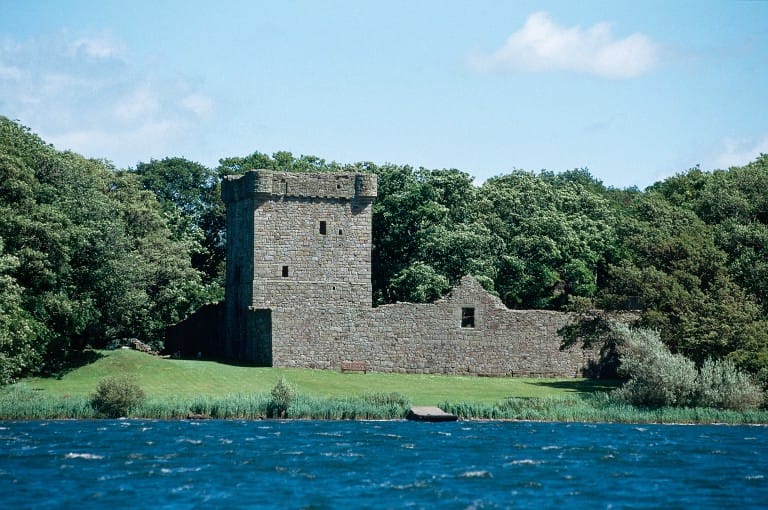
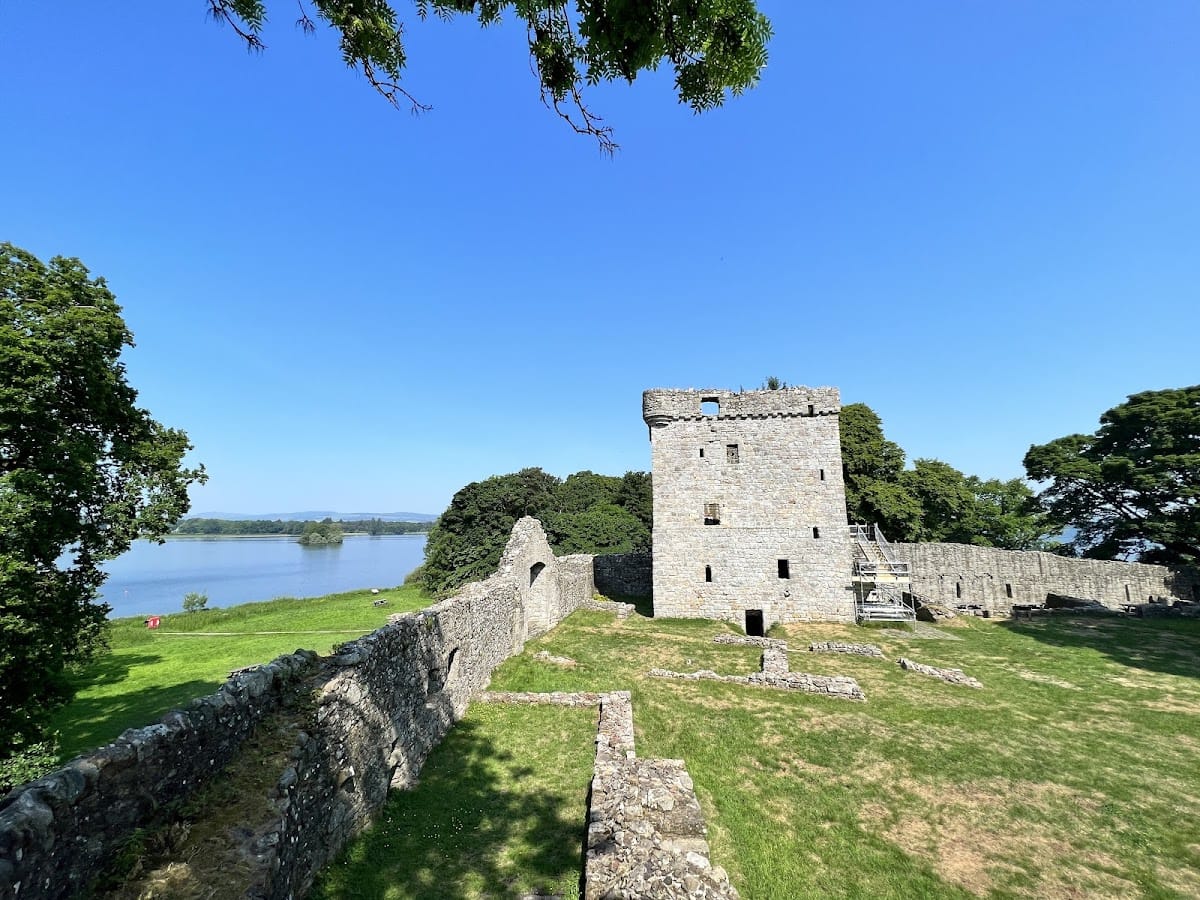
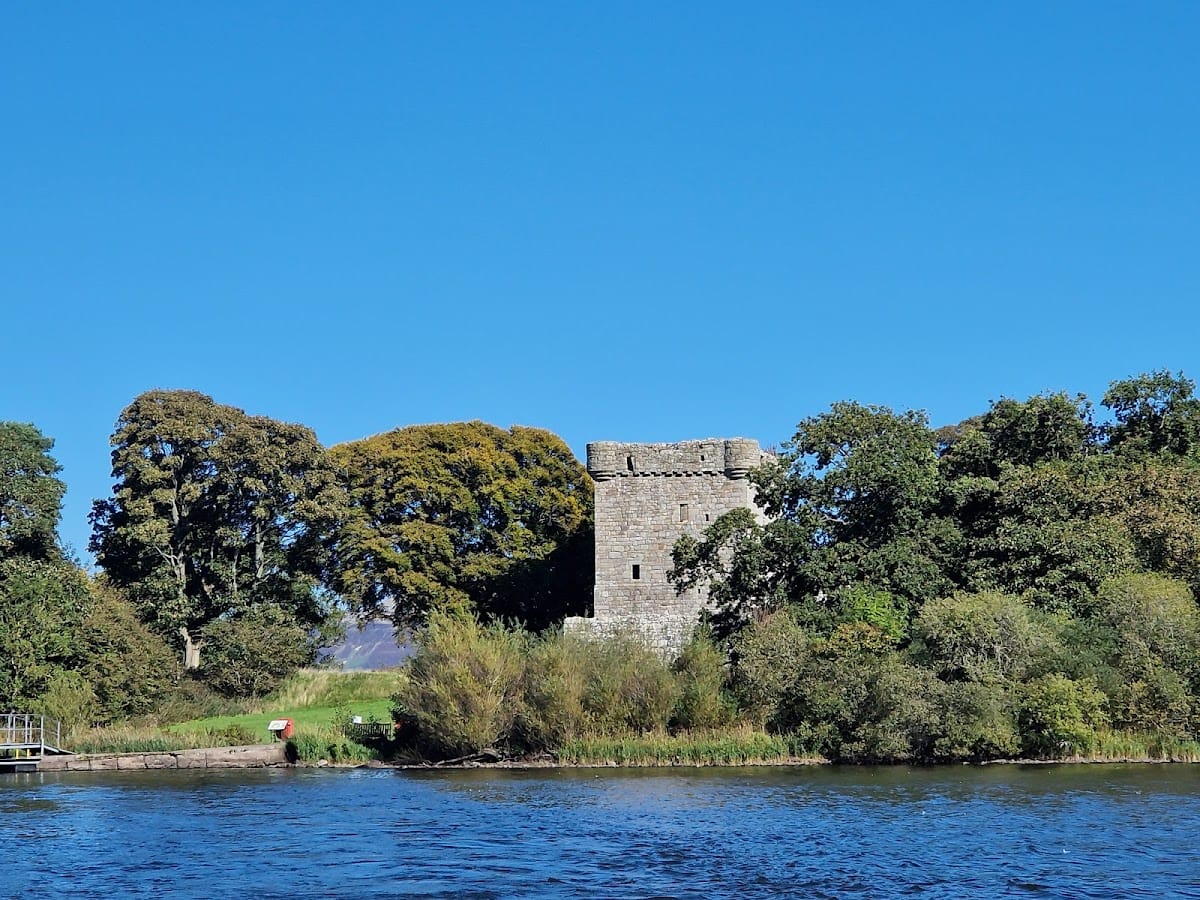
Loch Leven Castle stands on Castle Island in Loch Leven. The castle and an outer enclosure once occupied almost the entire island, although only limited parts of the enclosure survive. The island is now wooded and considerably larger because canalisation of the River Leven’s outflow in the early nineteenth century substantially lowered the loch’s water level. The surviving castle is arranged around a rectangular courtyard enclosed by a curtain wall, the defensive wall surrounding a castle, with a tower house at the western corner and the round Glassin Tower at the south-eastern corner.
Courtyard and outer enclosure
Curtain wall and courtyard
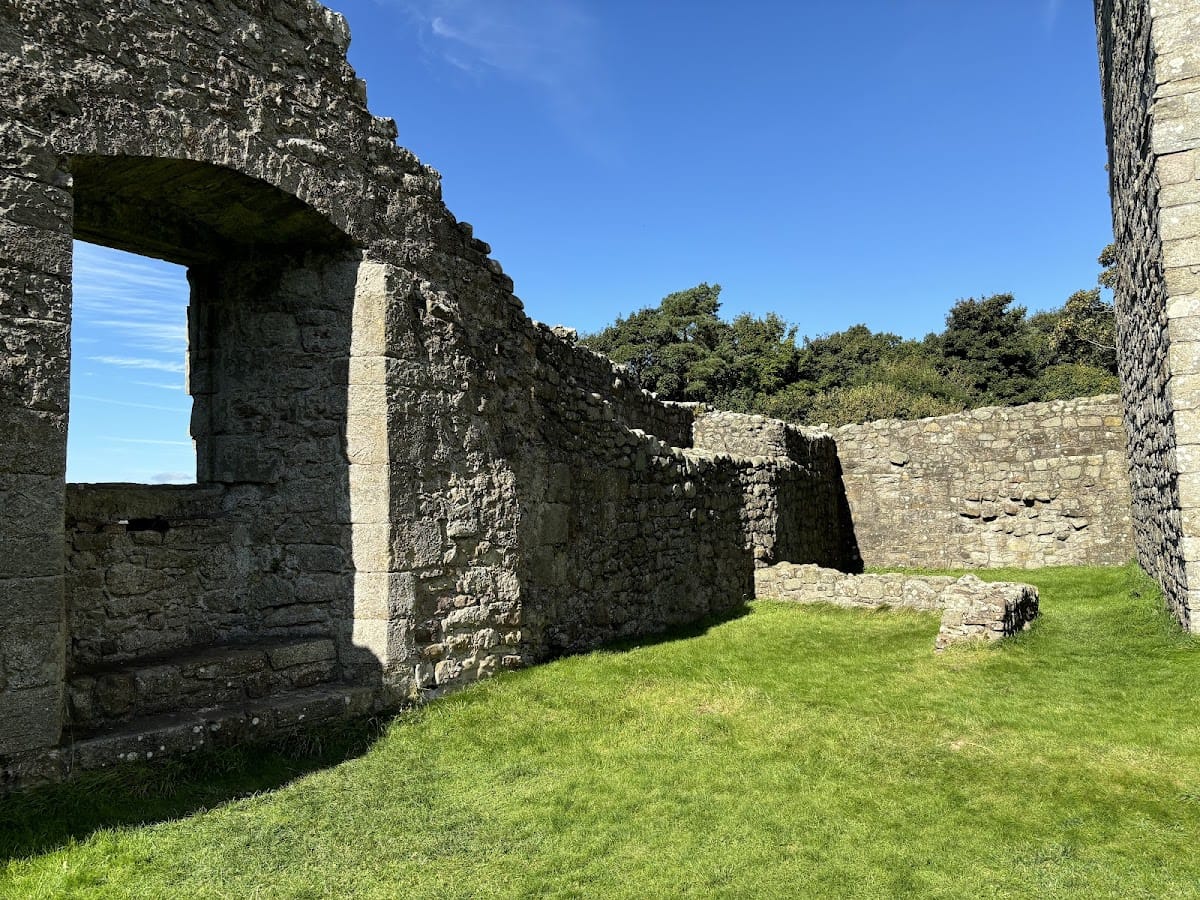
The curtain wall may partly date from the period of English occupation during the First War of Scottish Independence and may have been built by the occupying English forces. Within it, the rectangular courtyard preserves the basic form of the castle’s principal enclosure. Foundations of demolished building ranges remain along two sides of the courtyard, showing where additional structures once stood.
Outer enclosure
The outer enclosure survives mainly as an earth bank. Its only visible structure is the fragmentary remains of a bakehouse. Together, the bank and the surviving foundations indicate that the castle complex extended beyond the main courtyard, although little of the outer enclosure’s built fabric remains.
Fortified towers
Tower house
The tower house, also called the keep, measures 36.5 by 31.5 feet, or 11.1 by 9.6 metres, and originally rose through five storeys. Its roof and timber floors have disappeared. The lowest level is a vaulted basement, with a vaulted kitchen above it. The hall occupied the next floor, while chambers were arranged above. A spiral stair connected the levels.
A minor excavation in 1995 exposed the footings and two stone steps of a stairway leading to the tower house’s Great Hall. Sixteenth-century pottery and animal bones were found in 0.75 metres, or 2.5 feet, of debris near the external stair, known as a forestair. Mary, Queen of Scots, was moved to the main tower for a time during her captivity because it was considered easier to guard at night.
Glassin Tower
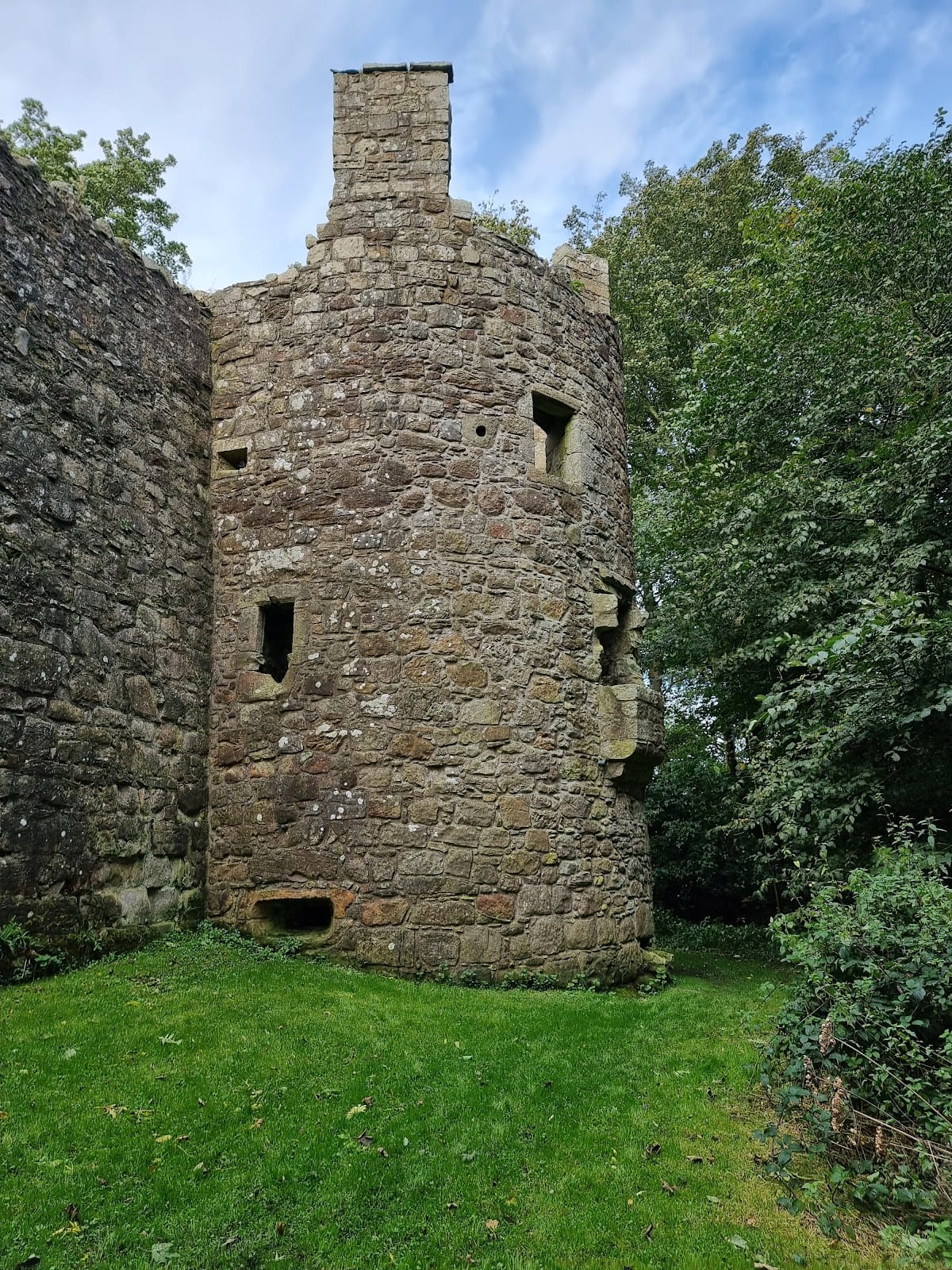
Glassin Tower is a round tower built into the south-eastern corner of the earlier curtain wall, probably around 1550. Its name has no known derivation. The tower supplied additional accommodation and strengthened the castle’s defences. Gunholes allowed fire to be directed along the outer face of the curtain wall.
The tower has a vaulted basement for storing water, reached separately from the courtyard. Separate channels collected water from the loch and carried waste water away through a slop-drain, a channel for liquid waste. Its lower chamber contains an oriel window, a projecting window supported above the wall, overlooking the loch. The upper chamber served as a bedchamber, while a small room at the top, reached only from the wall walk, may have been a study or library. Mary lived in Glassin Tower for most of her captivity.
Loch Leven Castle is now a ruin. The courtyard, curtain wall, tower house, Glassin Tower, foundations of former building ranges, outer earth bank, and bakehouse remains survive in the forms described by the site’s physical remains.