Burgschell: A High-Medieval Forest-Clearance Castle in Germany
Site at a Glance
- Popularity
- Very Low
- Country
- Germany
- Primary era
- Medieval
- External website
- Open
- Eras represented
- Medieval
- Civilizations
- Holy Roman Empire
- Site type
- Military
- Remains
- Castle
On this page9 sections
History
Burgschell is a high-medieval forest-clearance castle near Lampenhain, within Heiligkreuzsteinach, Germany. Such castles were associated with settling and cultivating newly cleared woodland. Its exact construction date is unknown, but it is linked to the lower nobility and to the settlement of the southwestern Odenwald.
Settlement and the castle’s role
In the twelfth century, the southwestern Odenwald was still undergoing woodland clearance. The Lords of Strahlenberg, whose ancestral castle was Strahlenburg near Schriesheim, promoted settlement in the area. The land was regarded as common property of the Bergstraße villages, particularly Ladenburg. Lampenhain, below Burgschell, was among the region’s earliest villages. The castle was positioned to protect and control forest-strip villages, whose cultivated fields extended in long strips from the settlement.
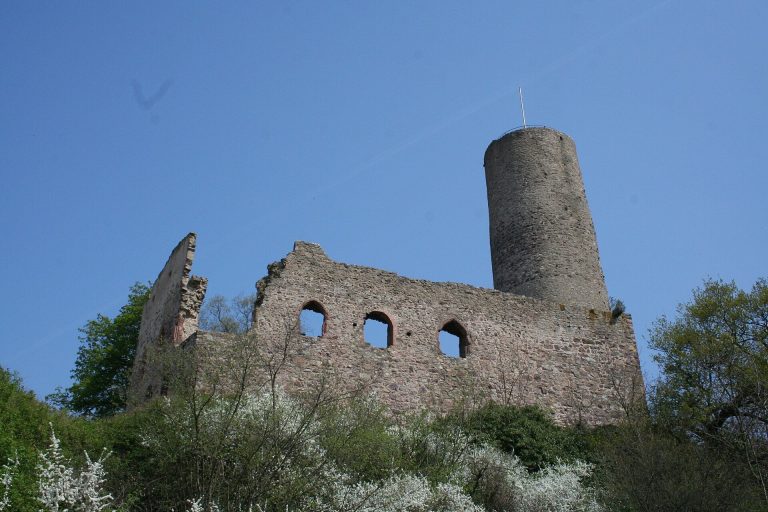
Castle researcher Thomas Steinmetz identified Burgschell, nearby Waldeck and Harfenburg as the Odenwald’s only clear examples of forest-clearance castles. Burgschell is regarded as a predecessor of Burg Waldeck, about two kilometres to the southeast, and may have been the starting point of the Waldeck lordship.
Territorial change and abandonment
A 1301 charter records Sophie von Strahlenberg and her sons granting the Electoral Palatinate, the territory ruled by the Palatine electors, the right to have their castles opened to it and the first option to buy them if they were sold. Burgschell is not named in the charter. Its omission may be connected with settlement and woodland clearance advancing farther into the Odenwald. The castle was probably abandoned relatively early.
In 1315, Emmerich von Schöneck, bishop of Worms and a territorial ruler, secured an agreement renouncing the founding of further settlements. The Strahlenbergs then had to hold their cleared lands as fiefs, or lands held under a lord’s authority, from the bishops of Worms.
Remains
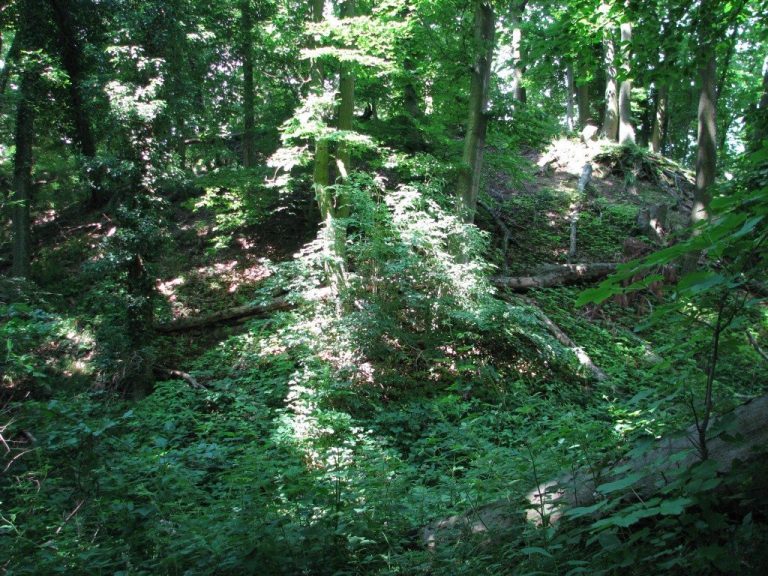
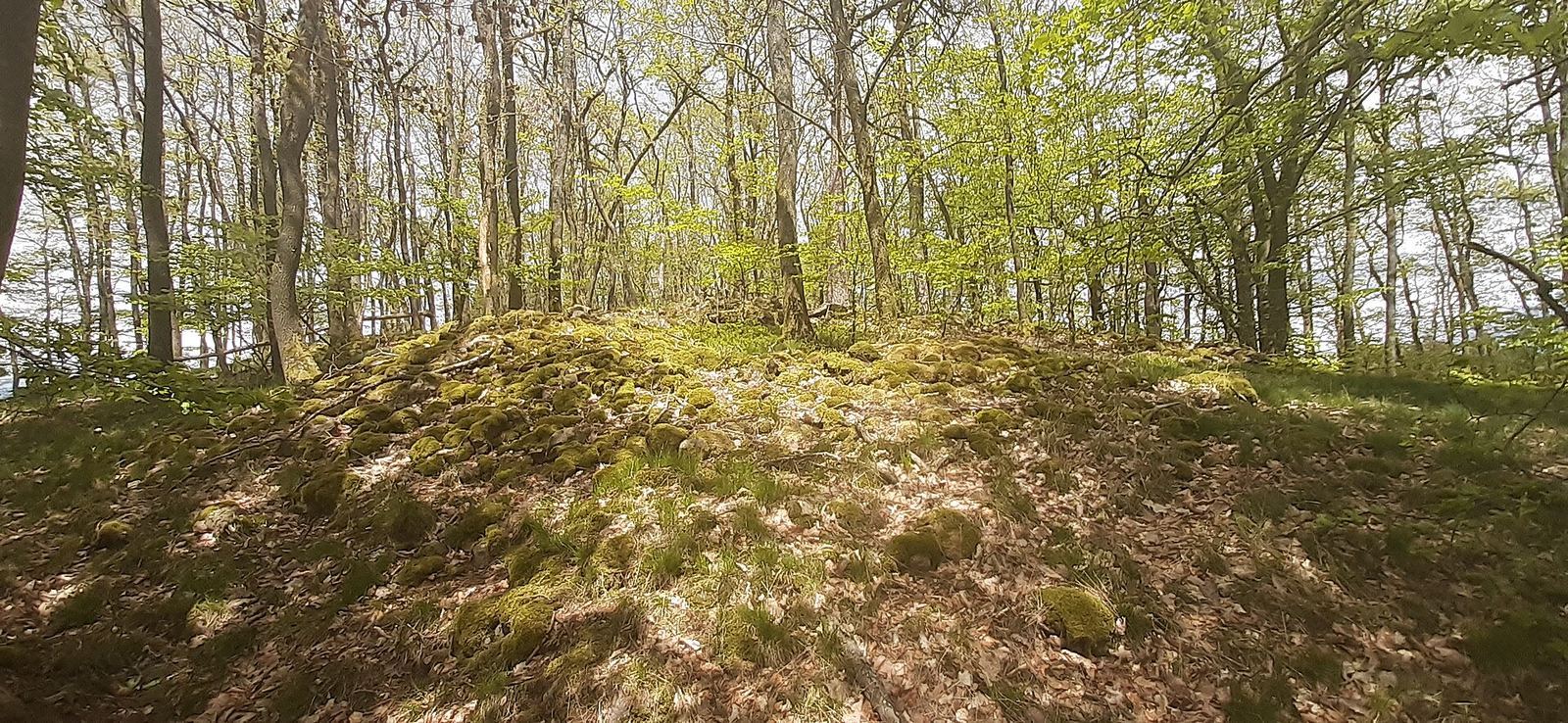
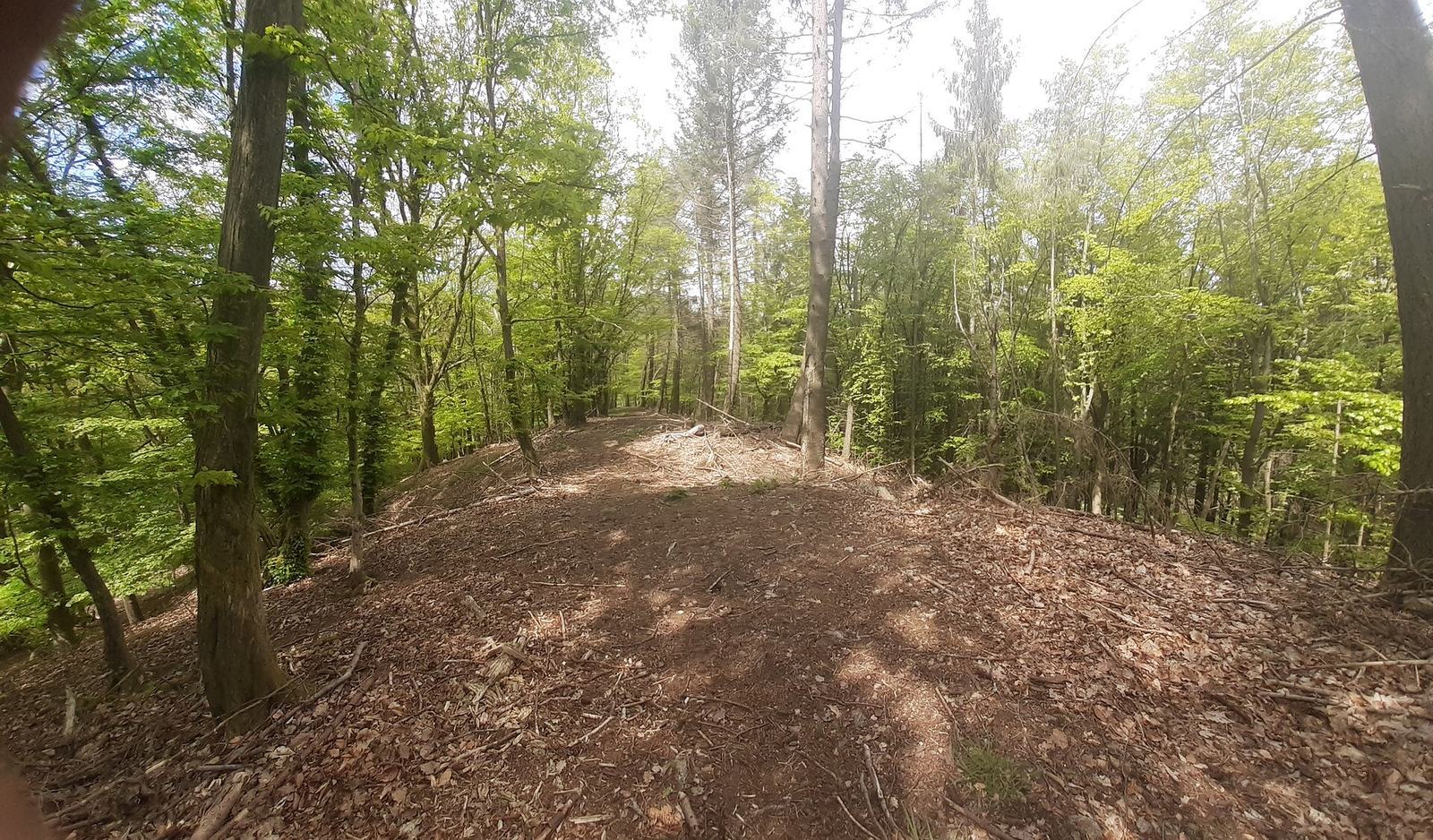
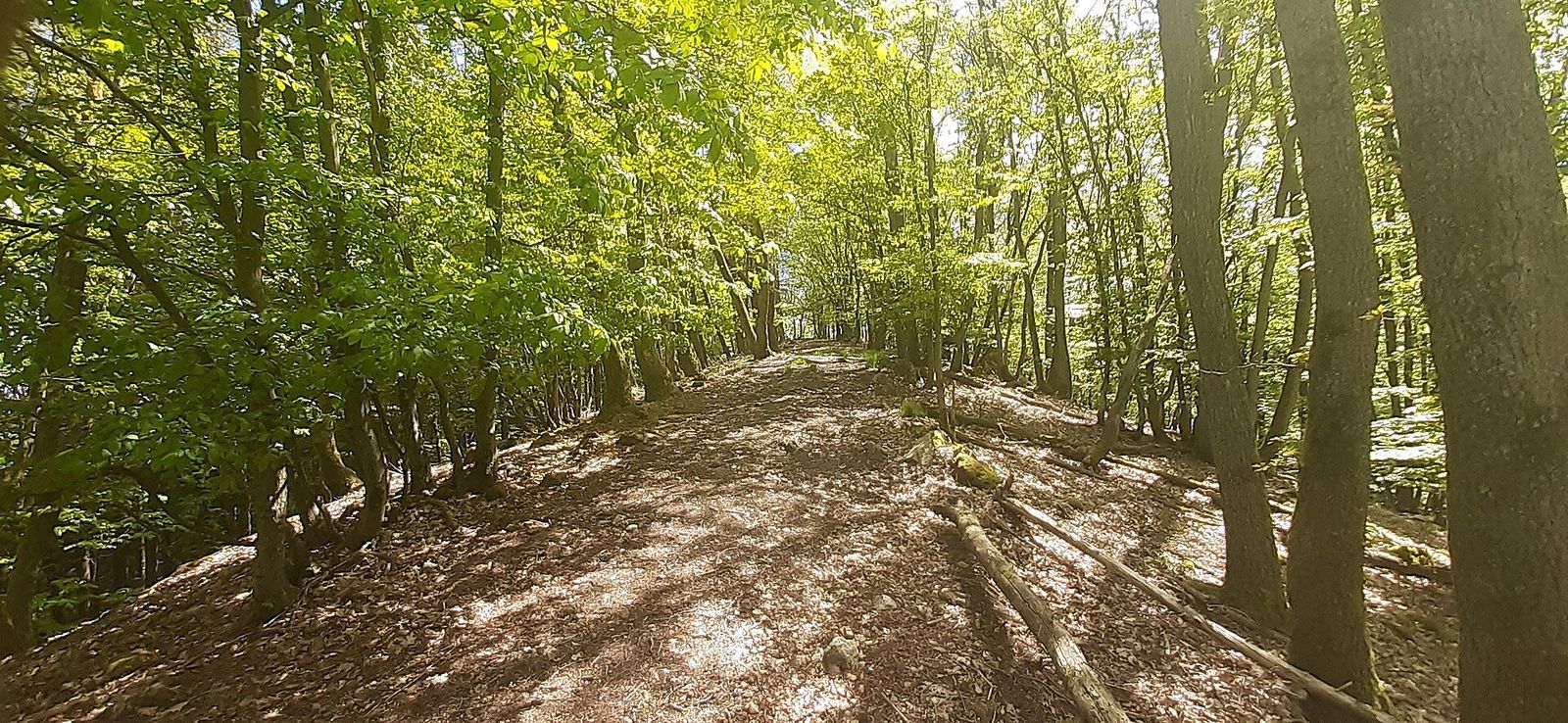
The remains occupy a south-projecting spur of a ridge in the southwestern Odenwald, at about 430 metres above sea level. The main plateau was cut into the ground and lies around 50 metres above the valley floor. Steep slopes descend toward the surrounding valleys on most sides, leaving the ridge approach from the north as the castle’s access.
The castle spur
Platforms and approach
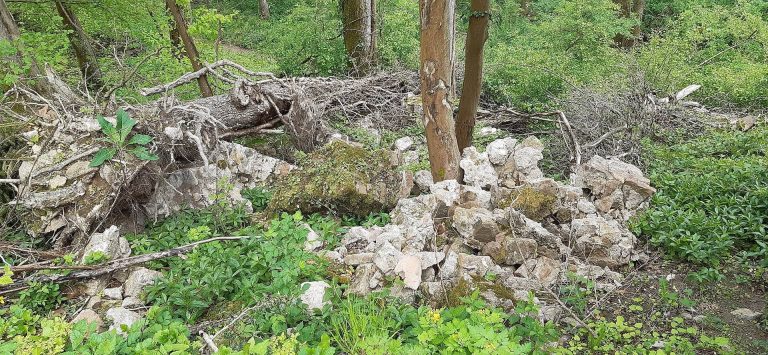
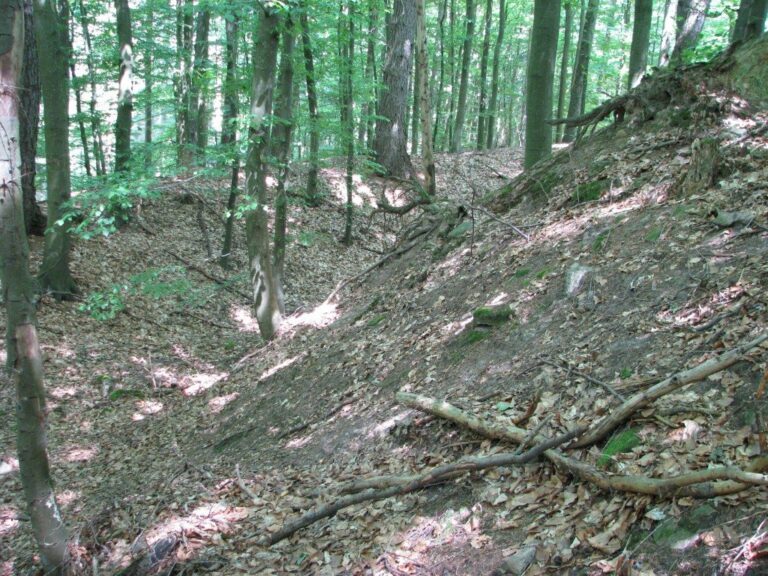
The main plateau measures about 11 by 15 metres. A second, possibly outer, platform measures about 11 by 18 metres and is roughly one metre lower. A partly filled ditch across the ridge approach was about eight metres wide and at least two metres deep. Stone banks beside the approach suggest that the entrance was defended, while two deposits of stone rubble near the present forest edge may mark a gatehouse. The site overlooks the cleared valleys of Lenzenbach to the east, Bärsbach to the west and south, and the Steinach to the southeast.
Timber defenses and buildings
The castle is thought to have been built mainly of wood. A substantial defensive wooden fence may have enclosed the site, and a multi-storey wooden tower may have provided both accommodation and a defensive position. The entrance may have had a wooden gate and gate tower. The surviving stone traces are scant and include remains attributed to a possible stone tower.
Path on the southern slope
A path formed from granite stones climbs the southern slope toward the castle. It may have served to carry drinking water uphill.
Northern approach remains
About 100 metres north of the main spur, on somewhat higher ground, wall-like stone remains and a square stone enclosure surround a central depression that may have been a cellar. Together, these features suggest another fortification. Its approach branches westward and could have been well secured. Tower remains have also been identified on the northern rise, including traces on both sides of the ridge path.