Iglesia de San Marcos (Seville): A Gothic-Mudéjar Parish Church
Site at a Glance
- Popularity
- Medium
- Country
- Spain
- Primary era
- Medieval
- Eras represented
- Medieval, Early Modern
- Civilizations
- Crown of Castile, Spanish
- Site type
- Religious
- Remains
- Church
On this page11 sections
History
Medieval foundation and urban setting
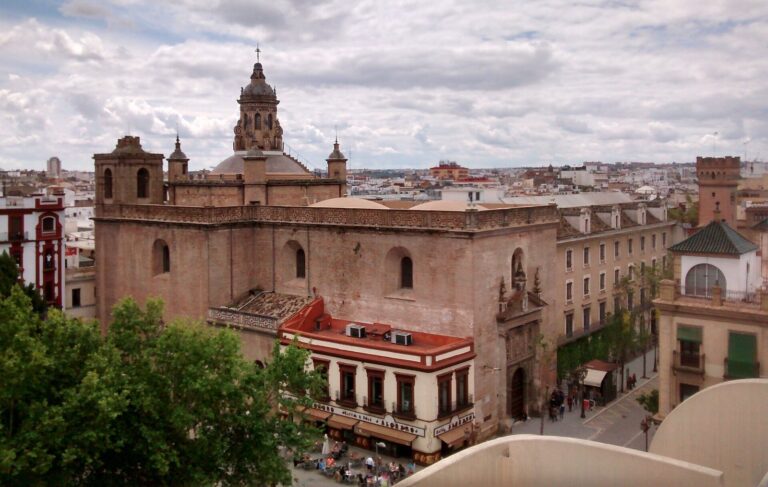
Iglesia de San Marcos is a 14th-century Roman Catholic parish church in Seville, Spain, built in the Gothic-Mudéjar style, which combines Gothic forms with building and artistic traditions derived from Islamic art in medieval Iberia. It belongs to the Diocese of Seville, a territorial district overseen by a bishop.
The church stands within the area once enclosed by Seville’s walls. The Roman city’s principal thoroughfare, the cardo maximus, ran through this area and later became a main street in Islamic Seville. One of the city’s principal entrances from outside stood at the street’s end, where the Puerta de la Macarena is now.
Later changes and wartime damage
On 4 June 1931, Spain declared the church an Asset of Cultural Interest, a legal status protecting cultural heritage. During the Spanish Civil War, fought from 1936 to 1939, the church was burned and looted. The destruction of its historical contents contributed to the church’s sparse imagery and restrained decoration.
Remains
The church has a rectangular plan and three lengthwise divisions, or naves, in a Gothic-Mudéjar design. Despite damage and later work, it remains among the least altered 14th-century parish churches of this style.
Interior layout and architecture
Naves and apse
The side naves end in flat walls, while the central nave concludes in an eight-sided apse, the terminal space of the church. Brick rib vaults cover the apse, with ribs forming a visible structural framework.
Arches and supports
Pointed horseshoe arches divide the naves and rest on rectangular piers. An alfiz frame, a border around an arch, surrounds these openings. At the entrance to the main chapel, a pointed Gothic arch is supported by two large columns.
Walls and sculpture
The interior walls are white and have little added decoration. Movable works include an image of Saint Mark, the Christian evangelist traditionally associated with the Gospel of Mark, attributed to the artistic circle of Juan de Mesa; a sculpture of the reclining Christ by José Lemus; and a bust of the Sorrowful Virgin, a representation of Mary grieving Jesus, carved by Pedro de Ávila.
Entrance and tower
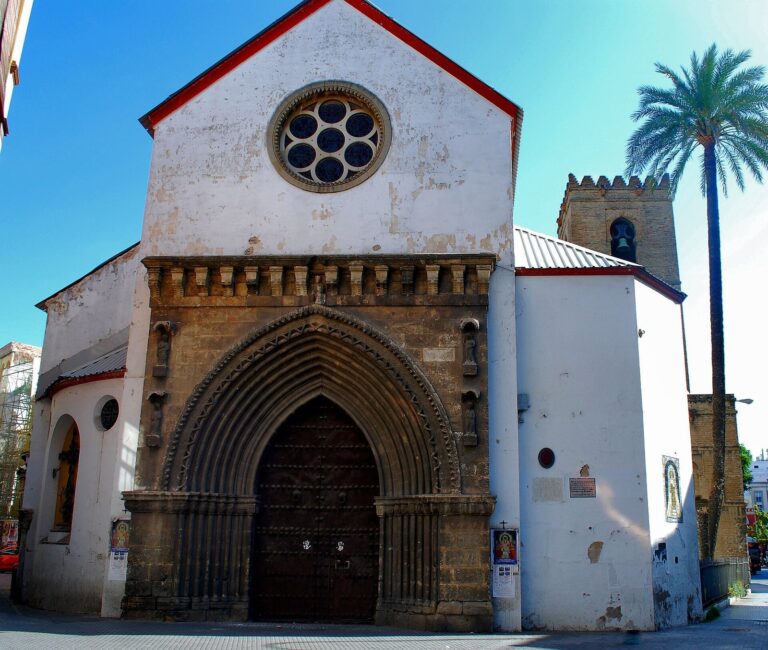
Main portal
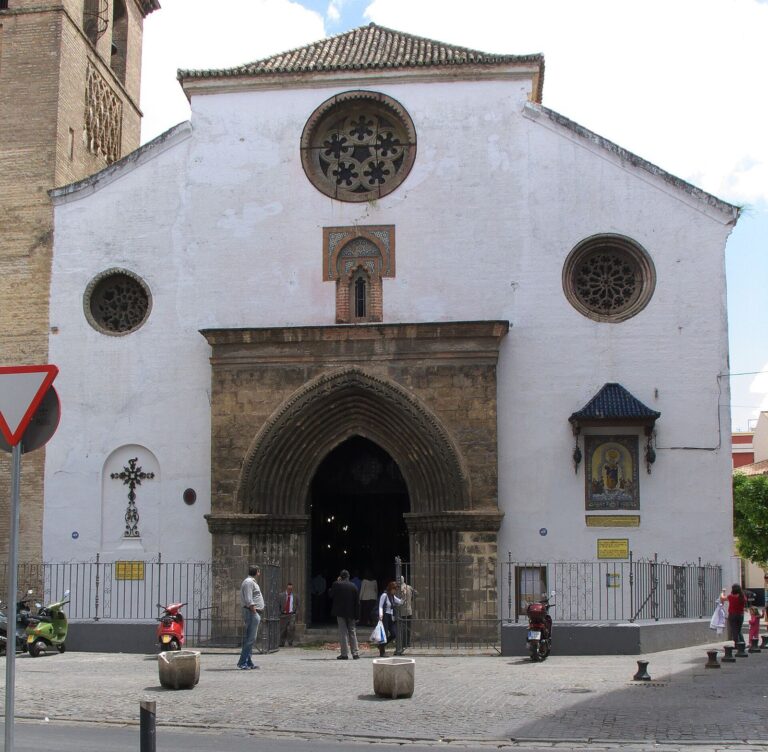
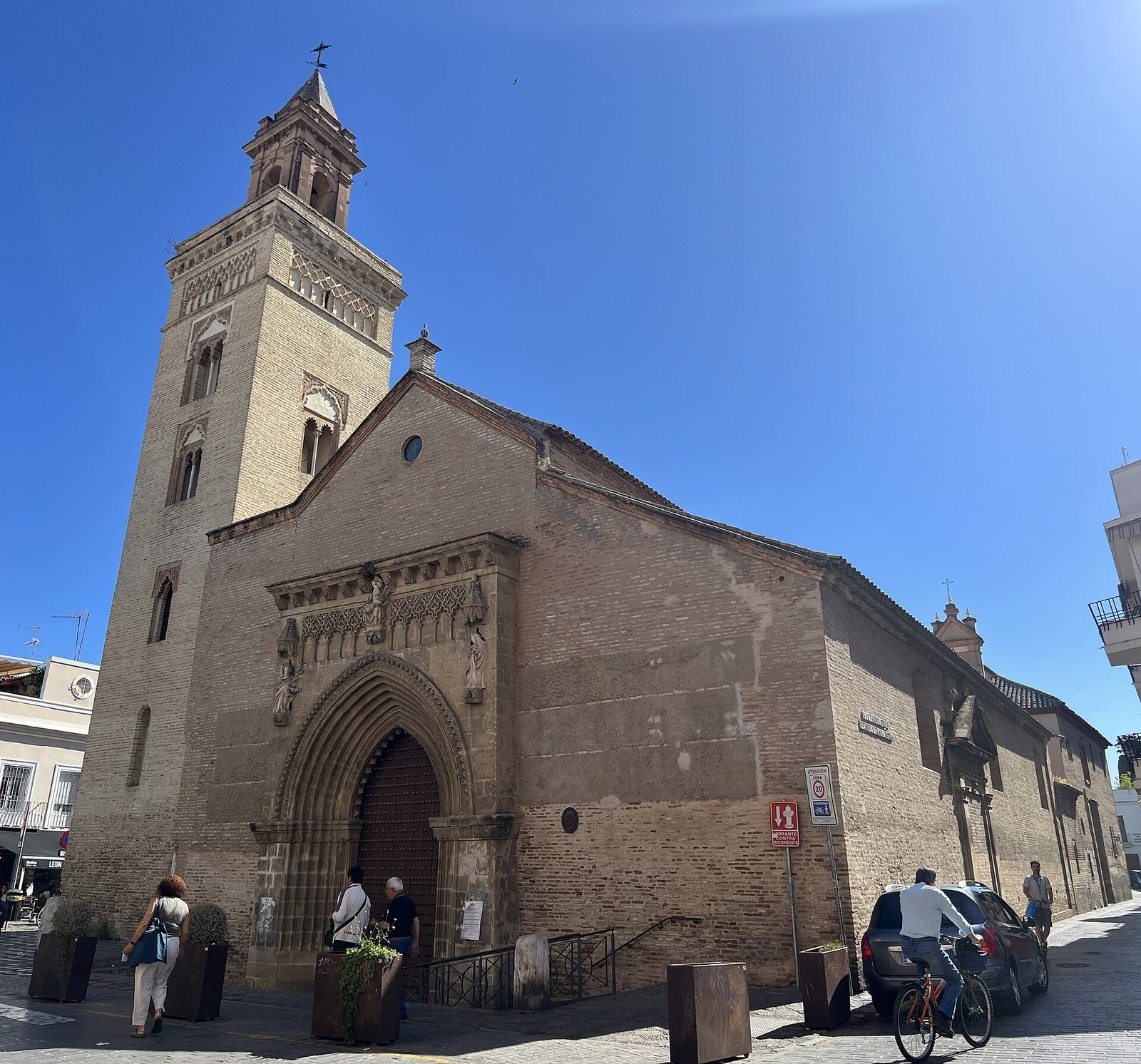
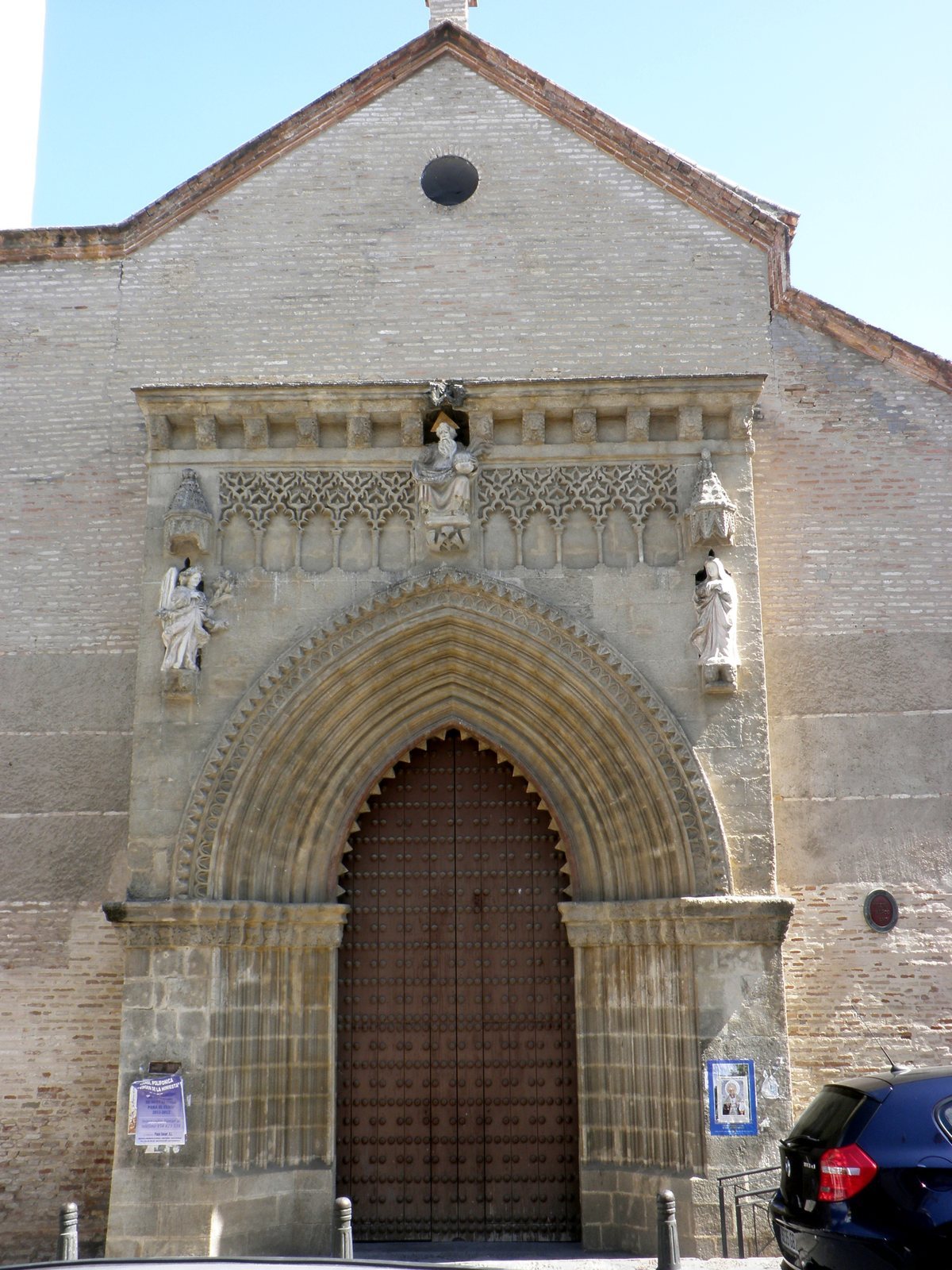
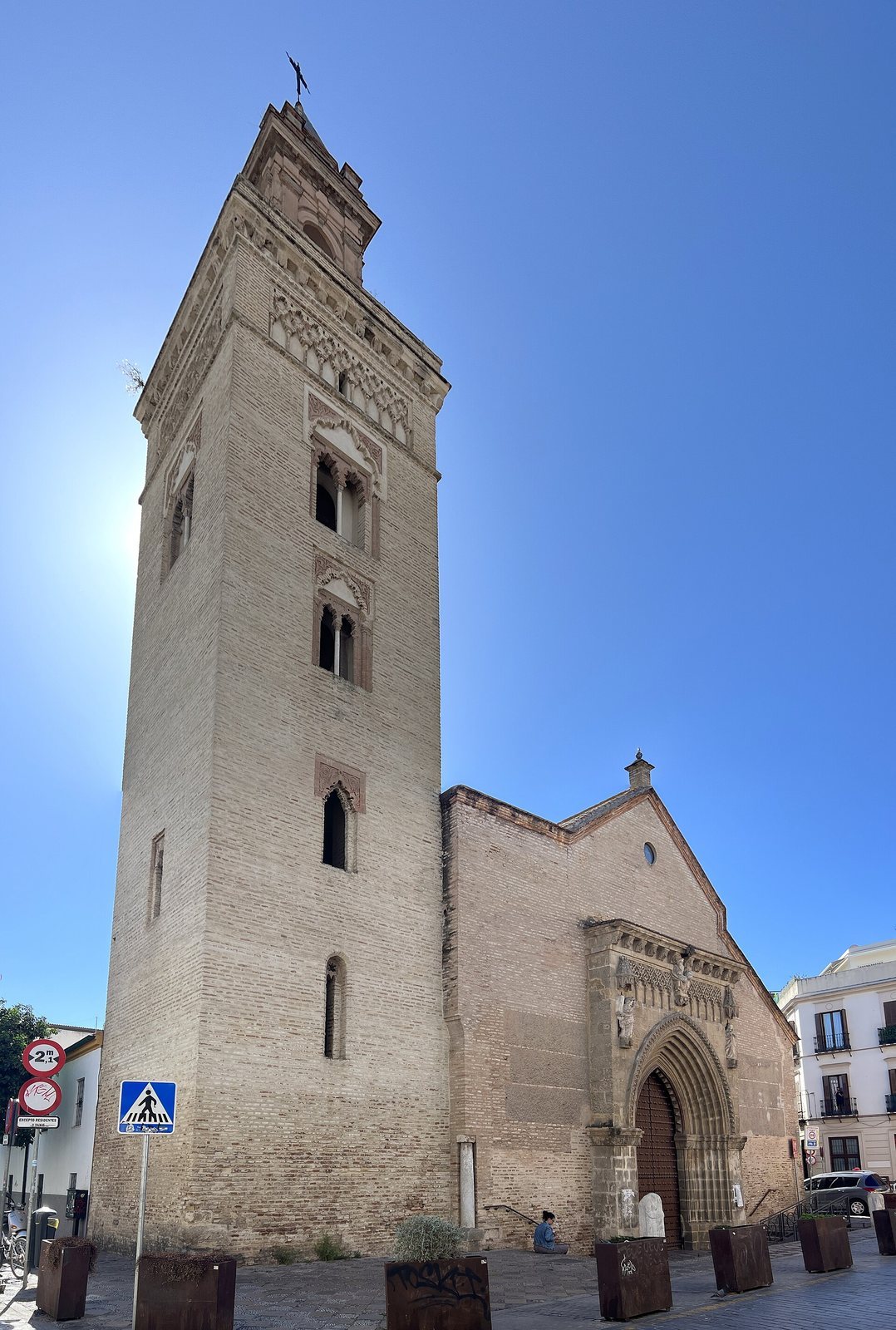
The main entrance is marked by a late-15th-century stone portal, with the tower set at an angle beside it. The first and last of its curved arch bands have sawtooth or diamond-point patterns. Small figures stand on pedestals beneath canopies on either side, and a horizontal band of net-like sebka decoration crosses the upper front.
Tower
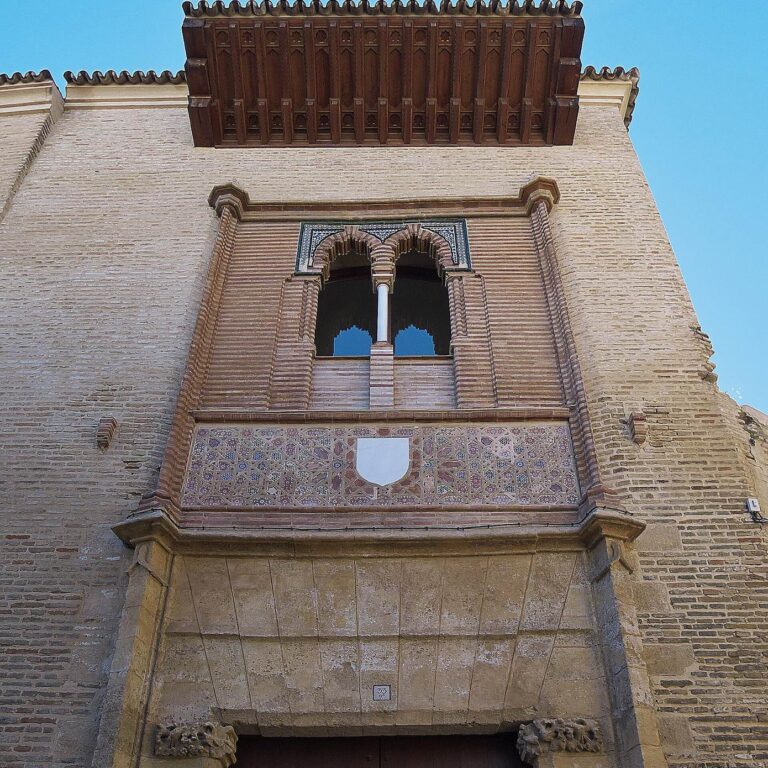
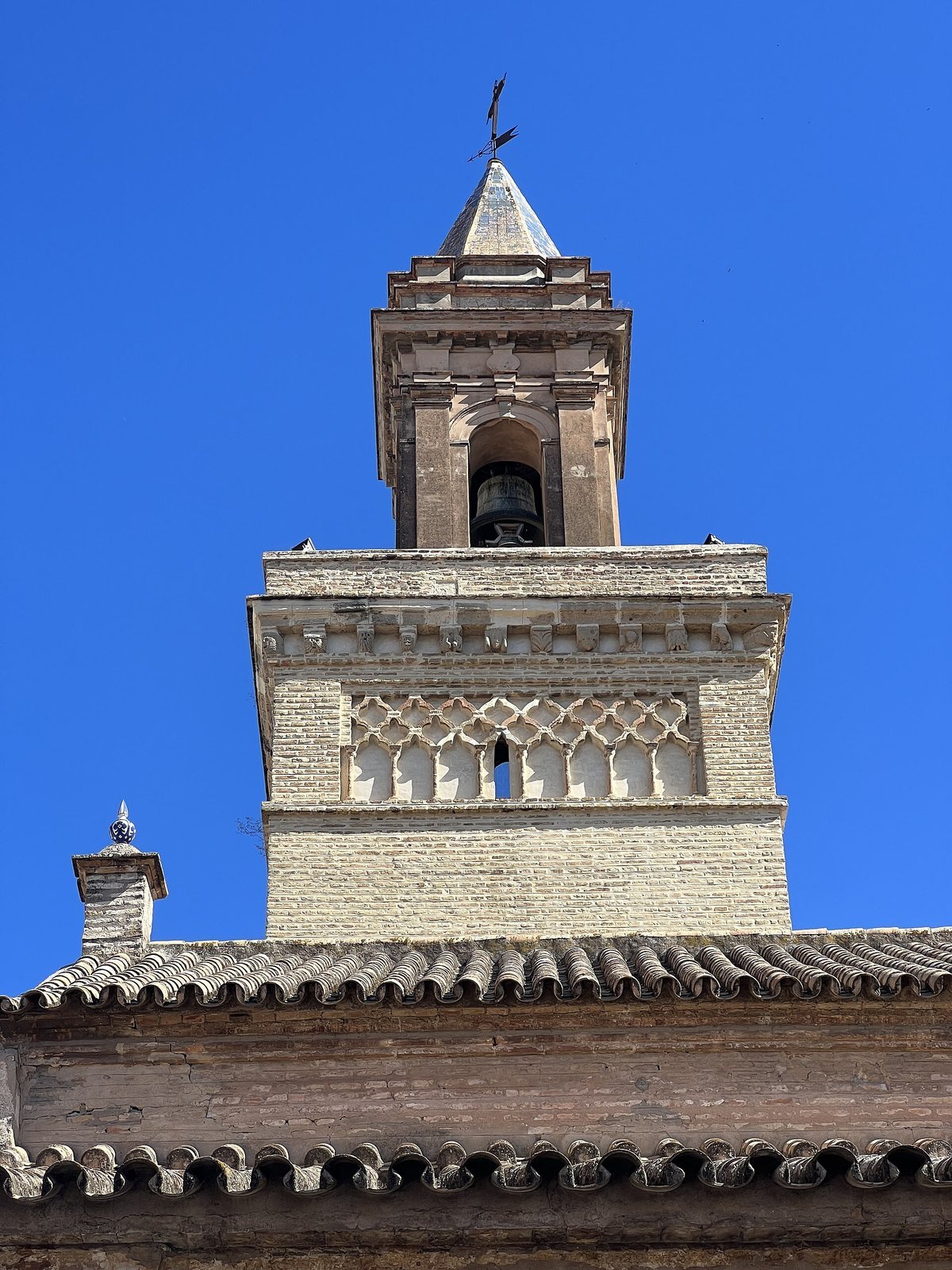
The tower is 22 metres high, with intricately ornamented windows and net-like sebka decoration across its upper section. This pattern also appears on the Giralda, the bell tower of Seville Cathedral, and on other towers in Seville. Vermondo Resta added the tower’s belfry in 1603. The Sevillian architect Aníbal González restored the tower in 1916.