D53: A Neolithic Passage Grave in the Netherlands
Site at a Glance
- Popularity
- Medium
- Country
- Netherlands
- Primary era
- Stone Age
- Eras represented
- Stone Age
- Civilizations
- Unclassified
- Site type
- Burial
- Remains
- Tomb
On this page13 sections
History
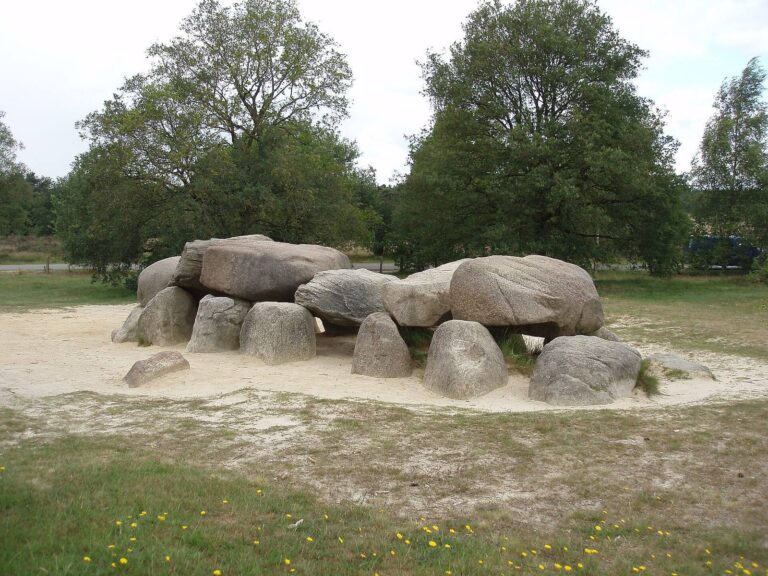
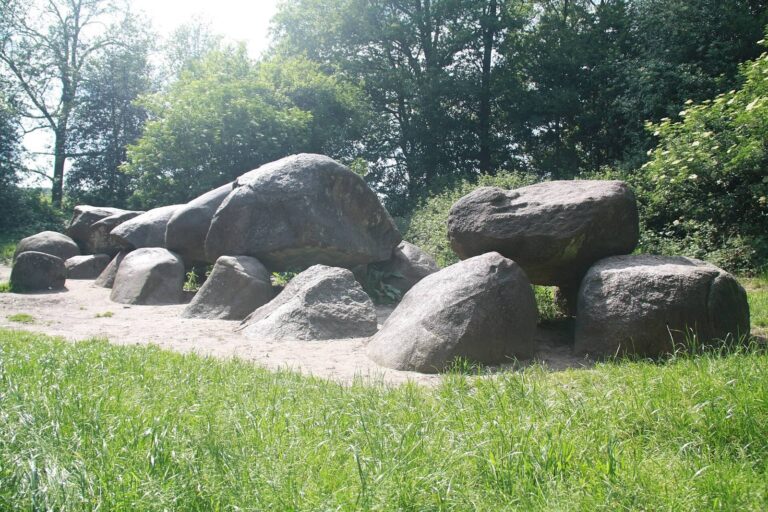
D53 is a Neolithic passage grave at Havelterberg in Darp, Drenthe, Netherlands, attributed to the western group of the Funnel Beaker culture, a Neolithic farming society of northern and central Europe named for the shape of some of its pottery. The tomb’s construction date is uncertain.
Early records and nineteenth-century surveys
Andries Schoemaker first recorded the tomb in 1732. Cornelis Pronk drew it that year, and Abraham de Haen made another drawing in 1737. In the nineteenth century, the Netherlands acquired D53 from Havelte’s local farmers’ association. French maps made between 1811 and 1813 marked D53 and nearby D54 as supposed Hunnic graves beneath large granite stones.
Leonhardt Johannes Friedrich Janssen visited in 1847 and published an overview of Dutch megalithic tombs the following year. In 1874, Willem Pleyte and photographer Jan Goedeljee made a systematic photographic record of surviving tombs, which Pleyte also used to create lithographs. Conrad Leemans visited Drenthe in 1877, and draughtsman Hooft van Iddekinge prepared plans for him, but Leemans’s report was not published.
Excavation and wartime disruption
Willem Johannes de Wilde recorded surviving Dutch tombs from 1904 to 1906 with plans, photographs and detailed descriptions. After earlier digging at D53, archaeologist Albert Egges van Giffen led a full investigation of the tomb in 1918. Around 1942, artist J. Dijkstra made a watercolour showing D53 and D54 that was later used as a school wall chart.
During the Second World War, German authorities ordered D53 dismantled to clear space for an airstrip. Its stones were placed in a pit about seven metres deep. The airfield was bombed in 1944 and 1945, and the tomb was rebuilt on its original site in 1949.
Restoration and recording
D53 was restored in 1991 and designated a protected national monument in 1997. In 2017, the Gratama Foundation used photogrammetry, which produces measurements and three-dimensional models from overlapping photographs, to record the tomb for a three-dimensional atlas. The project involved the province of Drenthe and the University of Groningen.
Remains
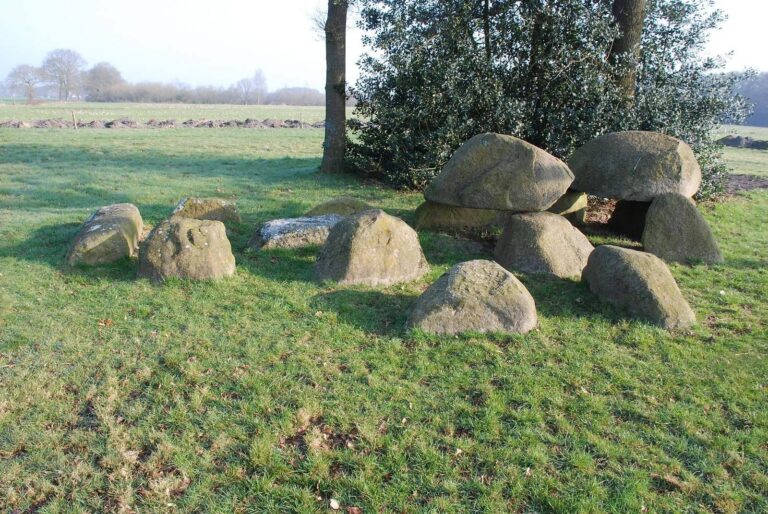
D53 lies north of Hunebeddenweg, with the smaller tomb D54 about 150 metres to the east across the road. Its elongated chamber is aligned east-northeast to west-southwest and has an entrance midway along its southern side.
Stone structure
Burial chamber
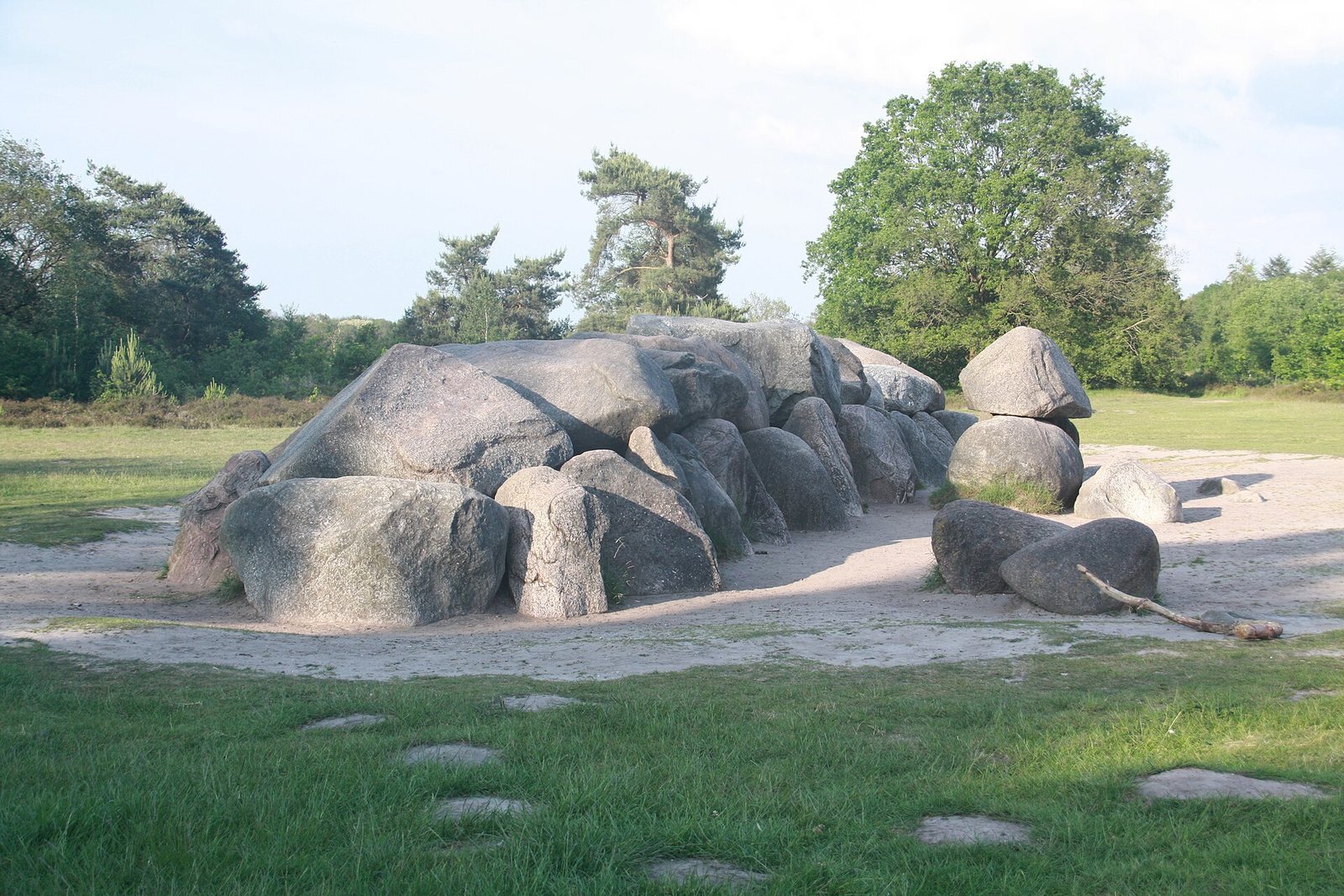
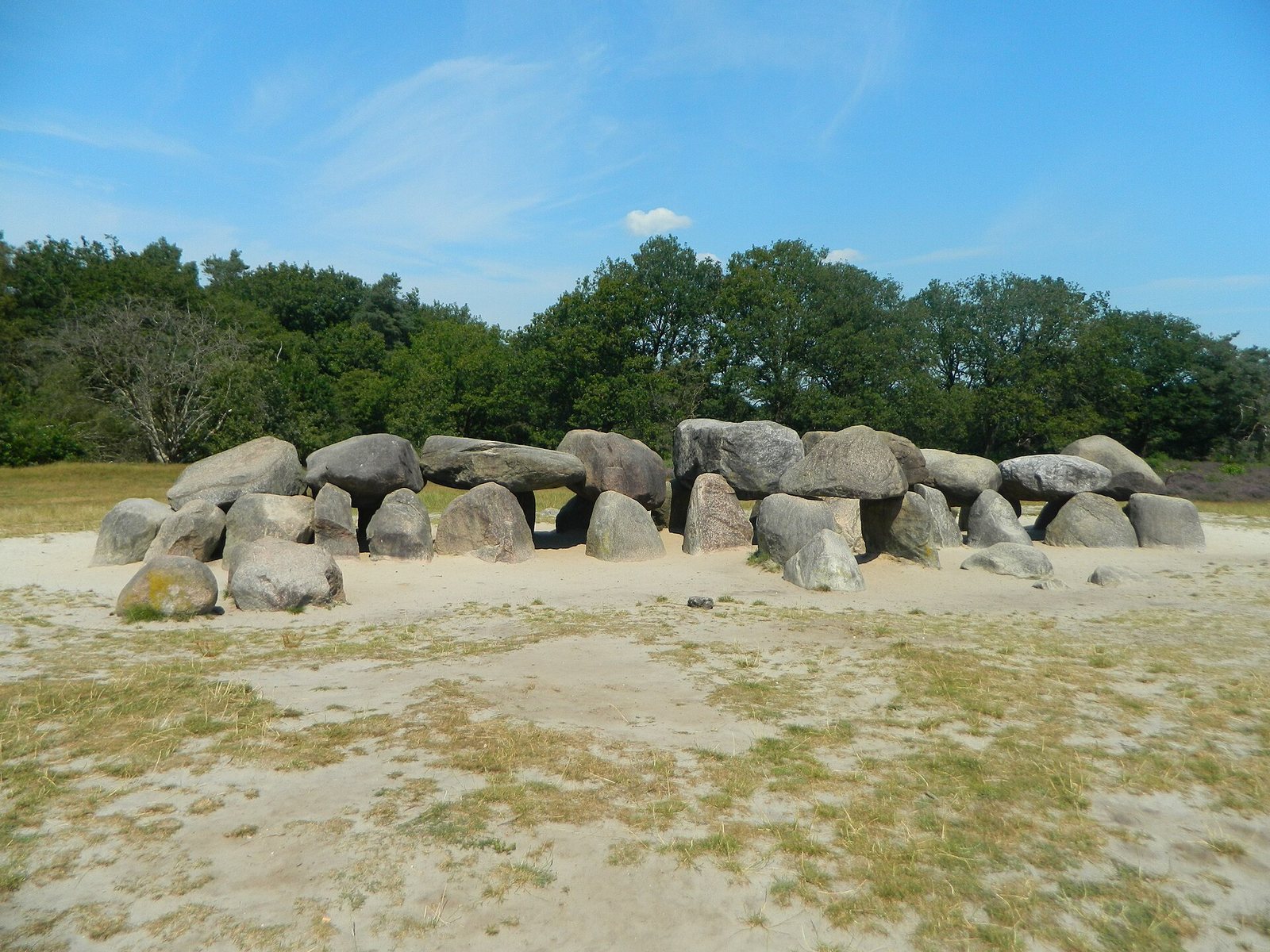
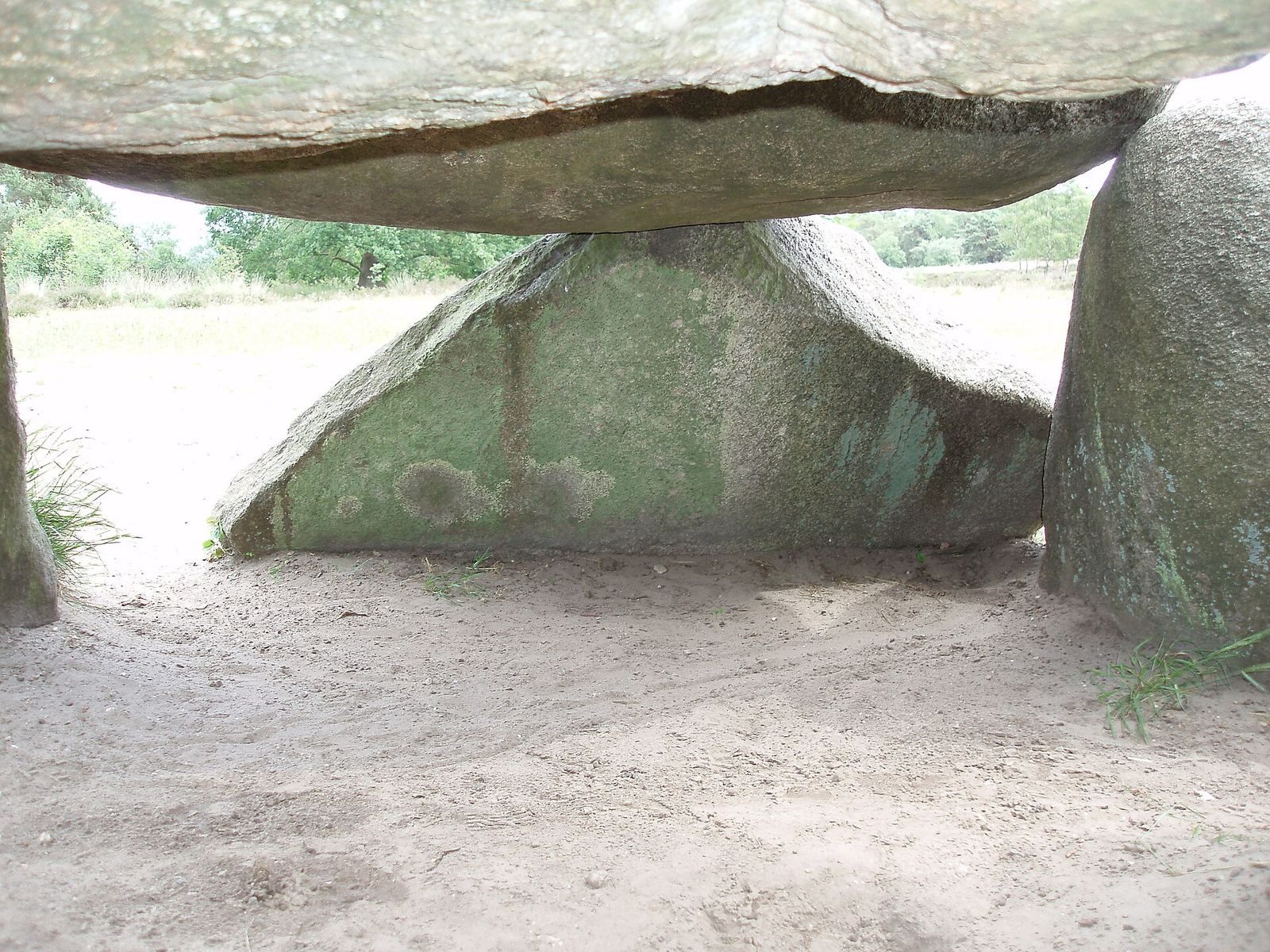
The chamber measures 18.9 metres long and 4.4 metres wide, making it the second-largest megalithic tomb chamber in the Netherlands; only D27 at Borger is larger. Twenty-one supporting stones form its sides, with ten on the north and eleven on the south. One end stone closes the eastern end. At the western end, three stones are arranged as one large stone and two smaller ones, a configuration unique in the Netherlands. All nine capstones survive, resting on the supporting stones.
Kerb stones
Ten kerb stones, which marked the base of the burial mound, survive. Fourteen were present at the 1918 excavation, and ground traces revealed the positions of another sixteen. The original boundary probably comprised more than forty stones.
Entrance and floor
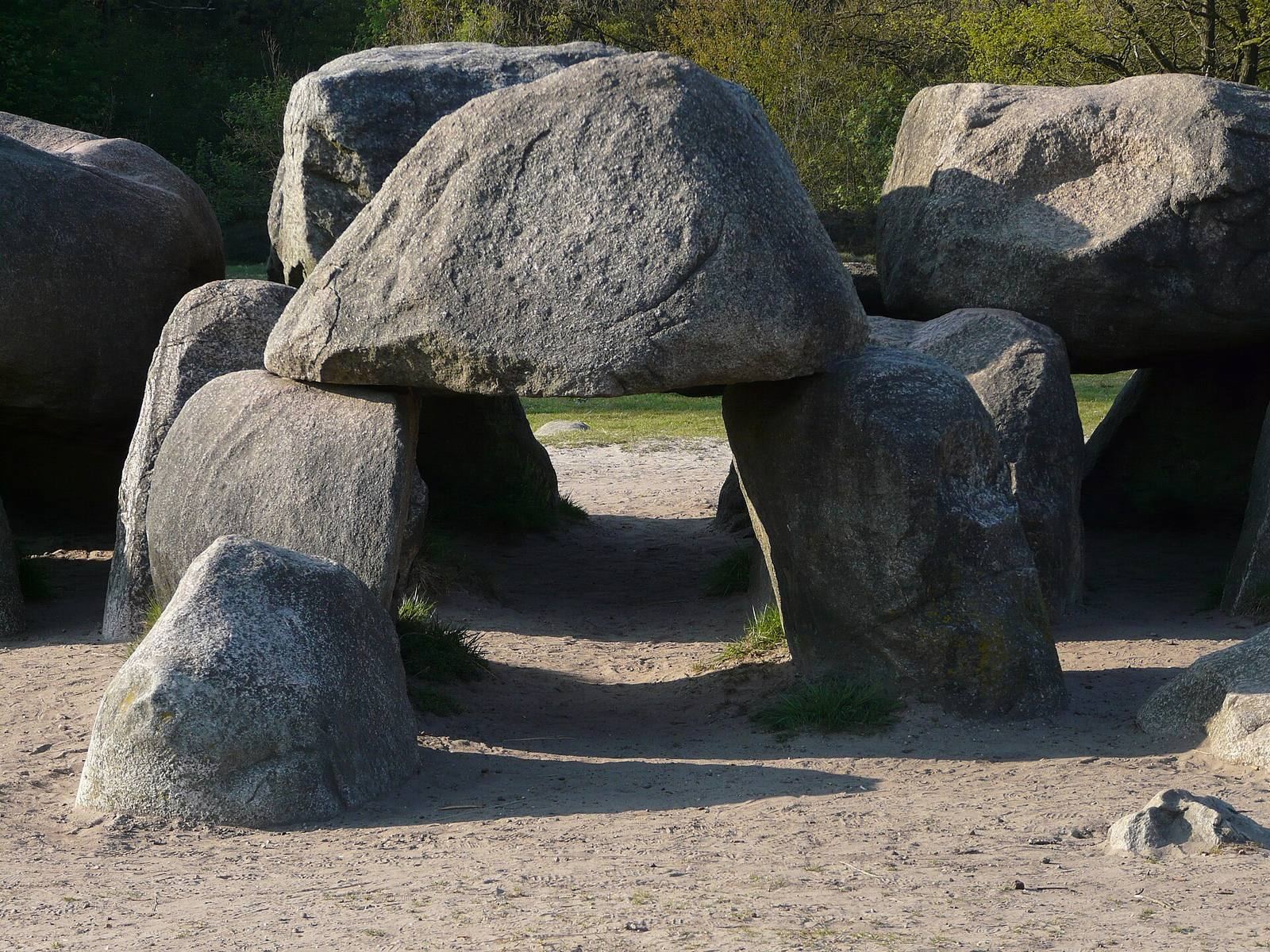
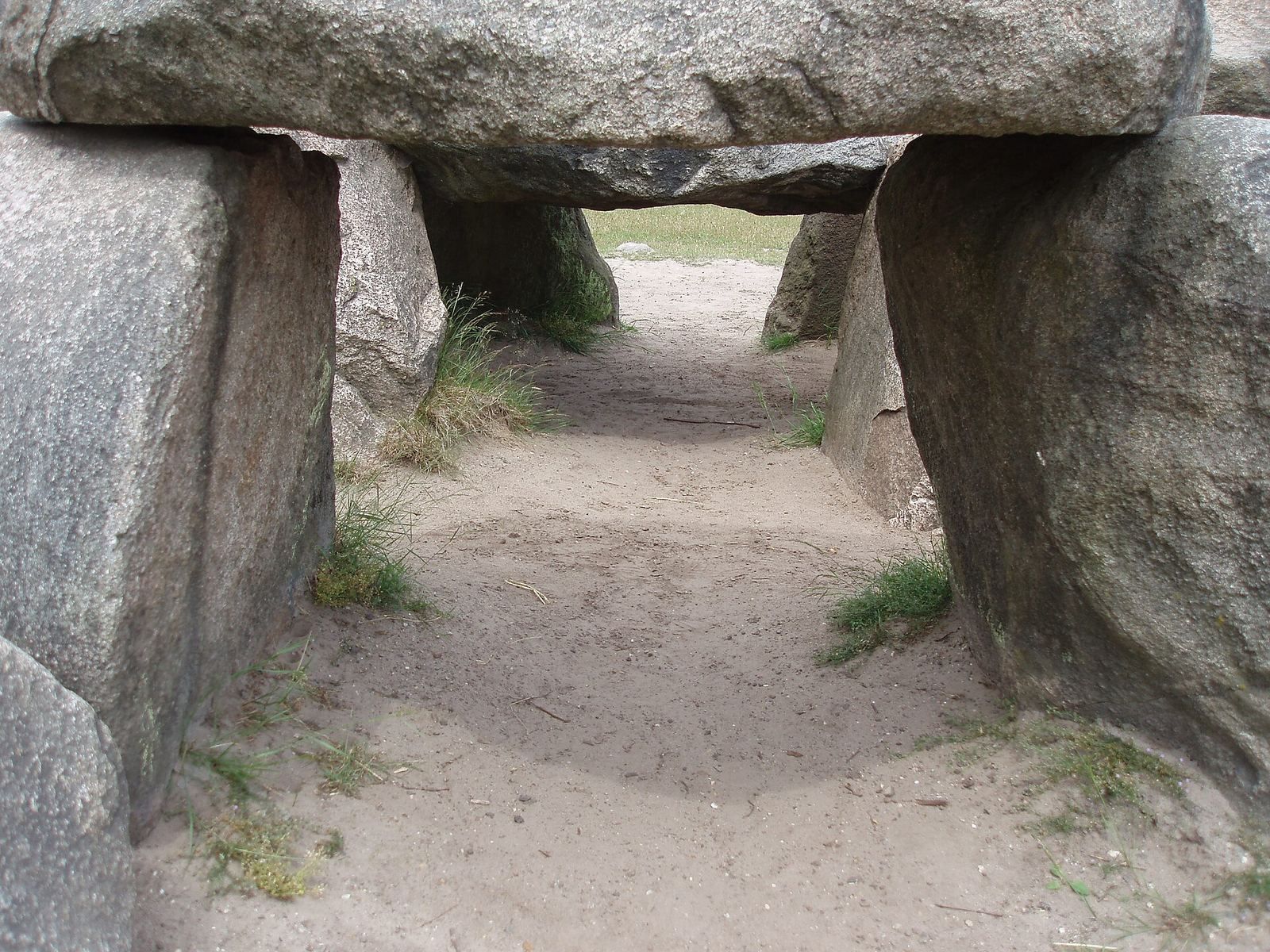
The entrance passage is made from two pairs of side stones and a capstone. Fieldstones form its floor, and a threshold stone divides the passage from the chamber. Inside, flat boulders make up the chamber floor, which is covered with burnt granite grit. The floor remained intact during the wartime dismantling. Drawings made during the 1918 excavation guided the reconstruction.
Excavated finds
Pottery
Excavation recovered sherds from 665 vessels in a layer 35 centimetres thick. This is more pottery than has been recovered from any other Dutch megalithic tomb. The vessels belong to phases 3–7 of Anna Brindley’s classification for the western Funnel Beaker group, dated to 3300–2760 BCE.
Tools and ornaments
Other finds include three flint axes, an arrowhead and a hammer-axe, a stone tool with an axe blade and a hammer-like end. Three beads were made of jet, a hard black fossil material, and another was made of amber.
Human and animal remains
The cremated human remains weighed 1,105 grams and represent at least five people: one person of undetermined sex who died aged 10–20; two men aged 20–40; a woman or young person of undetermined sex whose age could not be established; and a possible woman aged 30–50.
About 20 grams of burnt animal bone were recovered, including pig bones. Whether these bones were used as tools or placed as food offerings could not be determined. Two bear claws may have come from a bearskin used to wrap someone before cremation.