Dolmen D52: A Neolithic Passage Grave in Drenthe
Site at a Glance
- Popularity
- Medium
- Country
- Netherlands
- Primary era
- Stone Age
- Eras represented
- Stone Age
- Civilizations
- Unclassified
- Site type
- Burial
- Remains
- Tomb
On this page11 sections
History
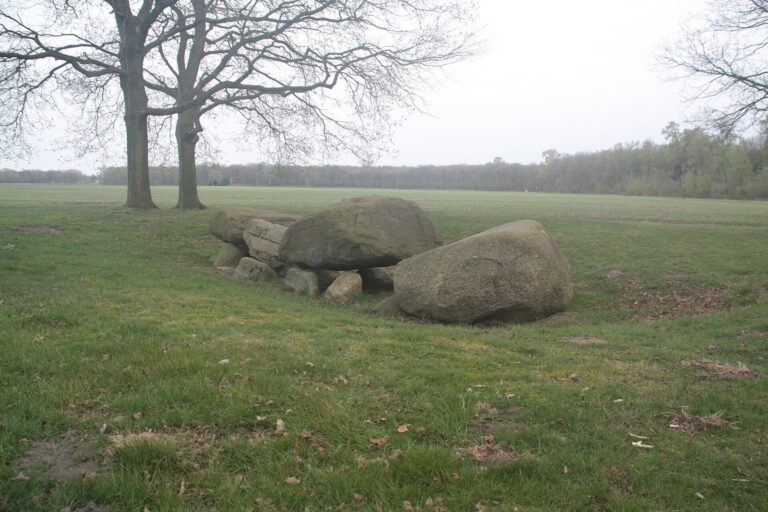
Dolmen D52 is a Neolithic passage grave, a burial chamber reached through a passage, northeast of Diever in the Netherlands. It is attributed to the western regional group of the Funnel Beaker culture, a farming culture named for its funnel-shaped pottery. Pottery associated with the tomb dates from 3470 to 2760 BCE. The designation D52 comes from Albert Egges van Giffen’s numbering system for Dutch megalithic tombs.
Early records
The tomb was mentioned in the seventeenth century and appeared on a French map drawn between 1811 and 1813. In 1818, local magistrate S. J. van Royen reported seeing a large hand engraved on a capstone. Dutch antiquarian and writer Nicolaas Westendorp repeated the story in 1822. The supposed carving is considered probably fanciful, and van Royen reported that the tomb was intact when he visited.
Nineteenth-century study and ownership
Leonhardt Johannes Friedrich Janssen visited D52 in 1847 and included it in his overview of Dutch megalithic tombs, published the following year with descriptions and schematic plans. Janssen was curator of Dutch antiquities at the Rijksmuseum van Oudheden. In 1871, the state purchased the field and tomb from Hendrik ter Mast. The tomb then lay beneath a barn.
In 1874, archaeologist and museum curator Willem Pleyte and photographer Jan Goedeljee made the first systematic photographic survey of Drenthe’s megalithic tombs. Pleyte later turned photographs into lithographs. Rijksmuseum director Conrad Leemans made a separate journey through Drenthe in 1877, using plans prepared for him by Jan Ernst Henric Hooft van Iddekinge.
Recording and restoration
Van Giffen included D52 in his atlas of Dutch megalithic tombs in 1918. He directed restoration work at the site in 1953–1954. Before that work, he described the tomb as so deteriorated that its main form was barely recognizable and reconstruction required intervention. The restoration has since been judged unjustified. A further restoration took place in 1995.
D52 has been a national monument since 1992, a status that protects historic sites in the Netherlands. In 2017, the Gratama Foundation used photogrammetry, which uses photographs to create measurements and three-dimensional records, to record the tomb for an atlas of surviving Dutch megalithic tombs. The work formed part of a project by the Province of Drenthe and the University of Groningen.
Remains
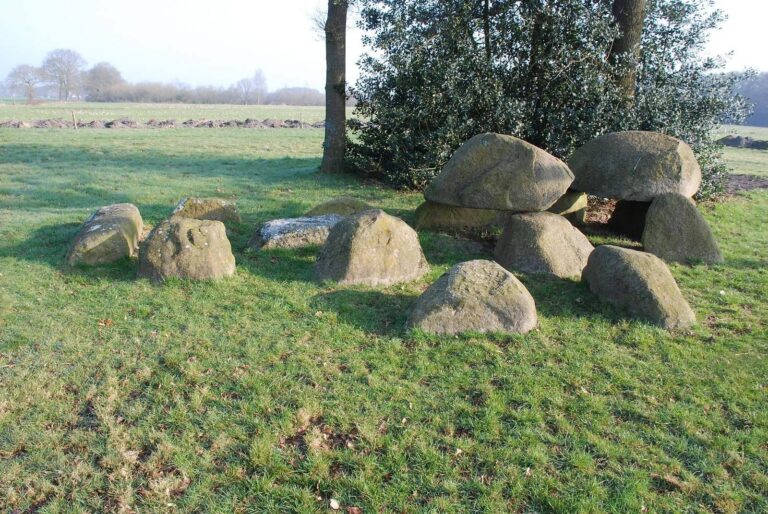
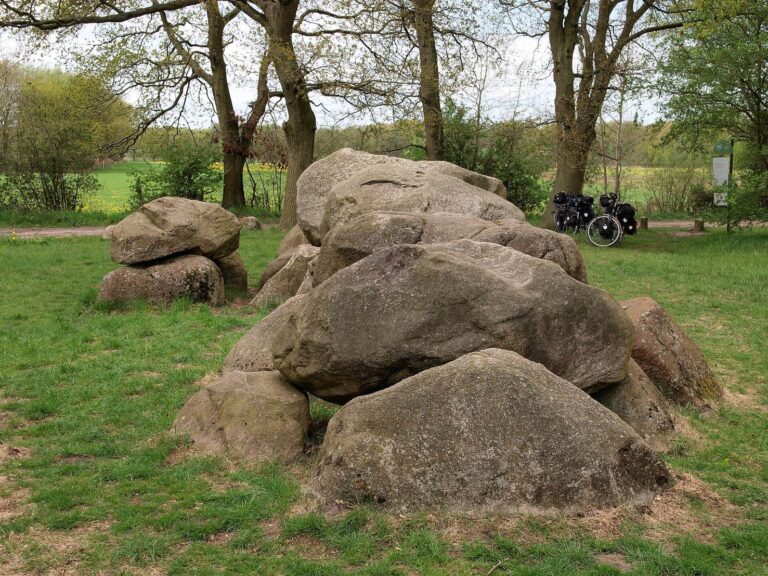
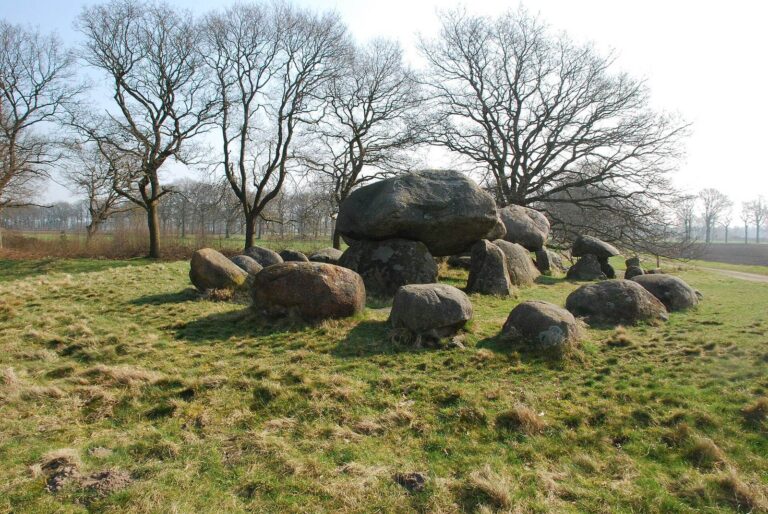
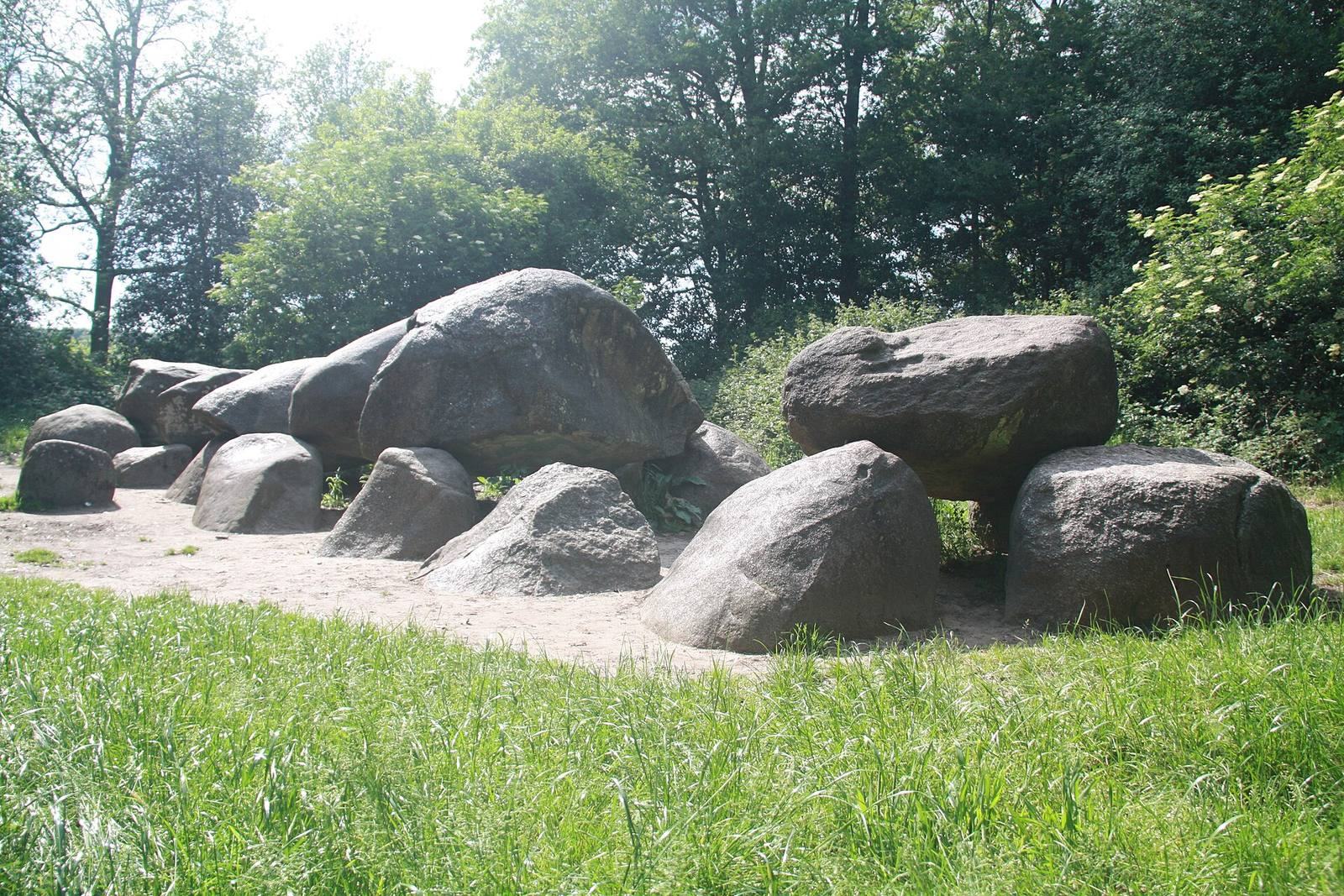
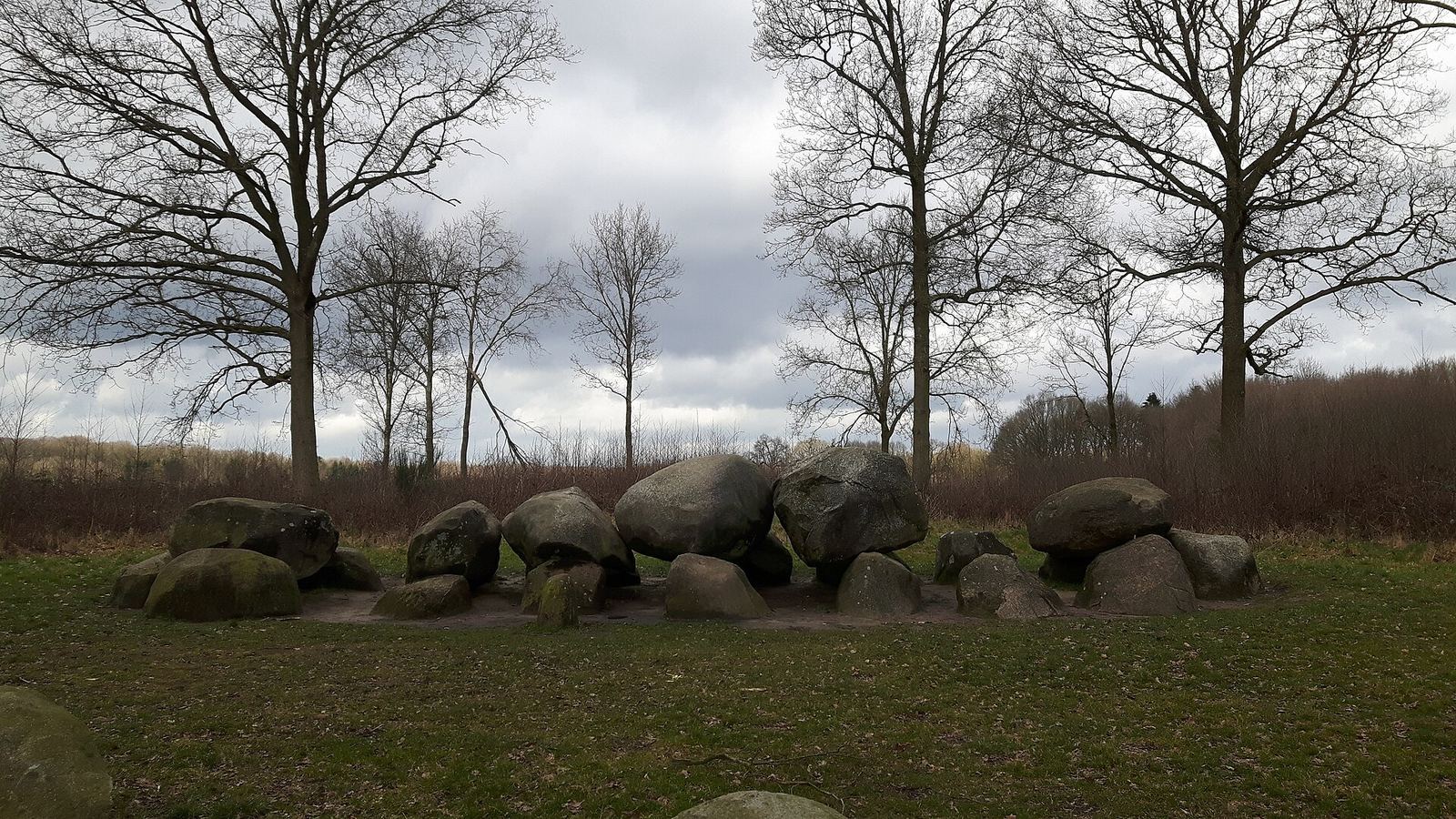
The burial chamber is a long structure aligned northeast to southwest. Its supporting stones and capstones define the chamber and its entrance on the southern long side.
Chamber and entrance
Burial chamber
The chamber measures 14.5 metres long and about 4.8 metres wide. Seven pairs of supporting stones line its long sides, with an end stone at each short end. Six capstones survive, three of them lying within the chamber.
Entrance
The entrance lies between the third and fourth supporting stones from the west on the southern side. A surviving western passage stone stands at the entrance. One supporting stone has a large crack caused by a fire in spring 2011. Three capstones were daubed with blue paint in November 2008, physically affecting the stones.
Human remains and finds
Cremated bone
A small quantity of cremated bone from the tomb weighs 58.7 grams and represents one person. The person’s age at death and sex could not be determined.
Pottery and flint
In the 1930s, J. van der Muur collected pottery and flint objects just outside the tomb. The pottery comprises 41 sherds from 40 vessels. Repeated forms include shoulder cups, two-handled amphorae, bowls and deep bowls. Two sherds came from steep-sided cups, and one each from a jug and a shoulder vessel. The pottery covers stages 2–7 of the western Funnel Beaker sequence, with few pieces from stages 2 and 3 and most from stages 4 and 5. In 2007, Adrie Ufkes concluded that the pottery had probably been cleared from the burial chamber. Van der Muur’s collection was later transferred to the Hunebedcentrum in Borger. A flint arrowhead was found with the pottery. Additional pottery collected during van Giffen’s work is held at the Archaeology Institute of the University of Groningen and remains unassessed.