Karabel Relief: A Hittite Monument of Tarkasnawa
Site at a Glance
- Popularity
- Medium
- Country
- Turkey
- Primary era
- Bronze Age
- Eras represented
- Bronze Age
- Civilizations
- Hittite
- Site type
- Civic
- Remains
- Rock Art
On this page7 sections
History
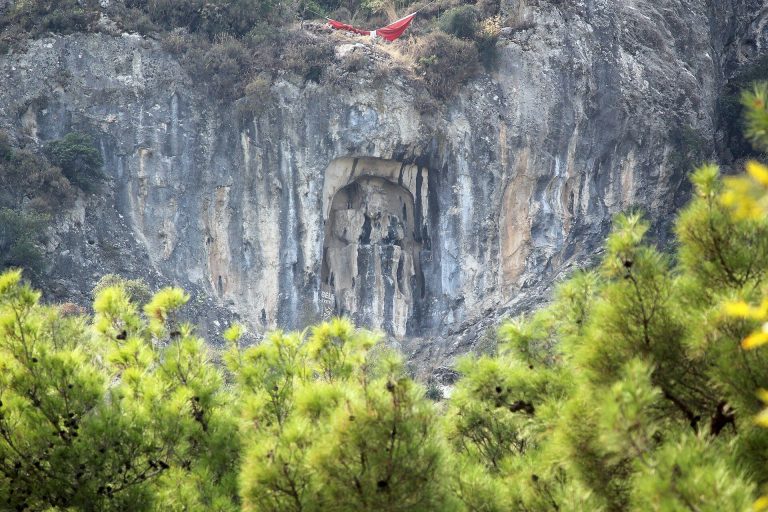
The Karabel relief is a Hittite rock monument in Turkey’s Karabel Pass, carved in the 13th century BC to portray Tarkasnawa, king of Mira. Mira was a vassal kingdom, subordinate to the Hittite Empire while retaining its own ruler. The relief has helped clarify the location of Mira and neighboring territories in western Anatolia.
An ancient misidentification
In Book II of his history, the Greek writer Herodotus identified a figure on the road between Sardis and Smyrna as Sesostris, an Egyptian pharaoh associated in Greek tradition with conquest. He described a man in Egyptian and Ethiopian armor, carrying a spear and bow, with an inscription across his chest claiming conquest. The identification reflects the later loss of knowledge of the Hittite civilization: observers encountering hieroglyphic writing could mistake it for Egyptian.
Recognition as a Hittite monument
French traveler and antiquarian Charles Texier visited the relief in 1839 and published documentation of it in 1862. Karl Richard Lepsius’s 1840 account treated it as Egyptian, based on a drawing that had reached him through Alexander von Humboldt. In 1843, Heinrich Kiepert disputed that interpretation by comparing the monument with the reliefs at Yazılıkaya. After it was recognized as Hittite, it was also visited and described by Kurt Bittel, Helmuth Theodor Bossert, Hans Gustav Güterbock, Ekrem Akurgal, Heinrich Otten, and Annelies Kammenhuber.
In 1998, John David Hawkins read the inscription as naming Tarkasnawa as king of Mira, son of Alantallis, another king of Mira, and grandson of a king whose name is not preserved. Other evidence has been used to suggest that the grandfather was Kubantaruntija. Hawkins also attributed the silver Tarkondemos seal, an engraved object used to leave an identifying mark, and other seal impressions from Hattusa, the Hittite imperial capital, to Tarkasnawa.
The inscription has also helped locate Mira in relation to other western Anatolian territories. Hittite diplomatic letters, especially the Milawata letter, place the Seha River Land, a territory known from those records, between Mira and Wilusa. The evidence supports locating Mira south of the Seha River Land, possibly in the Gediz River area, and Wilusa to the north, in the Troad. It also supports identifying Wilusa with Ilion, another name for Troy.
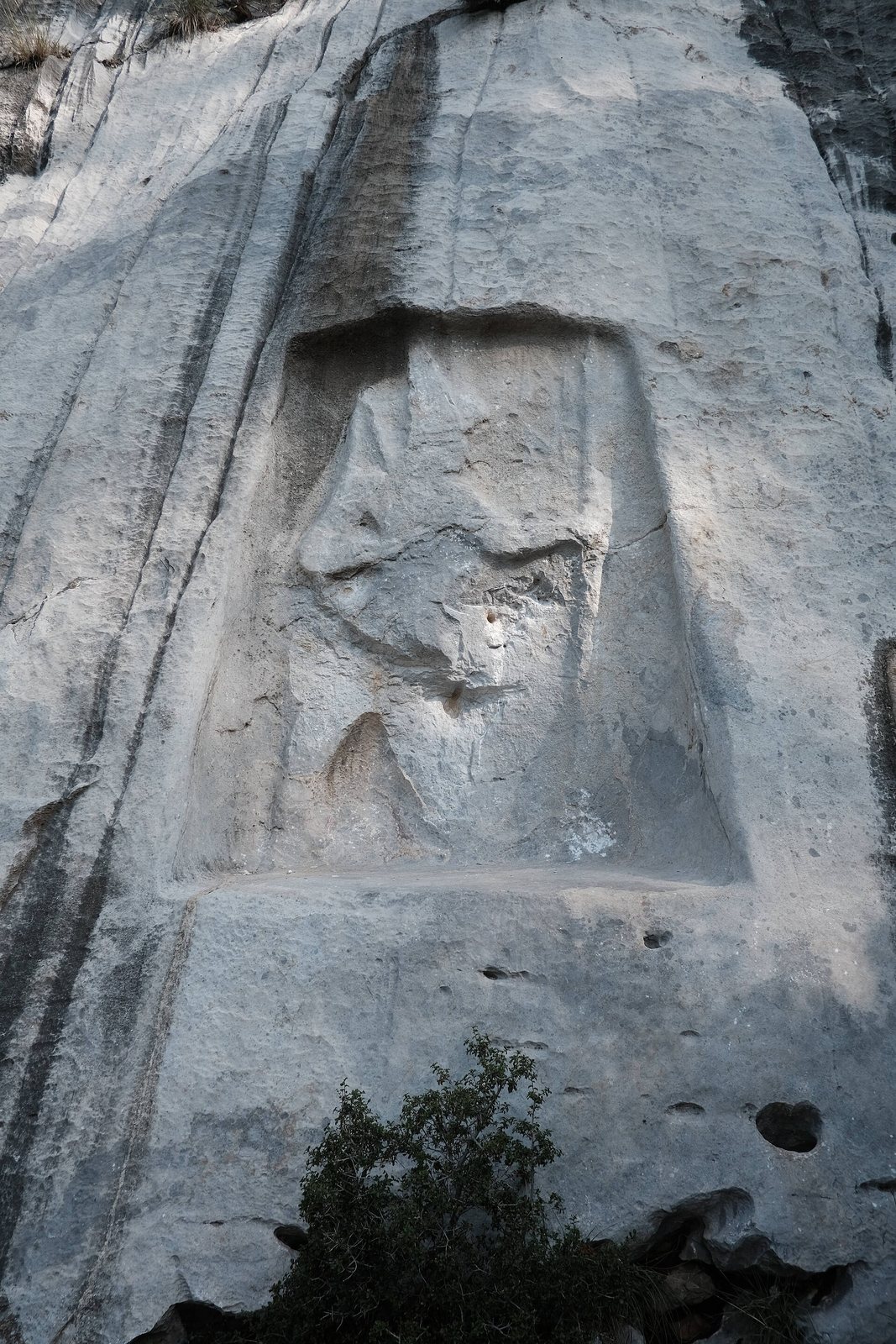
Between 1977 and 1982, road construction through the pass destroyed three of the monument’s four parts. In early 2019, unknown vandals attacked the surviving relief; they were thought to be treasure hunters.
Remains
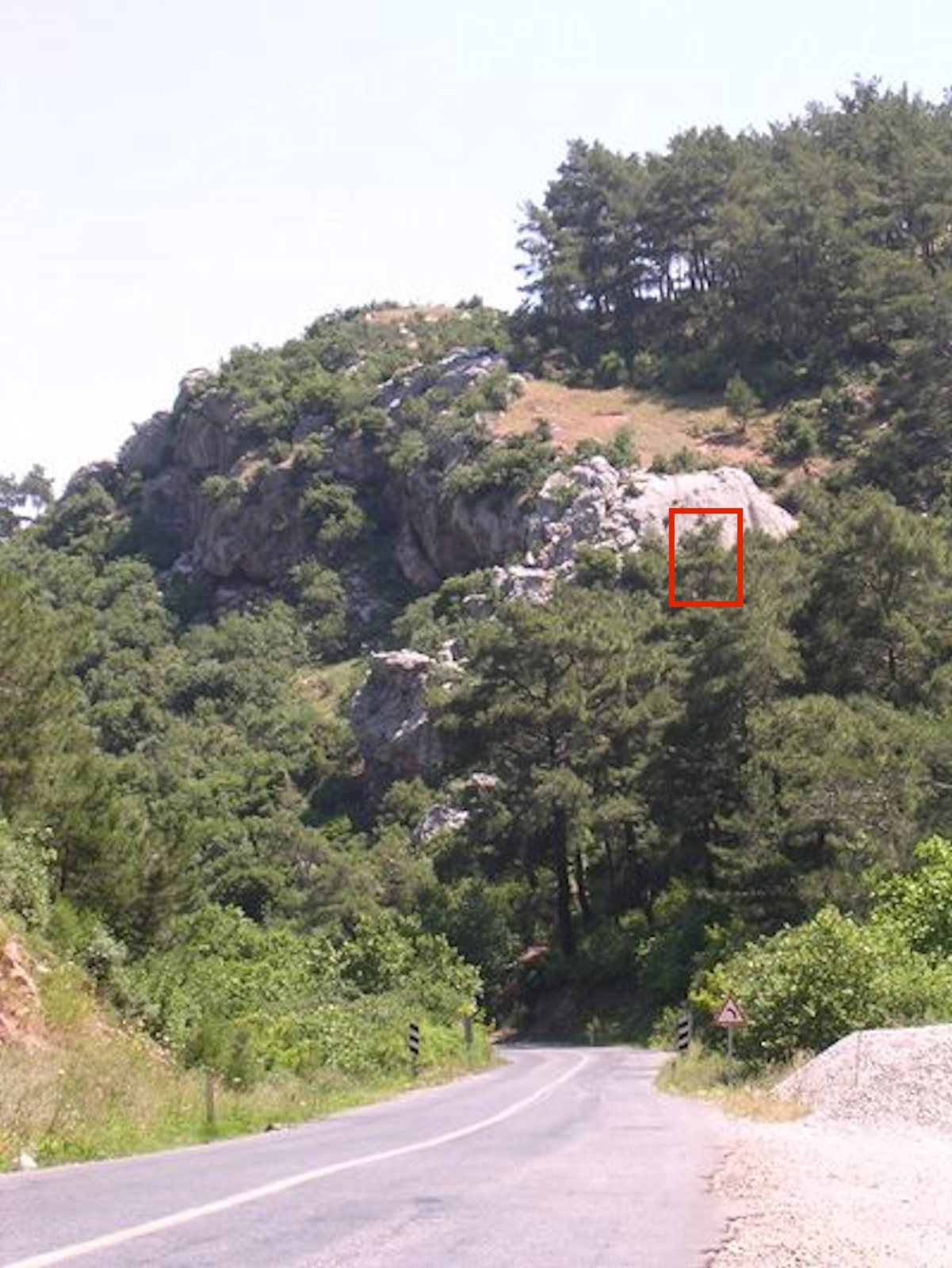
The monument stands in the Karabel Pass, which connects the Gediz Valley, known in antiquity as the Hermos, with the Küçük Menderes Valley, then called the Cayster. It lies about 20–25 km east of İzmir and 8 km southeast of Kemalpaşa. Its original arrangement combined figures carved into a cliff with inscriptions cut into separate boulders.
Components of the monument
Original arrangement
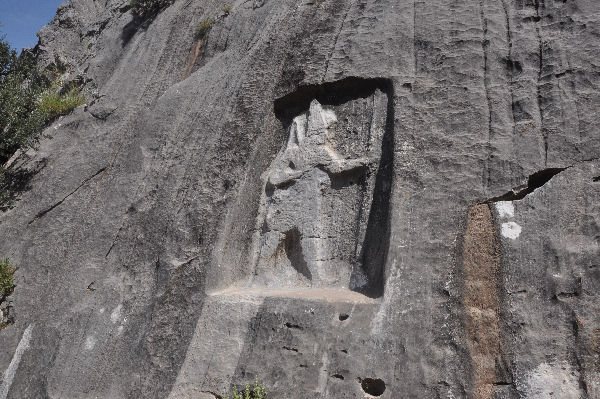
The monument comprised four parts. Two ruler figures, named Karabel A and Karabel B, were carved into a cliff, while inscriptions designated Karabel C1 and C2 were cut into boulders. Karabel A is the sole surviving component; the other three were destroyed during road construction between 1977 and 1982.
Karabel A
Karabel A measures 1.5 m wide and 2.5 m high. It shows an armed man walking to the right, holding a bow in his right hand and a spear in his left. Luwian hieroglyphs, a writing system used in ancient Anatolia, appear above his left arm. The lower portion was particularly damaged in the 2019 attack, when vandals drilled a hole into the relief to insert dynamite.