Santa Maria Egiziaca a Forcella, Naples: A Neapolitan Baroque Church
Site at a Glance
- Popularity
- Medium
- Country
- Italy
- Primary era
- Early Modern
- Eras represented
- Early Modern, Modern
- Civilizations
- Italian, Kingdom of Naples, Spanish
- Site type
- Religious
- Remains
- Church
On this page12 sections
History
Santa Maria Egiziaca a Forcella, Naples, is a Roman Catholic church in Italy, founded in 1342 under the patronage of Queen Sancha of Aragon. Its church and associated buildings were established as a refuge for women who had left prostitution or what was then regarded as a sinful worldly life. The church is a notably unified example of Neapolitan Baroque, an elaborate artistic style that developed in Europe from the late sixteenth century onward.
Foundation and convent
The dedication recalls Mary of Egypt, a Christian saint whose traditional story links repentance with a past in prostitution. After her husband’s death, Sancha entered a monastery of the Poor Clares, a Catholic order following the tradition of Clare of Assisi.
Over time, the convent’s work with women leaving prostitution was carried on mainly by Santa Maria Maddalena. Santa Maria Egiziaca instead became a small convent for aristocratic women. The convent was suppressed during the Napoleonic era, the period of Napoleon Bonaparte’s rule and influence in Europe in the late eighteenth and early nineteenth centuries.
Rebuilding and urban change
Gabriele d’Agnolo rebuilt or substantially remodelled the church in 1500. Dionisio Lazzari undertook another major rebuilding in 1684, giving it its Baroque appearance.
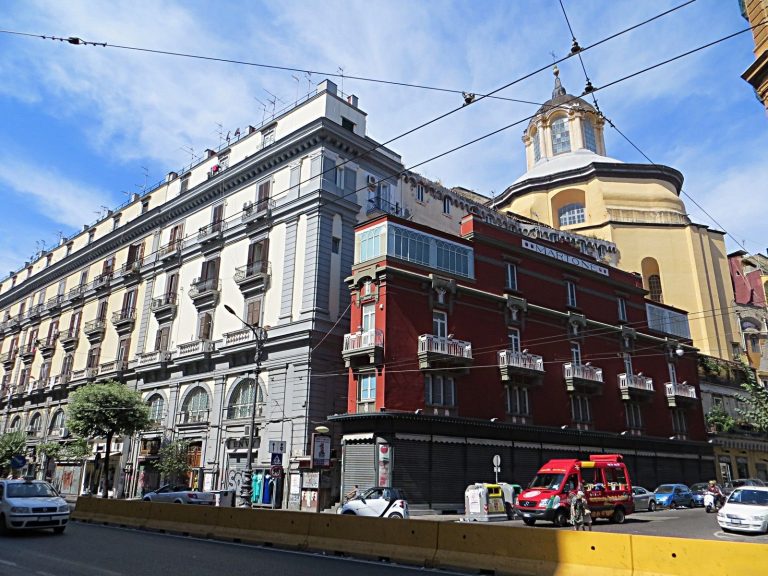
In the nineteenth century, Naples’s urban redevelopment brought Corso Umberto I, also known as the Rettifilo, past the church. Piazza dell’Olmo, named for an elm tree, was removed to make way for Via Cesare Falcone. The church gained an additional frontage and side entrance toward the new road while retaining its original entrance.
A hospital opened in the former convent during the first half of the twentieth century and later took the name of Cardinal Alessio Ascalesi.
Remains
Exterior and plan
Frontages and entrances
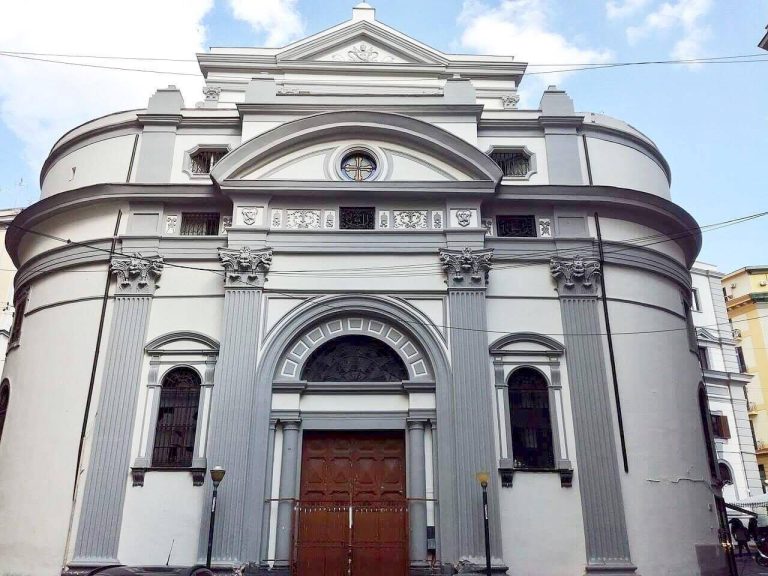
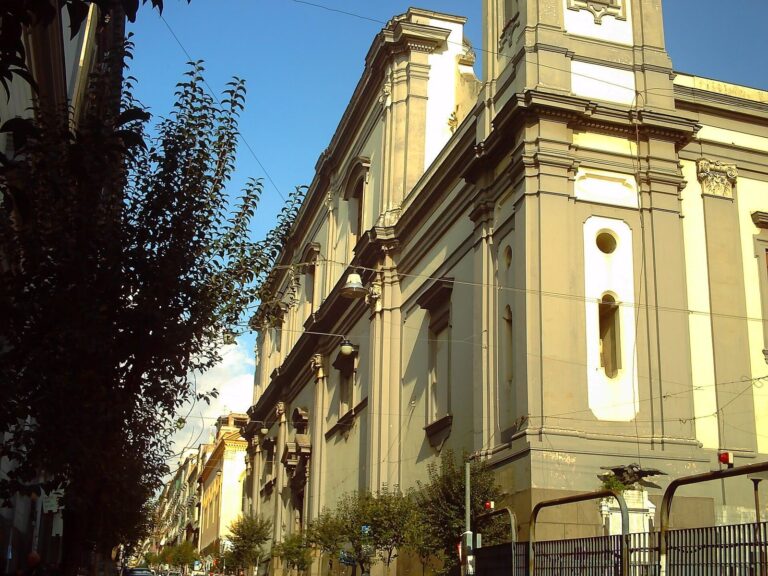
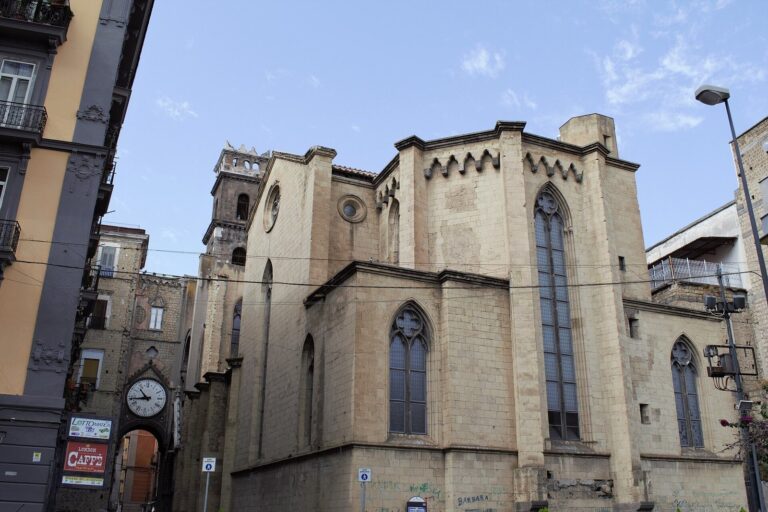
The church’s original frontage faced Piazza dell’Olmo. The nineteenth-century frontage toward Corso Umberto I has a side entrance, while the original entrance remains incorporated into a lateral facade that combines different stylistic elements.
Interior plan
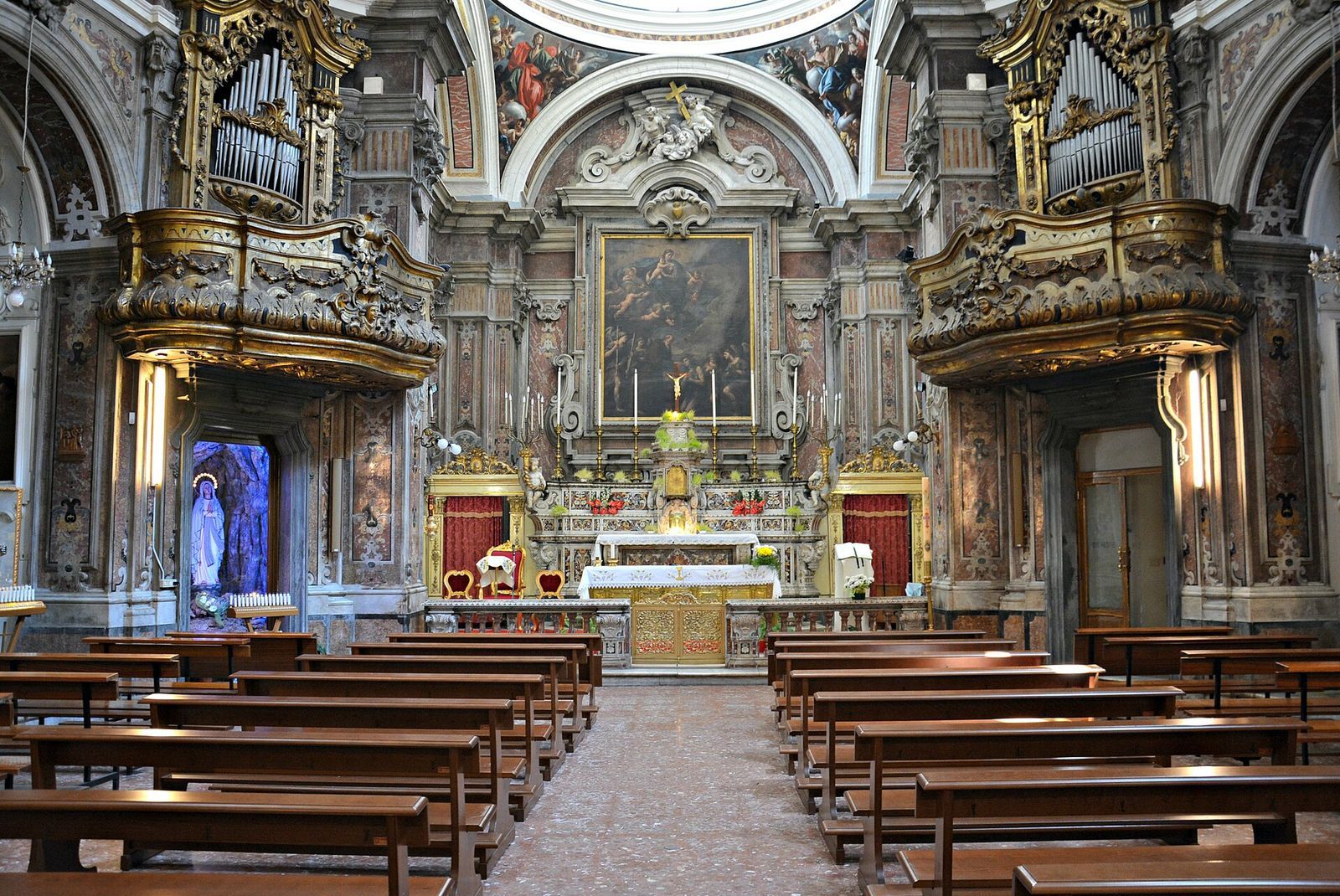
The interior has an elliptical plan and a vault shaped to resemble a dome. The apse, the recess at the end of the church, also has a domed covering. Two large side chapels flank the single nave. They match the presbytery, the area around the main altar, and the entrance vestibule in shape and size, with four square niches between these spaces.
Interior decoration and artworks
Marble decoration and organ galleries
Architect and designer Nicola Tagliacozzi Canale designed the interior’s marble decoration. Veined pink and reddish marble forms the base, enriched with multicoloured floral inlays and contrasted with white marble and stucco.
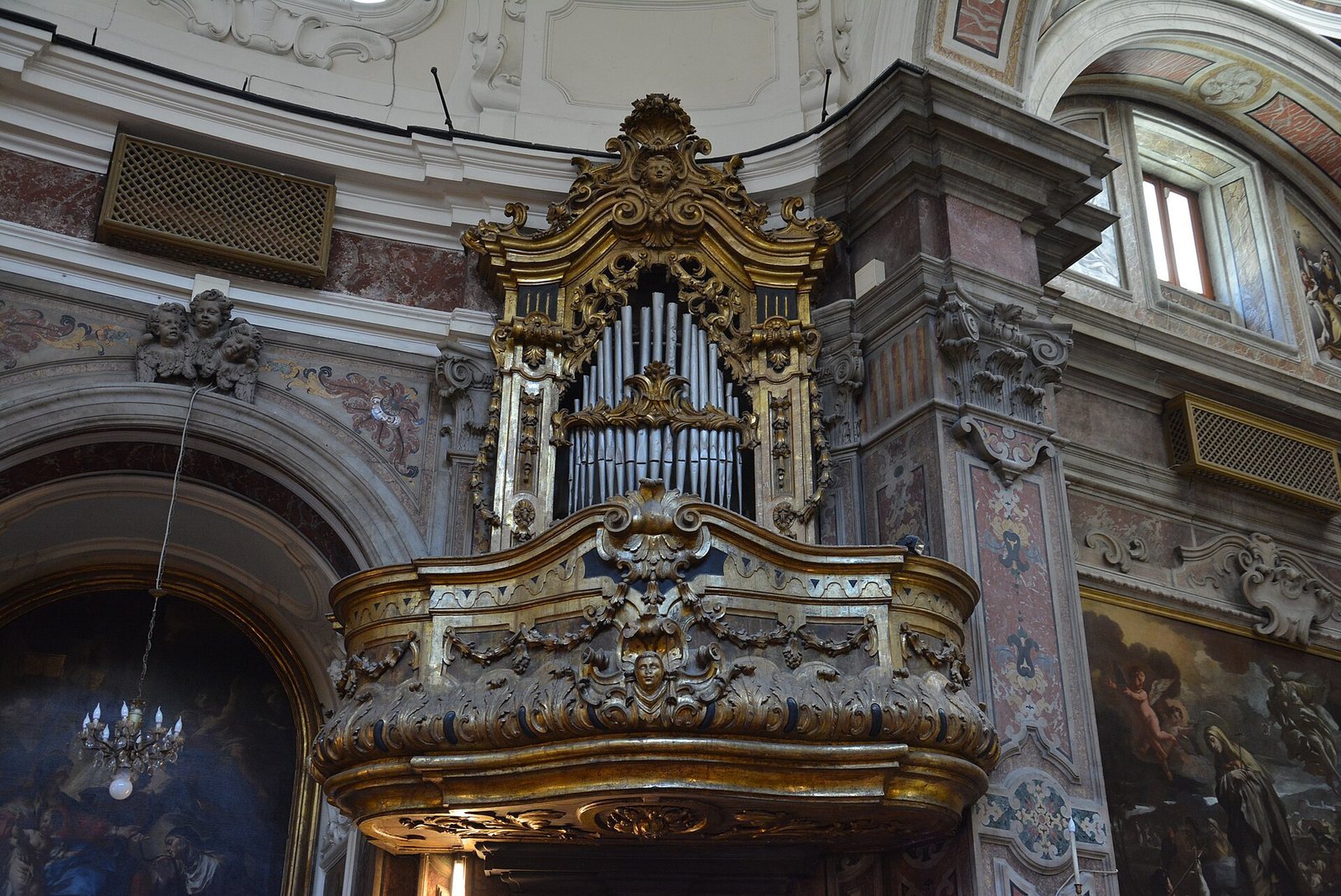
Four richly carved and gilded organ galleries are arranged in pairs near the entrance and beside the arch leading to the choir chapel in the apse. Organs occupy the galleries beside the arch, and the ornamental carving complements that of the small choir.
Main altar and apse paintings
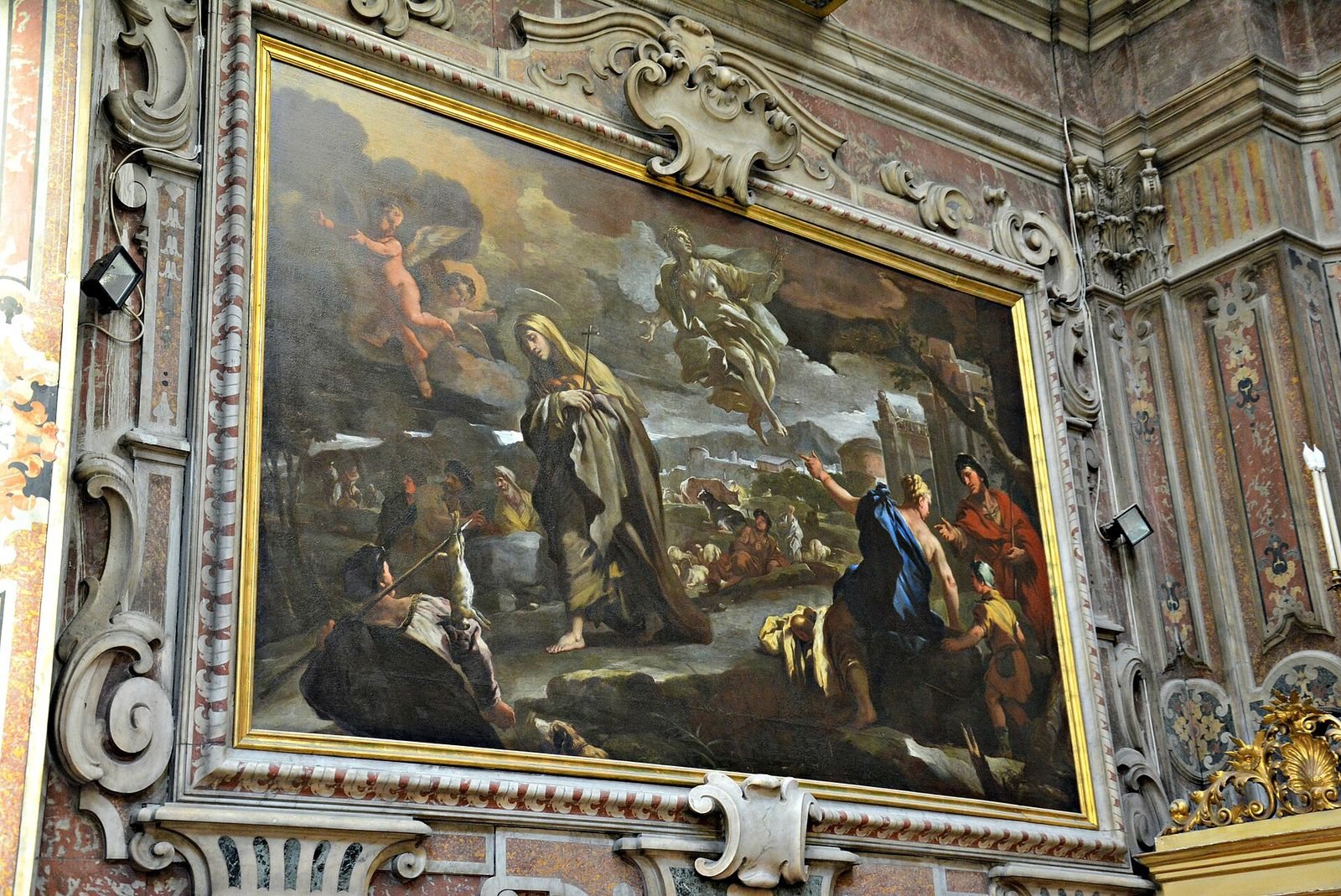
Gennaro Ragozzino made the main altar in 1713, decorating it with elaborate marble inlays of flowers and garlands. Its altarpiece is Andrea Vaccaro’s Communion of Saint Mary of Egypt, dated 1668. On the left and right walls of the apse are Luca Giordano’s The Flight of Saint Mary of Egypt and The Conversion of Saint Mary of Egypt, respectively.
Paintings by Paolo De Maio are placed between the presbytery windows and around the base and supporting piers of the dome.
Side chapels
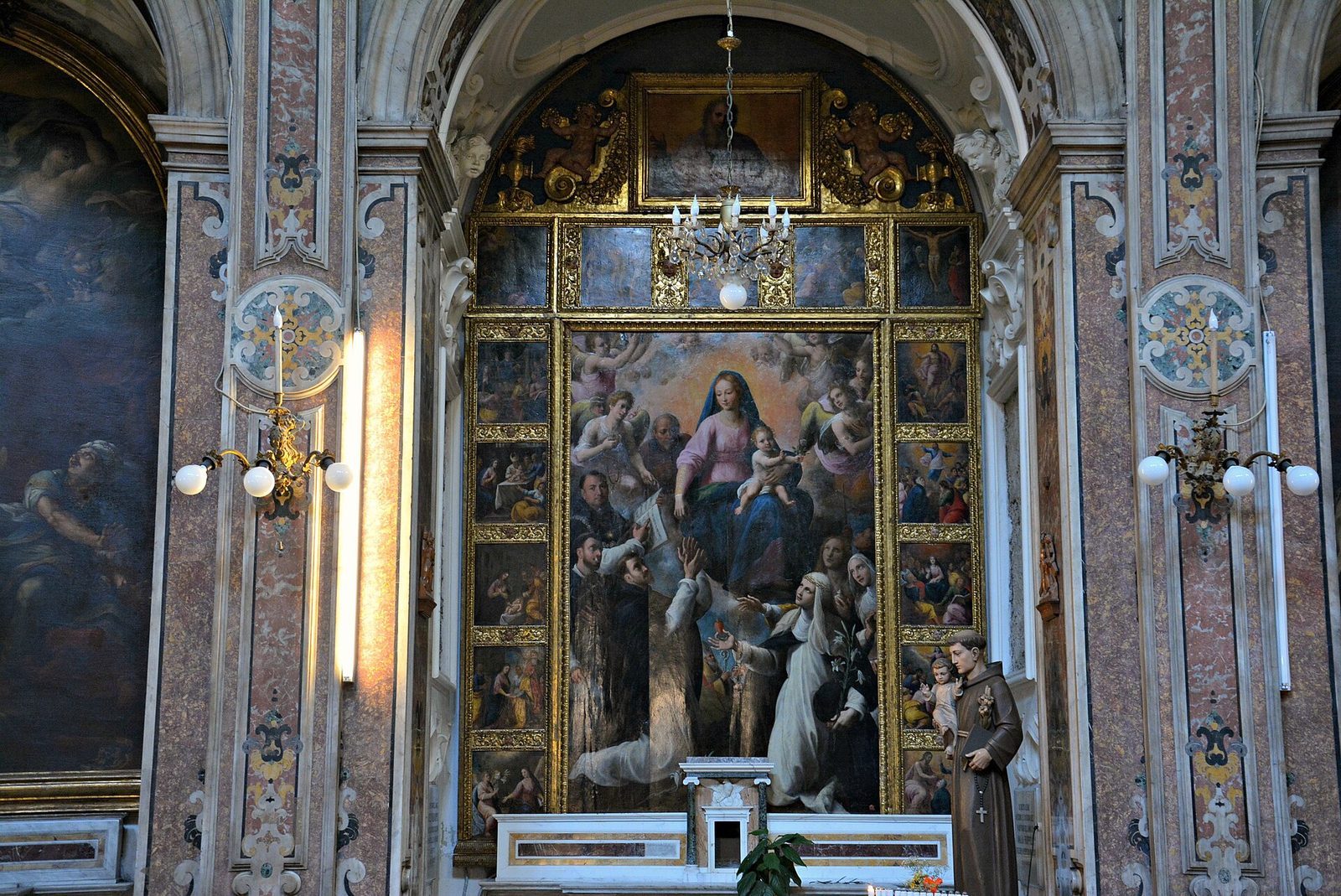
The side chapels have white-stucco decoration, including angel figures on their side walls. In the third chapel on the right are Francesco Solimena’s Madonna with Saints Angelo and Clare of Montefalco and Saints Cajetan and Francis. Another chapel on the right contains Fabrizio Santafede’s altarpiece of the Virgin of the Rosary with saints.
Other paintings
Other works include Solimena’s Madonna with Saints Augustine and Monica and Madonna of Carmel with Saints Bruno and Clare of Montefalco; Paolo De Matteis’s Young Virgin Mary and Trinity with the Virgin; and Giacomo Farelli’s Miracle of Saint Nicholas. A chapel also housed a painting of Saint Anne with the Child Virgin Mary attributed to Luca Giordano.
Further works include Ferrante Amendola’s Immaculate Conception and Paolo De Matteis’s Almsgiving of Saint Thomas of Villanova, which was stolen in the 1990s.