Ancient City of Aleppo: Syria’s Historic Walled Centre
Site at a Glance
- Rating
- 4.6
- Popularity
- Medium
- Country
- Syria
- Primary era
- Medieval
- Eras represented
- Bronze Age, Classical, Medieval, Early Modern
- Civilizations
- Mamluk, Ottoman, Seleucid, Seljuk
- Site type
- City
On this page21 sections
History
The Ancient City of Aleppo is the historic walled centre of Aleppo, Syria, developed over millennia through successive ancient, medieval, and Ottoman periods. It stands on the left bank of the Queiq River, along routes linking Mesopotamia and China to the east, Europe to the west, and the Fertile Crescent and Egypt to the south. Its walls and surrounding quarters grew amid invasions, political change, and commercial expansion, with some neighbourhoods becoming largely self-contained and organized partly along religious and ethnic lines.
Ancient settlement and Yamhad
Aleppo’s earliest identification remains uncertain. It may have been the city-state of Armi, associated with Ebla in the third millennium BC, although Armi has also been linked to Tell Bazi. In the 23rd century BC, Naram-Sin of Akkad, or possibly his grandfather Sargon, destroyed Ebla and Arman.
During the 18th and 17th centuries BC, Aleppo became the centre of Yamhad, an Amorite kingdom that ruled much of northern Syria through subordinate centres. Its kings included Sumu-Epuh and Yarim-Lim I, and its dependants included Ebla, Alalakh, Ugarit, and Emar. Yamhad also competed with Qatna. The Hittite king Hattusili I attacked the kingdom around 1620 BC, and Mursilis I destroyed it in the 16th century BC.
Aleppo later regained regional influence as Hittite power weakened. Parshatatar of Mitanni conquered the city in the 15th century BC, making it a frontier in struggles involving Mitanni, the Hittites, and Egypt. In the 14th century BC, the Hittite king Suppiluliumas I defeated Mitanni and took Aleppo. The city also served as a centre for worship of the Storm-God, a deity associated with rain, atmospheric power, and fertility.
After the Hittite kingdom collapsed in the 12th century BC, Aleppo belonged successively to Palistin and Bit Agusi, kingdoms in the region. Assyria conquered it in the 9th century BC; later rulers included the Neo-Assyrians, Neo-Babylonians, and Achaemenid Persians.
Hellenistic and Roman Beroea
Alexander the Great took Aleppo in 333 BC. Between 301 and 286 BC, Seleucus I Nicator established a Greek settlement and named it Beroea. The city remained under Seleucid rule for nearly three centuries. In 64 BC, Pompey took control of the Seleucid possessions, and Beroea became part of the Roman province of Syria.
Beroea was a Greek-speaking city whose ruling class remained in place under Roman rule. It probably had some local autonomy through an assembly of free Greek citizens. Roman government brought northern Syria more than three centuries of relative stability. The city is also mentioned in 2 Maccabees 13:4.
Late antiquity and the Hamdanid emirate
In AD 540, the Sassanid king Khosrow I pillaged and burned Aleppo. Sassanid forces invaded Syria again briefly in the early 7th century, but Arab Muslim forces led by Khalid ibn al-Walid captured the city in AD 637. Aleppo subsequently passed under a succession of caliphates and regional dynasties, including the Umayyads, Abbasids, Tulunids, Ikhshidids, and Fatimids.
In AD 944, the Hamdanid prince Sayf al-Daula made Aleppo the seat of an independent emirate. The city then experienced a period of major prosperity. Later powers included the Mirdasids, Uqaylids, Seljuqs, Artuqids, Zengids, and Ayyubids, followed by Mongol, Mamluk, Timurid, and Ottoman rule. The Mamluks governed Egypt and Syria from the 13th to the early 16th century.
On 9 August 1138, a destructive earthquake struck Aleppo and its surroundings. Estimates of the death toll reach about 230,000, although figures for the population at the time, and consequently the scale of the losses, are highly uncertain.
Expansion of the medieval and early-modern city
Timur invaded and destroyed Aleppo in 1400. Many Christians then moved beyond the walls and established a settlement in the northwestern suburbs, the beginnings of the Jdeydeh quarter around 1420. Some residents worked as brokers between foreign merchants and local traders. Additional quarters developed outside the walls during the 15th and 16th centuries, while the city’s commercial and religious life continued to grow.
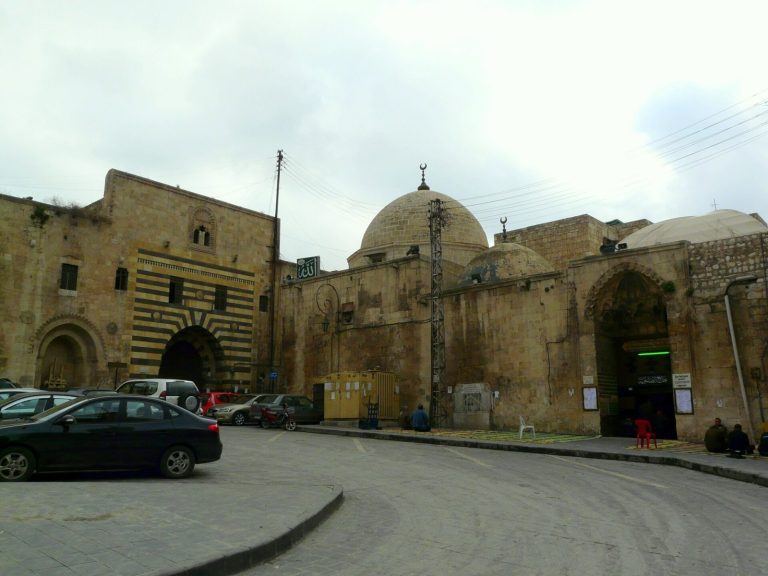
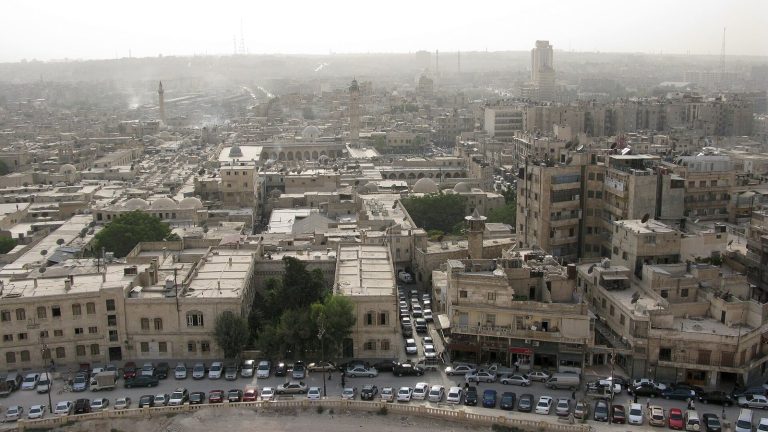
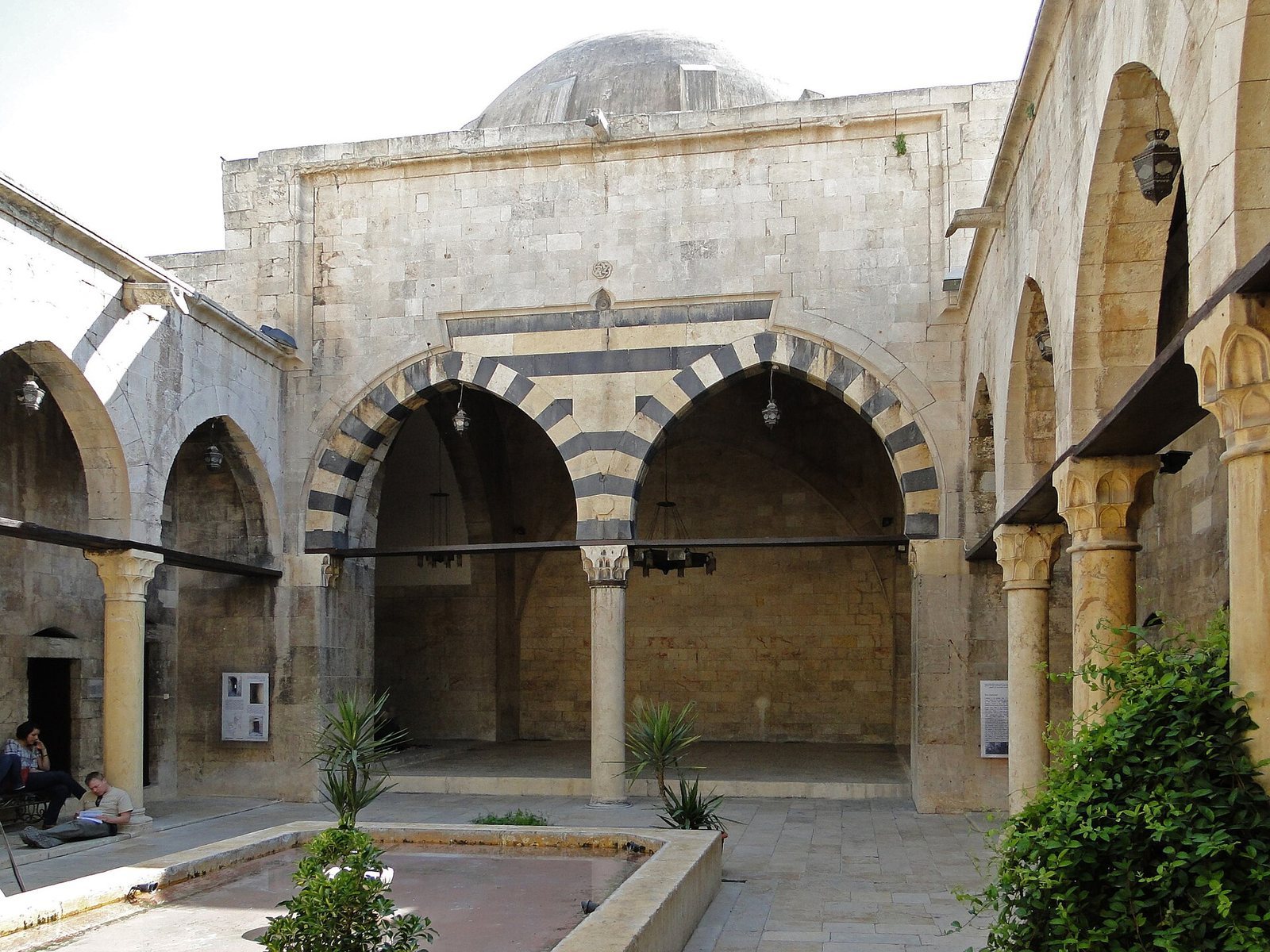
Successive Roman, Byzantine, Seljuq, Mamluk, and Ottoman periods shaped the historic centre. Its markets, caravanserais, bathhouses, schools, mosques, churches, and mansions reflect the development of commerce and religious life in the medieval and early-modern city. The centre and surrounding quarters cover approximately 350 hectares and historically housed more than 120,000 people. Before the Syrian Civil War, many districts retained much of the urban fabric built between the 11th and 16th centuries.
Modern change, preservation, and conflict
After the Second World War, traffic planning altered the historic city. In 1954, French architect André Gutton proposed broad roads. From 1954 to 1983, buildings were demolished for modern apartment blocks, particularly around Bab al-Faraj and Bab al-Jinan. The plan was abandoned in 1979 and replaced by a conservation-oriented approach developed by Swiss urban designer Stefano Bianca. Local preservation work, including that of Adli Qudsi, helped secure UNESCO World Heritage inscription in 1986. The designated area covers 364 hectares, and the site was on the List of World Heritage in Danger from 2013 to 2020.
During the Syrian conflict, shelling, street fighting, underground explosions, military use, illegal excavation, construction violations, quarrying, and deliberate destruction damaged the historic centre. About 30 percent of the Ancient City was destroyed, including substantial sections of Al-Madina Souq and other medieval buildings. The Khusruwiyah Mosque, Khan al-Shouneh, and Carlton Citadel Hotel were destroyed during the Battle of Aleppo. Historic buildings including the former justice palace and former municipal council building were used as fortified military positions before their destruction. Rehabilitation work later sought to repair damaged buildings and return historic properties to community use. The 2023 Kahramanmaras earthquakes damaged the western tower of the city wall.
Remains
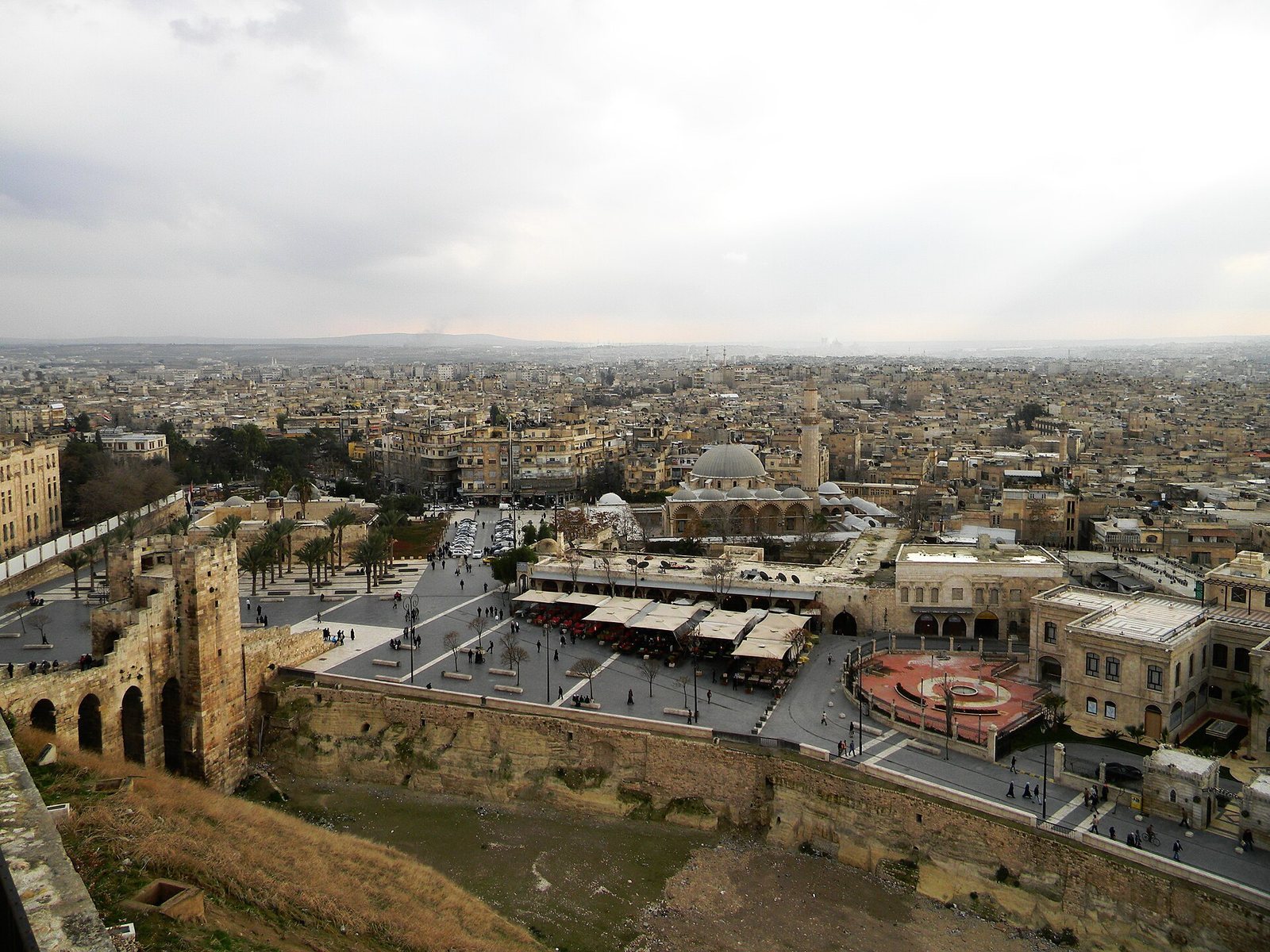
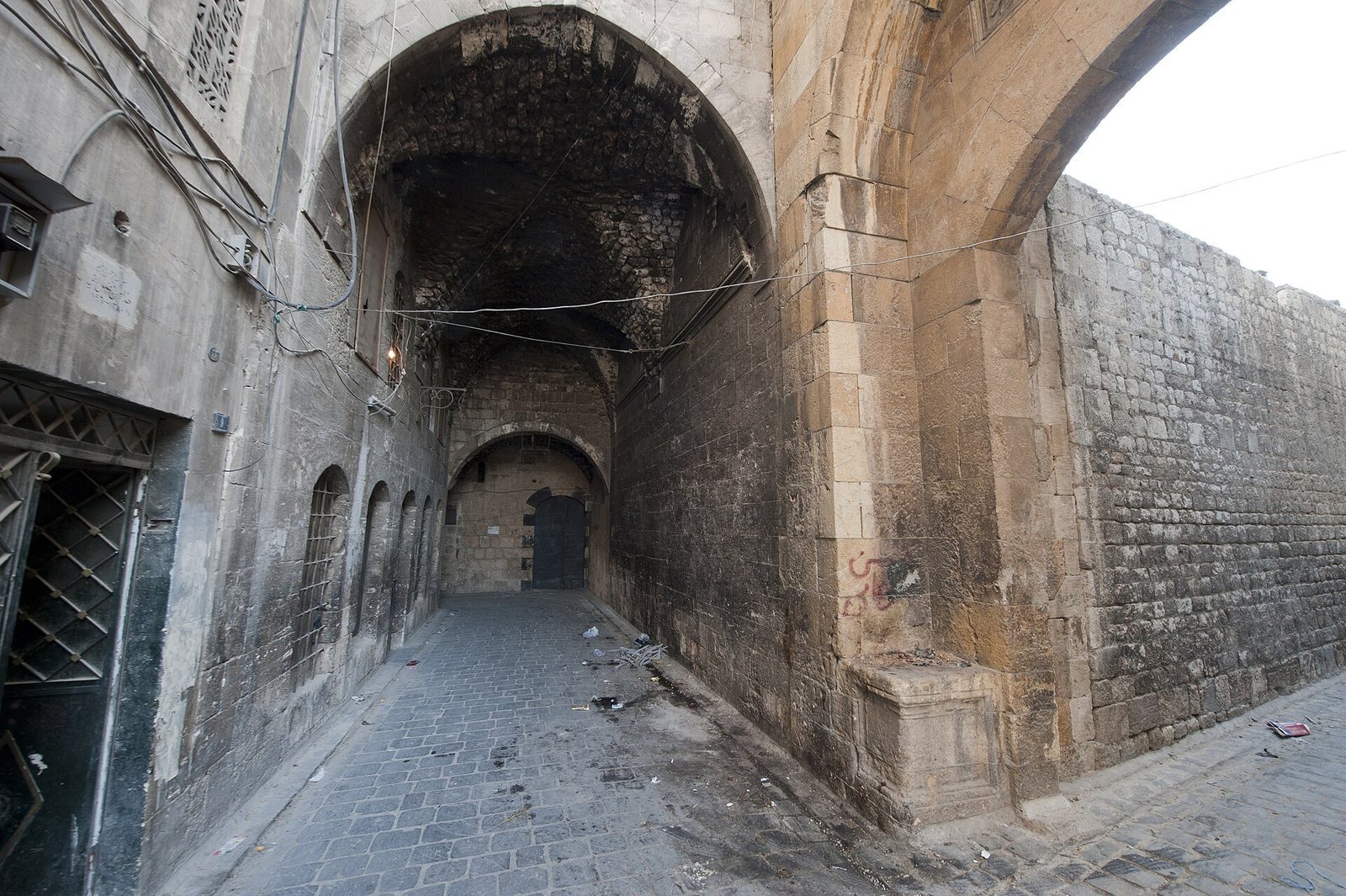
The historic centre is arranged around a central hill, with the citadel rising above the surrounding city. A ring of eight hills lies within roughly 10 kilometres of the centre. The walled core once extended for about 5 kilometres around the citadel and its quarters. Its surviving buildings combine large houses, narrow lanes, covered markets, caravanserais, bathhouses, and religious structures from different periods.
Citadel and city wall
The Citadel
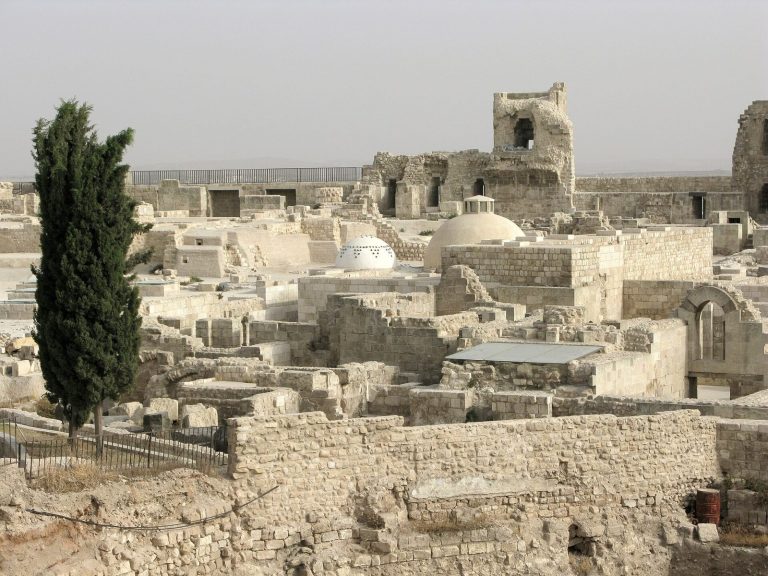
The Citadel stands on a huge mound, partly artificial, that rises about 50 metres above the city. Its earliest temple dates to the second millennium BC. Excavations on the mound also exposed a temple and 25 statues from the first millennium BC. Many of the structures visible today date to the 13th century. Earthquakes caused extensive damage, particularly the 1822 Aleppo earthquake.
The wall and gates
The city wall was last rebuilt under the Mamluks and was surrounded by a broad, deep ditch. Nine gates pierced it: Bab al-Hadid, Bab al-Ahmar, Bab al-Nairab, Bab al-Maqam, Bab Qinnasrin, Bab Antakeya, Bab Jnen, Bab al-Faraj, and Bab al-Nasr. Much of the wall has disappeared. Bab al-Ahmar, Bab al-Nairab, Bab Jnen, and Bab al-Faraj are completely ruined, while Bab al-Nasr is partly ruined.
Markets and merchant buildings
Al-Madina Souq and its trading complexes
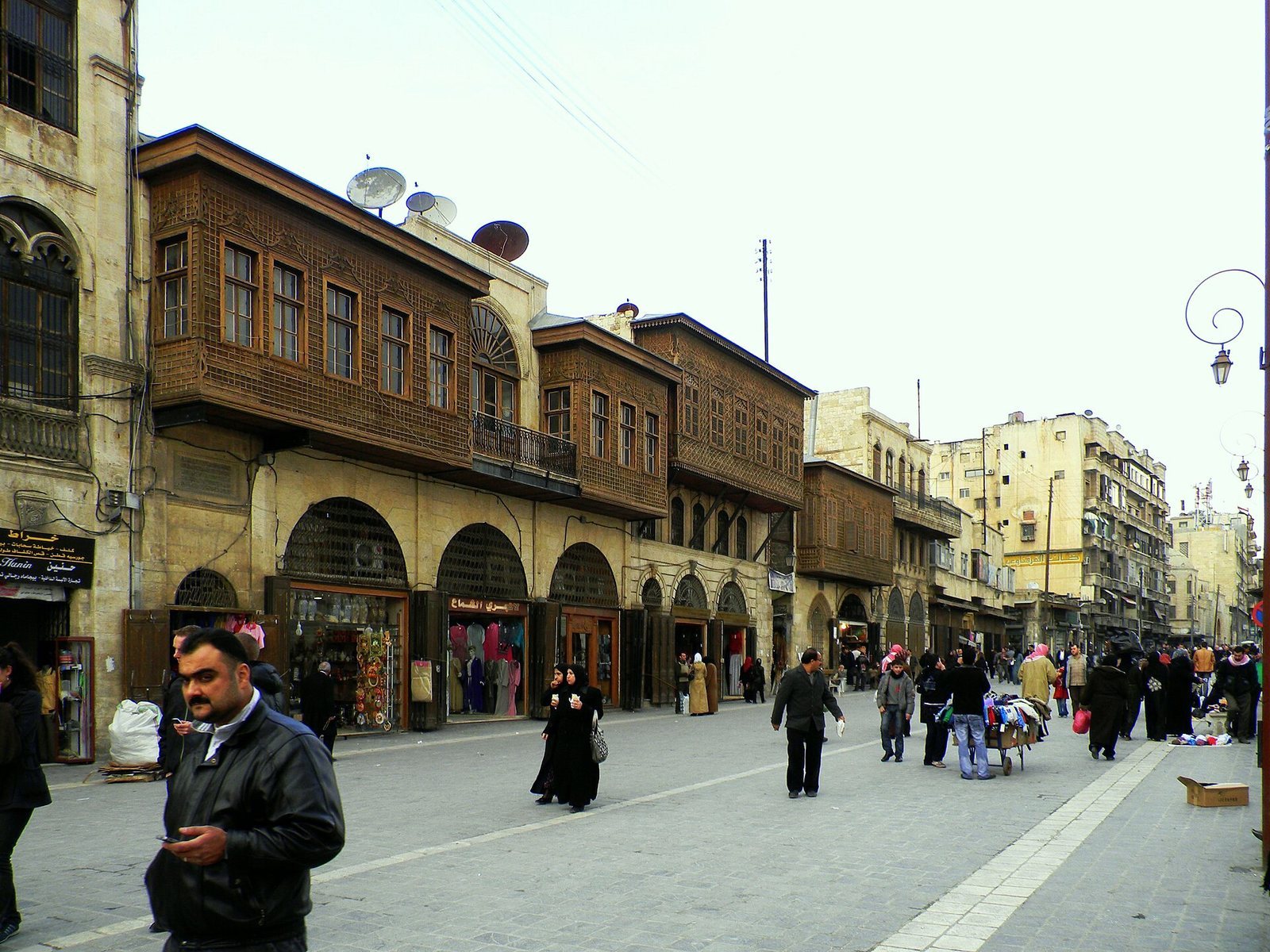
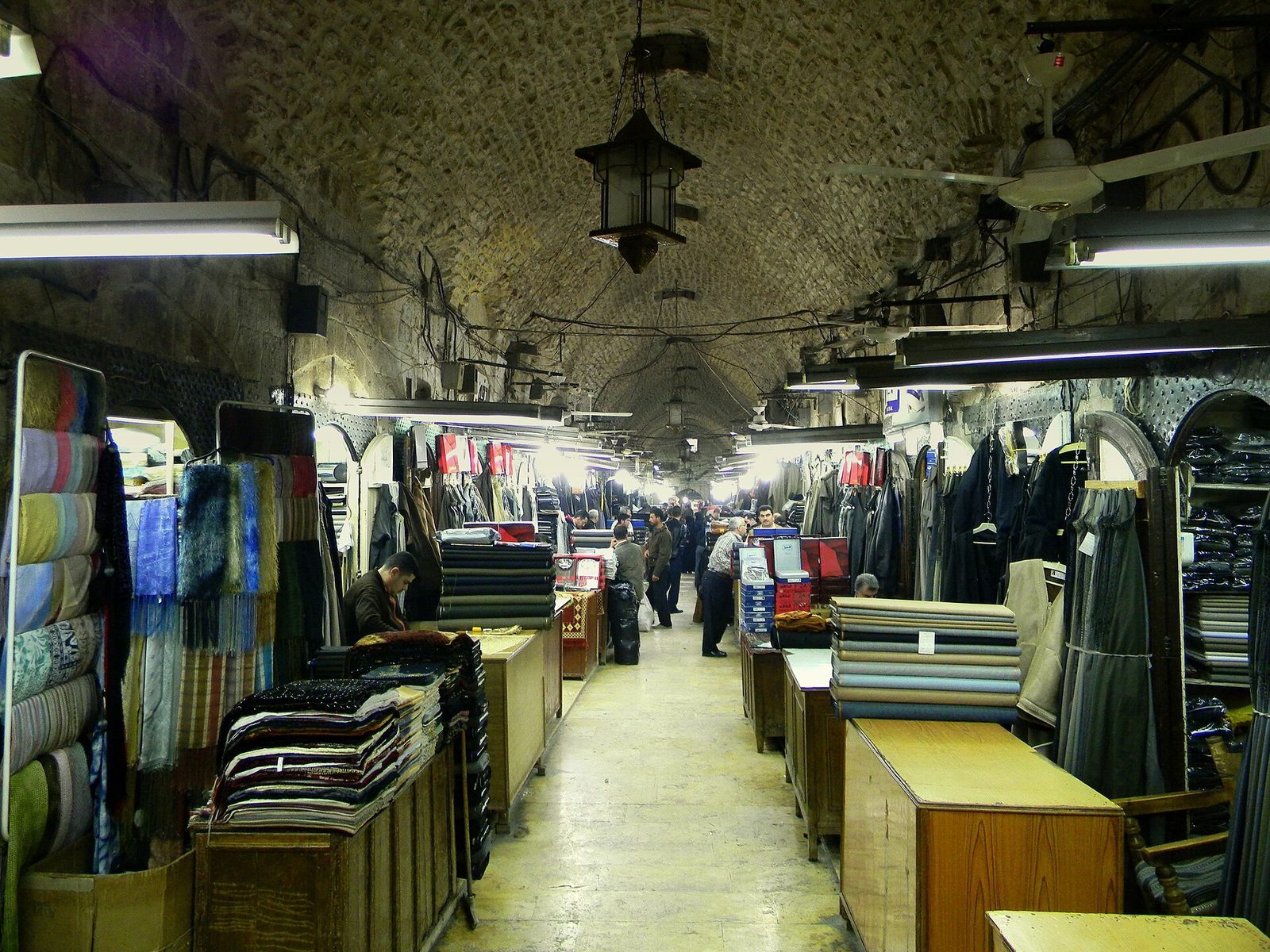
Al-Madina Souq is a covered commercial complex about 13 kilometres long. Its markets traded imported silk from Iran, spices and dyes from India, coffee from Damascus, as well as wool, agricultural goods, and soap. The souq also included khans, or caravanserais, where travelling merchants and their goods could be accommodated, and smaller market and workshop complexes.
Religious and civic buildings
The Great Mosque
The Great Mosque of Aleppo was founded around AD 715 by the Umayyad caliph Walid I and was probably completed under his successor, Sulayman. The present structure began to be built for Nur al-Din in 1158. Its 45-metre tower was erected in 1090–1092 under the Seljuq sultan Tutush I.
Schools and religious institutions
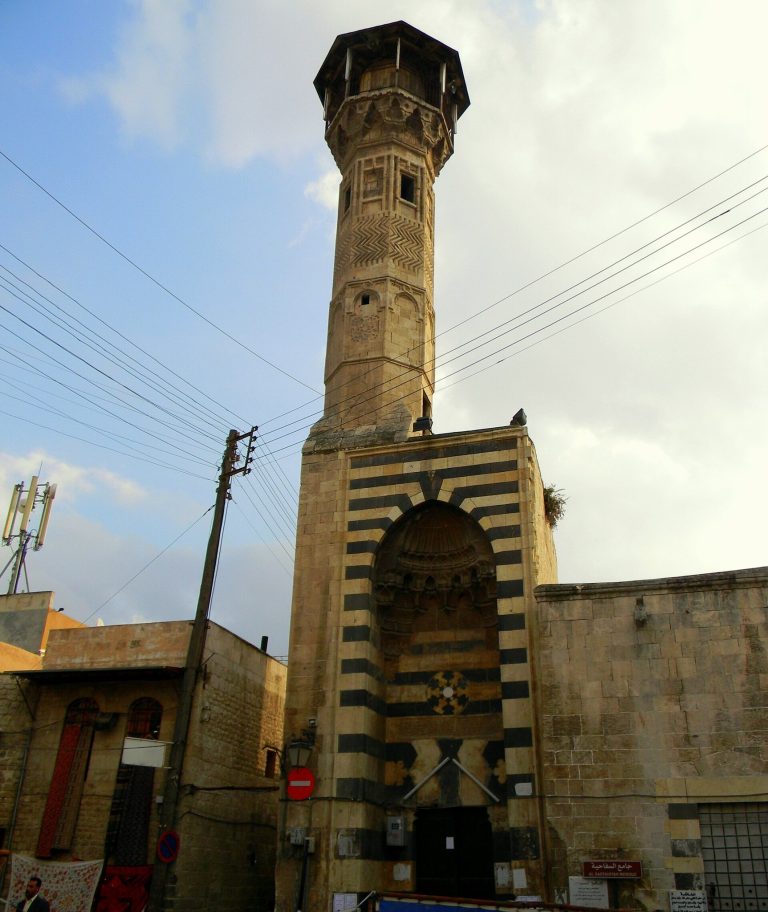
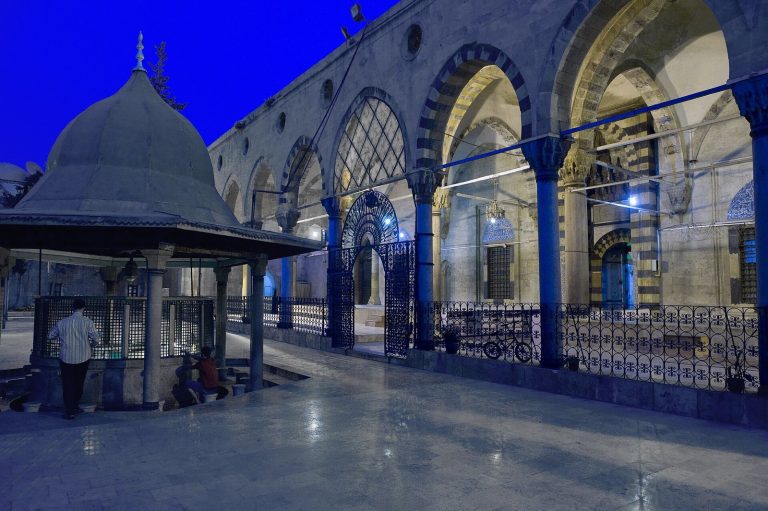
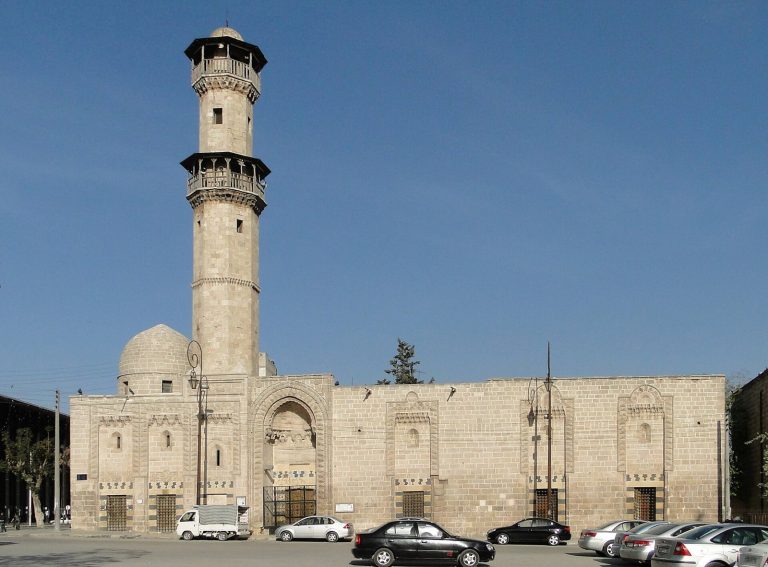
Aleppo’s madrasas, Islamic institutions for religious and sometimes wider scholarly education, date from the 12th through the 18th centuries. Examples include Al-Halawiyah, Al-Muqaddamiyah, Al-Shadbakhtiyah, Al-Zahiriyah, Al-Sultaniyah, Al-Firdaws, Al-Kamiliyah, Al-Sharafiyah, Al-Turantaiyah, Al-Ahmadiyah, and Al-Uthmaniyah. Other named institutions include Khanqah al-Farafira, a religious establishment for Sufi practice, and Bimaristan Arghun al-Kamili, a medieval hospital.
The city’s places of worship include medieval and Ottoman mosques, Armenian Apostolic, Armenian Catholic, Maronite, Greek Orthodox, Melkite Greek Catholic, and Syrian Catholic churches, as well as the Central Synagogue of Aleppo. Historic buildings also include Al-Shibani Church-School, Al-Matbakh al-Ajami, Dar Rajab Pasha, Junblatt Palace, Beit Marrash, the Bab al-Faraj Clock Tower, the Grand Serail of Aleppo, and the National Library of Aleppo.
Historic quarters and houses
Jdeydeh
Jdeydeh is characterized by narrow lanes, closely spaced buildings, historic Christian houses, churches, and commercial areas. Its older built section dates to the late 15th or early 16th century, with further construction during the 17th century. Notable houses include Beit Wakil, Beit Ghazaleh, Dar Zamaria, Beit Achiqbash, Dar Basile, and Beit Dallal. Beit Wakil, a 17th-century courtyard mansion, was severely damaged by shelling and bombing and later became an example of restoration intended to return a historic property to community use.
Al-Salibeh
Al-Salibeh has narrow lanes, closely joined buildings, finely decorated Aleppine houses, and important Orthodox and Armenian Catholic churches. Its development followed the destruction caused by Timur in the 15th century.
Bathhouses, wells, and underground features
Bathhouses
Aleppo had 177 bathhouses during the medieval period. Many were destroyed during the Mongol invasion, while about eighteen remained in operation in the modern period. Named examples include Hammam al-Sultan, Hammam al-Nahhasin, Hammam Bab al-Ahmar, Hammam al-Bayadah, Hammam Yalbugha, Hammam al-Jawhary, Hammam Azdemir, and Hammam Bahram Pasha.
Water and underground features
The old city includes cisterns, wells, water channels, underground spaces, former gardens, cemeteries, bridges, and street installations. Jabb Asad Allah contained a communal well, while Jubb al-Qubbeh retained a well beneath a dome. In al-Maghayer, rock-cut caves include the large Magharat al-Jdeyde. Tradition held that it connected with filled underground passages of the Citadel.