Oratory of Santissima Annunziata in Pietra Ligure: A Baroque Catholic Oratory
Site at a Glance
- Popularity
- Very Low
- Country
- Italy
- Primary era
- Early Modern
- Eras represented
- Medieval, Early Modern, Modern
- Civilizations
- Genoese, Italian
- Site type
- Religious
- Remains
- Chapel
On this page15 sections
History
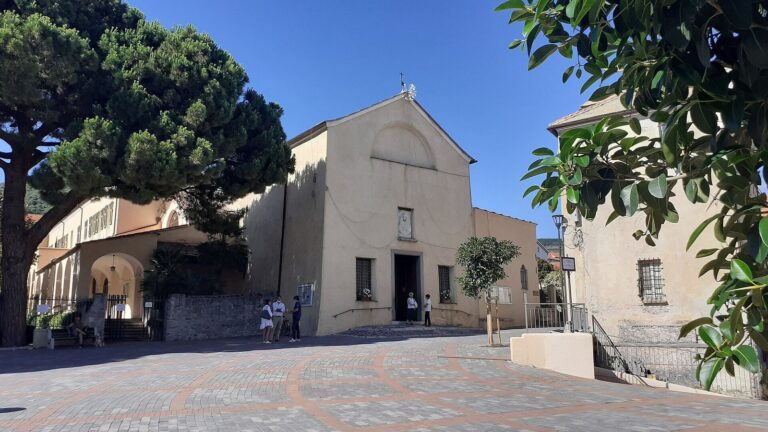
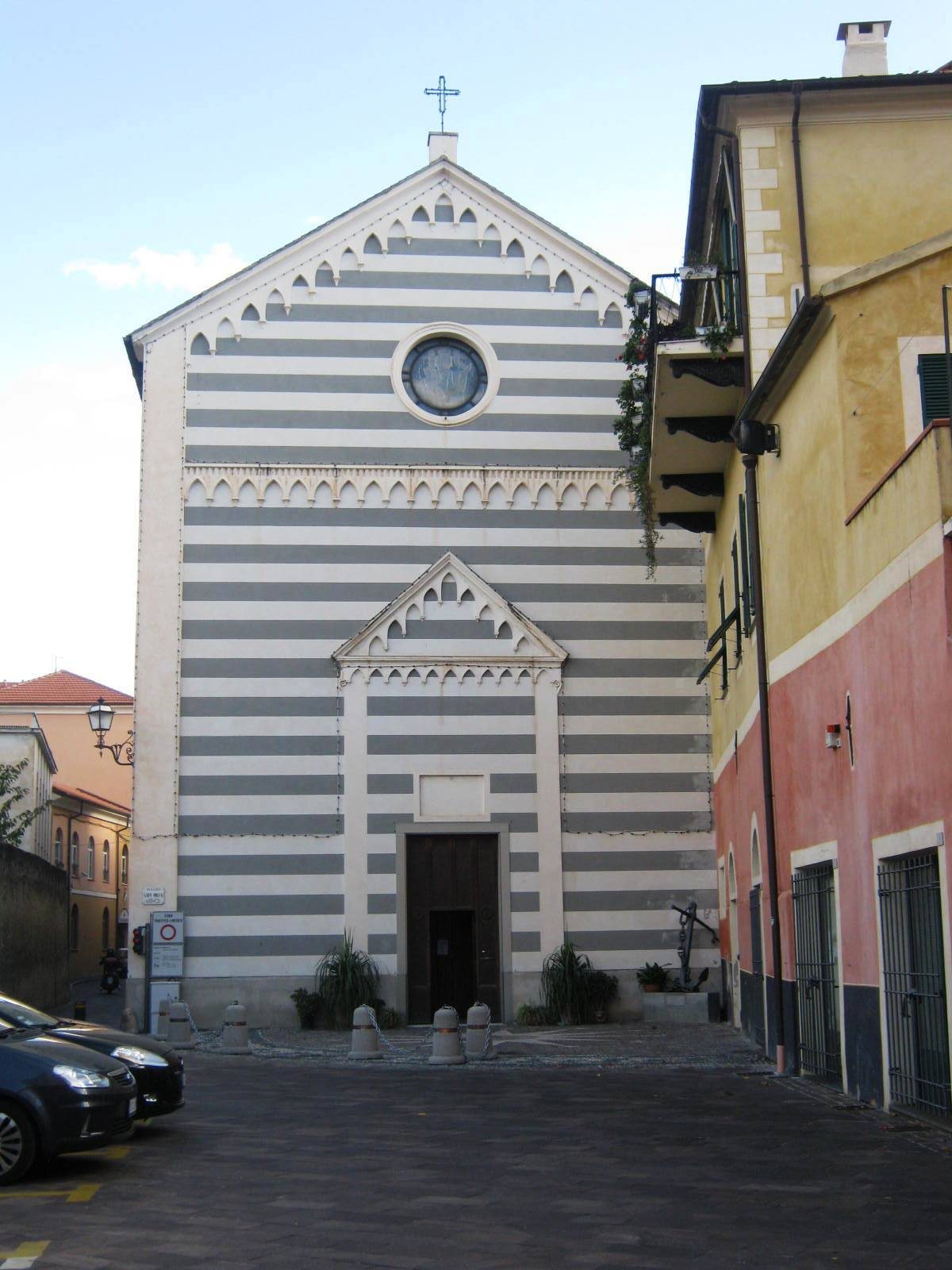
The Oratory of Santissima Annunziata in Pietra Ligure is a Roman Catholic chapel in Italy, dedicated to the Annunciation and belonging to the Diocese of Albenga-Imperia. Its present church is Baroque, an artistic style prominent in the seventeenth and eighteenth centuries, and developed from a Dominican foundation established on the town’s outskirts.
Dominican foundation
The Company of the Flagellants, also called the Disciplinants, had established itself outside Pietra Ligure’s walls by the late thirteenth century. On 6 June 1481, the group gave the Dominican friars an older oratory, described as a house of the Disciplinants. In the months that followed, the friars began building a convent, cloister, and church dedicated to the Annunciation. The church was consecrated in 1519, and four monks lived at the convent.
During Lent in 1550, the Dominican friar Michele Ghisleri of Bosco Marengo stayed there. He became pope in 1566 as Pius V and was canonized in 1713.
Expansion and the end of the convent
After a collapse, the church was enlarged between 1664 and 1683 into its present form. In the early eighteenth century, the Dominicans left their original convent near the bell tower for a new convent on what is now Via Garibaldi. The church continued in use until 1798, when laws of the Ligurian Republic suppressed the convents and ordered the religious to leave.
Confraternities and continued worship
Founded in Pietra in 1633, the Confraternity of Death and Prayer joined Rome’s Archconfraternity of Saint Mary of Prayer and Death that same year. A confraternity is a lay religious association organized around worship and charitable or mutual-aid activities. Its members could wear a black hooded cloak, earning the group the popular name Company of the Blacks. Their duties included burying poor people and shipwreck victims and assisting those condemned to death. The last execution associated with the confraternity was that of Antonio de Rubeis of Pornassio, beheaded in June 1709 in the olive groves at Chiappe.
After the church had served as a depot for building materials, it was granted to the Confraternity of Death and Prayer for use as an oratory in 1809. The confraternity brought its furnishings and devotions to Saint Anne and Saint Lucy there, while giving a painting of Saint Dominic to the old parish church. In the late nineteenth century, the local noblewoman Carlotta Bosio Regina restored the church’s interior and exterior; a musicians’ gallery and pipe organ were also installed.
Use of the oratory was granted to the Confraternity of Saint Catherine of Alexandria, known as the Reds, in 1979. Continuing devotional practices include processions, celebrations of the Rosary, a Catholic prayer focused on the lives of Jesus and Mary, and observances for Saint Catherine, traditionally venerated as an early Christian martyr. The Office of the Dead, a liturgy of prayers for the deceased, is sung in Latin to traditional melodies. Other customs include a Holy Thursday altar of repose, where the Eucharist is reserved after the Mass of the Lord’s Supper, and a seasonal Nativity scene. The earlier confraternity also took part in the Good Friday evening procession and led the Octave of the Dead, an eight-day period of observance.
Remains
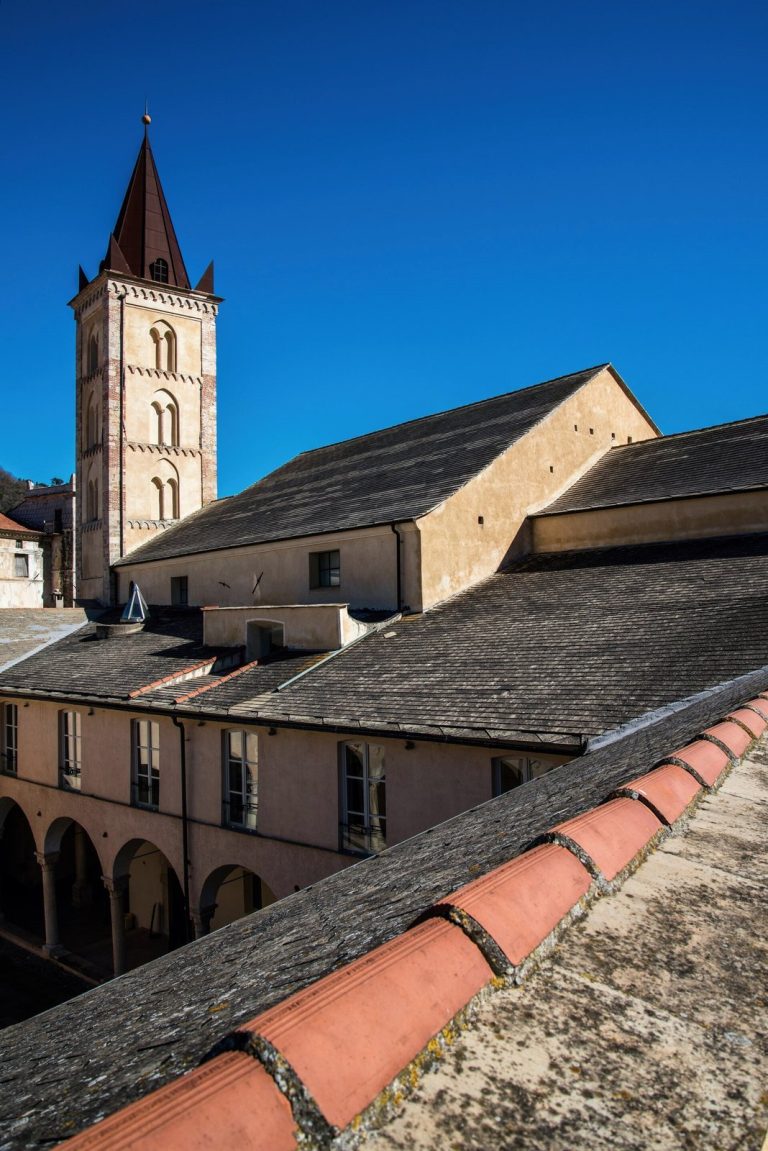
The church is arranged as a single nave, its main worship space, ending in an apse, a rounded space at the sanctuary end. The surviving complex brings together the Baroque church, a sacristy that began as an older oratory, and a Gothic bell tower. The tower is the sole surviving part of the earlier church.
Church and tower
Main church and sacristy
The church has one nave and an apse. The convent was built over the earlier oratory, which became the sacristy, a room for preparing worship and keeping liturgical objects. The church’s marble high altar dates to 1890.
Bell tower
The late-fifteenth-century bell tower is Gothic, a medieval European architectural style. It contains a bell dated 1529 and survives from the earlier church.
Altars and furnishings
Apse and high altar
A large image of the Annunciation, painted in 1593 by Benedetto Brandimarte of Lucca, stands in the apse above the marble high altar, made in 1890.
Side altars
Four side altars line the church. The seventeenth-century altar of the Madonna of the Rosary features inlays of differently colored marble. Opposite it is the altar of Saints Anne, Libera, and Liborius. Its canvas, donated by the noble Basadonne family in the eighteenth century, was transferred from the Oratory of Saint Lucy in 1809. The Saint Lucy altar holds an image attributed to Orazio De Ferrari, a painter from Genoa. The altar of Saint Pius V was built in 1723.
Organ and seasonal display
The church has a musicians’ gallery and a pipe organ made by William George Trice, an organ builder from Genoa. During the Christmas season, a large mechanical Nativity scene is set up in the nave.
Processional images
Saint Catherine and the Madonna of the Rosary
A processional statue of Saint Catherine of Alexandria was sculpted in 1858 by the Genoese artist Paolo Garaventa. A group representing the Madonna of the Rosary, attributed to Anton Maria Maragliano, is kept in a niche and carried in procession. It underwent a general restoration in 2010 and was later shown in Corte, Corsica, at an exhibition about Mediterranean confraternities.
Processional crucifixes
The oratory preserves several large processional crucifixes. The largest weighs 144 kg and bears an image copied from a statue by Anton Maria Maragliano. Commonly called u pria, it is described as one of the most imposing in Liguria. Another crucifix carries a dark-colored figure of Christ and weighs 117 kg. Two other crucifixes, weighing 87 kg and 62 kg, have relatively modern wooden images made by Luis Yepez, an Ecuadorian sculptor working in Genoa, to replace older images. The 62 kg crucifix also bears a dark-colored Christ.