Santa Maria degli Angeli a Pizzofalcone: A Minor Basilica in Naples
Site at a Glance
- Popularity
- Medium
- Country
- Italy
- Primary era
- Early Modern
- Eras represented
- Early Modern
- Civilizations
- Kingdom of Naples, Spanish
- Site type
- Religious
- Remains
- Basilica
On this page16 sections
History
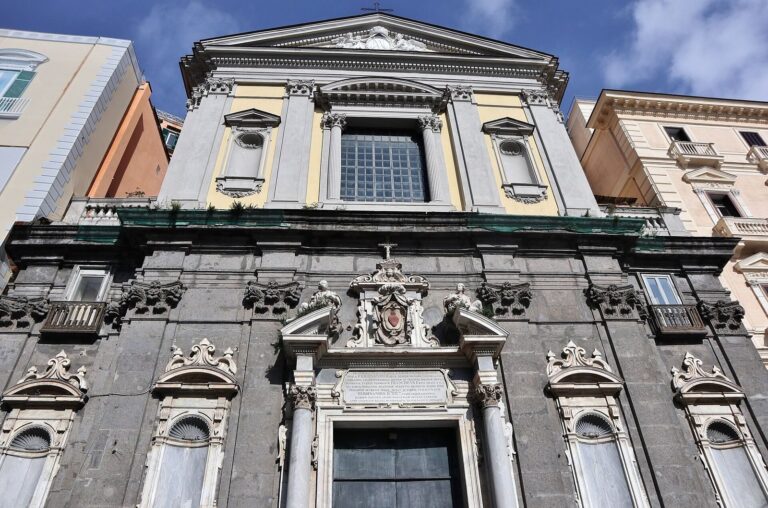
Santa Maria degli Angeli a Pizzofalcone is a Roman Catholic church on Pizzofalcone Hill in Naples, Italy. Founded in 1587 at the initiative of the noblewoman Costanza Doria del Carretto, it was given to the Theatine Fathers, a Catholic clerical order founded in sixteenth-century Italy during the period of Catholic reform. A complete rebuilding in 1610, following a design by Francesco Grimaldi, gave the church its present overall form. Grimaldi was an architect active in the development of Baroque architecture in Naples. The church belongs to the Archdiocese of Naples and holds the title of minor basilica, an honorific status granted to some Catholic churches.
The church, convent, and confraternity
The church was part of a larger complex that included a convent and the Archconfraternity of the Whites of the Nativity of Saint Mary at Pizzofalcone. Its lay and religious members had been active from 1610, providing charitable assistance and care for the dead in the Monte di Dio area and across Naples. From 1861, the state used the convent as a military tribunal.
The confraternity ended its work in the late twentieth century, after roughly four centuries. In 2013, the diocesan Curia, the administrative body assisting a bishop, dissolved it and transferred its premises and furnishings to the Parish of San Marco di Palazzo. The church itself served as an important social monument for about four centuries, a history reflected in its funerary use.
War damage and archaeological discoveries
Aerial bombing in 1943 destroyed some of the church’s painted decoration, including the Presentation in the Temple, and severely damaged the four chapels along the right nave.
During work for a new metro station, archaeological finds dating to sixteenth-century Naples were recovered in the area occupied by the church.
Remains
Plan and exterior
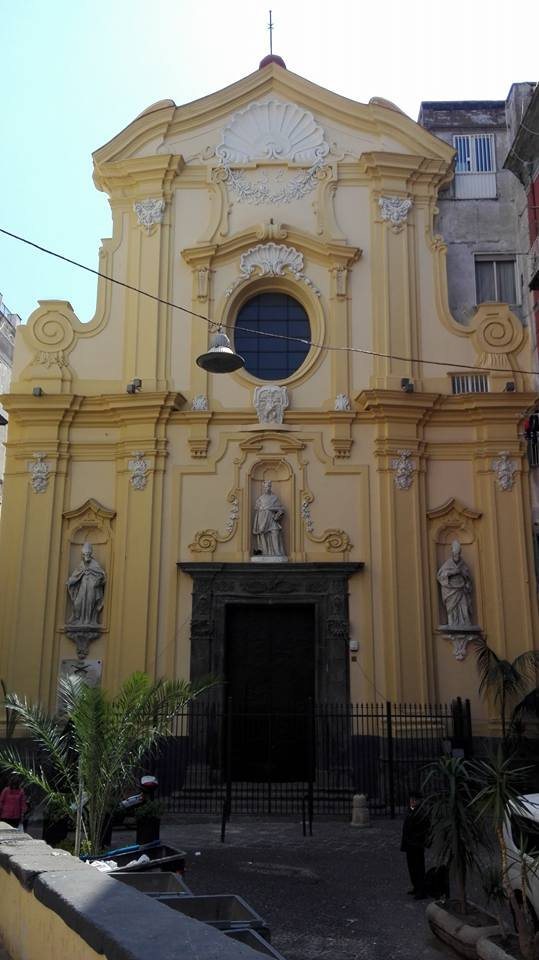
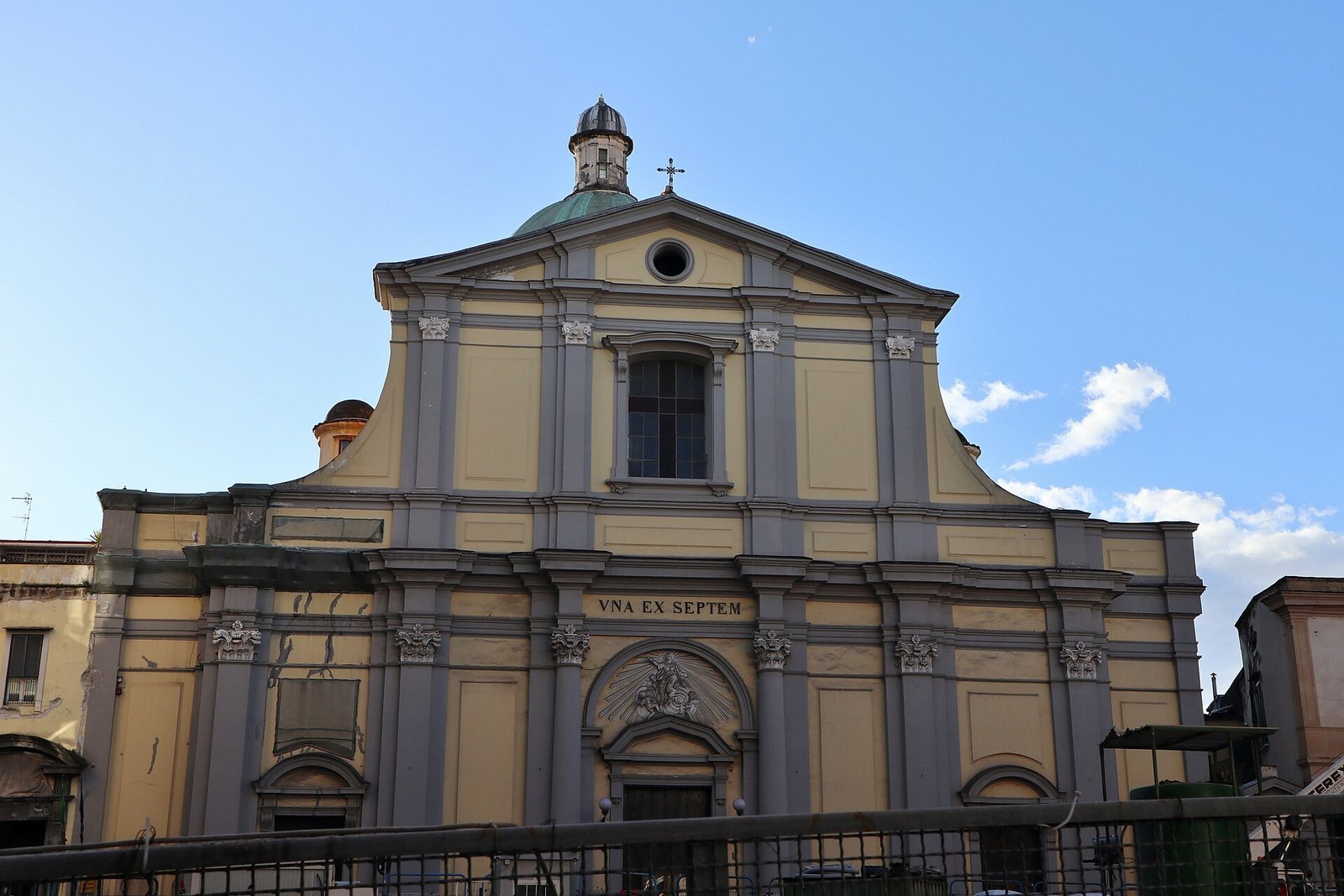
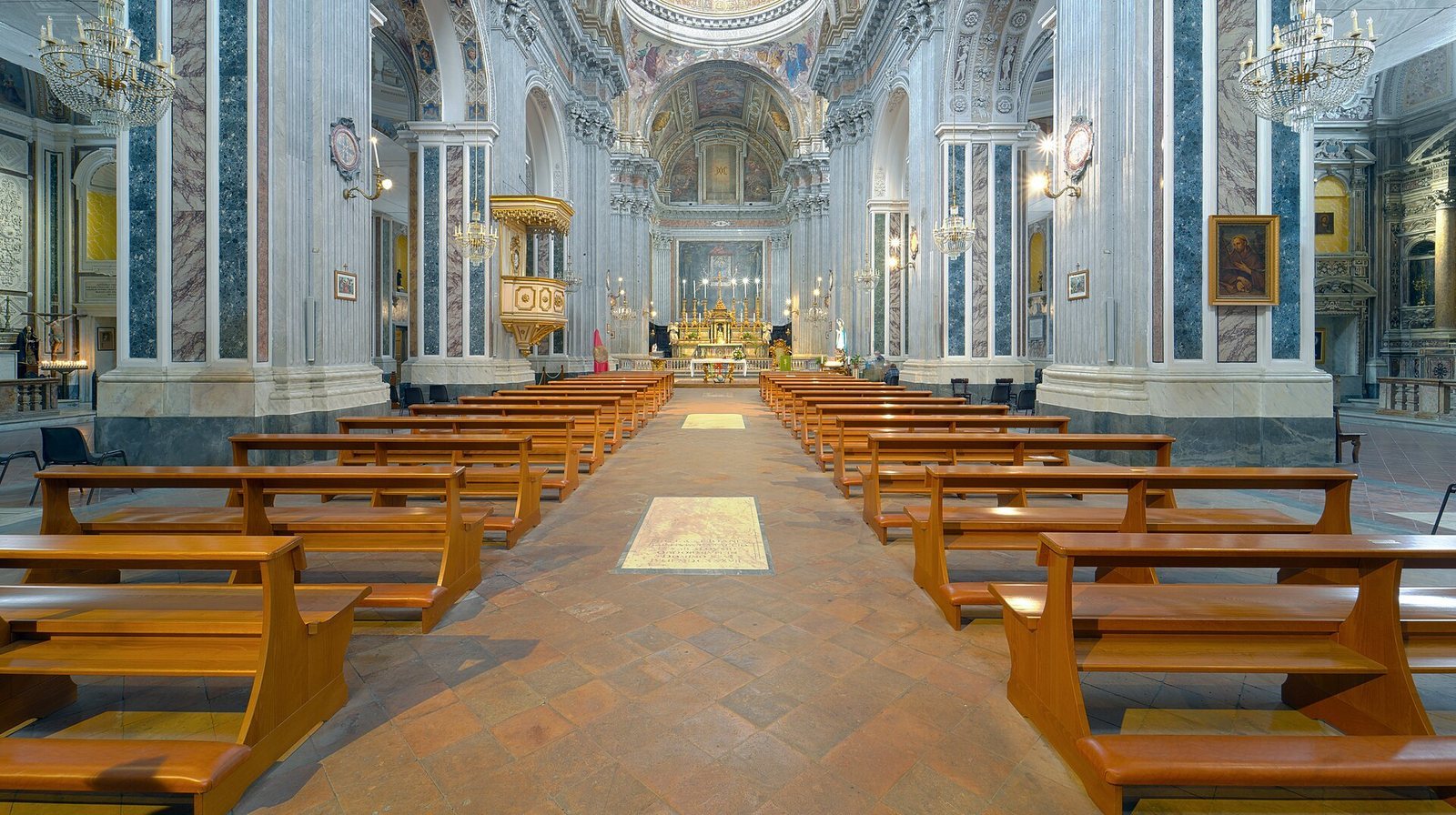
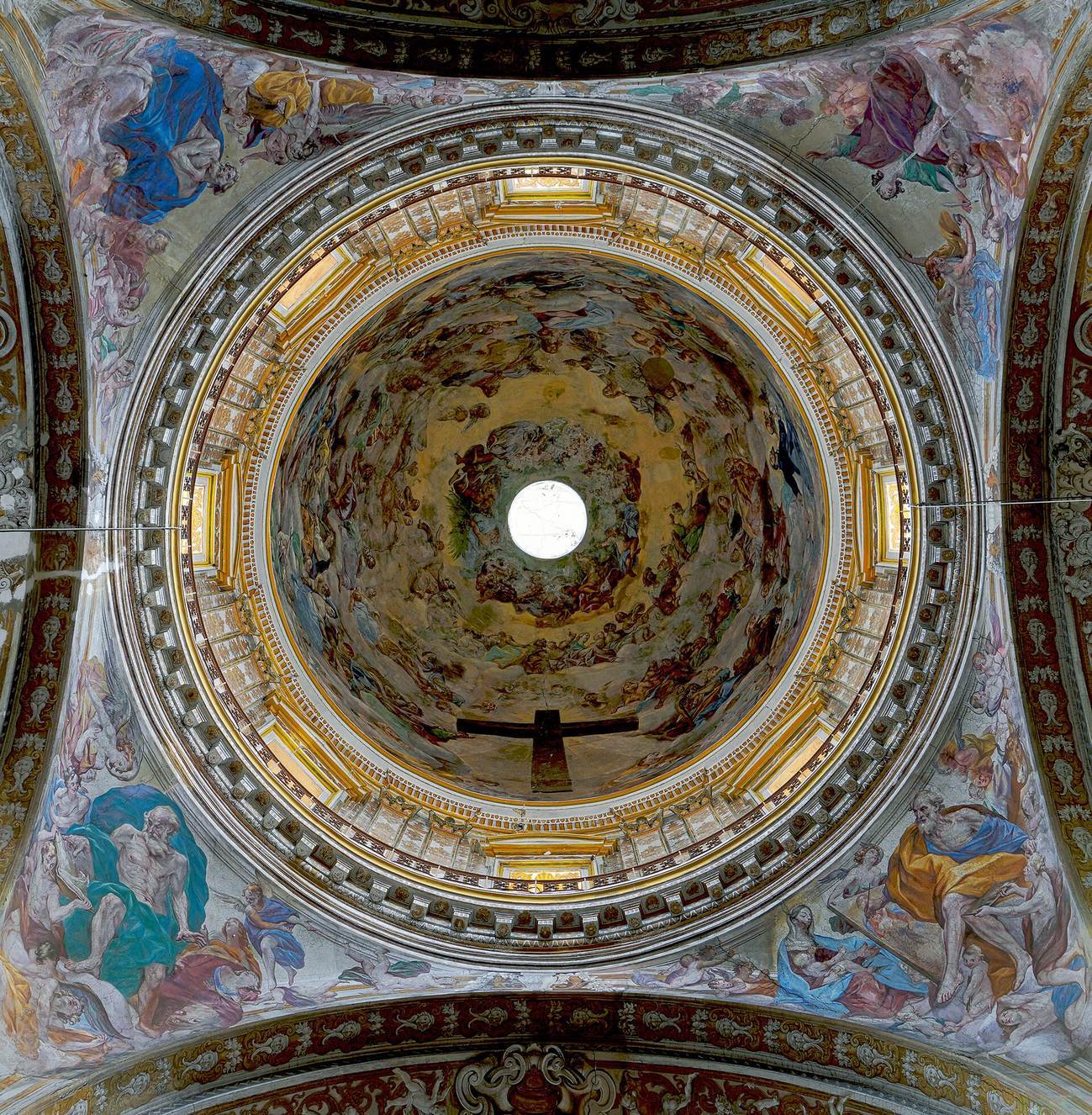
The church occupies a rectangular plan, with three naves (lengthwise divisions) and a crosswise transept arranged in a Latin-cross layout. Side chapels and a dome form part of the interior. The central nave and transept are covered by barrel vaults, continuous arched ceilings. The present façade dates to a rebuilding in the second half of the eighteenth century. Grimaldi’s tall dome rises above the church, and large windows in its drum, the supporting wall at the dome’s base, bring light into the interior.
Painted decoration
Nave and dome frescoes
Between 1668 and 1675, Giovanni Battista Beinaschi painted scenes from the Life of the Virgin in the central nave and transept. His dome paintings include a Coronation of the Virgin and figures of the four Evangelists on the pendentives, curved triangular surfaces supporting the dome. A golden band around the dome’s base bears an inscription praising the holy Mother of God, raised above the choirs of angels to the heavenly kingdom. A large vault painting is also attributed to Beinaschi.
Transept and apse paintings
Five large canvases by Paolo Caliari, known as Veronese, and his school are placed around the church: two in the transept, two in the apse tribune, and one at the far end. They are noted for their purplish colors. Francesco Maria Caselli also painted large canvases for the apse and transept around the middle of the seventeenth century, including an Adoration of the Magi and an Adoration of the Shepherds.
Painting above the entrance
Above the central entrance is Stabile’s Expulsion from the Temple.
Chapels and altars
Immaculate Conception Chapel
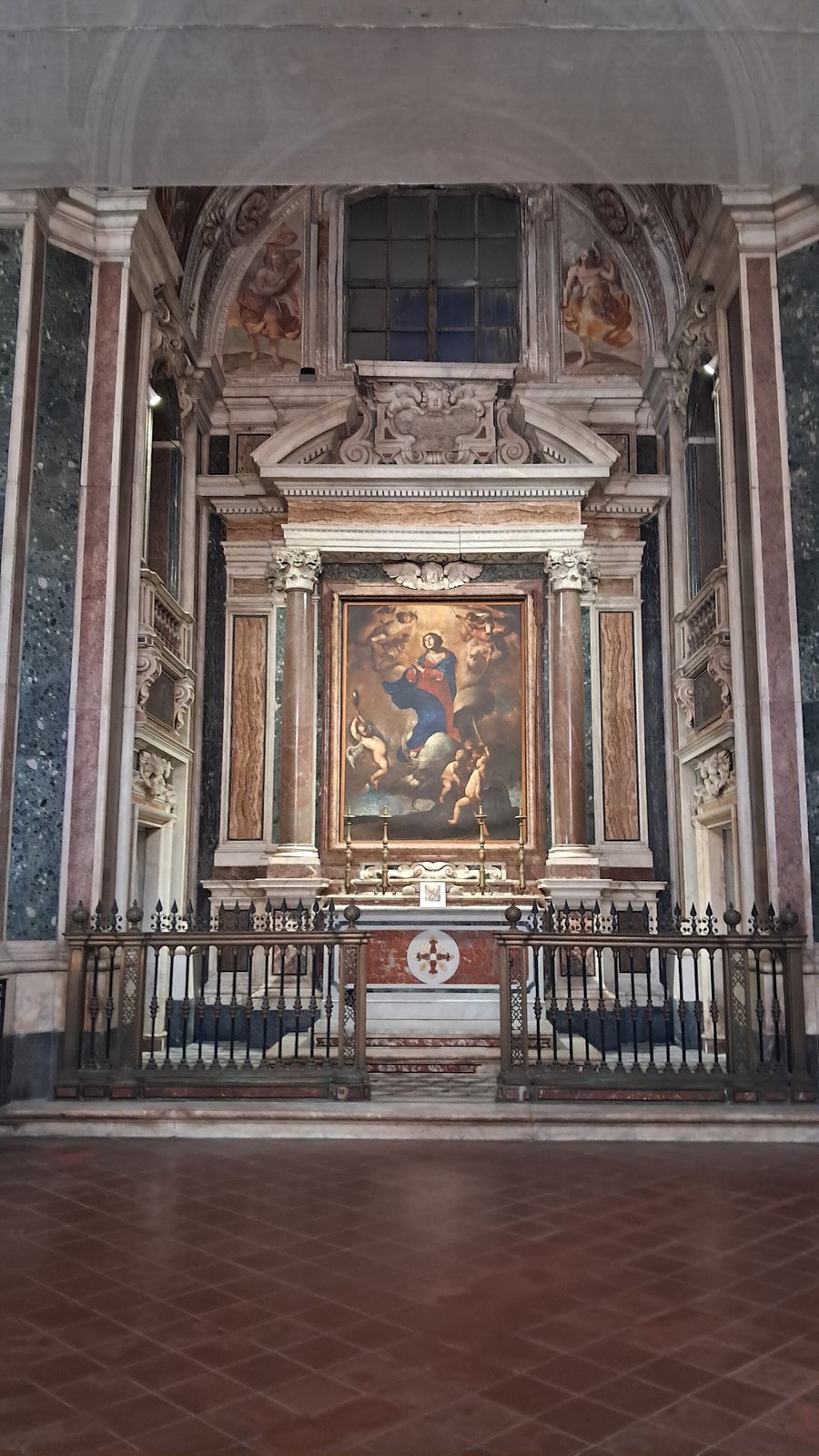
The chapel dedicated to the Immaculate Conception contains a painting of the Virgin Mary by Massimo Stanzione and paintings by Beltrano. The Britto family dedicated the chapel. Opposite it is a hypogeum, an underground burial chamber.
Chapels on the left
Paintings by Giovan Bernardo Azzolino decorate the first and third chapels on the left. The Angel Guardian chapel also has an Azzolino painting and a cast-iron balustrade, while the chapel of Saint Charles Borromeo contains work by the same painter. Giusto’s paintings decorate the chapel of Saints Mark and Januarius.
Saint Gaetano Chapel
To the left of the main altar, the chapel of Saint Gaetano contains a painting by Luca Giordano and frescoes by Beinaschi. A painting of Saint Gaetano by Giordano, dated 1662, is also in the choir.
Main altar and Saint Andrew Avellino oratory
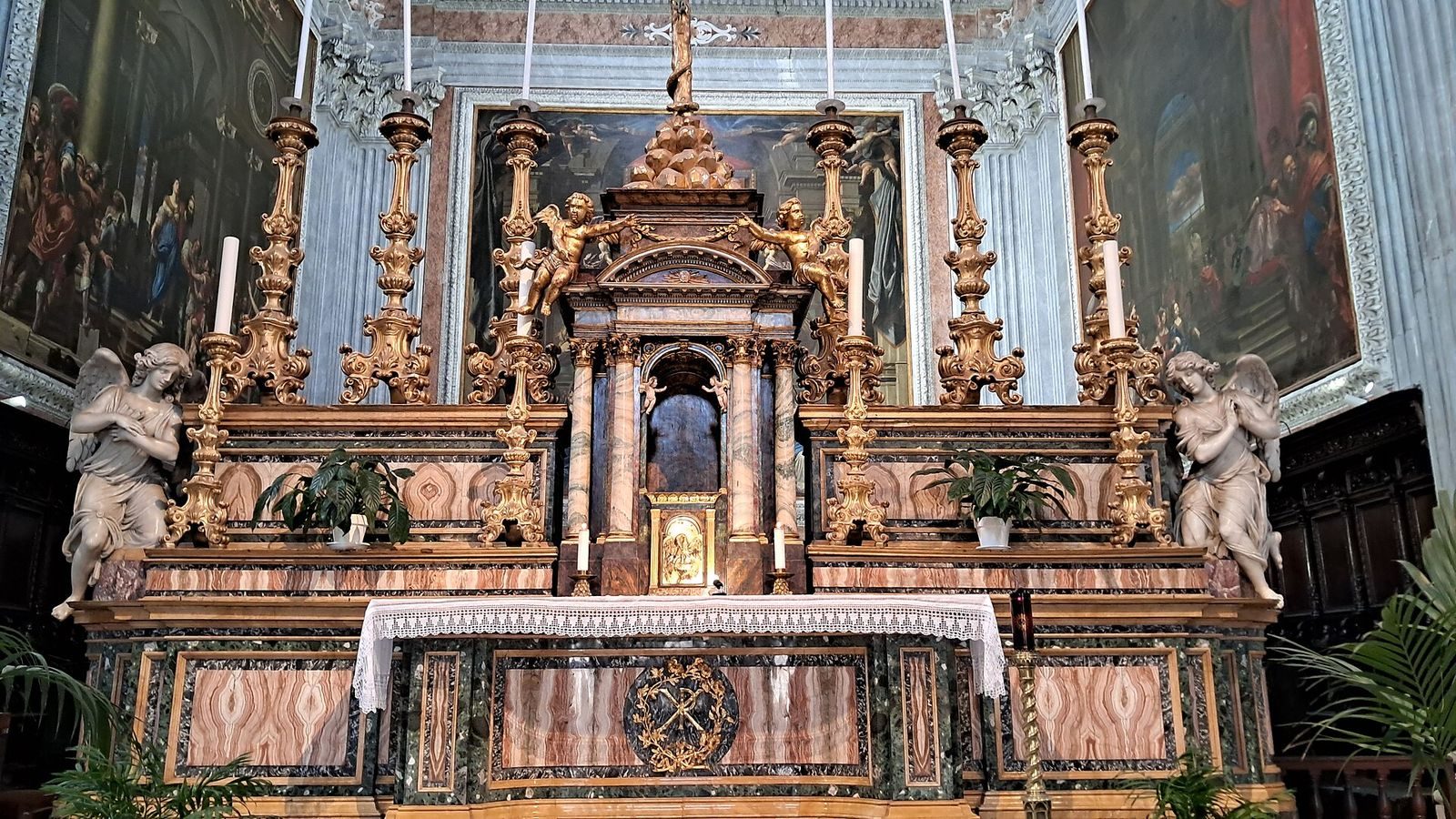
Giovan Battista Broggia made the neoclassical main altar, whose design draws on forms associated with classical antiquity. To its right is Paolo De Matteis’s painting of Saint Andrew in Ecstasy. The oratory, a small chapel or place for prayer, of Saint Andrew Avellino stands to the altar’s right and contains works by De Matteis and Sarnelli.
Chapels along the right nave
The chapel of the princes Pignatelli di Monteroduni has a Last Supper by Stabile on its vaulted ceiling and a silver altar frontal. Another silver frontal belongs to the chapel of the barons Lentini. A further chapel contains Azzolino’s Holy Family with the Adolescent Jesus. At the entrance, the chapel of the princes Serra di Cassano-Gerace has its own underground burial chamber and a Holy Family with the Young Saint John the Baptist. The first chapel contains two tombs sculpted by Tito Angelini for the Serra di Gerace family.
Floor and funerary monuments
The church retains its original terracotta floor and numerous tombs and funerary monuments. At the entrance are tombstones for the Cantelmo family, dated 1621, and the de Leyra family, dated 1639. Tombstones in the central nave commemorate the Caracciolo family (1637), the Zunica family (1662), and the S. Biase family (1739). The right nave includes tombs of the Gras-Preville family (1829), the Serra family (1836), and the Grimaldi-Grifeo family (1838), as well as tombs associated with the Pignatelli di Monteroduni and Torre Montanara families. Among the tombs in the left nave are those associated with the Lossieux, De Guzman, and Malaspina families. The church also contains a marble monument to the jurist Giuseppe de Gemmis, who lived from 1734 to 1812.