St.-Kilian-Kirche: A Romanesque Lutheran Church in Bad Lausick
Site at a Glance
- Popularity
- Low
- Country
- Germany
- Primary era
- Medieval
- Eras represented
- Medieval, Early Modern
- Civilizations
- Electorate of Saxony, Holy Roman Empire
- Site type
- Religious
- Remains
- Church
On this page9 sections
History
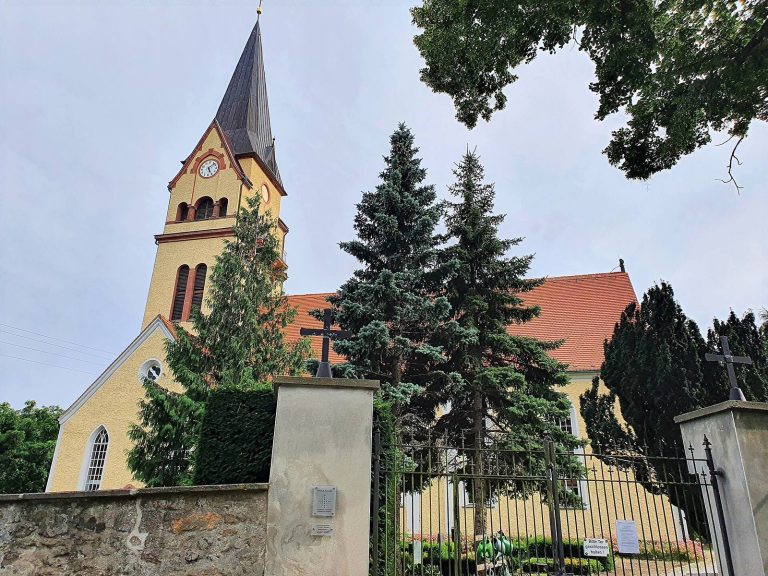
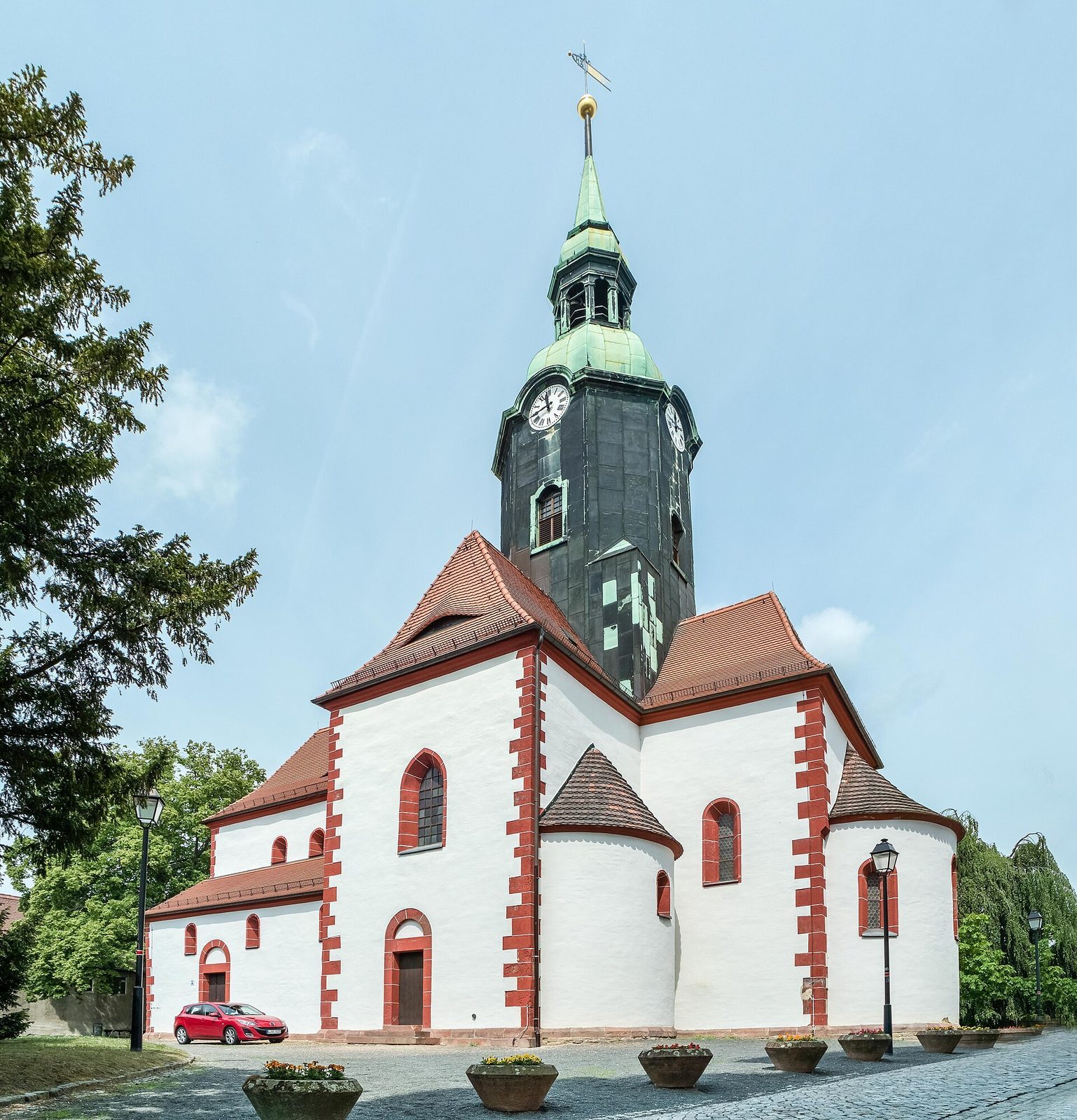
St.-Kilian-Kirche is an Evangelical Lutheran church in Bad Lausick, Saxony, Germany. Construction began in 1105 under Count Wiprecht von Groitzsch, and the church was designed as a three-aisled Romanesque basilica. It is the town’s oldest building and was intended as a central place of worship for nearby villages established by settlers from Franconia, a historical region in what is now southern Germany.
The Benedictine monastery at Pegau oversaw the building work. The settlers’ patron saint, Kilian, a Christian missionary bishop venerated as a saint, gave the church its name.
In 1523, the congregation chose a Protestant pastor, marking the church’s change to Protestant worship. It remains Evangelical Lutheran, a Protestant Christian tradition that developed from the Reformation associated with Martin Luther.
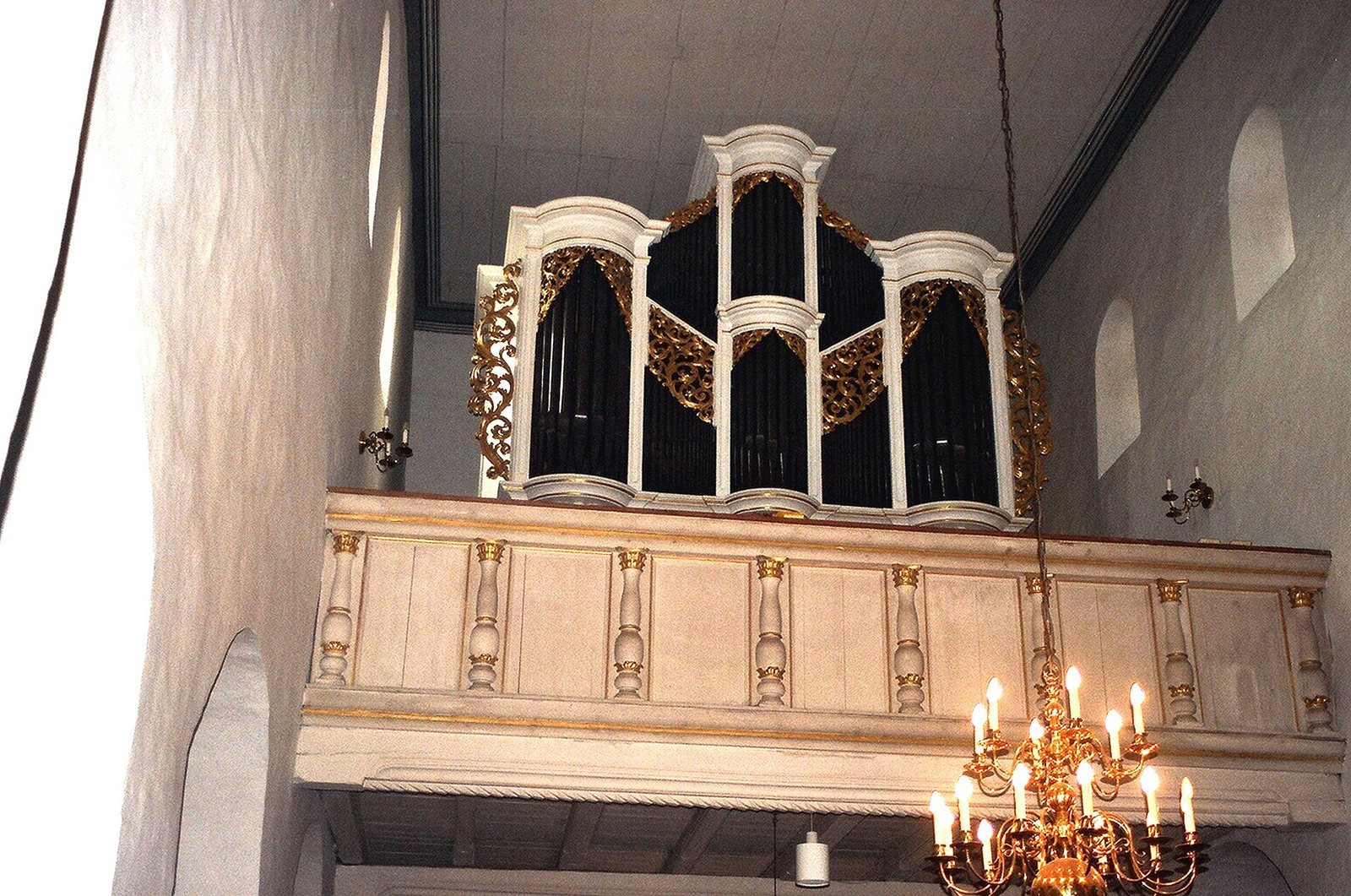
A restoration from 1955 to 1957 returned the building largely to its original form. The work also brought the church its present historic organ, whose earlier history and physical features are described below.
Remains
Building fabric
Plan and tower
The church follows a three-aisled basilica plan, with a central nave and side aisles. Its Romanesque building was first constructed without a tower. A tower was added shortly after 1523 and replaced in the eighteenth century.
Interior and west portal
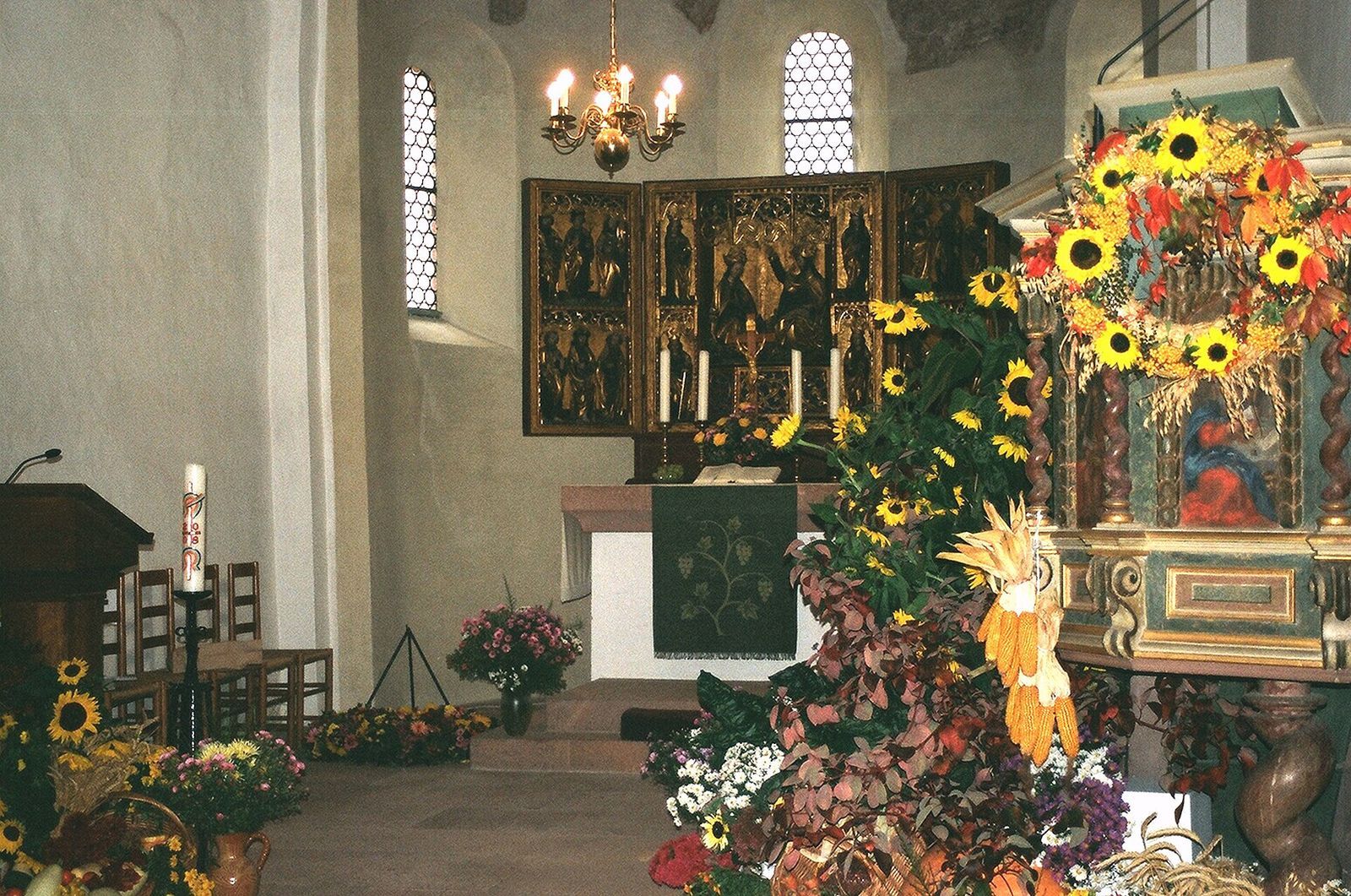
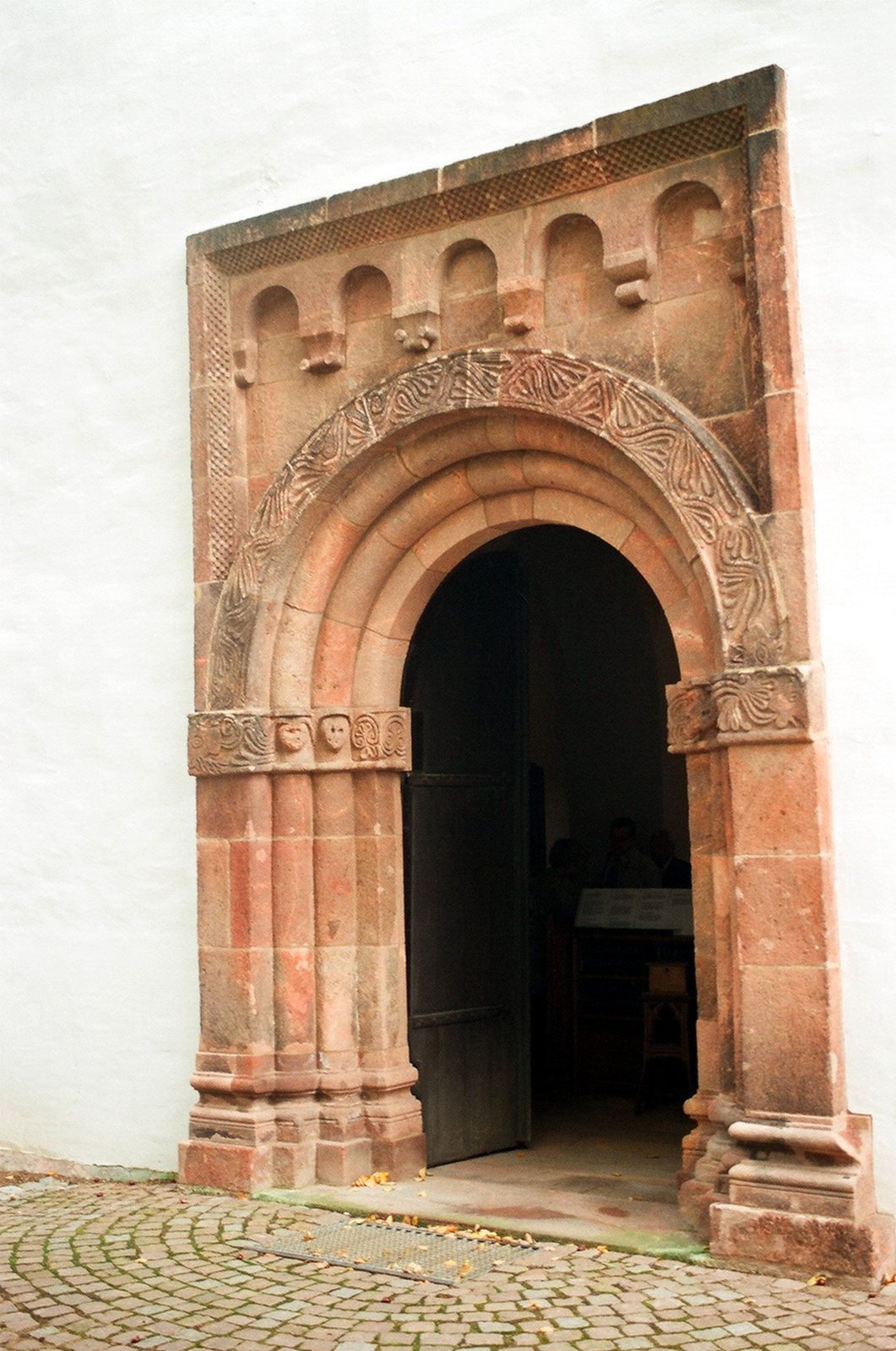
In the eighteenth century, the church interior was painted in the Baroque style, and groin vaults, formed where two barrel-shaped ceilings intersect, were installed over the side aisles. The west portal is made from porphyry, a hard stone, from Rochlitz.
Furnishings and memorials
Organ
The church’s organ was built by Gottfried Silbermann in 1722 for the Johanniskirche in Chemnitz. After that church moved into a new building in 1772, Johann Gottlob Trampeli enlarged the instrument in 1791, adding a second manual, or keyboard, and eight stops, which control sets of pipes. The organ was sold to the church at Auligk near Pegau in 1879 and altered slightly. Its tuning was modernized in 1940, and it was moved to St.-Kilian-Kirche in 1957 during the renovation. In 1988, the Bautzen organ-building firm Eule adjusted it largely toward the choir pitch, the historical tuning standard intended for the instrument. Its couplers include II/I, a sliding coupler, and I/P; couplers link keyboards to one another or connect a keyboard to the pedal.
Winged altar
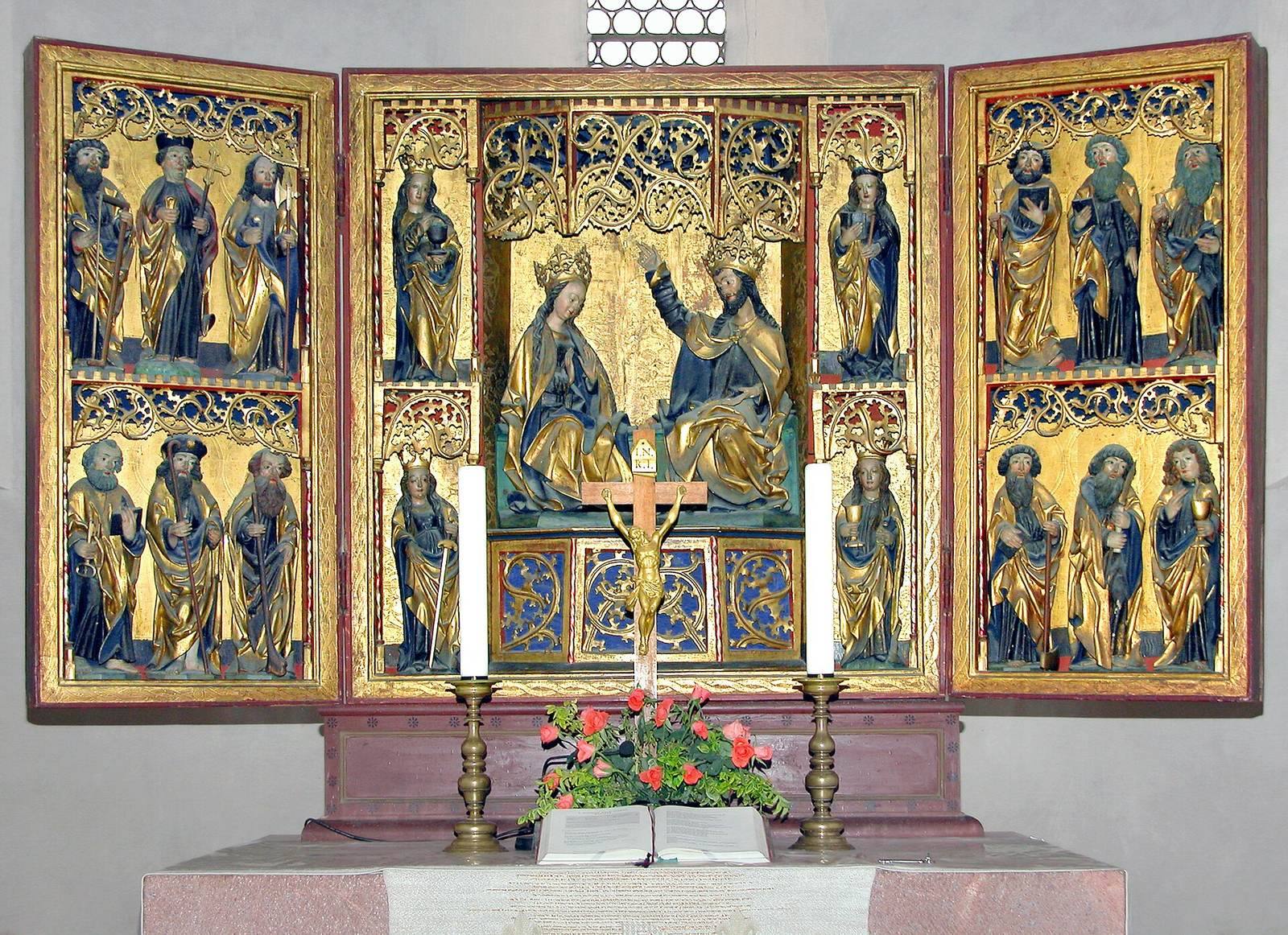
A winged altar, an altar with hinged side panels, stands in the church. Dating to 1490, it came from the former church at Witznitz and was transferred to Bad Lausick in 1920. Witznitz had been abandoned in connection with open-cast lignite mining.
War memorials
Memorials north of the church commemorate people killed in the wars of 1870–71 and 1914–18.