Otzberg Castle: A Hilltop Fortress in Germany


Site at a Glance
- Rating
- 4.4
- Popularity
- Low
- Country
- Germany
- Primary era
- Early Modern
- External website
- Open
- Eras represented
- Medieval, Early Modern
- Civilizations
- Electoral Palatinate, Holy Roman Empire
- Site type
- Military
- Remains
- Castle
On this page16 sections
History
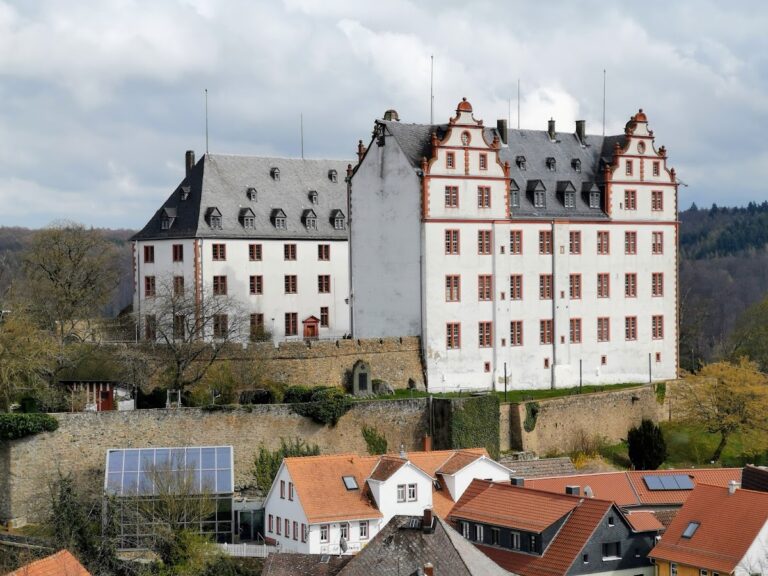
Otzberg Castle is a hilltop fortress in Germany, built under the influence of Fulda Abbey on the summit of the Otzberg in the Odenwald. Probably constructed in the late twelfth or early thirteenth century, it combines a Romanesque keep with a sixteenth-century fortress layout. The castle and the village of Hering are closely connected, since Hering developed on the northern slope from the lower ward and the settlement of the castle’s castellans.
Fulda origins and medieval rule
The territory around Otzberg probably formed part of land that King Pippin, also known as Pippin the Short, donated to Fulda Abbey in 766 together with the Umstädter Mark. Fulda Abbey was a major medieval religious and territorial institution whose abbots controlled extensive estates in central Germany.
The castle was probably established during the late twelfth or early thirteenth century, when Marquard I, Abbot of Fulda, was securing the abbey’s possessions and constructing prominent castles to express Fulda’s territorial influence. He transferred Otzberg to Conrad of Hohenstaufen, a member of the dynasty associated with Emperor Frederick Barbarossa. Conrad held the castle as vogt, a secular guardian and administrator acting for a religious institution, and was also Count Palatine of the Rhine.
Otzberg first appears in a written record from 1231 under the name castrum Othesberg. In that document, Siegfried III, Archbishop of Mainz and administrator of Fulda Abbey, guaranteed Count Palatine Otto II an agreement made the previous year. The agreement’s contents are not known. By 1244, five castellans, or Burgmannen, and their servants were living at Otzberg, showing that the fortifications were sufficiently complete for regular occupation. These military retainers established residences in Hering, including houses associated with Gans of Otzberg whose surviving parts remain connected with the settlement below.
Pledges, sale, and Palatine control
Financial pressure repeatedly affected Fulda’s control of the castle. In 1332, Prince-Abbot Henry VI of Hohenberg pledged Otzberg and Fulda’s share of the Umstädter Mark to Werner of Anevelt and Engelhard of Frankenstein for 4,600 pounds of Heller. The two men spent 200 pounds on construction at the castle.
Fulda redeemed the estate in 1374, but pledged Otzberg, Hering, and half of Umstadt to Ulrich of Hanau in the same year for 23,875 guilders. Ulrich undertook additional building work valued at 400 guilders. In 1390, Fulda sold Otzberg and Hering, together with half of the Umstädter Mark and the Hanau pledge, to Count Palatine Rupert II for 33,000 guilders.
From medieval castle to artillery fortress
During the Bavarian Feud in 1504, Landgrave William II of Hesse seized Otzberg by force. The conflict followed Emperor Maximilian’s imposition of the imperial ban on Count Palatine Philip during the dispute over the succession to Landshut. An imperial ban, or Reichsacht, placed a person outside the protection of imperial law. After the Diet of Constance in 1507, the Electoral Palatinate recovered the Amt of Otzberg, a territorial administrative district.
The growing use of artillery changed the demands placed on fortifications. From 1511, Otzberg was strengthened as a fortress rather than being defended solely by its medieval castellans. An outer defensive enclosure and passage, known as a Zwinger, was added, the inner wall was reinforced, and a new gatehouse was built. A stone wall was later constructed around the lower ward at Hering, corresponding to the village’s settlement area.
The garrison had included soldiers from an early period, with six men recorded in the fourteenth century and fourteen people around 1471. During the sixteenth-century conversion into a more heavily fortified installation, specialized paid troops became part of the castle’s military organization.
Wartime occupations and changing military use
Otzberg was drawn into the Thirty Years’ War, the European conflict of 1618 to 1648 that combined religious, dynastic, and territorial struggles. In 1621, a Bavarian corps of 2,000 men, together with imperial and Spanish troops, occupied the Otzberg-Umstadt area and besieged the castle. The garrison capitulated in 1622. In 1623, Otzberg, its Amt, and half of Umstadt passed to Hesse as compensation for war damage.
French forces captured and occupied the castle in 1647, using the remaining food supplies. The Peace of Westphalia, the treaties that ended the Thirty Years’ War in 1648, returned Otzberg to the Palatinate. During the later War of the Palatine Succession, the Palatine Archives were stored at Otzberg. Their records were subsequently used to substantiate property claims during political reorganization.
As political conditions stabilized, the castle became less important militarily to the Palatinate. Active soldiers were gradually replaced by disabled veterans from 1711. From 1720, Otzberg functioned as an invalids’ garrison that also guarded prisoners.
Prison, preservation, and museum use
The Electoral Palatine Oberamt of Otzberg passed to the Landgraviate of Hesse-Darmstadt in 1802, and the castle became a state prison in 1803. It ceased to serve as a military location in 1818. A Hessian demolition order of 1806 destroyed the former heated residential building, later adapted as barracks. Its foundations remain visible.
On 25 July 1826, the Finance Ministry in Darmstadt ordered the preservation of the keep, the commandant’s house and its small stables, the doctor’s residence, the stable near the Marketenderei, the well house, and the New Barracks, also called the Bandhaus. Other buildings were to be sold for demolition. These measures shaped the surviving arrangement of the complex.
The Bandhaus became a youth hostel in 1921. In the 1950s, the commandant’s house contained a forestry office and a restaurant, and after the mid-1960s it continued as a restaurant under changing tenants. From 1985, the Bandhaus housed the Collection of Folk Culture in Hesse, while the Palas, the principal residential or representative hall of a medieval castle, housed the Otzberg Museum from 1985 to 2019. The Korporalshaus was rebuilt in 1996 and later served as a museum building and as the registry office and wedding room of the municipality of Otzberg.
The castle lease ended in June 2019, after which the State of Hesse placed the entire complex under renovation. Otzberg Castle is protected as a cultural monument under Hessian monument-protection law. The upper Otzberg, including the castle and surrounding land, is also protected as an extensive natural monument.
Remains
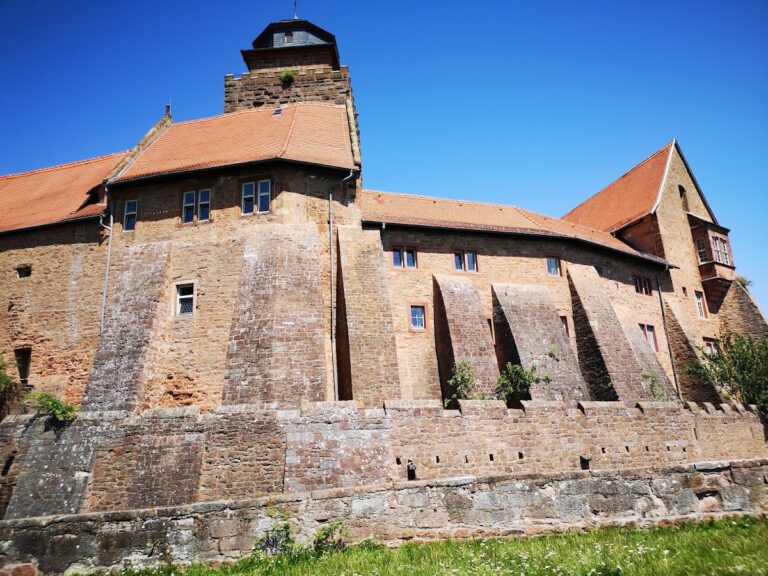
Otzberg Castle occupies the summit of the Otzberg at approximately 367 to 368 metres above sea level. Its surviving arrangement is dominated by two concentric, oval ring walls built in the sixteenth century and by the older Romanesque keep. Together, these elements form a post-artillery fortress whose defenses were adapted to changing methods of warfare.
Fortifications and water supply
Romanesque keep
The round-masonry keep is the oldest building in the complex and dates from the Romanesque period. Locally called the White Beet or Sauerkraut Barrel, it rises approximately 17 metres and measures 10 metres in diameter at the base. The shaft narrows to 9.6 metres at about 2 metres above ground level. A sandstone projection at a height of 15.5 metres carries rainwater away from the tower. The viewing platform stands about 15.9 metres high and overlooks Darmstadt-Dieburg County toward Frankfurt am Main and the Taunus in clear weather.
Ring walls and gate defenses
The two oval ring walls belong to the sixteenth-century strengthening of the castle. From 1511, the inner wall was reinforced and a Zwinger, an outer defensive enclosure between fortification walls, was added. A new gatehouse formed part of this work. The later stone enclosure around the lower ward extended the fortified area toward Hering, the settlement that developed below the summit.
Castle well
The castle well stands beside the passage and dates from about 1320. More recent excavations place its depth at approximately 50 metres, making it one of the deepest wells in Hesse. A treadwheel installed beside the well in 1788 helped raise water from the shaft.
Residential and service buildings
Commandant’s House
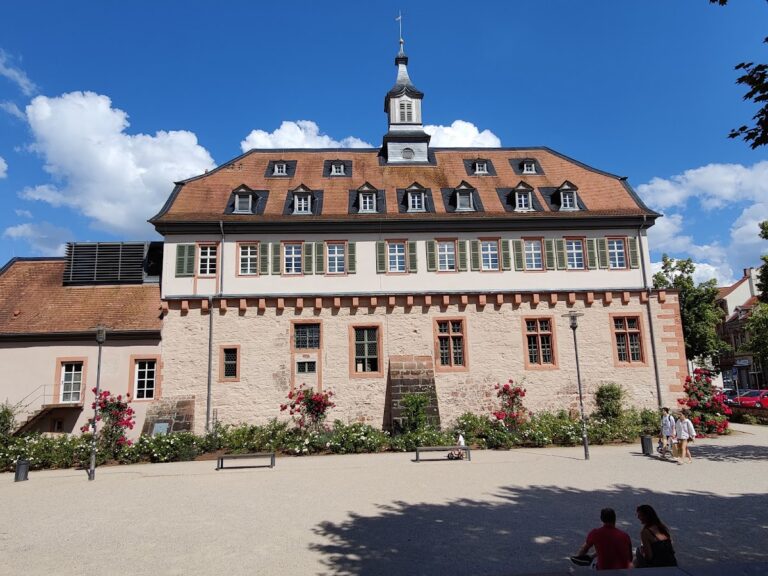
Built in 1574 with several other new structures, the Commandant’s House served as an administrative and residential building. It contained the castle restaurant and later accommodated forestry administration in the twentieth century. Its small stables were included among the structures ordered to be preserved in 1826.
Palas and former Kemenate
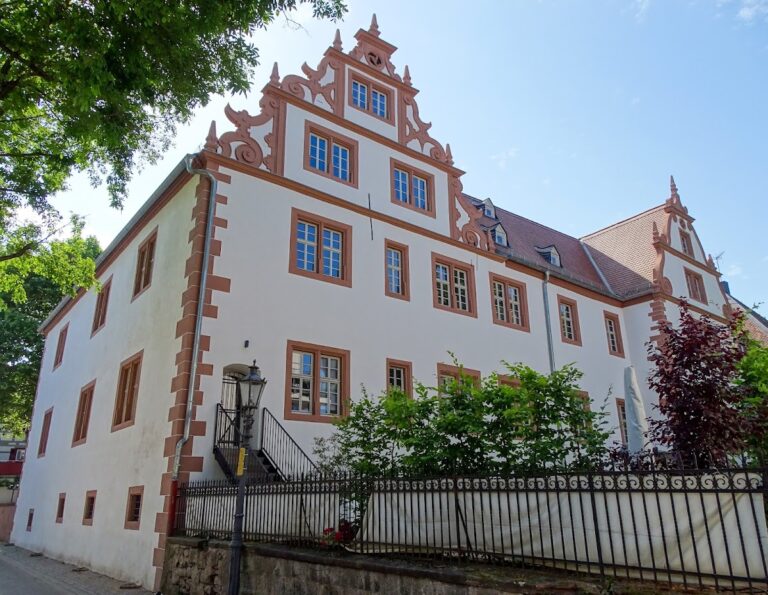
The Palas housed the Otzberg Museum from 1985 to 2019, including the collection of folk culture in Hesse. The former Kemenate, a heated residential building that was later adapted as barracks, was destroyed under the 1806 demolition order. Its wall foundations remain visible within the complex.
Bandhaus and Korporalshaus
The Bandhaus, or New Barracks, was among the buildings protected by the 1826 preservation order. It was converted into a youth hostel in 1921 and later housed the Collection of Folk Culture in Hesse. The Korporalshaus was rebuilt in 1996 and subsequently used as a municipal museum building and as the registry-office wedding room of Otzberg.
Burgmannen houses in Hering
Parts of the property associated with Gans of Otzberg survive in Hering. These buildings belonged to the wider settlement created by the castle’s castellans and their households on the northern slope, linking the surviving village fabric with the medieval organization of the fortress.