Santa Tecla, Este: Baroque Parish Church in Italy
Site at a Glance
- Popularity
- Medium
- Country
- Italy
- Primary era
- Early Modern
- Eras represented
- Classical, Medieval, Early Modern
- Civilizations
- Holy Roman Empire, Roman, Venetian
- Site type
- Religious
- Remains
- Church
On this page15 sections
History
Santa Tecla, Este, is the principal Roman Catholic church in Este, Italy. Its earliest parts probably date to the fourth or fifth century, while the present building is Baroque. The church is dedicated to Saint Thecla of Iconium, an early Christian martyr associated with Anatolia. It remains a principal place of worship and serves the local parish, a Catholic community and its district, within the Este vicariate, a subdivision of the Diocese of Padua, a territorial church district overseen by a bishop.
Early church and medieval parish
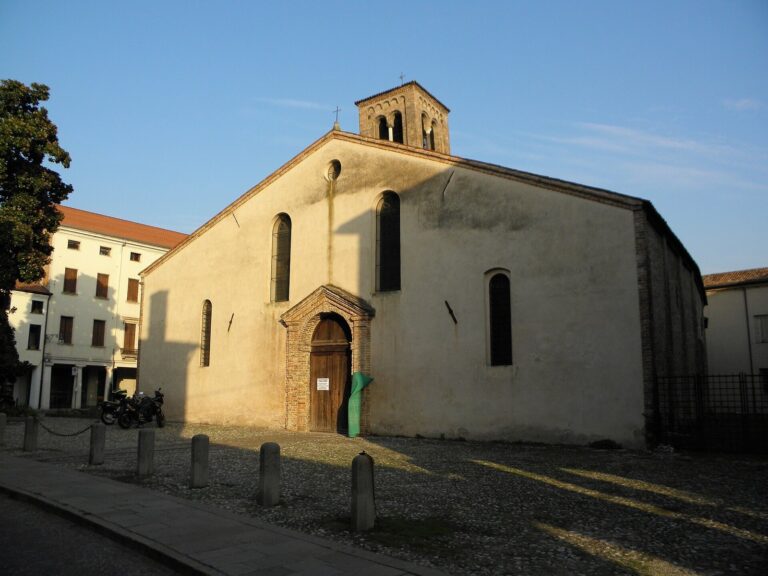
The church’s earliest structure was built over the remains of a pagan temple. By the eighth century, the building had five naves, or lengthwise divisions.
Its role as Este’s parish church is first recorded in 1034. Pope Leo IX, whose papacy lasted from 1049 to 1054, reconsecrated it in 1052, and the church was rebuilt during the twelfth century.
Repairs and rebuilding in the sixteenth century
During a pastoral visit in 1489, Pietro Barozzi, bishop of Padua, found the parish church poorly organized. Repairs followed, and in the first half of the sixteenth century the decision was made to rebuild it.
Architect Vincenzo Scamozzi designed a reconstruction carried out from 1583 to 1592. The work shifted the façade to the east, reversing the earlier arrangement in which the apse, a recessed end of the church, faced east.
Reconstruction after the earthquake
An earthquake on 15 April 1688 destroyed the church. Marco Marchetti, the town’s archpriest, or senior priest of its principal church, promoted a new building. Work on a design by Venetian architect Antonio Gaspari began in 1690, with the blessing of Bishop Gregorio Barbarigo.
The church was completed in 1720 and consecrated in 1748 by Bishop Carlo Rezzonico, who later became Pope Clement XIII. Between 1724 and 1730, the bell tower was raised above the base of an eighth-century tower; its rise to its present height is attributed to architect Rossi.
Later religious role
In 1896, Pope Leo XIII elevated Este’s archpriest’s church to the status of an abbey church, a church associated with an abbey. In May 1957, the sarcophagus containing the remains of Blessed Beatrice I d’Este, an Italian noblewoman venerated but not canonized, was transferred here. Angelo Roncalli, then Patriarch of Venice and later Pope John XXIII, attended the ceremony. Beatrice’s remains are venerated in the church, and she is also regarded as a patron of Este.
Guido Negri, an Italian Catholic layman and soldier, is buried in the church.
Remains
Building and exterior
Plan and façade
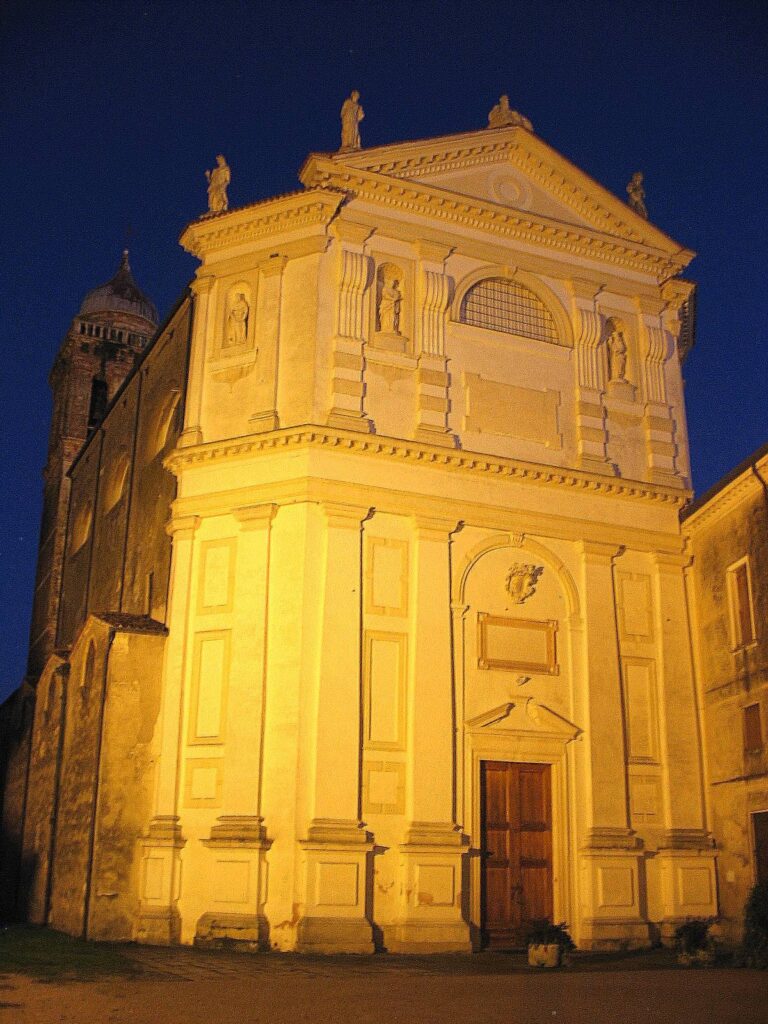
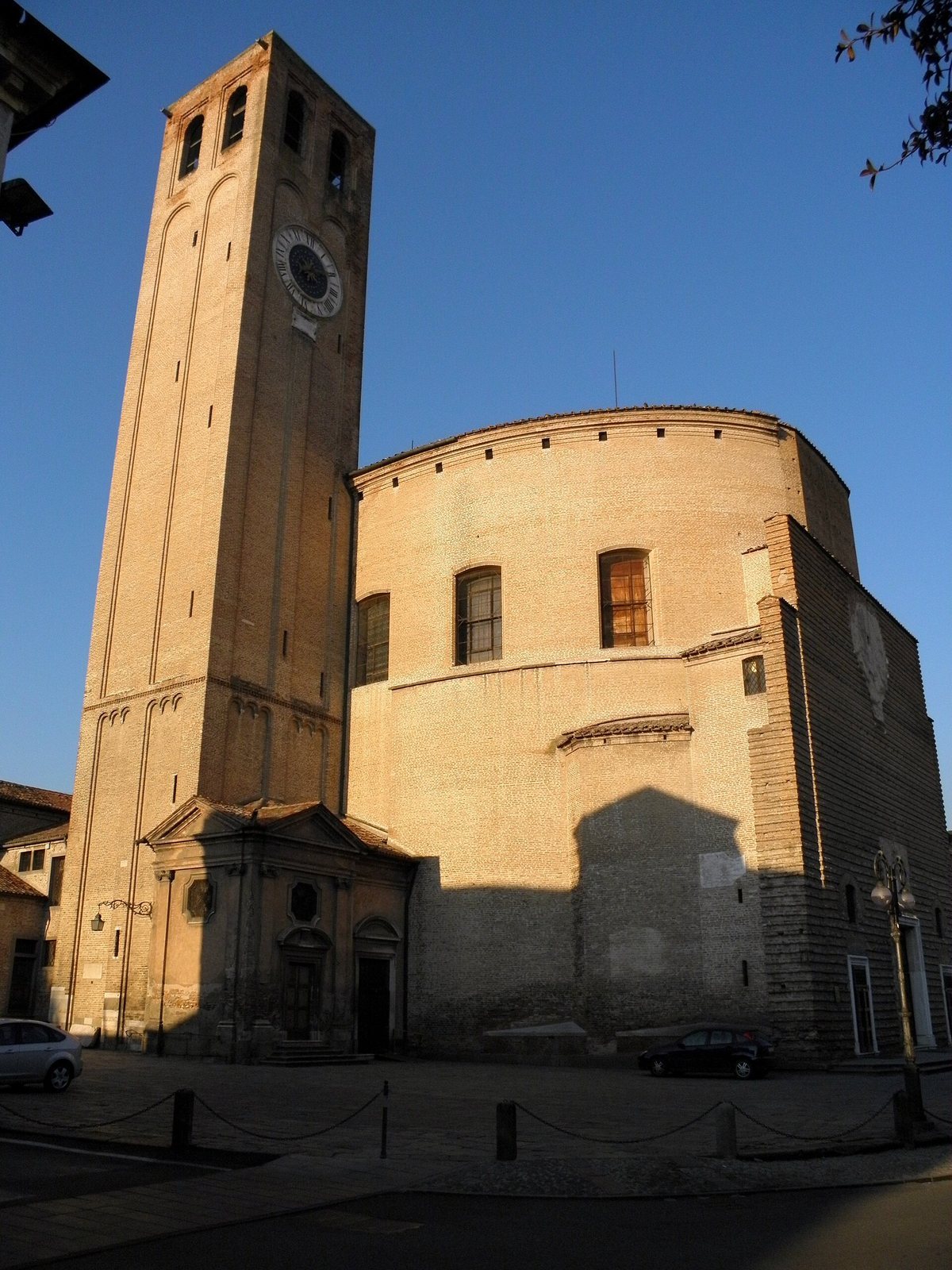
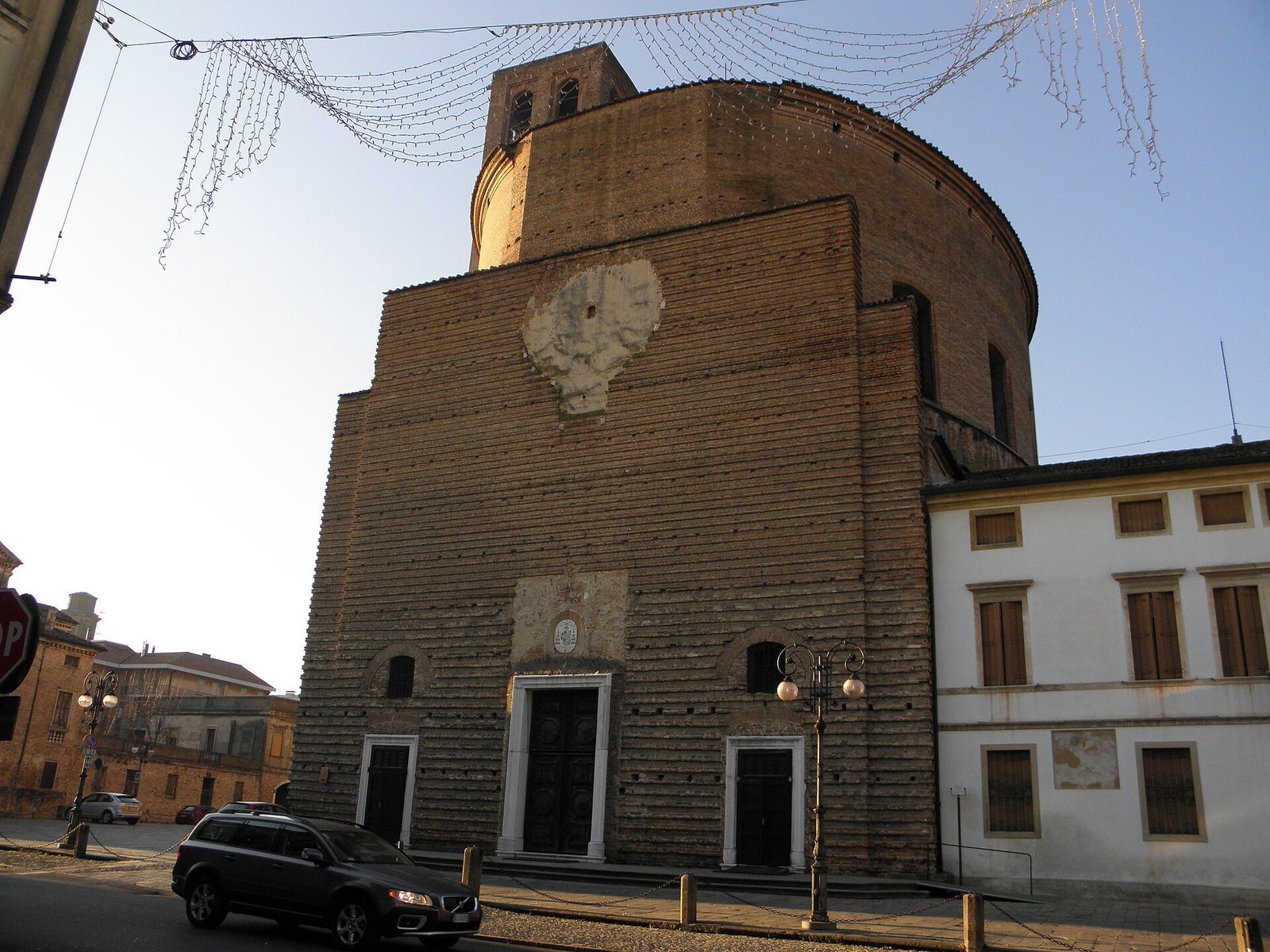
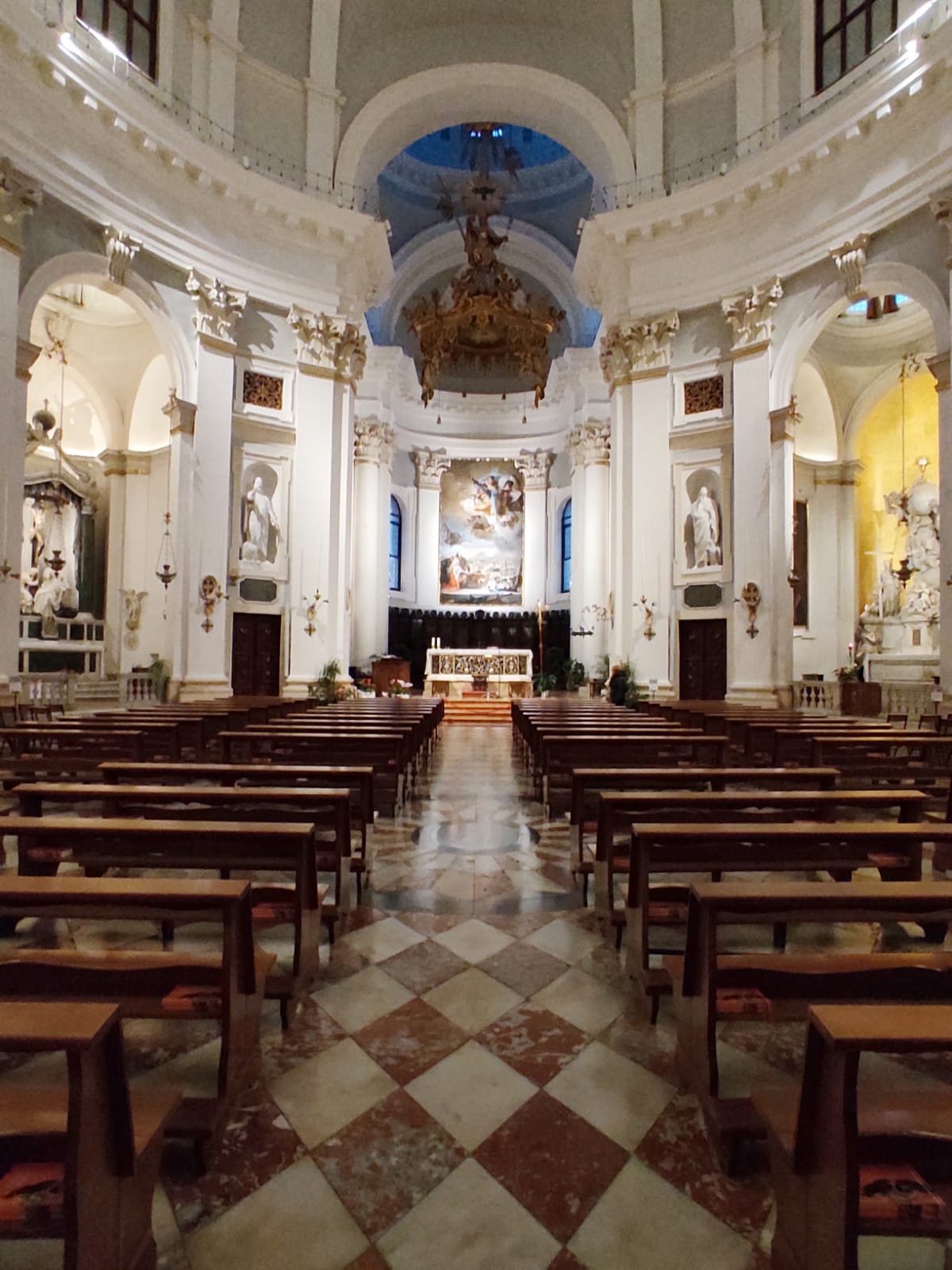
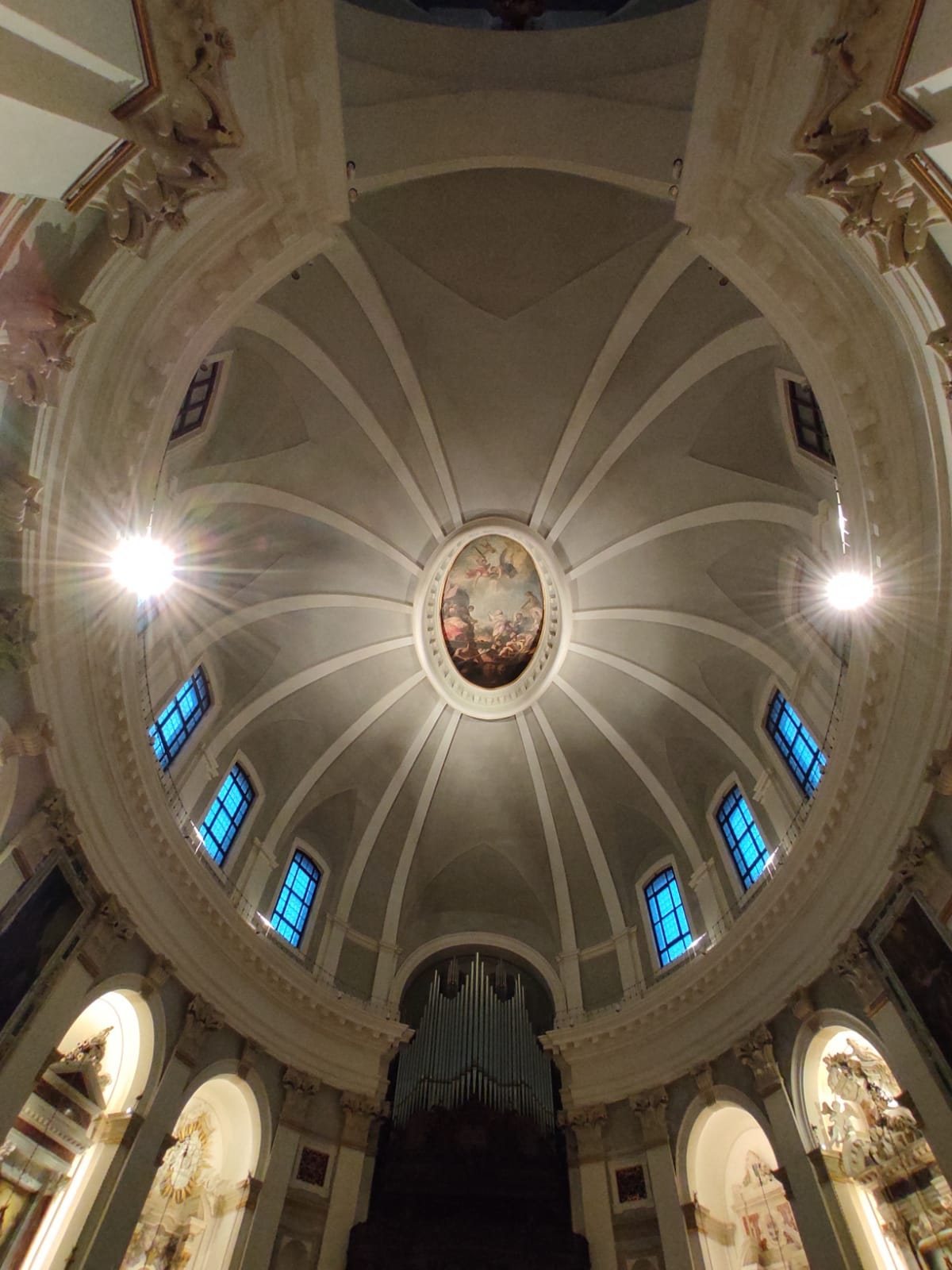
The present church has a Baroque design, organized around an elliptical central space rather than a long axis, and rises to a tall dome. Its façade was never completed and remains in rough brick.
Bell tower
The tower’s lower section dates to the eighth century, while its later upper part brings it to its present height, attributed to Rossi. It contains seven bells mounted to swing, with a combined mass of 6,525 kilograms. The Cavadini episcopal foundry in Verona cast all seven in 1835. The six larger bells follow a seven-note major scale beginning at B2; the smallest is an octave bell, sounding the same note name in another register.
Interior artworks
Altar and chapels
The main altarpiece, an oil painting on canvas by Giambattista Tiepolo dated 1759, occupies the recessed altar end of the church. It shows Saint Thecla asking the Eternal Father to deliver the city from the plague of 1630. An altarpiece by Antonio Zanchi is also among the interior works. In the Chapel of the Blessed Sacrament, the consecrated Eucharist understood in Catholic belief as Christ’s presence, Antonio Corradini’s marble group depicts the Triumph of the Eucharist and includes a veiled figure of Faith.
The chapel on the left contains a seventeenth-century wooden crucifix by Francesco Terilli. At its base, Mary Magdalene embraces the cross, while the Madonna is supported by Mary Salome; Bernardo Falconi sculpted these marble figures about a century after the crucifix. Jacopo Amigoni’s depiction of the Martyrdom of Saint Thecla is set on the nave ceiling, in the church’s main body.
Sacristy and Oratory of San Valentino
A staircase and vestibule connect the church with its sacristy, the room used by clergy to prepare for services and keep vestments and sacred objects, and the Oratory of San Valentino, a small place of prayer. Their paintings include a Madonna by Andrea del Sarto, a Flagellation of Christ attributed to Dürer, and works by Giovanni Battista Zelotti, Antonio Zanchi, Luca da Reggio, and Tiepolo.
Memorials and musical furnishings
Altar of Beatrice I d’Este
The second altar to the right of the entrance is dedicated to Beatrice I d’Este and holds a glass shrine containing her remains. A large nineteenth-century altarpiece by Michelangelo Grigoletti depicts the Virgin, Saint John the Baptist, and Beatrice.
Organ
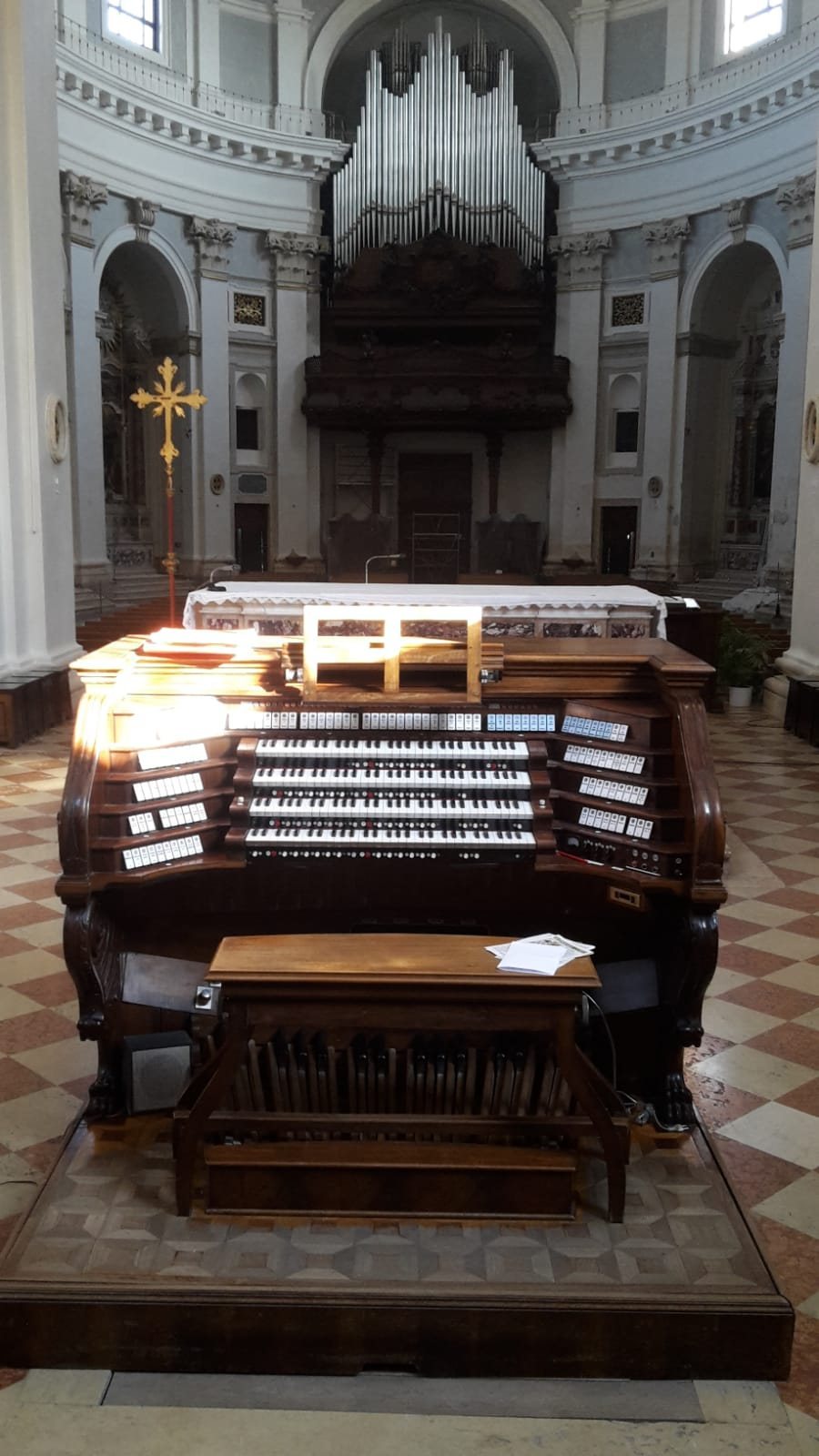
Made by Fratelli Ruffatti, the church’s organ has four keyboards and 65 stops, the controls that select groups of pipes. It is among the largest organs in the region.