Madonna della Costa: A Marian Sanctuary in Sanremo
Site at a Glance
- Popularity
- Medium
- Country
- Italy
- Primary era
- Early Modern
- Eras represented
- Early Modern, Modern
- Civilizations
- Genoese, Italian
- Site type
- Religious
- Remains
- Sanctuary
On this page10 sections
History
Madonna della Costa is a Roman Catholic Marian sanctuary, a place of worship dedicated to Mary, in Sanremo, Italy. It belongs to the Diocese of Ventimiglia-San Remo, a church district administered by a bishop. The present church was built in 1630 and consecrated on 1 November 1832.
Early foundations and traditions
The sanctuary’s beginnings are placed tentatively in the fourteenth or fifteenth century. Some historians associate its foundation with 1361, when a castle belonging to the Doria family passed to the Republic of Genoa, a maritime state governed from Genoa. The Doria were a prominent Genoese family. The transfer is linked to the origins of Sanremo’s “festival of chains”: residents went to the sanctuary dragging chains to celebrate their liberation from Doria rule.
A document from 1474 refers to a chapel already dedicated to Madonna della Costa and associates it with the local Fabiani family. Local tradition connects the sanctuary’s establishment with the miraculous discovery of a chest containing construction funds. A sailor said to have escaped pirates through divine help had opened a public subscription, and residents had pledged money toward the project.
Rebuilding and civic devotion
The church built in 1630 replaced an earlier one. In times of hardship, the people of Sanremo prayed to the Madonna for relief from drought and for protection during the plague of 1656–1657. The local historian Grossi later wrote that numerous ex-votos, offerings made to fulfill vows or express gratitude for perceived divine help, had once adorned the sanctuary. He said many were burned, or perhaps destroyed in a fire.
During the cholera outbreak of 1835, the people of Sanremo credited the Virgin with protecting the city. A commemorative procession through the streets is held every fifteen years on 15 August. That date is also the sanctuary’s principal feast, the Feast of the Assumption, the Christian belief that Mary was taken into heaven.
Remains
Setting and exterior
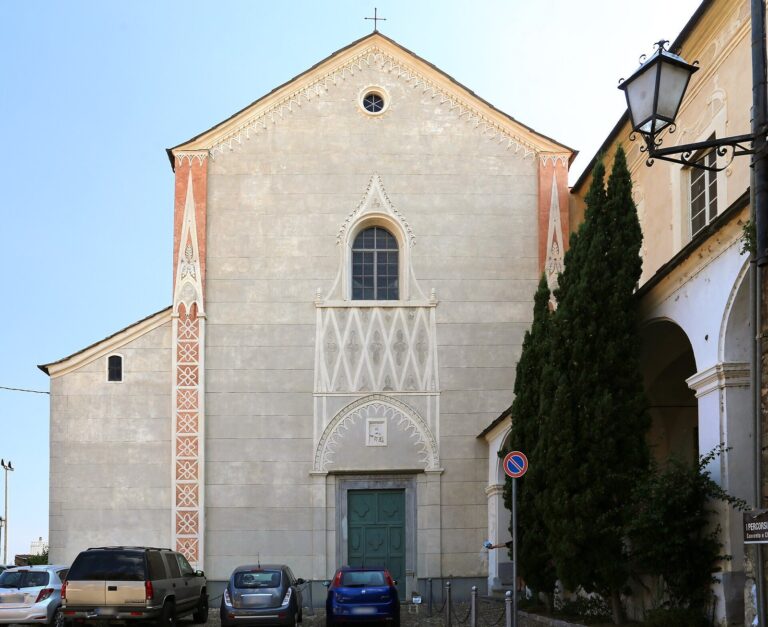
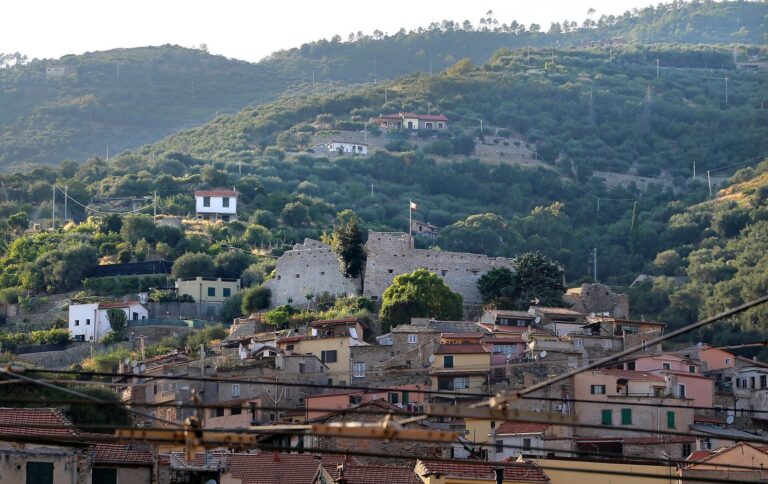
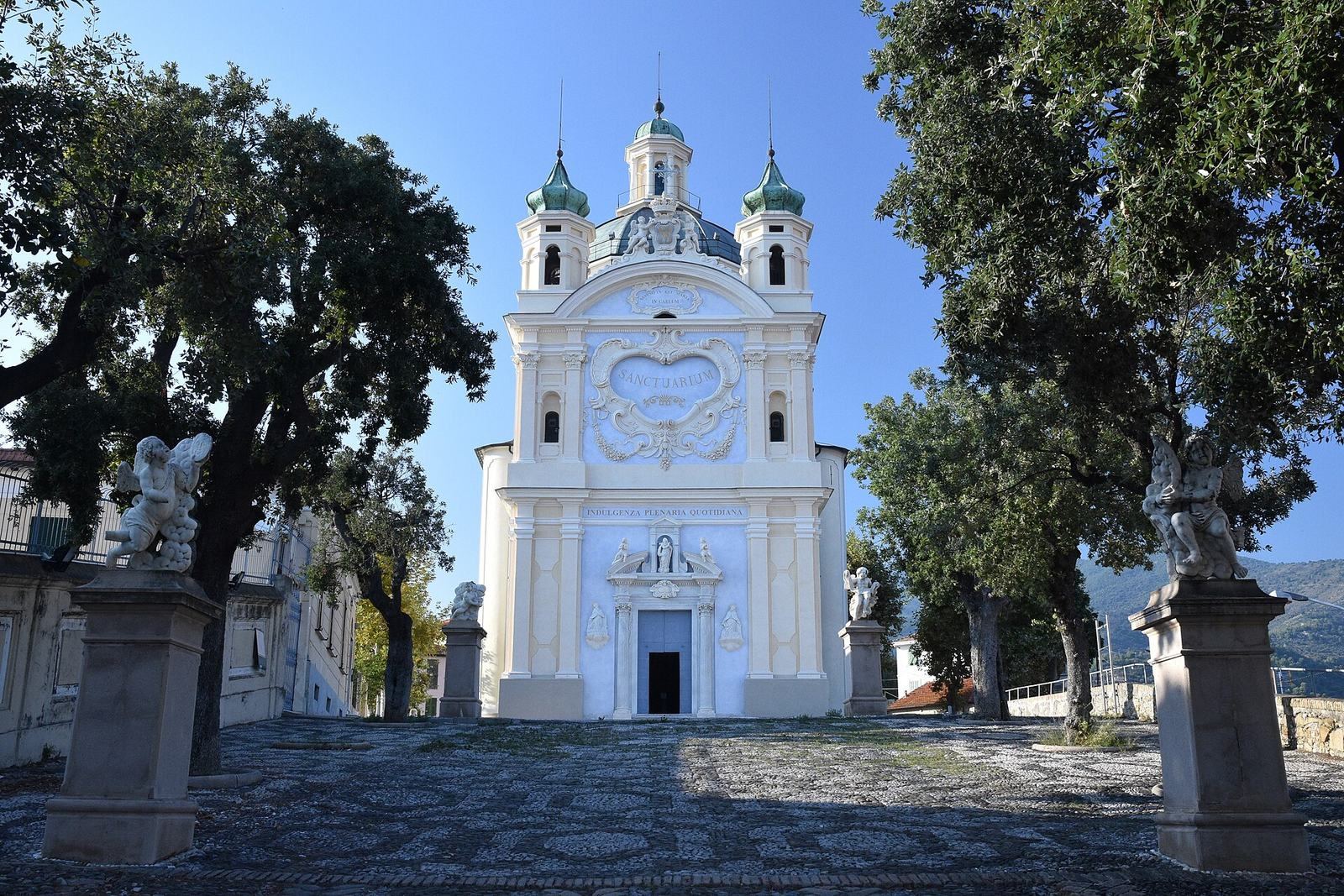
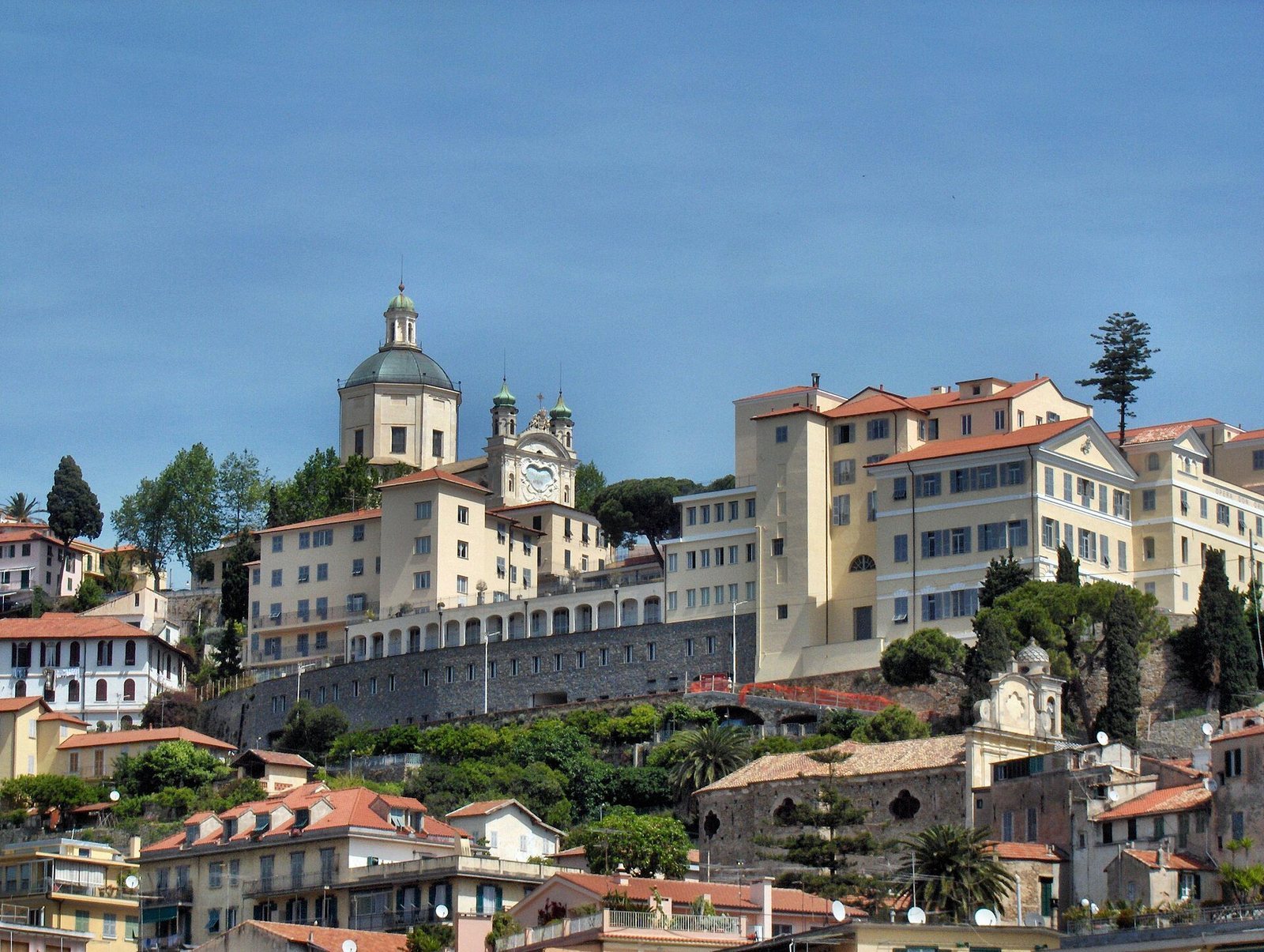
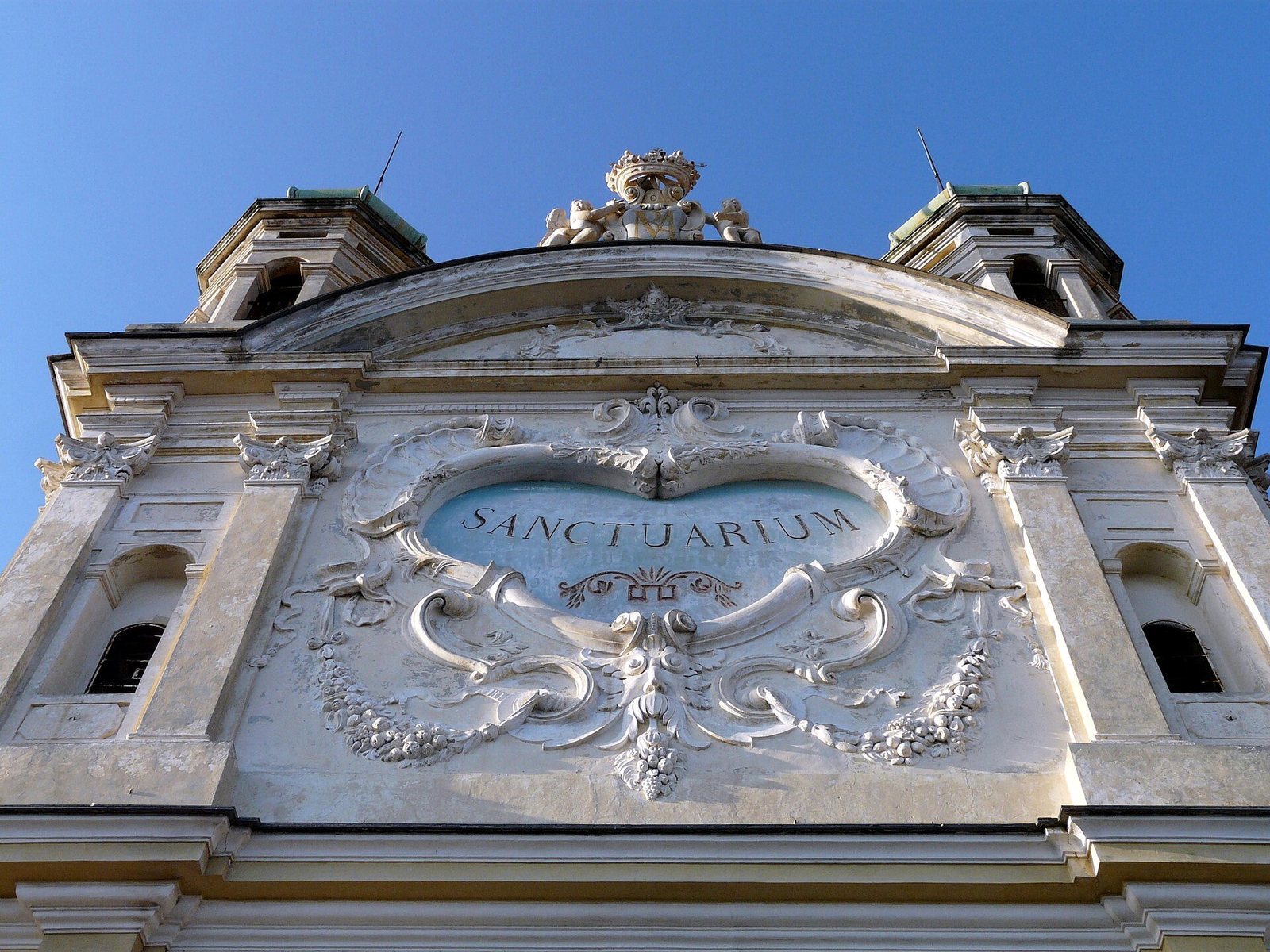
The sanctuary stands on a hill about 100 metres above sea level, overlooking Sanremo’s historic Pigna district. Its Latin-cross plan has a long main axis crossed by a shorter one, and its facade is Baroque in style. A small shrine-shaped feature on the front depicts the Assumption, flanked by marble figures of Saints Siro and Romolo, revered in Liguria. Towers at the sides are topped by small cupolas. The main dome was built between 1770 and 1775. Work from 1979 to 1981 included repainting the facade and covering the dome and two smaller cupolas with copper.
Interior and artworks
The Madonna image and wooden sculpture
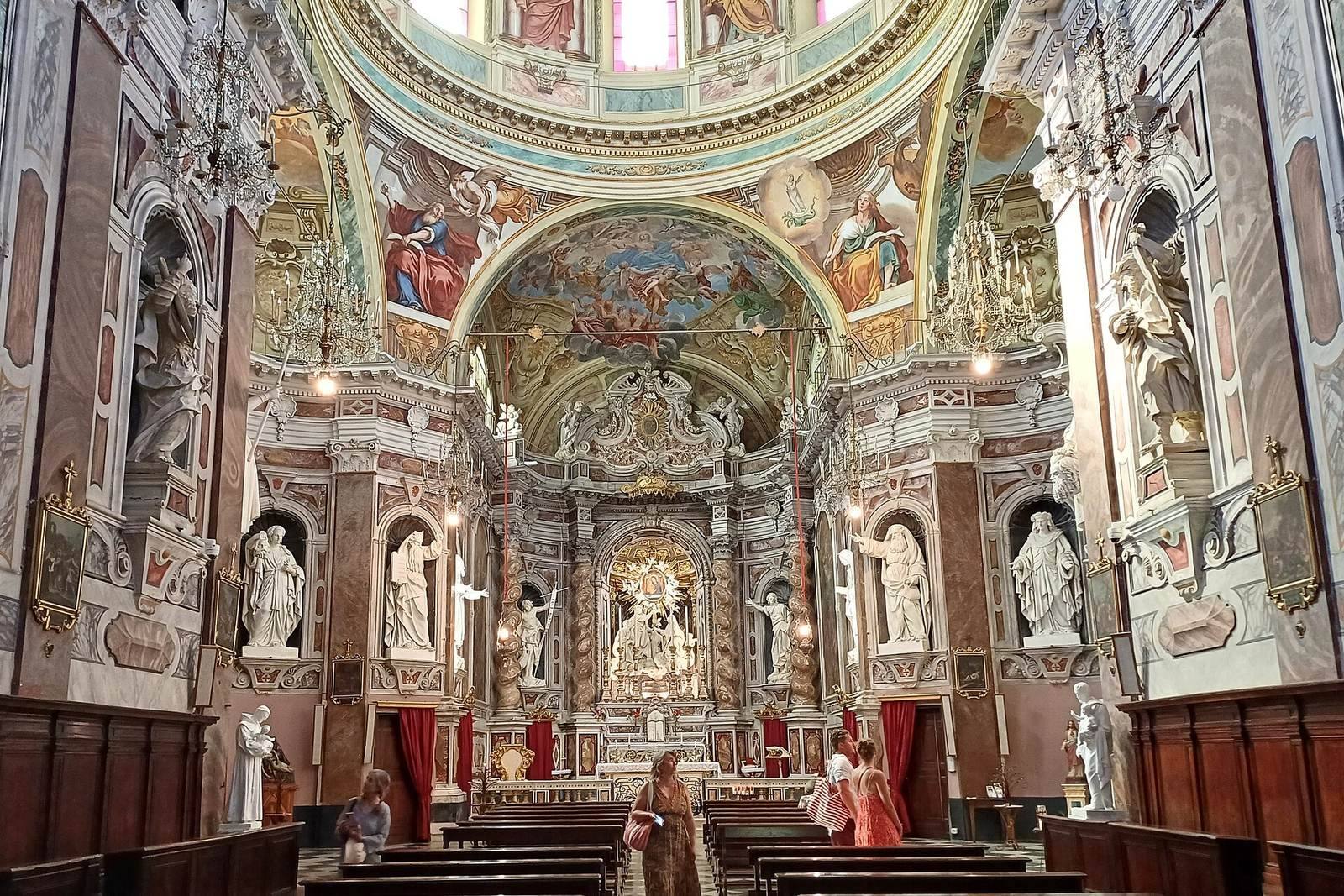
Above the high altar is the revered image of the Madonna and Child, showing Mary with the infant Jesus. Tradition attributes it to Saint Luke, traditionally regarded as a Gospel writer, while other proposed attributions name the fourteenth-century painter Barnaba da Modena and Nicolò da Voltri. Wooden statues inside the church include Saints Anne and Joachim, traditionally regarded as Mary’s parents, and Saint Joseph, her husband. Some of the figures are attributed to Anton Maria Maragliano, a Genoese sculptor known for religious woodcarving.
Crucifix and presbytery figures
A wooden crucifix by Maragliano was placed above its dedicated altar in 1723. The presbytery, the area around the main altar reserved for clergy, contains wooden figures of Saint Elizabeth and Zechariah, traditionally identified as the parents of John the Baptist, as well as Saint John the Baptist and Saint John the Evangelist, whom Christian tradition identifies with the apostle John.
Paintings
In the transept, the crosswise part of the church, an altarpiece, or artwork placed behind or above an altar, by Bartolomeo Guidobono depicts the Visitation of Mary to Elizabeth. Domenico Fiasella’s Vision of Saint Hyacinth, donated by the Genoese Carrega family in 1846, hangs to the left of the entrance. Giulio Cesare Procaccini’s Beheading of the Baptist is on its right.
Apse and ceiling decoration
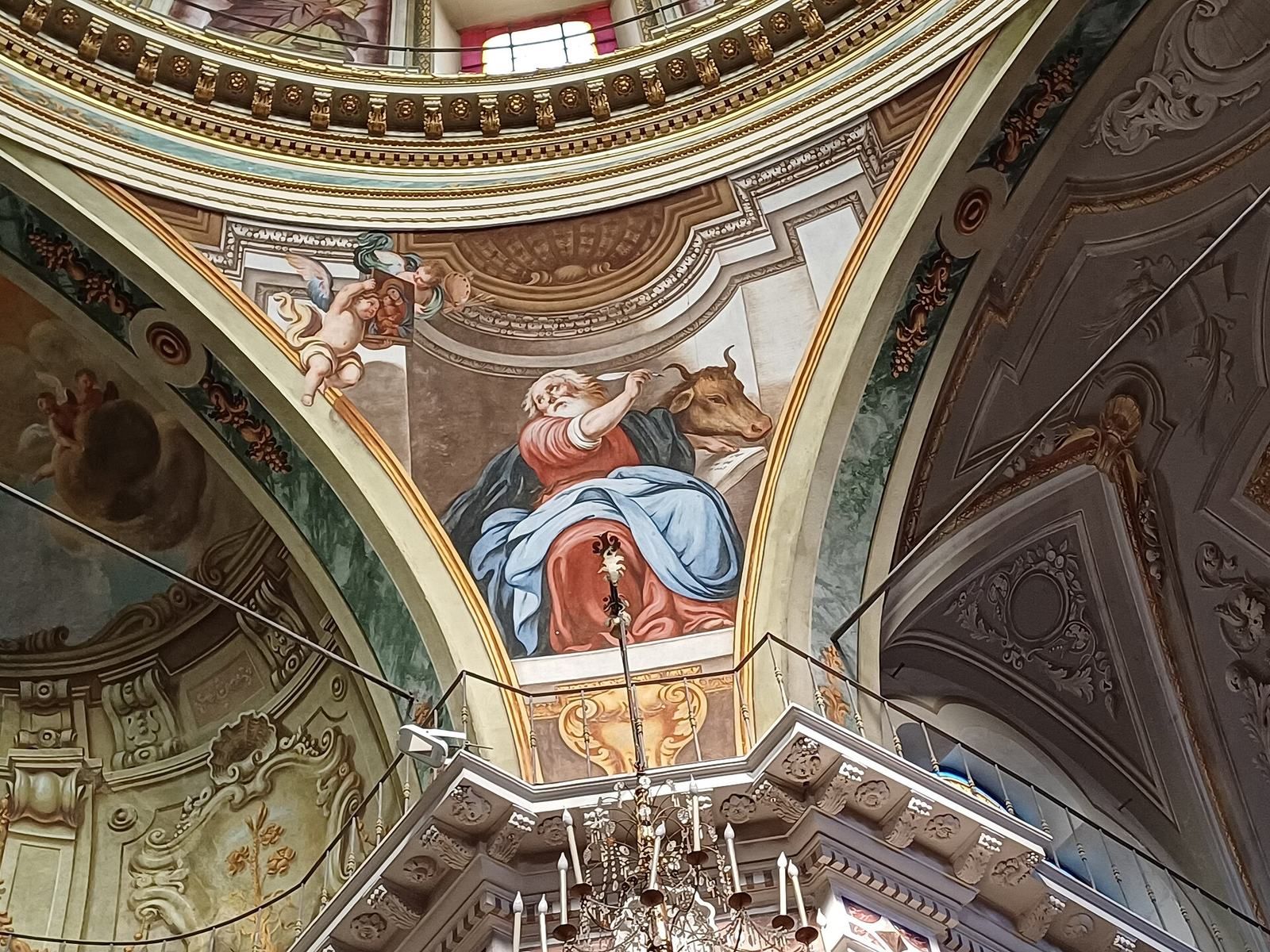
Stucco work and painted decoration cover the apse, the end of the church around the altar, and the vaulted ceiling. Giacomo Antonio Boni carried out this work in 1727.