Jewish Cemetery of Venice: A Historic Burial Ground on the Lido
Site at a Glance
- Popularity
- Medium
- Country
- Italy
- Primary era
- Early Modern
- Eras represented
- Medieval, Early Modern, Modern
- Civilizations
- Italian, Venetian
- Site type
- Burial
- Remains
- Necropolis
On this page10 sections
History
Origins and expansion
The Jewish cemetery of Venice occupies the northern part of the Lido in Italy and was founded between 1386 and 1389 as the lagoon’s Jewish burial ground. It is one of Europe’s oldest surviving Jewish cemeteries and preserves material evidence of the community’s presence in the lagoon from the fourteenth century. In Jewish tradition, a cemetery is sacred ground as well as a place to reflect on life and how to use the time that remains.
Jewish presence in the Venetian lagoon dates to around 1000. In 1254, Venice’s Great Council barred Jews from living in the city and prohibited them from lending money. After the costly War of Chioggia (1378–1381), Venice allowed Jews to return and eased restrictions on their commercial and financial activities. In 1386, during the rule of Doge Antonio Venier, Venice’s elected chief magistrate, the Magistracy of the Piovego, the governmental body responsible for public lands, authorized land for a Jewish cemetery. Its first burial took place around 1389–1390, when Samuel den Shinshon was laid to rest there.
The cemetery’s establishment led to a three-year legal dispute with the neighboring Benedictine monastery, a community belonging to a Catholic monastic order. The parties settled their disagreement. Because Jews could not own real estate, the cemetery later grew through long-term leases of monastery land. It reached its greatest extent in 1641. Vandalism also led the Jewish community to seek permission to enclose the burial ground.
Military pressure and replacement
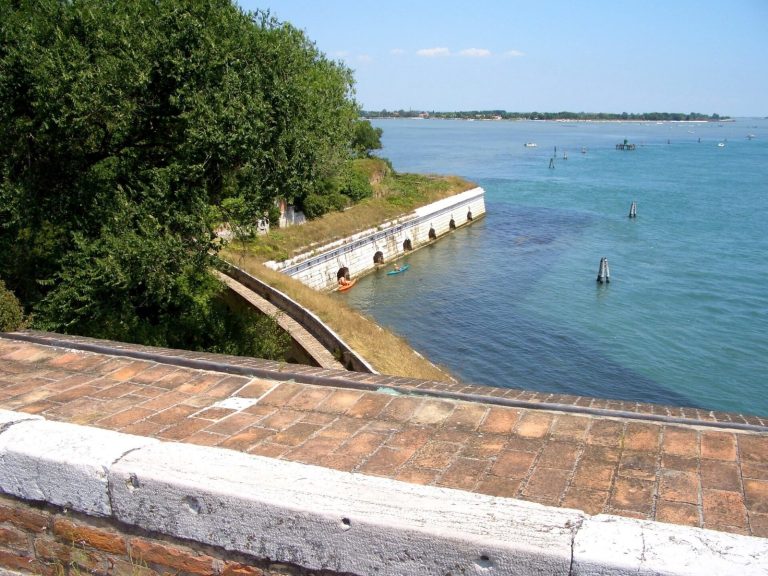
The cemetery’s position near the harbor entrance exposed its surroundings, and sometimes the burial ground itself, to military encampments during wars. Troops damaged or displaced many gravestones, making it difficult to restore them to their original places. In 1715, construction of new defenses at Fort San Nicolò caused substantial damage and losses.
In 1774, the Republic assigned the Jewish community a new burial area of about 3,500 square metres farther inland, away from both the old cemetery and the military zone. This New Cemetery replaced the original burial ground, which gradually fell out of use, especially during the nineteenth century. Its deterioration drew poets and writers visiting Venice during that century.
Decline and restoration
In 1925, construction of a national shooting range beside the old cemetery brought many lost gravestones to light and further reduced the site. The old burial ground deteriorated again from the late 1920s. A road built along the lagoon in 1929 also reduced its area. In 1938, Italy’s Fascist racial laws, antisemitic measures that discriminated against Jews, led to the cemetery’s formal and definitive closure.
From the late 1980s, the Jewish Committee of Venice pursued restoration under Professor Cesare Vivante. Recovery work and the restoration of gravestones began in 1993 under the authority responsible for artistic and historical heritage; major work was completed in 1999. The restored cemetery was extended into unused land belonging to the adjacent New Cemetery.
Remains
Setting and enclosure
The old cemetery occupies the northern part of the Lido, a long, narrow island, near the monastery of San Nicolò. The land granted in 1386 measured 70 by 30 paces and lay apart from Venice’s inhabited center; the small settlement of Malamocco stood at the island’s opposite end. The surviving old cemetery includes part of the original burial ground. Before restoration, this portion covered about 3,000 square metres, roughly half the original area, and the restored grounds extend into unused land in the New Cemetery.
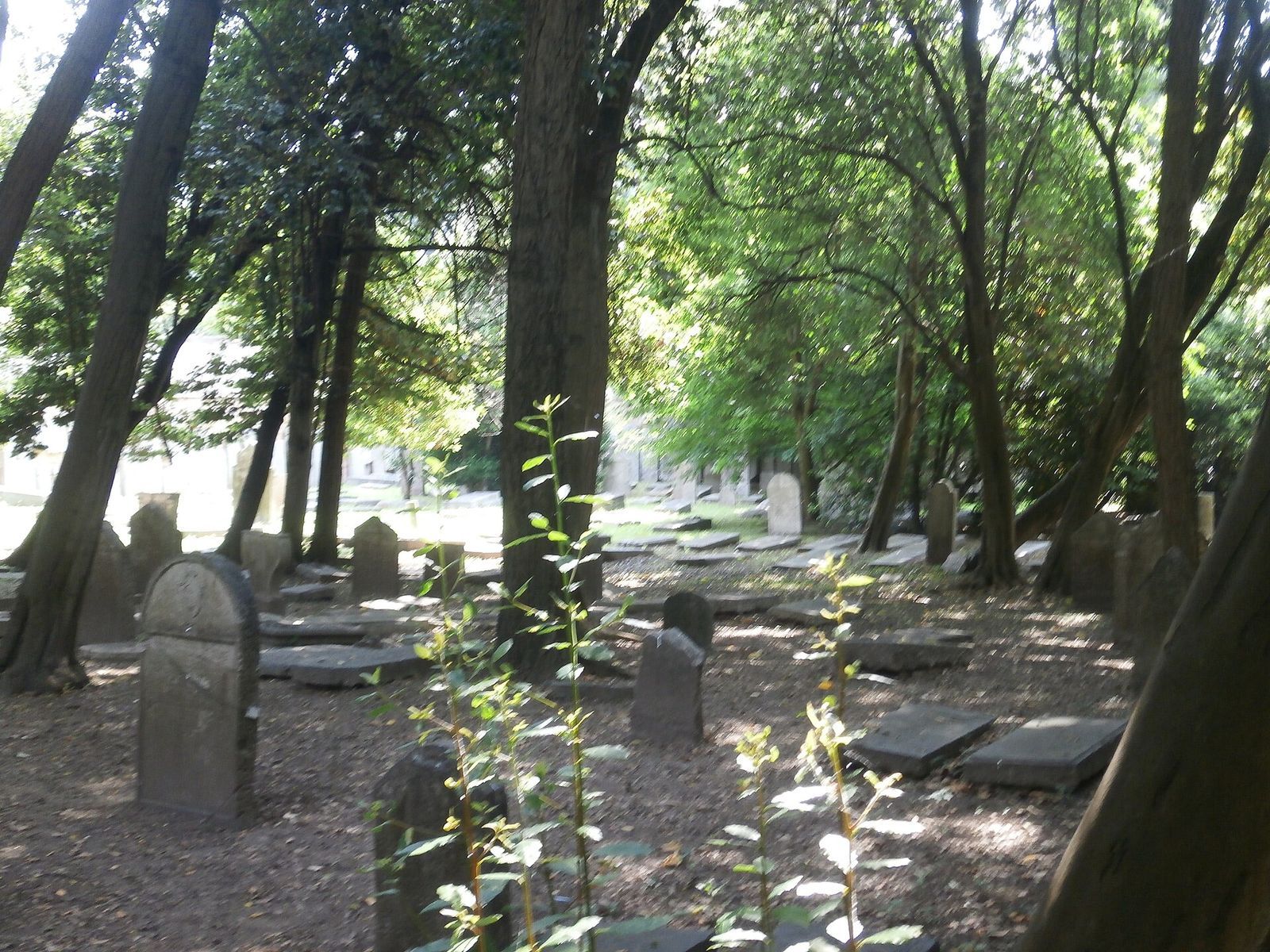
A high brick wall encloses the burial ground, with a gate facing the lagoon. Its inscription reads "ANCIENT ISRAELITE CEMETERY." When the lagoon-side road was built in 1929, the wall and entrance were shifted 17 metres inland. The stones and vegetation were rearranged, and gravestones were set in rows without regard to their original forms or the graves beneath them.
Burial markers and stone remains
Gravestones
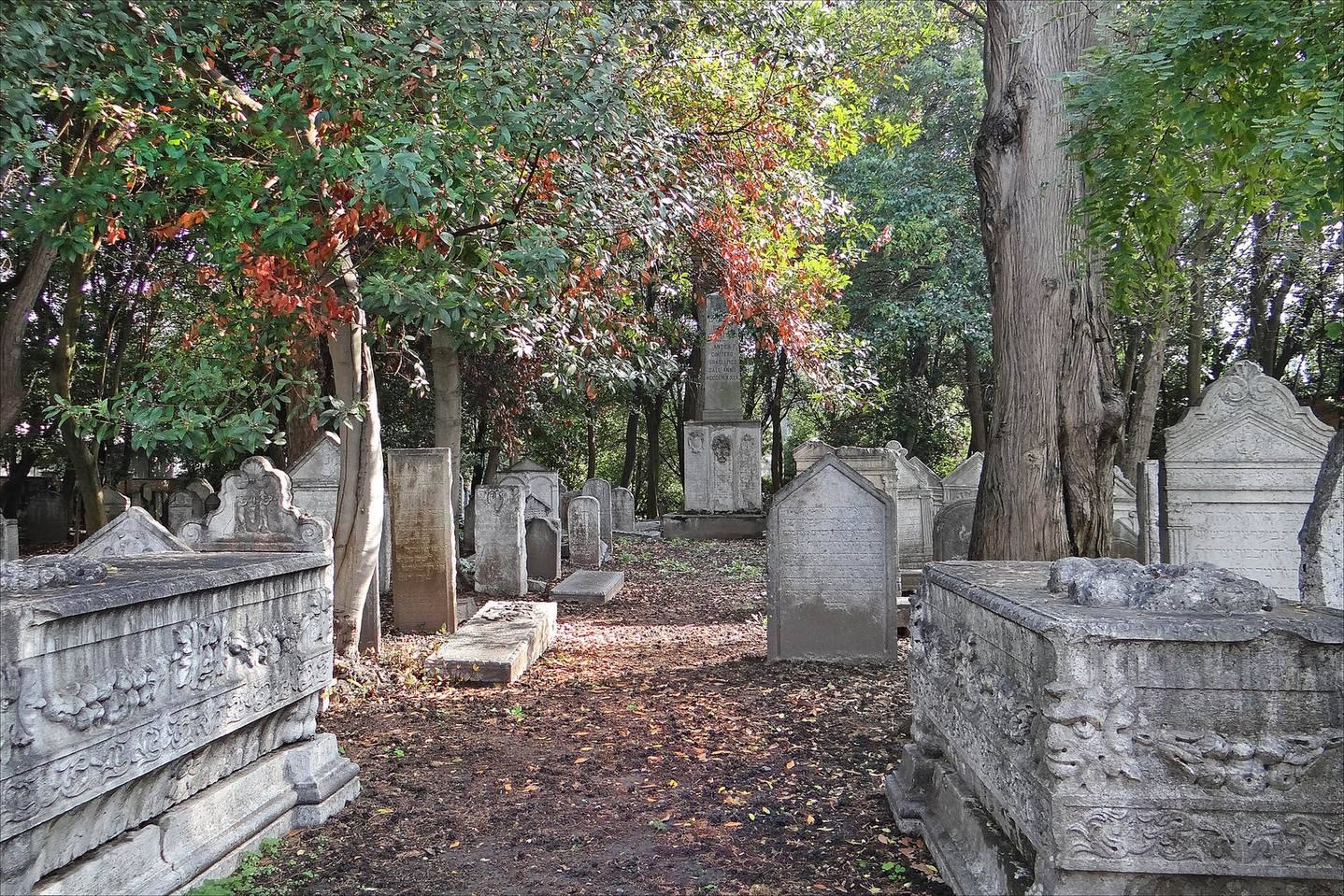
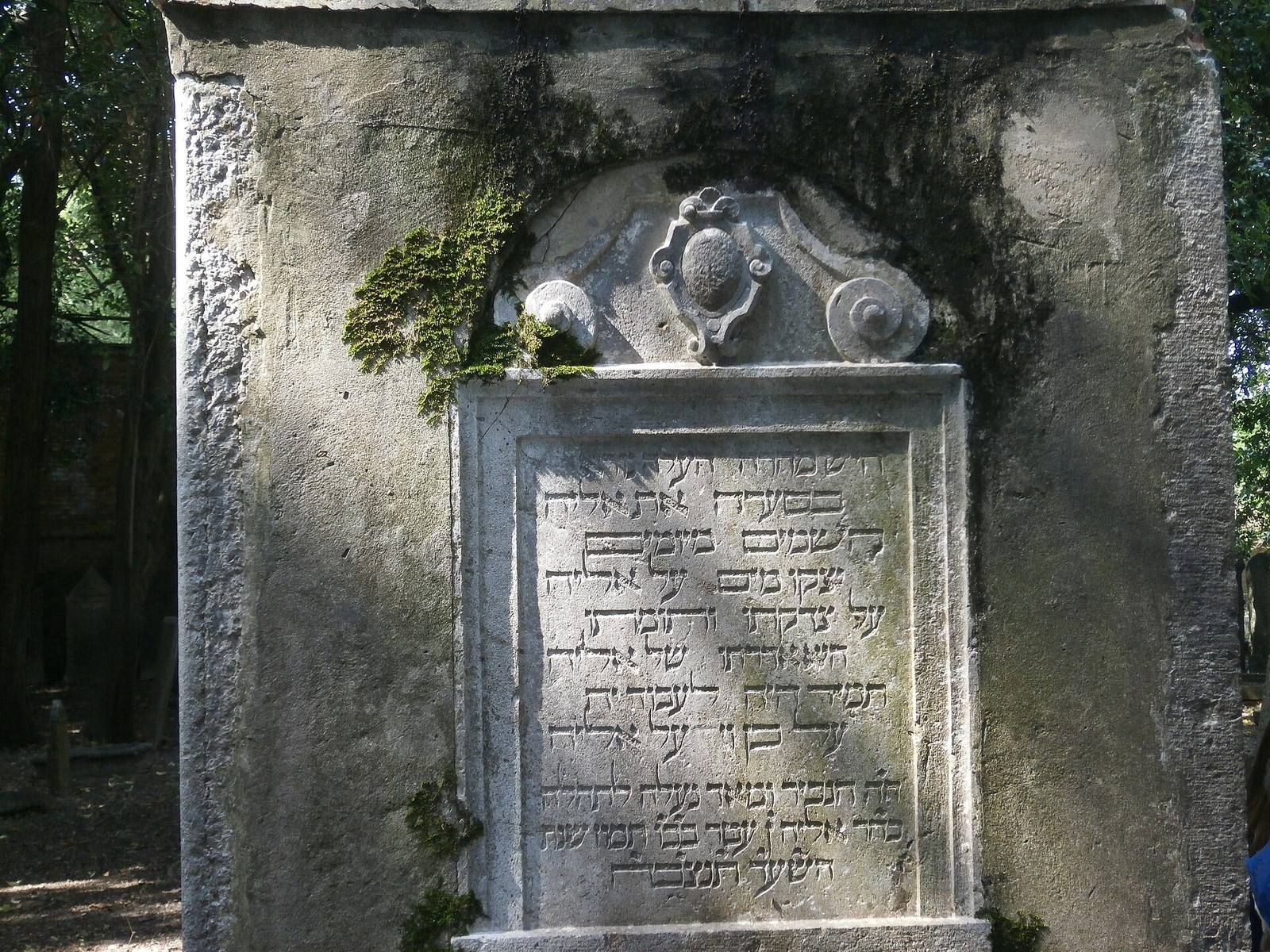
More than a thousand gravestones dating from 1550 to the early eighteenth century were recovered. Their inscriptions are in Hebrew, Spanish, and Portuguese. During restoration, the stones were cleaned and sorted by size; those set upright were placed in an open, sunny area to limit biological deterioration. Broken markers were joined with medium-density epoxy resin where possible, though some fragments could not be reassembled. Stones that could not be returned to the ground were attached to the inner walls with stainless-steel hooks to protect them from salts in the masonry. Restored stonework was also arranged along the inner wall in the area added during the recovery work. The grave of Rabbi Leone da Modena (1571–1648), a Venetian teacher and interpreter of Jewish religious tradition, is near the entrance.
Sarcophagus remains
Fragments of sarcophagus lids, the covers of stone coffins, were found partly buried in wet ground or piled together. During restoration, the fragments were cleaned and reassembled where possible. Reconstructed lids were placed horizontally on concrete supports, with lead sheets separating the stone from the supports.
Roman boundary markers reused as gravestones
Several dozen gravestones from the old cemetery were moved to the New Cemetery in the 1920s. Six were originally Roman boundary markers dating from the first century BC to the first century AD, spanning the late Republic, before the Roman Empire, and the early Empire. Such markers defined administrative areas or private property, including burial grounds. Circular openings near their bases once held stabilizing posts. Hebrew funerary inscriptions were later carved on them between 1440 and 1501.