Wok’s Tower: The Medieval Defensive Tower of Prudnik
Site at a Glance
- Popularity
- Medium
- Country
- Poland
- Primary era
- Medieval
- Eras represented
- Medieval, Modern
- Civilizations
- Kingdom of Prussia
- Site type
- Military
- Remains
- Castle
On this page8 sections
History
Wok’s Tower is a medieval defensive tower at the former castle site in Prudnik, Poland. The castle, founded by Bohemian nobleman Wok of Rosenberg, was built beside a bend in the Prudnik River to control movement along the trade route between Nysa and Opava. Construction began in 1255 and was completed before 1302; the tower belongs to the building phase that also included the castle walls and a residence, administered by Henry of Rosenberg from 1262. The tower is identified as the oldest castle tower in Upper Silesia and the oldest privately built defensive structure in Poland.
Medieval rule and conflict
From 1337, the castle belonged to the Piast family, a ruling dynasty with branches in Poland and Silesia. Its standing rose after 1424, when Silesian Piast duke Bolko V the Wallachian ruled the separate Duchy of Głogówek–Prudnik. During the 15th-century Hussite Wars, conflicts associated with the religious movement inspired by the Bohemian reformer Jan Hus, the castle was damaged repeatedly. The first known damage came in March 1428, when Hussite forces captured Prudnik.
Changing ownership and decline
When the Opole branch of the Piast dynasty ended in 1532, Habsburg rulers of Bohemia took over the Duchy of Opole and Racibórz, and the castle passed between different owners. Prudnik’s town council took the castle estates as a pledge in 1562 and acquired them outright in 1597. The heavily ruined castle was repaired in 1691. Later, Frederick II the Great, king of Prussia, gave one of its buildings to Evangelical, or Protestant, Christians for use as a prayer house, when the castle was again in a ruinous condition.
Fire, demolition, and changing names
A fire accidentally started by a journeyman weaver ravaged the castle complex on 27 August 1806. From 1844 to 1847, the castle buildings were demolished, leaving the tower. Work during the demolition also repaired the tower and altered its upper part and entrance.
The castle was known as Wogendrossel, also written Wogendrössel, a name meaning “Wok’s Rose” and referring to its founder’s heraldic rose. After the other buildings were demolished, the name continued to be used for the tower alone. German-language writing also called it the “Pagan Tower,” reflecting a local belief that it had stood since time immemorial. After the Second World War, Polish writing used “castle tower” and “Piast tower.” Journalist Antoni Weigt brought “Wok’s Tower” into public use in the late 1990s.
Remains
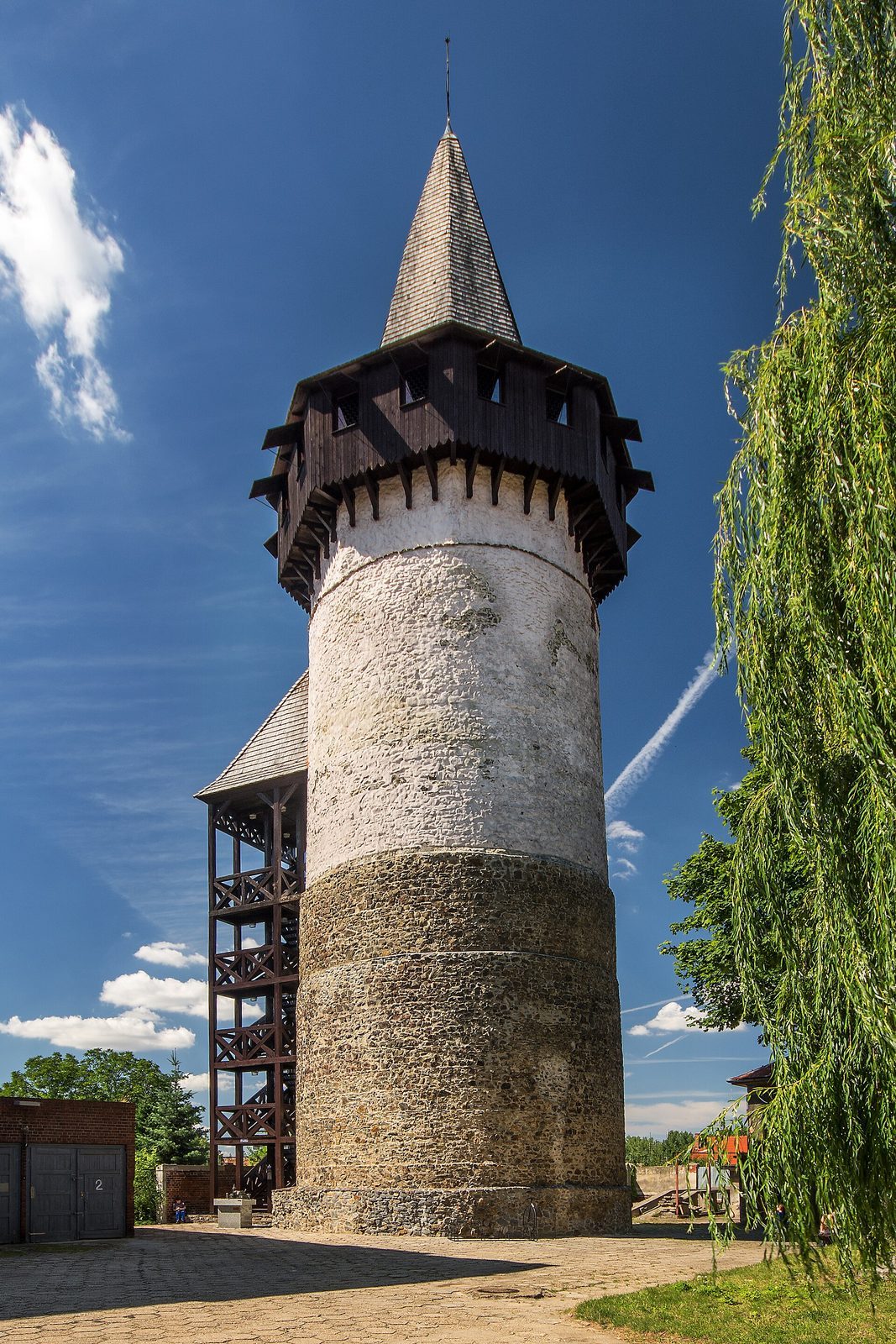
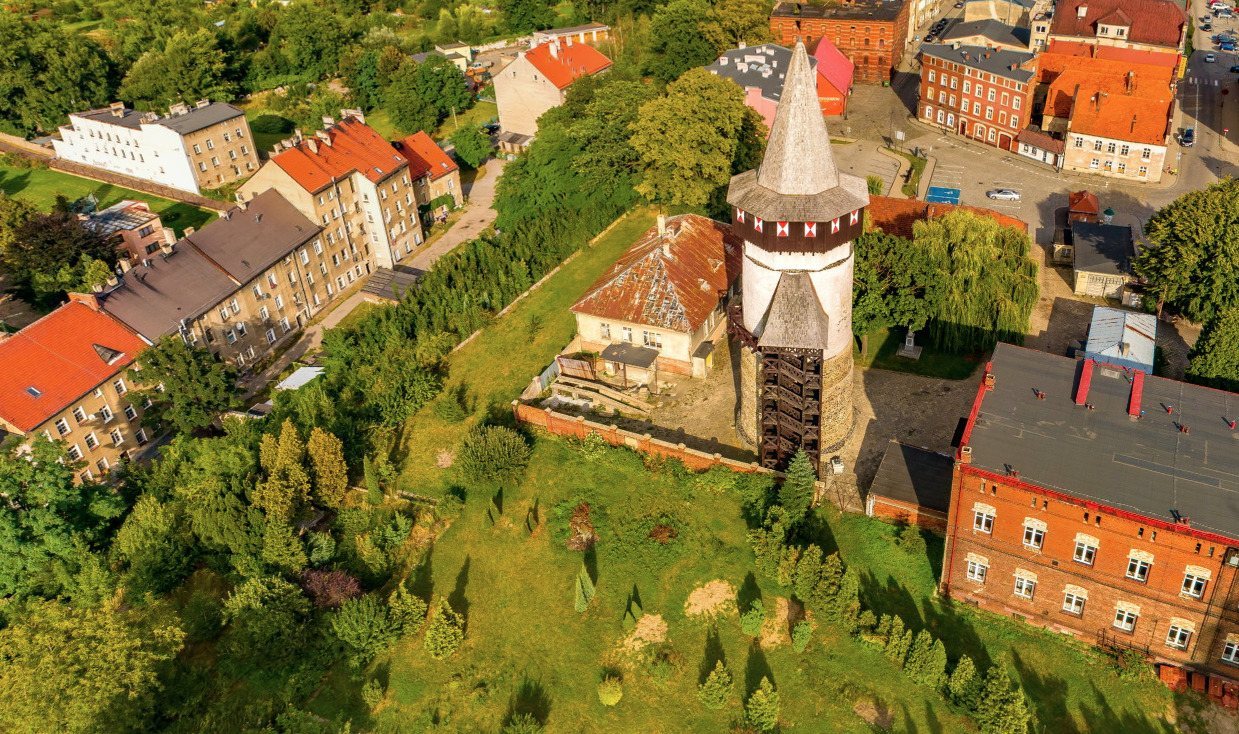
At Castle Square, near a bend in the Prudnik River, the tower is the surviving structure of the former castle. Its circular lower body rises to an octagonal upper section.
Structure and exterior
The tower is 41 metres high, with a base about 12.5 metres across. Its walls are 4 to 5 metres thick at foundation level and are built from graywacke, a hard, dark sandstone-like rock quarried in the nearby Opawskie Mountains. A wooden gallery and pyramidal roof crown the octagonal upper part. On the north side, a stone-framed doorway sits high above ground level.
Interior and defensive use
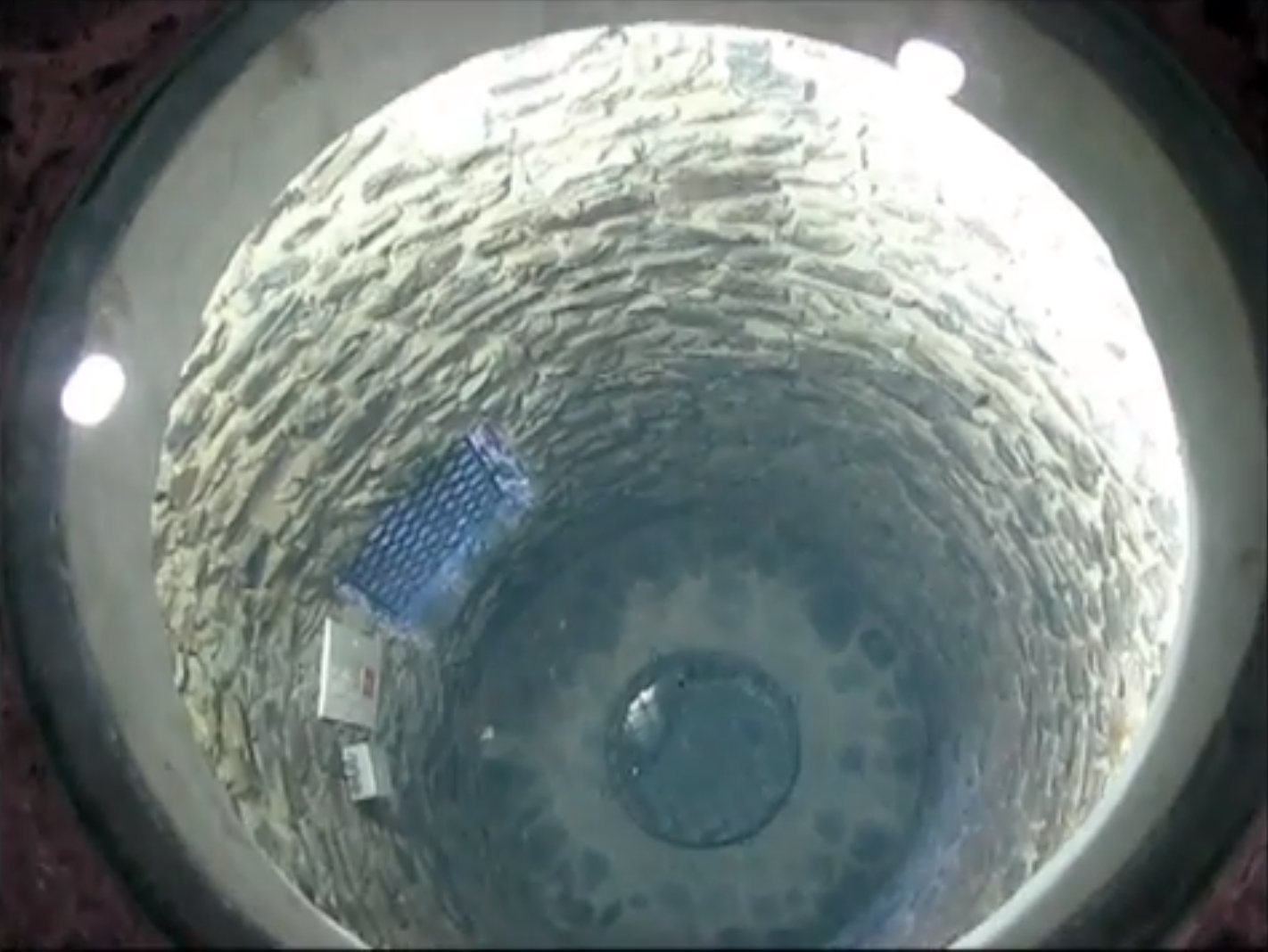
A prison pit inside the cylindrical tower measures 2 metres across and 13 metres high; access was through an opening in the vault above it. Two rooms above the pit are divided by beam ceilings. The tower was designed as a last refuge during a siege, where defenders could remain briefly rather than live permanently.
Conservation
Conservation work in 2009 removed earlier repairs to gaps in the exterior and replaced them with stone. The upper part was plastered and painted a natural lime color, while the internal stairs, prison-pit vault, interior walls, and upper platform were repaired. A timber structure strengthened the crown and supported a wooden fighting gallery adapted for use as a viewing platform. The work also added a wooden roof cap and staircase.