Saint James Church in Lubrza: A Neoclassical Roman Catholic Parish Church
Site at a Glance
- Popularity
- Very Low
- Country
- Poland
- Primary era
- Early Modern
- Eras represented
- Early Modern
- Civilizations
- Holy Roman Empire, Kingdom of Prussia
- Site type
- Religious
- Remains
- Church
On this page7 sections
History
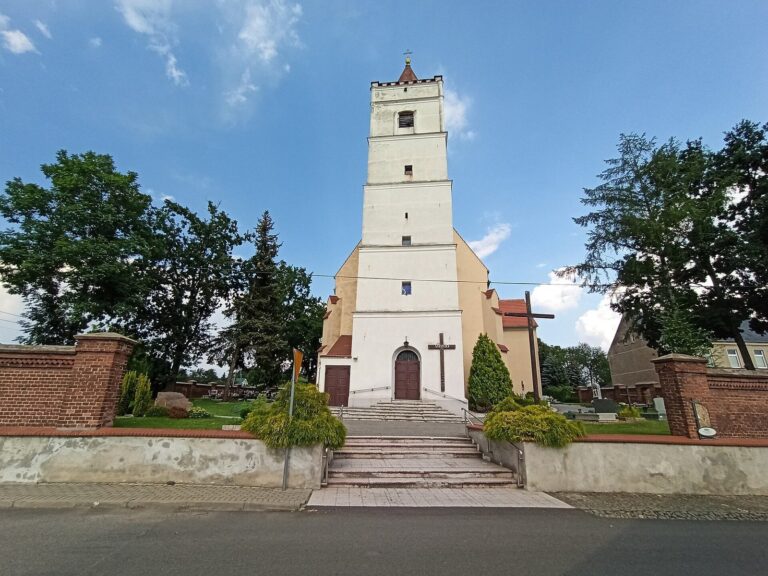
Saint James Church in Lubrza, Poland, is a Roman Catholic parish church whose present Neoclassical building, a style associated with the late eighteenth century onward, dates to 1797–1798.
Early church and tower
A church in Lubrza is first mentioned in 1474. Its dedication was to Saint James the Greater, one of the Twelve Apostles, and Saint Martin of Tours, a fourth-century bishop venerated as a Christian saint. A Renaissance tower, in a style associated broadly with sixteenth-century Europe, was built in 1600.
Rebuilding and parish role
Parishioners’ efforts led to the construction of the present church in 1797–1798, replacing the earlier building while retaining its tower. Today the church is the principal church of the Parish of Saint James the Greater, within the Prudnik deanery, an administrative subdivision of the Roman Catholic Diocese of Opole. It has been protected as a monument since 1959.
Remains
Exterior and plan
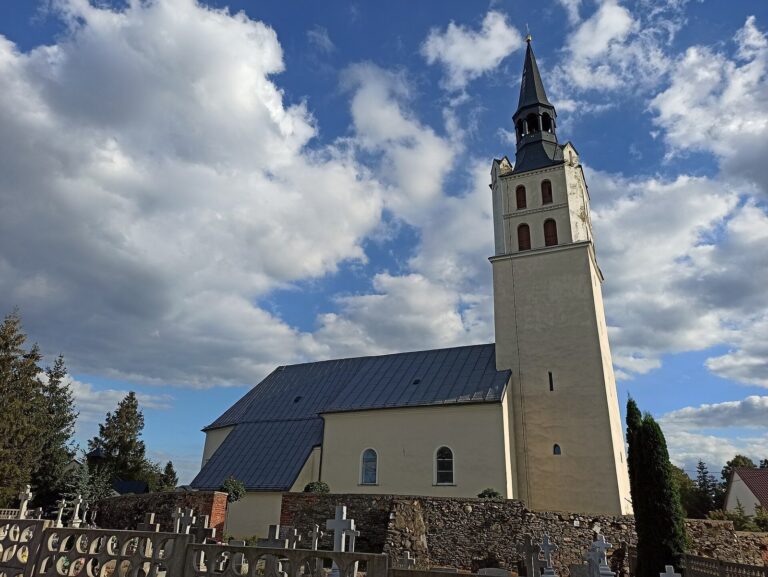
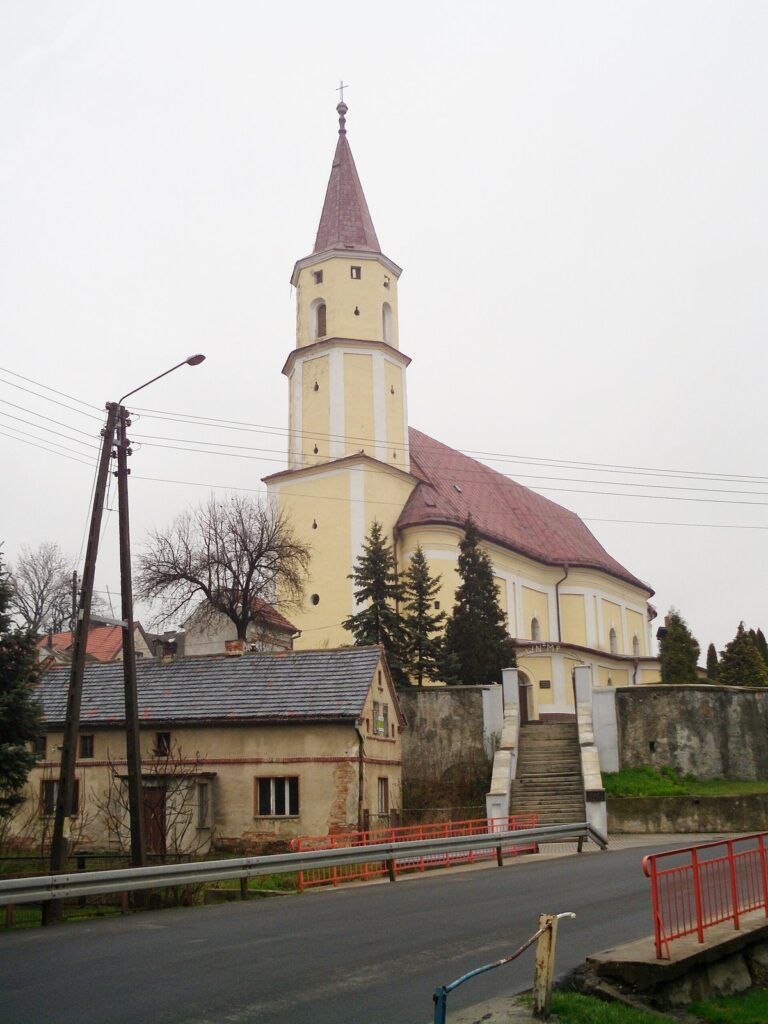
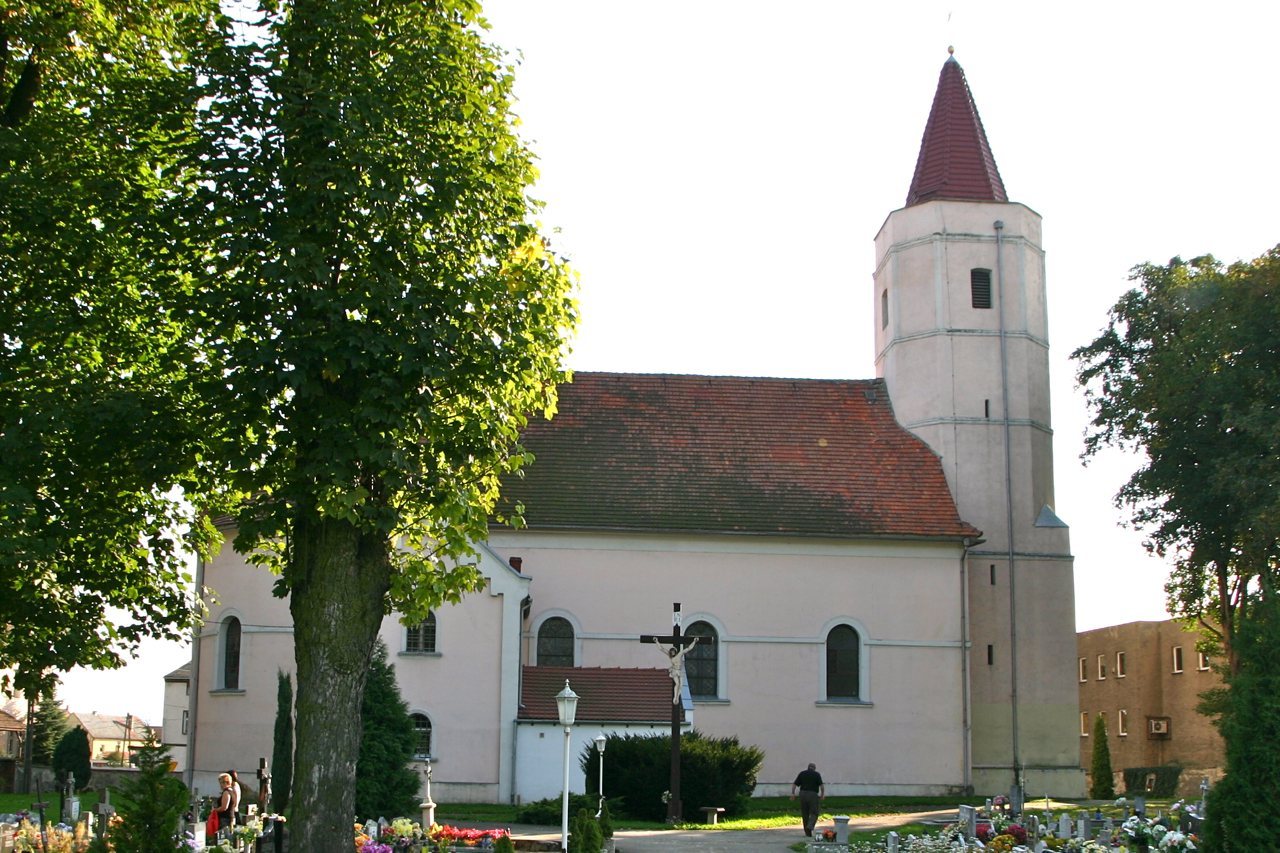
The brick church stands in the village center beside the main road and rises 22 metres. It is east-oriented, with a rectangular plan, one nave (the main worship space), a rounded sanctuary end, and three altars. A sacristy, a room for clergy and church furnishings, is on the north side, a porch on the south, and the tower at the west end. The four-storey tower has a square lower section and an octagonal upper section, with visible setbacks and projecting horizontal bands. A low parapet crowns its upper section. The church has a gabled, tiled roof.
Interior structure
The space beneath the tower has a cross-ribbed vault, supported by intersecting ribs. A barrel vault, shaped like a continuous tunnel, covers the nave, with lunettes, curved sections formed where openings meet the vault. The windows end in semicircular arches; those on the east side have stucco decorations in festoon, or garland, patterns.
Bells and furnishings
The tower holds two Gothic bells dated 1503 and 1555. The earlier bell has a small-letter inscription, while the later one carries the monogram “HS” and a plaque showing the Crucifixion of Jesus Christ. The interior also contains a Renaissance stone baptismal basin with a hexagonal bowl, dating to the second half of the sixteenth century, and a painting of Jesus, Mary, and Joseph on the main altar, from around the turn of the eighteenth and nineteenth centuries. Other furnishings include a Baroque crucifix and sculpture of the Resurrected Christ, both in a style associated broadly with the seventeenth century; Rococo frames for printed texts used during Mass, in an eighteenth-century style; and a white liturgical vestment embroidered in the eighteenth century.